Author: it@arcticportal.org

  • Last days of the Arctic – photographs by RAX

    Last days of the Arctic – photographs by RAX

    Last days of the arctic“The world turns its gaze toward the Arctic. Nowhere are the signs of climate change more visible; here global warming already affects the day-to-day lives of the local people. Still the circumpolar Arctic is one of the most disputed territories on Earth, with many nations laying claim to the mining and oil rights of the area as the sea ice retreats. For thousands of years the Inuit have built their communities based upon a sensitive understanding of the land and the frozen ocean, but rapid social and environmental change threatens their traditional way of life. The hunters of the North are a dying breed. This is the twilight of their society.” (rax.is)

    [http://www.youtube.com/watch?v=u3yxDnaben4]

    Ragnar Axelsson is an Icelandic photographer and photojournalist, born in 1958. He has worked for the Icelandic newspaper Morgunblaðið since 1976 and as a freelance shooting projects in various parts of the world for numerous magazines and agencies. The North has for a long time fascinated him and different aspects of north appeared in his photography regularly. In 2004, he published “Faces of the north“, a collection of his black and white photographs of traditional ways of life in Iceland, the Faroes and Greenland taken over a period of fifteen years, preserving that way a glimpse of a lifestyle that is gradually vanishing.

    His newest publication “Last days of the Arctic” is a breathtaking introduction to a life of Greenlandic hunters in the most remote communities in the world. Professor Mark Nuttall, one of the leading Arctic scholars, wrote the foreword for the book, which in sincere and simple way represents the part of world that we now watch changing.

    To learn more about Ragnar Axelsson, please visit his homepage.

    Here below you can see a documentary of him made by his son Jón Snær Ragnarsson. The film is in Icelandic only.

    [http://www.youtube.com/watch?v=PPdnjLSvG1Q]
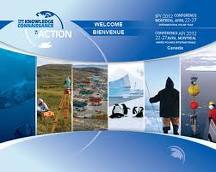
  • IPY 2012 From Knowledge to Action Conference First Circular is out

    IPY 2012 From Knowledge to Action Conference First Circular is out

    IPY 2012 From Knowledge to Action

    The IPY 2012 Conference in Montreal is the final event of International Polar Year 2007 – 2008, the largest international program of interdisciplinary polar research ever undertaken.

    This upcoming international forum in April 2012 will be a valuable opportunity to demonstrate and apply the latest findings of polar research on a broad range of topics from oceans and sea ice, to permafrost, vegetation and wildlife, to changes in Arctic communities and beyond. The “From Knowledge to Action” Conference will present the highlights of IPY 2007-2008 and the recent polar science assessments that are advancing our knowledge of the polar regions.

    The Conference will be organized around 4 main areas:

    1. Highlight the latest polar science findings
    2. Synthesize knowledge and results into system-scale understandings
    3. Link knowledge to action
    4. Advance public engagement to further action on polar issues
  • Fiery Ice, possibly the next big energy source

    Fiery Ice, possibly the next big energy source

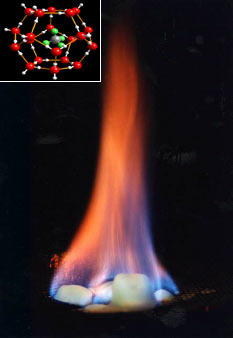
    Burning hydrate

    Methane clathrate, also called methane hydrates, methane ice or fire ice is something that most of us are perhaps not to familiar with but could potentially have great significance for future energy use globally and especially in the Arctic.

    Methane clathrate is a crystaline form of methane gas and pure water that exists when pressure is sufficiently high, or temperature sufficiently low. Given that these conditions exist the substance looks like a lump of ice. The quantity of the substance is staggeringly abundant estimated about 300,000 trillion cubic feet locatid at the bottom of the ocean all over the world and in the Arctic permafrost. It is believed to be the cleanest and most abundant source of energy in the world.

    There is however naturally a big if involved as it’s harvesting and utilization is extremely complex. Once the material is extracted from either it’s pressure drops or temperature rises the material will expand 164 times, representing significant storage and transport issues. Due to it’s obvious problems the utilization of Methane clathrate is in it’s early stages.

    A Japanese and Candadian Science project was just concluded in the Mackenzie Delta. Over two winter the researchers drilled down more than a kilometer into a 150 meter thick layer by the edge of the Beaufort Seat at Malik which contains the most concentrated known deposit of the frozen fuel in the world. Initial results are a step in the right direction as scientists were able to sustain steady flow of gas from the hydrates for six days, where previous attempts have only sustained the flow for a few hours.

    “It’s a landmark, no doubt about it,” says Ray Boswell, technical manager of the U.S. government’s gas hydrate program. Even if there are significant challenges in the utilization of Methane clathrate or Fiery Ice but due to the quantity available of the substance and it’s environmentally friendly attributes compared to other sources of energy future developments seem to be something one should definitely be on the look for.

    Source: Arctic Focus

  • Russian cargo vessel to Shanghai and back through Northern Sea Route

    Russian cargo vessel to Shanghai and back through Northern Sea Route

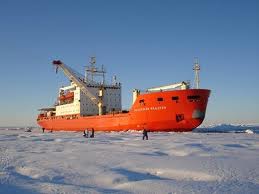
    Norilsk Nickel

    Norilsk Nickel – Russian Arctic-class cargo vessel returned yesterday, Tuesday, to harbour in Dudinka after being first in history to navigate through the Arctic waters without any ice-breaker support.

    The vessel travelled through the Northern Sea Route by Russian Arctic coastline to Shanghai and back taking total of 58 days, total steaming time of 41 days, for the trip. Total length of the round trip Dudinka-Providence Bay-Busang-Shanghai-Nakhodka-Dudinka was 11,320 miles from which approximately half was in clear water and half in ices.

    According to Sergey Buzov, Deputy General Director – Head of Transport and Logistics unit of MMC Morilsk Nickel the trip was an invaluable experience, which they will use in future to plan their transport operations and can indeed be regarded as the Company’s contribution to the development of Russian Maritime Declaration in exploration and development of new Arctic regions and Arctic wealth.

    At the moment Company owns five ARC-7 ice-class vessels for Arctic transportation and the sixth will be introduced in 2011. The vessels are built in accordance with latest environmental and technological standards enabling them to navigate independently through Arctic ice without ice-breaker support.

  • A sustainable EU Policy for the High North draft report presented and debated this week in Brussel

    A sustainable EU Policy for the High North draft report presented and debated this week in Brussel

    EU Arctic Policy flag

    The Draft report undertakes to asses the existing legal and political framework in the Arctic as well as to establish a clear set of priorities of the European Union with regard to the Arctic.

    The report suggests that the European Commission and the Council and offering close cooperation to the Arctic states and stakeholders. The draft report clearly recognizes that the Arctic is far from being a legal vacuum, but has developed a set of rules which will nevertheless need to be further developed due to changing circumstances.

    Main priorities of the EU in the Arctic set out are:

    • The road to a sustainable socio-economic development and environmental protection
    • The potential of new world transport routes and their vital importance to the EU member’s states
    • The potential of developing resources like Hydrocarbons, Minerals, fish and biogenetic resources

    With regard to a sustainable socio-economic development the Eco-System based management approach as applied in the Barents today is recognized.

    The report acknowledges the responsibility of the EU as one of the main contributors to pollution and climate change.

    In its conclusion the Report requests the Commission to set up a permanent Inter service on the Arctic and likewise in the future EEAS.

    Requests and suggestions are made as to a new circumpolar co-funding and co-programming research programme.

    Finally the importance of EU engagement in the further development of Northern Sea Routes is highlighted and suggestions as to the Galileo project are made.

    Overall the Draft Report seems to be well perceived, both in the EU and in the Arctic.

    Thus there is justified hope that the Report will not only contribute to outline the EU’s Arctic policy, but also to contribute to confidence building with the Arctic stakeholders.

    The Process will continue with the EU Arctic Forum hosting the Meeting with the European Parliaments Rapporteur to discuss the report on “A Sustainable EU policy for the High North” on 7. December 2010.

    The text from the official announcement can be seen here:

    Birgit Schnieber-Jastram, Chair of the EU-ARCTIC-Forum now has the pleasure to host a meeting with the rapporteur and several shadow rapporteurs before the vote of the Report in the Committee on Foreign Affairs takes place.

    The Rapporteur Michael Gahler MEP is looking forward to present and debate the Report on A sustainable EU Policy for the High North as well as amendments on 7. December at 09.00 (tbc) in the European Parliament in Brussels.

    To ensure fair involvement of Arctic stakeholders the Chair of the EU-ARCTIC-Forum in the European Parliament Birgit Schnieber-Jastram MEP is inviting you to participate in the debate and in particular welcomes any contributions, which should be made in due time by contacting the Adviser on the Report to Michael Gahler MEP: Mr. Steffen Weber, Or the respective shadow rapporteurs and members of the EU-ARCTIC-Forum: Anneli Jäätteenmäki MEP, Liisa Jaakonsaari MEP, Indrek Tarand MEP, Konrad Szymanski MEP and Sabine Lösing MEP.

    The EU-ARCTIC-Forum in the European Parliament thus wants to ensure the proper involvement of stakeholders and continues its work to facilitate and bolster a well informed debate on Arctic Issues in Brussels and to interlink debates on Energy, Environment and Climate Change, Resources, World Trade Routes, Security, Sustainable Development etc, that are important in the Arctic context.

  • The resolutions from the recently concluded COP10 in Nagoyja Japan, made specific reference to the Arctic Council and Arctic biodiversity.

    The resolutions from the recently concluded COP10 in Nagoyja Japan, made specific reference to the Arctic Council and Arctic biodiversity.

    COP10 Nagoya, Japan

    By TOM BARRY, CAFF Executive Secretary

    The resolutions from the recently concluded COP10 in Nagoyja Japan, made specific reference to the Arctic Council and Arctic biodiversity.

    Under the section on New and Emerging issues, the following resolution was noted:

    [That the 10th Conference of the Parties] invites the Arctic Council to provide relevant information and assessments of Arctic biodiversity, for consideration by the Subsidiary Body on Scientific,Technical and Technological Advic. In particular, information generated through the Circumpolar Biodiversity Monitoring Program of the Arctic Council’s working group on Conservation of Arctic Flora and Fauna(CAFF)

    In early 2009, the CAFF Working Group signed a Memorandum of Understanding with the Convention on Biological Diversity (CBD). Subsequent to that, the CAFF report on “Arctic Biodiversity Trends 2010: Selected Indicators of Change” was designated as the Arctic Council’s contribution towards measuring the CBD target of reducing the rate of biodiversity loss by 2010. Specifically, the CAFF report contributed to:

    • The United Nations 2010 Biodiversity – an international (CBD) target to reduce loss of biodiversity by 2010.
    • The UN International Biodiversity Year (2010)

    Further information at http://www.cbd.int/cop10/.

  • First NATO headquarters in the Arctic as Norway moves it’s military leadership into the Arctic Circle

    First NATO headquarters in the Arctic as Norway moves it’s military leadership into the Arctic Circle

    Military headquarters

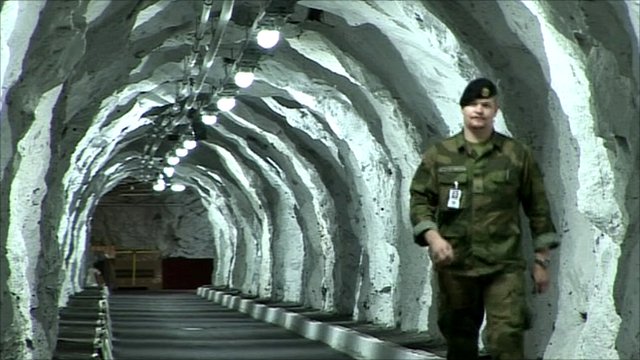
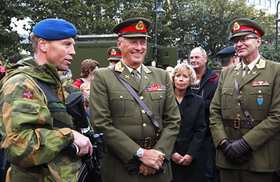
    Norway is the first of the NATO countries to move it’s military headquarters to the Arctic by formally opening a new high tech Operations Center located one kilometer inside the mountain at Reitan outside Bodø. North Norway.

    The operational center ,which has been described as unique in the world by H.M. King Harald of Norway, contains the most modern technology allowing military commanders to plan operations in different parts of the world simultaneously. The center contains Norway’s largest flat screen covering an approximitely 40 square meters. The complex was essentially a cold-war base, covering an aproximit 18.000 square meter five stories high and built to withstand a nuclear blast.

    Military generals

    The opening of the command center, is in line with the governments increased focus on the Arctic regions. The previous command center was located in Stavanger in southern part of Norway. The move can be estimated to bring the military command not only physically closer to the Arctic but mentally, including a first hand contact with all the questions concerning the High North and a deeper understanding of the stakeholders.

    To Take a look into the military complex follow this link

    To watch a video from the opening follow this link

    Source: Barents Observer & BBC News

  • Day of the North: The Nordic House

    Arctic Portal

    Tomorrow the 10th of November the Nordic house in Iceland will host a series of lectures about Northern issues. The event focuses on the monitoring of environment and society and will include many very interesting lectures and topics. The Arctic Portal will be streaming the event live on the Arctic Portal. The broadcast will start tomorrow morning at 09:00 GMT.

    09:00-09:15

    • Address by Þorsteinn Gunnarsson, Chairman of the Icelandic cooperation board on Northern issues.
    • Address by Svandís Svavarsdóttir, Icelandic Minister for the Environment.
    • 09:15-09:45 Tom Barry, CAFF: Introduction to the Arctic Council and it’s working group on Conservation of Arctic Flora and Fauna (CAFF).
    • 09:45-10:15 Hans H. Hansen, Environmental Agency: Risk assessment map of the North Atlantic, relevant to co-ordinated reaction strategy to environmental accidents.

    Coffee Break 

    • 10:30 Ingibjörg Jónsdóttir, University of Iceland: Sea Ice studies and monitoring in the North. 
    • 11:00-11:30 Árni Einarsson, Natural research center Mývatn Iceland: Þingeyingar for a thousand years.
    • 11:30-12:00 Starri Heiðmarsson, The Icelandic Institute of Natural History: Esja mountains and the glacier Breiðarmerkurjökull.

    Lunch Break

    • 12:50 Oddur Vilhelmsson, University of Akureyri: The Microbiology flora in Glerár river- a practical model for monitoring on environmental implications due to climate and pollution in the North or not?
    • 13:20- 13:50 Embla Eir Oddsdóttir, Stefansson Arctic Institute: The advance toward the North, risk, safety and adaption of coastal towns due to climate change and increased shipping in the North.

    14:00-15:00 Round Table discussion: 

    The status of research, monitoring and international cooperation in the North

    Discussion moderator: Kristján Kristjánsson, University of Reykjavík

    Participants: 

    • Guðrún Nína Petersen, Icelandic Met Office
    • Hallgrímur Jónasson, The Icelandic Center for Research (Rannis)
    • Ragnheiður E. Þorsteinsdóttir, Minestry of foreign affairs
    • Helgi Jensson, The Environment Agency of Iceland
    • Níels Einarsson, Stefanson Arctic Institute
    • Þóra Ellen Þórhallsdóttir, University of Iceland

    15:00-16:00 Memorial lecture on Vilhjálmur Stefánsson, The Arctic Explorer  

    Professor Þóra Ellen Þórhallsdóttir

    The event will cover many of the most exciting topics within the Arctic region, the broadcast can be seen on the Arctic Portal front-page or by following this link

  • Towards an Arctic Governance: What role for France and Europe

    Towards an Arctic Governance: What role for France and Europe

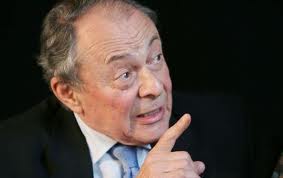
    Michel RocardMichel Rocard, a former Prime Minister and now a special representative for the President of France with regards to matters concerning the poles, Arctic and Antarctic, gave a lecture “Towards an Arctic Governance: What role for France and Europe?” at the University of Iceland on November 1, 2010. The lecture is part of a series organized by the President of Iceland, entitled “New Currents” in which various internationally known scholars and world leaders have taken part over the years.

    Michel Rocard has a long political career behind him. He has served as a Minister of Agriculture in France and was the Prime Minister of France between 1988-1991. He held a seat in the European Parliament for three terms and has been especially active in matters concerning foreign policy, education and employment. In this lecture he will share his vision for the North and discuss the role of Europe in the future of the Arctic region.

    Michel Rocard from Kennslumiðstöð Háskóla Ísl on Vimeo.

  • Opportunities with Arctic Sea Ice Decline

    Opportunities with Arctic Sea Ice Decline

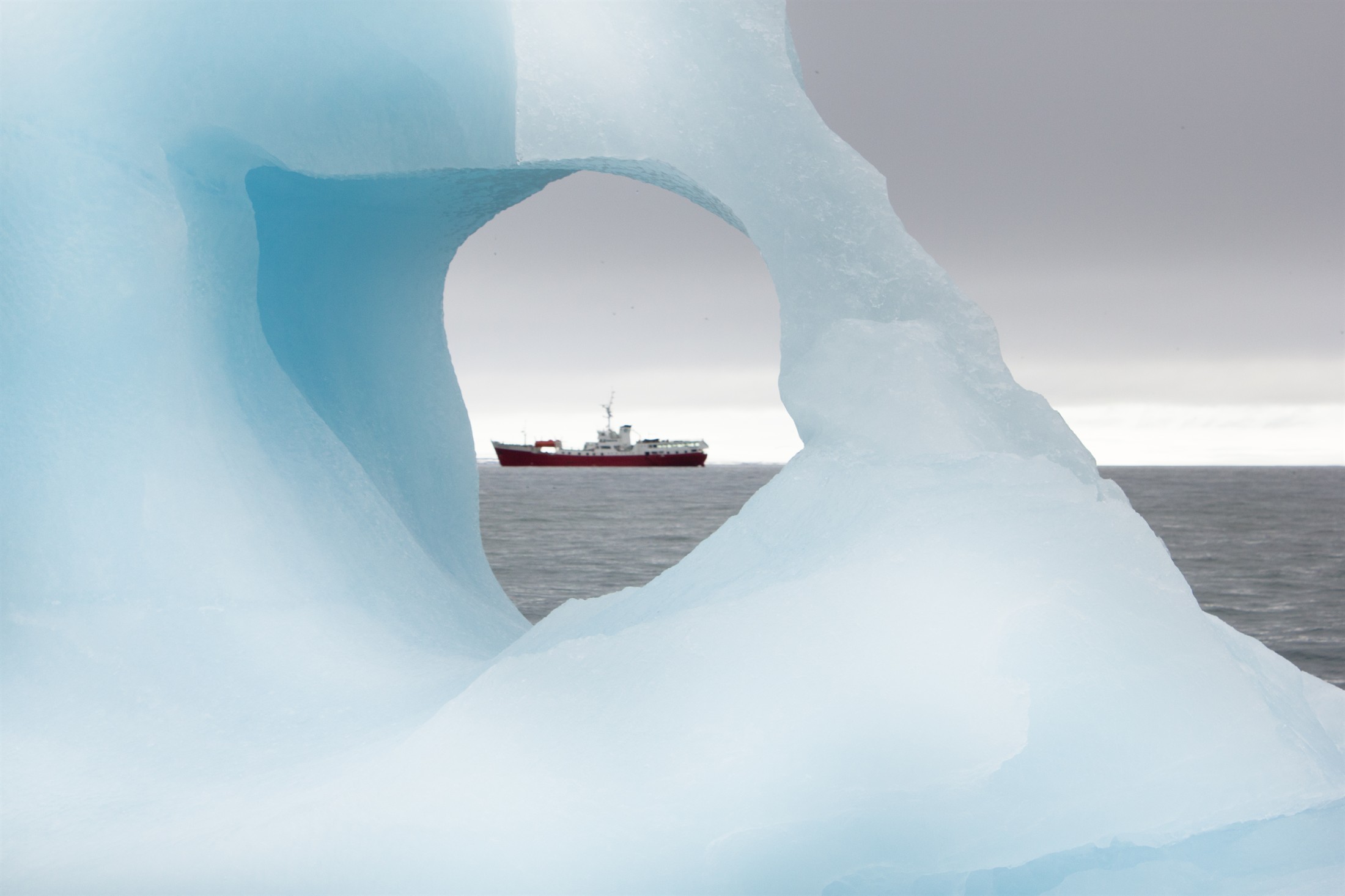
    Tourist cruise ship, Svalbard

    Shipping

    The possibility of a trans-arctic shipping route has intrigued seafarers since the days of the first Arctic explorers, as it would shorten the distance between the Pacific Ocean and the Atlantic Ocean significantly and shorten trading routes. This possibility still intrigues many and is an issue that has received significant media coverage; it probably will become a possibility during the 21. century due to declining in sea Ice.

    This would create a number of economic opportunities of Arctic residents as regular transit shipping through the Arctic Ocean would require significant infrastructure, transshipment ports, search and rescue infrastructure would need to be strengthened significantly and numerous other services would be needed.

    Energy exploration

    Less Sea Ice could further enable access to the vast natural reserves located in the Arctic which would contribute further to the regions economic stability, it does however need to be noted that the loss of sea ice in this context could be both a good thing as well as something creating a problem. Less sea ice would mean better access but at the same time mean stronger waves and storms which could endanger infrastructure such as platforms for oil and gas exploration.

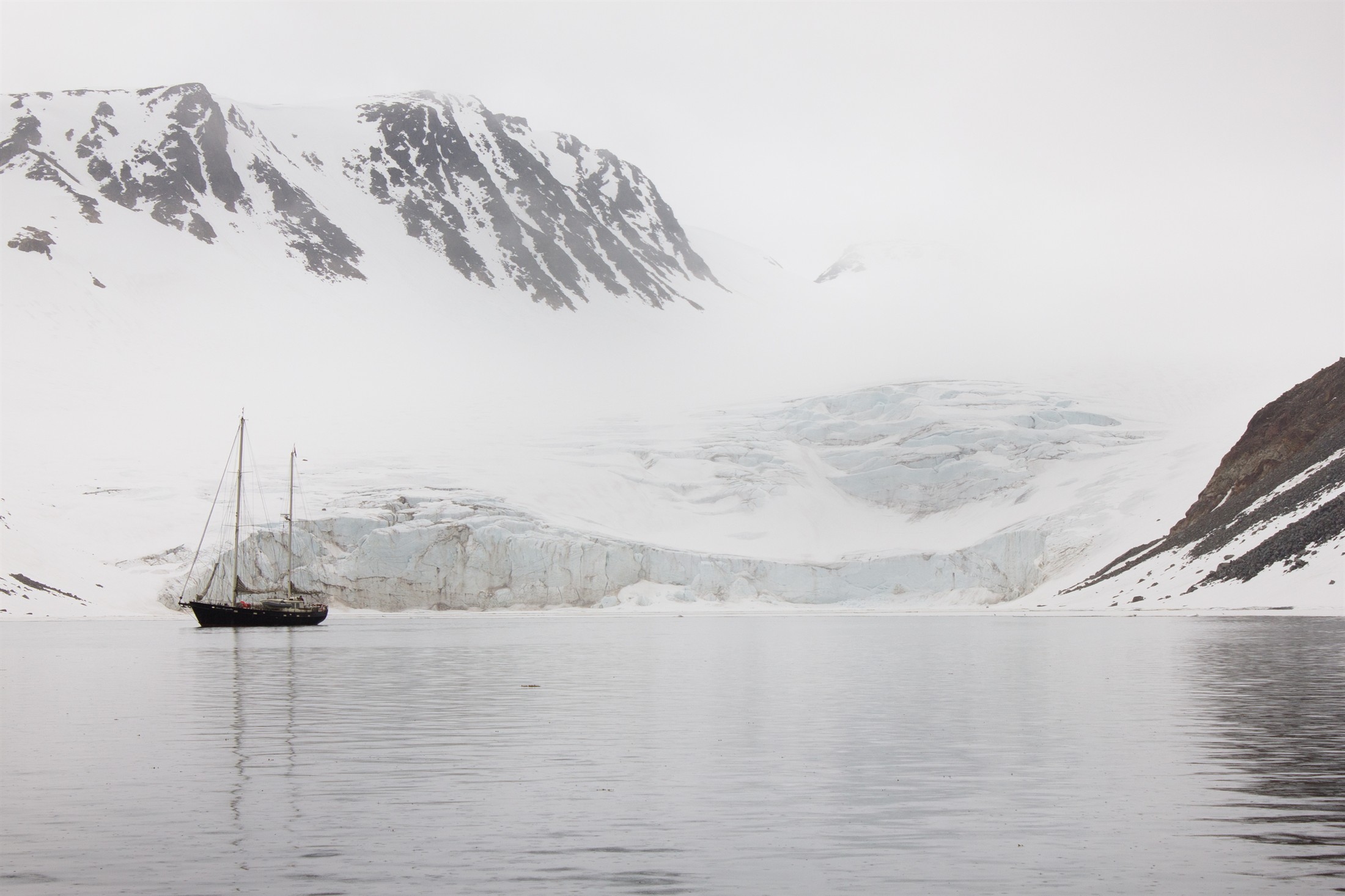
    Private yacht in polar waters, near Svalbard

    Tourism

    With less sea ice coverage, it could be estimated that more cruise ships would venture into the Arctic, which also creates the need for more infrastructure and offers local communities opportunities to offer services to tourists and further build up the Arctic infrastructure.

    All of these opportunities mentioned have their upside and downside as well.

    These activities have the possibility if they are not closely managed to pose an environmental threat to the in many ways fragile region, but also could offer quite an opportunity to spur sustainable growth in the North.