Category: News & Press Releases

Arctic Portal News Portlet

  • Moscow chosen over NSR-cities

    Moscow chosen over NSR-cities

    The Northern Sea Route.

    Russia has decided to host the administration for the Northern Sea Route in its capital, Moscow. The new headquarters will open late January this year.

    The Deputy Transport Minister of Russia, Viktor Olersky, said to RIA Novosti that a draft of the resolution has been made and it is being coordinated by federal agencies. The BarentsObserver states that both Murmansk and Arkhangelsk lost the fight for hosting the administration, after looking for having it in its respective cities for years.

    The reason given for choosing Moscow, instead of either of the two harbor cities in the route is “in order not to offend anyone”. Olersky also said that a branch could be opened later in Arkhangelsk.

    He said that although concerns may rise that Moscow is not at the sea route that it was a good location as the Emergency Situations Ministry was in Moscow, as well as other big companies and organizations who work and employ in the areas.

    The state owned enterprise will have a budget of 35 million Rubles. Only for days prior to the decision by Olersky, the Governor of Arkhangelsk Igor Orlov said that Arkhangelsk was ready to open a NSR office that would handle all practical tasks connected to traffic on the route – applications to use the route, coordination with the Agency on Hydrometeorology and Environmental Monitoring, use of Arctic aviation and so on.

    In 2012 total cargo transported through the Northern Sea Route was 1.261.545 tons, an increase of over 50 percent from 2011. The total number of ships also increased from 34 in 2011 to 46 in 2012, compared to only 4 in 2010.

    Sources
    RIA Novosti

    Barents Observer

  • No oil leak from stranded rig

    No oil leak from stranded rig

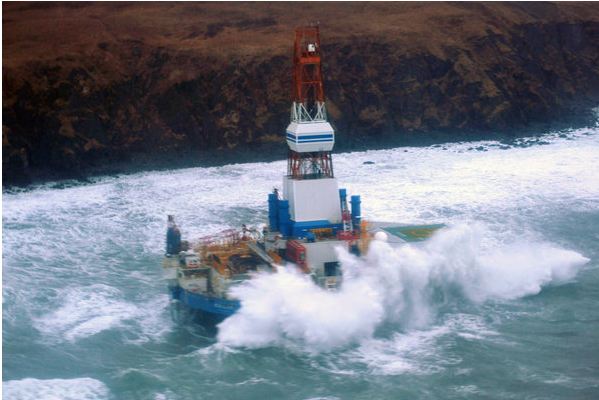
    Stranded oil rig

    An oil rig stranded in severe storms near the island Kodiak in Anchorage, Canada. No oil is leaking from the rig.

    The drillship is called Kulluk, owned by Royal Dutch Shell. The US coastguard was concerned about any leak but overflights confirmed that no leak has occurred.

    Coast Guard Captain Paul Mehler said the Kulluk had 143,000 gallons of ultra-low-sulfur diesel and 12,000 gallons of other oil products on board.

    The grounding of the drillship, weighing nearly 28,000 gross tons and operated by Noble Corp, is a blow to Shell’s $4.5 billion offshore program in Alaska.

    The rig had been headed to Puget Sound for maintenance and upgrades when it broke away from one of its tow lines on Monday afternoon and was driven to rocks just off Kodiak Island that night. The 18-member crew had already been evacuated by the Coast Guard on Saturday because of risks from the storm.

    With winds reported at up to 60 miles (100 km) an hour and Gulf of Alaska seas of up to 35 feet (11 m), responders were unable to keep the ship from grounding, the Coast Guard said.

    Sean Churchfield, operations manager for Shell Alaska, could not explain why the Kulluk had been caught in the weather. “I can’t give you a specific answer, but I do not believe we would want to tow it in these sorts of conditions.”

    Susan Childs, emergency incident commander for Shell, believed that a significant spill was unlikely because of the Kulluk’s design, with diesel fuel tanks isolated in the center of the vessel and encased in very heavy steel.

    Shell is waiting for weather to moderate to begin a complete assessment of the Kulluk.

    Sources

    Independent

    Reuters

  • Environmental concerns for caribou

    Environmental concerns for caribou

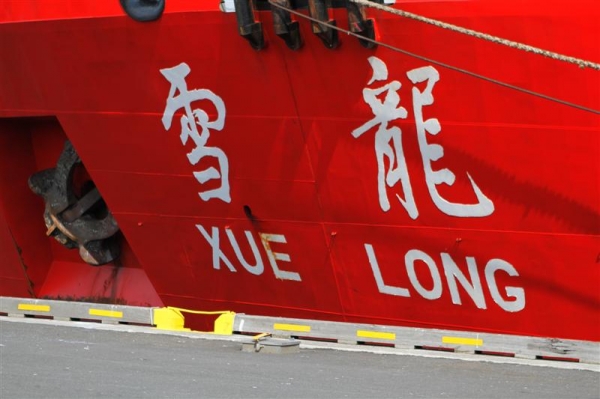
    Chinese icebreaker Xuelong.

    Canada is set to look into a mining project to be funded by China. Four federal ministers will come together to decide how to conduct an environmental review for the Izok Corridor proposal.

    It could bring many billions of dollars into the Arctic but would also see development of open-pit mines, roads, ports and other facilities in the centre of calving grounds for the fragile Bathurst caribou herd.

    “This is going to be the biggest issue,” said Sally Fox, a spokesperson for proponent MMG Minerals, a subsidiary of the Chinese state-owned Minmetals Resources Ltd.

    It would be hard to exaggerate the proposal’s scope. Centred at Izok Lake, about 260 kilometres southeast of Kugluktuk, the project would stretch throughout a vast swath of western Nunavut.

    Izok Lake would have five separate underground and open-pit mines producing lead, zinc and copper. Another site at High Lake, 300 kilometres to the northeast, would have another three mines.

    MMG also wants a processing plant that could handle 6,000 tonnes of ore a day, tank farms for 35 million litres of diesel, two permanent camps totalling 1,000 beds, airstrips and a 350-kilometre all-weather road with 70 bridges that would stretch from Izok Lake to Grays Bay on the central Arctic coast.

    MMG plans a port there that could accommodate ships of up to 50,000 tonnes that would make 16 round trips a year — both east and west — through the Northwest Passage.

    Izok Lake would be drained, the water dammed and diverted to a nearby lake. Three smaller lakes at High Lake would also be drained. Grays Bay would be substantially filled in.

    The result would be a project producing 180,000 tonnes of zinc and another 50,000 tonnes of copper a year.

    The four ministers, of Northern Development, Transport, Natural Resources and Fisheries and Oceans — have three choices. They can send the project back to MMG and ask for changes, they can choose to let the board run hearings itself or they can decide the project’s effects would be broad enough to require the involvement of other governments in hearings.

    Source

    The Record

  • Canadian sea bed camera

    Canadian sea bed camera

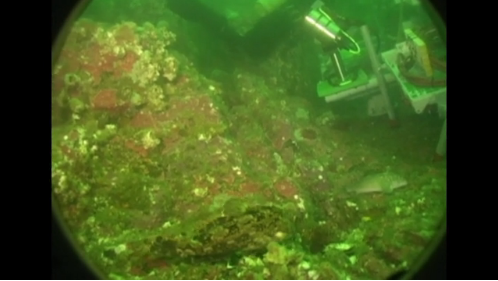
    Sea bed camera

    An underwater monitor station has been installed on the Canadian Arctic sea floor, near Cambridge Bay in Nunavut. It allows for live views of the sea bed. Installation was in the hands of Ocean Networks Canada, based at the University of Victoria.

    Dr. Kim Juniper said the observatory is already generating interest among scientists who want to use the site for their own work.

    “Essentially using what we’ve put in there as a basis to provide some background for some other research,” he said.

    Juniper said it’s a preview to the kind of work expected at the High Arctic Research Station, which is expected to open in 2017.

    So far, the mini-observatory has caught shrimp and fish on camera, and has recorded ice thickening at the rate of one centimetre a day.

    Beth Sampson, a science teacher at Kiilnik High School in Cambridge Bay, said it’s the kind of real-life science that appeals to her as a teacher.

    “It also has a video camera on it, so it’s live-streaming data, and you’ll be able to see things that live in the water that might be swimming past or crawling past on the ocean floor. So it’s exciting to be able to see a side of the ocean that we don’t see from the surface.”

    Sampson’s Grade 11 biology students got the see the apparatus before it went under water. She is now working on a plan to use the data in science projects next school term.

    The underwater observatory is a scaled-down version of similar observatories in seafloor networks off the coast of Vancouver Island.

    Source

    Alaska Dispatch

  • Amazing Mt. Everest photo

    Amazing Mt. Everest photo

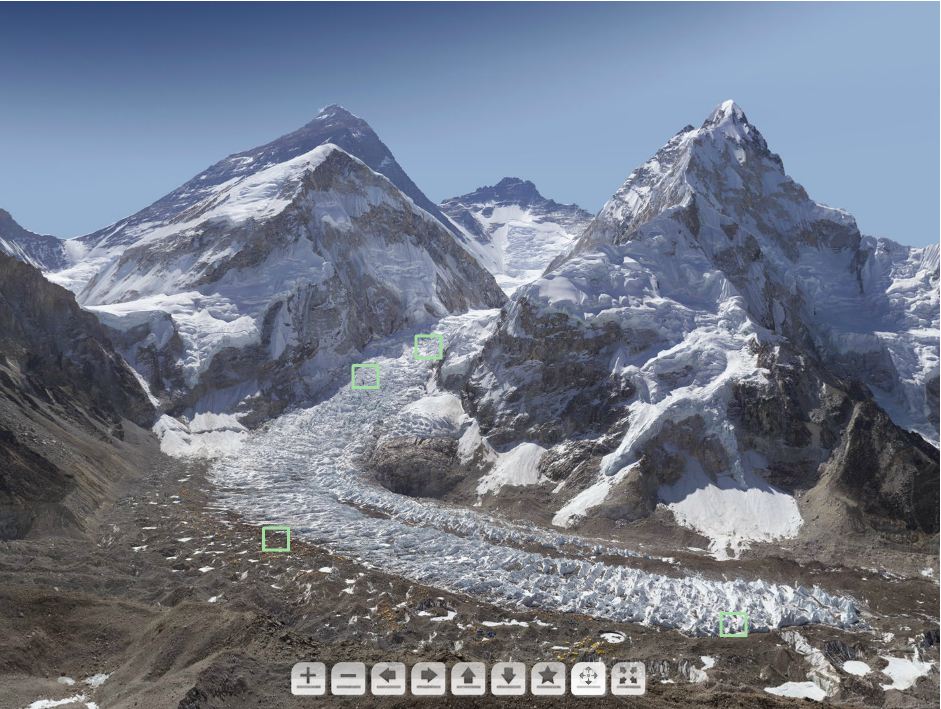
    The Mt. Everest

    David Breashears has released a stunning picture of Mount Everest to show effect of climate change on the world’s highest peak. It is over 3,8 million pixels and stitched together from 477 photographs.

    The photo can bee seen below and is also available here.

    Filmmaker David Breashears and nonprofit organization GlacierWorks worked on the project together and he is now working with Microsoft on an even more detailed version.

    This version allows users to zoom in and also show before and after pictures from the area since 1921.

    “It’s just extraordinary and we’re so excited by that image, and people love clicking on things and zooming in,” he said.

    “We want to tell the bigger story of climate change in the area, and we are working with Microsoft and the Royal Geographical Society on this.”

    The team eventually hope to develop a far larger version of the image so detailed users can actually zoom inside tents at base camp.

    “Just 1/100th of our imagery is on the site, and the storytelling possibilities are incredible – people love to move things,” said Breashears, who has climbed Everest five times.

    “It started out as a simple concept, and every time we visit we find out more – this is not even the tip of the iceberg, we want to take people all over the mountain with 120,000 pictures from a helicopter in the region. We are building this with Microsoft, and we could soon be able to combine the old and new pictures so people can virtually ‘swipe’ images to see how they looked in the past.”

    Source

    Daily Mail

  • Russian 100 million icebreaker to Finland

    Russian 100 million icebreaker to Finland

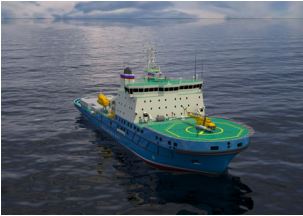
    Russian icebreaker

    Russia is building a new icebreaker in Finland, to be ready in 2015. The vessel is planned to be used in year-round operation in the Baltic Sea and in summer season in the Arctic seas. The vessel is able to operate in temperatures as cold as -40°С and the maximum icebreaking capability is 1.5 m.

    Arctech Helsinki Shipyard will build the 16 MW icebreaker with a total worth of the vessel about 100 million EUR. The contract has been awarded together with OJCS Vyborg Shipyard.

    The main tasks of the vessel are icebreaking and assisting of heavy-tonnage vessels in ice, towing of vessels and other floating structures in ice and open water. The vessel will also be used for fire fighting on floating objects and other facilities, assisting vessels in distress in ice and open water and also for cargo transportation.

    The vessel will measure 119.8 m in length and 27.5 m in breadth. The four main diesel generator sets have the total power of 27 MW. The total propulsion power is 18 MW consisting of two full-circle azimuth thrusters.

    Arctech Helsinki Shipyard Inc. specializes in arctic shipbuilding technology, e.g. building icebreakers and other Arctic offshore and special vessels. Arctech is a joint-venture, which is 50/50 owned by STX Finland Oy and Russian United Shipbuilding Corporation. The joint venture agreement was signed in December 2010. Arctech is located in Helsinki and has approximately 400 employees.

    Source

    Arctech

  • Huge interest in east-Greenland oil

    Huge interest in east-Greenland oil

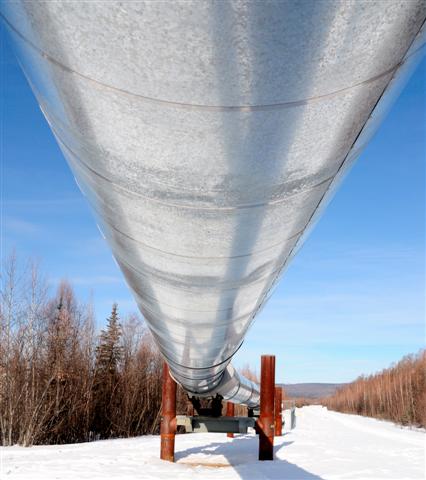
    Arctic Oil Pipeline

    Companies are queuing up to get a part of a potential oil boom in the waters off East Greenland.

    There is great interest in extracting oil off the coast as interest in the first preliminary round of tendering for the area shows.

    The Energy Ministry in Nuuk received 11 applications for exploration and exploitation of oil and gas in the Greenland Sea, according to Greenland self-government, Naalakkersuisut, in a press release. The deadline was December 15th.

    The number of applicants shows that there is competition for several license blocks that were offered. Forthcoming is an extensive evaluation and negotiation process before the best applications are selected.

    “The result of the licensing round is an important milestone in achieving a long-term and sustainable economy for Greenland,” says Ove Karl Bertelsen, a member of Naalakkersuisut.

    The area in the Greenland Sea covers 50,000 square kilometers. A total of 19 blocks were offered, ranging in size from 1752 to 3306 square kilometers.

    The offering process is divided into two rounds. The first is the so-called Kanumas-Group consisting of Statoil-Hydro, BP, ExxonMobil, Chevron, Japan Oil, Gas and Minerals National Corporation – and the state oil company Nunaoil.

    The second round is an open round where all companies are allowed to apply. The same terms and conditions apply for the two blocks.

    Source

    Jyllands Posten

  • Canada meets Sweden for Arctic Council

    Canada meets Sweden for Arctic Council

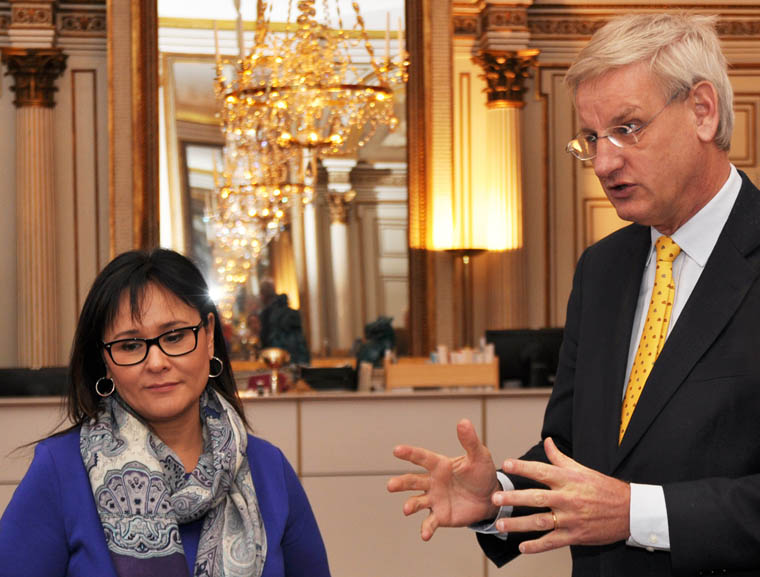
    Leona Aglukkaq and Carl Bildt at the press conference

    Canada will take over chairmanship in the Arctic Council in May 2013 from Sweden. The two countries have close cooperation for a smooth process when Canada takes its second chair of the council.

    Established in 1996, all eight Arctic States have held the Chair for the Arctic Council, with Sweden now completing the round.

    Sweden Minister for Foreign Affairs Carl Bildt met Canada’s Minister for the Arctic Council Leona Aglukkaq last week. Canada will serve as chair under Ms. Aglukkaq’s leadership, for the period 2013–2015. The work of the Arctic Council to protect the environment from oil spills, and Canada’s plans for its upcoming Chairmanship, were discussed at the meeting.

    Ms. Aglukkaq is now visiting the member states to introduce herself as the person who will lead Canada’s two-year chairmanship period. Tuesday it was the turn of Sweden and Minister for Foreign Affairs Mr. Carl Bildt.

    “We have worked to become more visible globally with regard to climate change, and to draw attention to the fact that climate change is occurring twice as fast in the Arctic than in the rest of the world. Awareness of this is now much greater in the global debate. This must be translated into political action, which takes a little longer. But I think we have made progress, for example on the issue of black carbon in the Arctic.” said Mr. Bildt.

    “Our priorities focus on development for people in the north: responsible resource development, safe shipping and sustainable circumpolar communities. The final priorities will be finalised when consensus has been reached in the Arctic Council at the Ministerial Meeting in Kiruna in May,” said Ms. Aglukkaq.

    During its chairmanship of the Arctic Council in 2011–2013, Sweden has worked to strengthen environmental protection during oil exploration in the Arctic. This has been achieved by developing safety standards based on best practice in the industry and negotiating an international agreement on cooperation in the event of oil spills. Sweden has also led efforts to establish the new permanent secretariat of the Arctic Council in Tromsø, Norway, which will open in May 2013, the Arctic Council website says.

    Sources

    Arctic Council

    Swedish Chairmanship

  • Iceland to establish a national oil fund

    Iceland to establish a national oil fund

    President Grímsson has been instrumental in Iceland's Arctic development

    The president of Iceland has announced that the country plans to set up a national wealth fund to safeguard revenue from potential oil discoveries as it opens up to exploration.

    The Dreki area will be explored further next year and high hopes are that reserves will be found in the area.

    Iceland has no history of oil exploration and no national oil wealth exists.

    Faroe Petroleum Plc (FPM), Valiant Petroleum Plc (VPP) and Petoro AS will be the first foreign explorers to search Icelandic waters for oil and gas. They are betting that the geology matches that of the Shetland Islands, where BP Plc and Total SA are drilling, according to Faroe.

    “Since we look at this resource as a national wealth, there will be a national wealth fund that would be established, but this is more of a general policy at this time,” Grimsson said in an interview with Bloomberg in London this week. Explorers “have to do their work. It will take some years.”

    Icelandis already working with the member states of the Arctic Council to prevent oil spills in the North Atlantic and share equipment and technology for search and rescue operations.

    Future oil industry regulations will be “within the framework of the Nordic as well as European cooperation,” Grimsson said. They will be modeled on Iceland’s geothermal and hydropower industry, he said.

    Source

    Bloomberg

  • Electronic Memories in St. Petersburg

    Electronic Memories in St. Petersburg

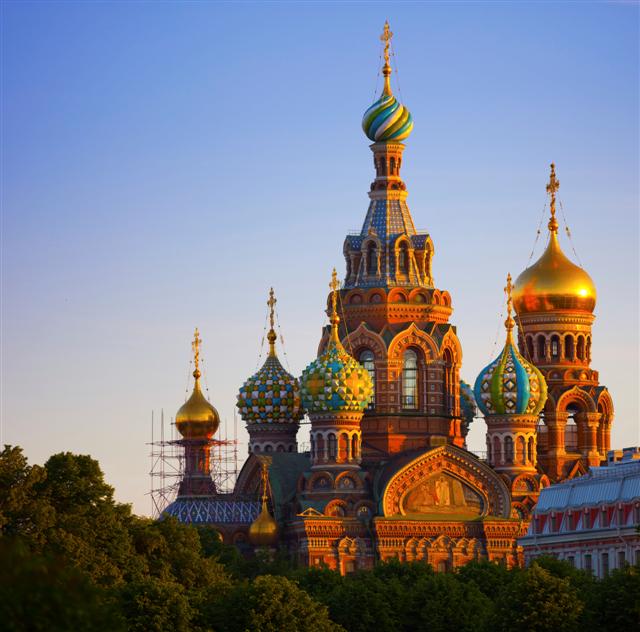
    The Church of the Resurrection of Jesus Christ

    St. Petersburg in Russia celebrates Arctic Days in December where the highlight is the conference “Electronic Memory of the Arctic – cultural communications of the circumpolar world”.

    The Conference has been organized by the joint effort of the National Library of Russia (NLR), Nonprofit partnership Center for the Preservation of Cultural and Historical Heritage “Electronic Memory of the Arctic” (NPP EMA), Center of International and Inter-regional Collaboration and is an important step towards creation of the “International Scientific Multifunctional Arctic Center in Salekhard.”

    December 12-15th are the Arctic Days, under support of the Arctic Council, RF Ministry of Foreign Affairs, RF Ministry of Culture and the Russian Geographical Society.

    The major event is the First international scientific and practical conference “Electronic Memory of the Arctic” taking place now on the premises of the National Library of Russia.

    The event is marked by the presence of the leading establishments of the world-wide Arctic community, including Arctic Council Secretariat, University of the Arctic (Norway-Russia), Arcticportal.org (Iceland), Arctic Centre (University of Lapland), The Academy of Finland, Foundation for Siberian Cultures, Scott Polar Research Institute (University of Cambridge), as well as of the representatives of the national libraries and archives of the Arctic Council countries, inter alia The National Library of Norway, The Sámi Archives (Norway), The Yukon Archives (Canada) and others.

    The Russian scientific community is to be represented by more than 20 institutions, among which there are The Library of the Russian Academy of Sciences, The Russian State Historical Archives, The Institute of the Peoples of the North (Herzen University), MGU, StPGU and other large specialised organisations.

    The Arctic days will see many interesting presentations and working sessions, click here to see the conference program.

    Sources

    Website of EMA

    Conference program

    Press release Electronic Memory of the Arctic

    Press release Arctic Days