Category: News & Press Releases

Arctic Portal News Portlet

  • Online seminar on reindeers

    Online seminar on reindeers

    Reindeers on the run

    A seminar entitled Civilisation of Reindeer and future of the Arctic is shown live over the internet today.

    The seminar has many interesting speakers and presentation and it is easily accessible here.

    Nomadic Herders and Industrial Development of Natural Resources is held in the Nomadic Herders Days in St. Petersburg, Russia.

    The venue is Saint-Petersburg State University, Faculty of Geography and Geoecology and the chair of the today is  Dr. Konstantin Klokov.

    Source

    ICR

  • Barents cooperation stressed at NArFU

    Barents cooperation stressed at NArFU

    NArFU conference

    Leading researches and experts, politicians, representatives from business and authorities are attending the conference “Cooperation in the Barents Euro-Arctic Region in the field of education and research as a resource for regional development” which began yesterday.

    The conference is held in the Northern (Arctic) Federal University (NArFU). In a welcoming address Britt Vigdis Ekelu, vice President of Education in the University of Tromsø said that it was “very interesting for us to discuss our common past.

    Fruitful and extensive cooperation in the fields of medicine, education, biology, student exchange has been established between our universities during the years of collaboration,” she said, and stressed close cooperation in the region.

    The first plenary session was held later with the framework of the conference. Sverre Stub, Ambassador, Ministry of Foreign Affairs of Norway spoke about “Norway’s views on the Barents cooperation”. Andrej Shalev, Honorary Council of Norway in Archangelsk reviewed the last twenty years of Barents Cooperation.

    President UArctic Lars Kullerud held a lecture about “Circumpolar cooperation in higher education and research: University of the Arctic”. Katja Sukuvaara, Senior Advisor, Joint Managing Authority, Kolarctic ENPI CBC Programme spoke about the Kolarctic program.

    “Cooperation gave us an opportunity to normalize relationships between the countries in a small amount of time,” Sverre Stub said. “And the most important thing is that this cooperation has been gradually developing and involved more and more people. Contacts between people became the main basis of Barents region cooperation and turned to be the greatest achievement.”

    Later a panel discussion was held on the theme “Northern Universities for the development of the region: new realities – new perspectives”. A dialogue between the university community and politicians”. The discussion focused on the issues of Barents region cooperation, new challenges of education and research in the North, the role of universities in the development of international relationships. Special attention was paid to the problems of Barents region, such as population outflow.

    The first day of the conference be considered as having been a successful event not only because of the quality of the lectures and but also because of its international character. The participants praised a constructive and motivating atmosphere during the sessions and informal talks, according to the Narfu website.

    Source

    NArFU

  • Two windmills rise in Iceland

    Two windmills rise in Iceland

    The windmills being moved

    Iceland will have two new windmills set up this winter. They were transported to its location this week, but Iceland has a short history of windmill use.

    Iceland is rich in energy and geothermal power is the major input, of 2/3 of Iceland’s energy production. Iceland imports around 14% of its energy sources.

    Hydroelectric power accounts for almost 20% of the energy production but hopes for the windmills are high. Energy company Landsvirkjun is setting up the windmills, each is 900kw but in total their energy production will be around 5,4 Gwh per year.

    They are 55m high and each blade is 22m in length. The total height is therefore 77m.

    In wind at 15m per second they produce its peak total, but if the wind goes below 3m they automatically stop to produce. It peaks in between 15m and 28m per second wind and stops again if the wind goes beyond 34m.

    German company Energon produced the windmills and will help with insertation in December. They should be able t run full speed in January.

    Energy production in Iceland in 2011 - Pie chart

    Landsvirkjun says on their website that the windmills are a part of research- and development program for sustainable energy in Iceland, and that several areas are well equipped for windmill use.

    Windmills are generally 0,5-1 kw and Landsvirkjun says that it is very well possible for Iceland to produce 50-100 Gwh per years with windmills within a few decades.

    Sources

    Mbl.is

    Landsvirkjun

    Iceland Statistics

  • New report on melting glaciers

    New report on melting glaciers

    Melting glacier in Svalbard

    A new report of current rates of changes of land ice in the Arctic and North-Atlantic region has been released. It shows that the Greenlandic glacier shrinks by 200 square kilometers every year.

    Helgi Björnsson, a glaciologist at the University of Iceland, says that the Greenlandic glacier is melting rapidly, at twice the rate in the last 10-20 years. The glacier tongue is also stretching further out in the ocean than ever.

    The report states that the world oceans are rising of 3,3 mm every year, and almost 1/5 of that is because of the Greenlandic glacier. Only 20 years ago it was 2 mm less per year.
    The report included research on ice in Greenland, Iceland, Svalbard and Scandinavia.

    Glaciers in Iceland are also getting thinner, by 1 meter every year. Since 1990 glaciers in Iceland has shrunk by 150 square kilometers.

    The report is available here, in the Arctic Portal Library.

    This is the first Interim report of current rates of changes of land ice in the Arctic and North-Atlantic region from the Nordic Centre of Excellence ‘Stability and Variations of Arctic.

    Land Ice’ (SVALI). SVALI is one of three Nordic Centres of Excellence within the Nordic Top Research Initiative sub-programme ‘Interaction between Climate Change and the Cryosphere’. The report (Deliverable D.1.1-7 in the project) is written by the partners in Theme 1 “Observing the present – baseline and changes”.

    The report is a step towards answering one of the key questions to be addressed within SVALI: How fast is land-ice volume in the Arctic and North-Atlantic area changing?

    The report is available here, in the Arctic Portal Library.

    Sources

    Rúv

    SVALI report

  • RAIPON´s recess causes public clamor

    RAIPON´s recess causes public clamor

    RAIPON

    At the beginning of November 2012, The Russian government sparked major reactions internationally, when the country’s Ministry of Justice ordered the closure of Russian’s indigenous peoples’ umbrella organization RAIPON, because of an “alleged lack of correspondence between the association’s statutes and federal law”.

    This topic brought much attention to the Haparanda SAO Meeting that took place 14th – 15th November 2012 in the northern part of Sweden. The Senior Arctic Officials and Permanent Participant Heads of Delegation, including both Russia and RAIPON, drafted a statement which SAO Chair Gustaf Lind read at the meeting.

    RAIPON´s vice-president Pavel Sulyandziga is determined to fight decision of Russian Federal Government as reported on the organization´s website.

    Support from social movements, organizations and human rights groups was announced as urgently needed.

    RAIPON played a central role in the international cooperation among indigenous peoples of the Russian Arctic and other Arctic states. Over the 20 years of its existence, RAIPON has worked actively to protect indigenous peoples’ human rights and legal interests, as well as to promote their right to self governance. RAIPON represented 41 groups of Indigenous peoples, in total some 300,000. They live in 60 percent of the whole territory of the Russian Federation from Murmansk to Kamchatka.

    Source

    RAIPON

  • Just one week away

    Just one week away

    Passenger plane

    Arctic Transportation Infrastructure: Response Capacity and Sustainable Development one important component of the Arctic Marine and Aviation Transportation Infrastructure Initiative (AMATII) – opens Monday, December 3 in Reykjavik, Iceland.

    International relationships are reflected in the workshop’s agenda and point to the global and systemic nature of Arctic transportation.

    The conference will treat about current activities in the Arctic in relation to marine and air transportation.

    The Arctic Maritime and Aviation Transportation Infrastructure Initiative (AMATII) is a platform for addressing critical needs in the Arctic’s aviation and maritime environment.

    The Initiative will approach Arctic air and maritime transportation policy, education, and research from various vantage points and will facilitate ongoing and increased communication and collaboration throughout the Arctic. It will serve as a coordination point for research and will facilitate technology transfer within and between Arctic nations.

    The Arctic Portal will play the active role in the project, developing the database to include the baseline assessment of maritime and aviation infrastructure that will accommodate continual update on Arctic maritime and aviation features.

    The Arctic Portal Interactive Mapping System will be used to illustrate the overlapping spheres of responsibility and capacity. It will be also used as an informative tool for the Arctic´s nations to understand and respond to both needs and capacity of Arctic maritime and aviation infrastructure.

    To read more about the conference and subscribe to the event, please click here. To browse the conference agenda, please access here. Information about workshop logistics, such as hotel and transportation are available here.

    Please, follow the links to read about the Arctic shipping and aviation challenges on the Arctic Portal Shipping Portlet.

    Source

    The Institute of the North

  • Biggest penguin ever discovered

    Biggest penguin ever discovered

    Penguins in Antarctica

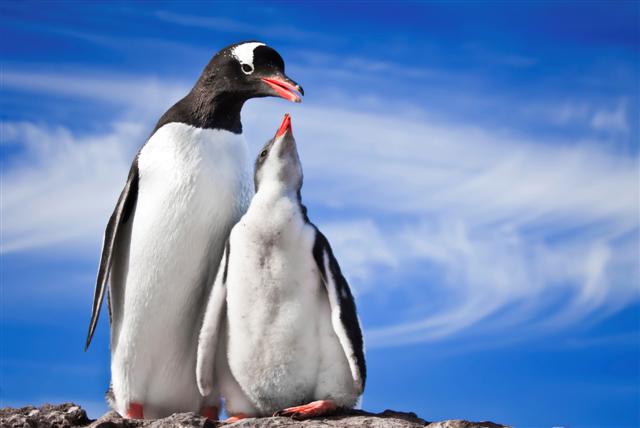
    Argentinian scientists have discovered the largest penguin ever. Paleontologists from the Natural Sciences Museum of La Plata province in Argentina announced this week that they have discovered fossils of 2 meter tall (6 1/2-foot) penguins in Antarctica.

    The extinct species were alive 34 million years ago, when Antarctica was developing ice sheets, and transitioning from the cooler Eocene epoch to the warmer Miocene.

    “This is the largest penguin known to date in terms of height and body mass,” Researcher Carolina Acosta told Agence France-Presse. The Emperor holds the modern-day record at 4 feet.

    Lead researcher Marcelo Reguero says their discovery will “allow for a more intensive and complex study of the ancestors of modern penguins.”

    The researchers will return during Antarctica’s summer to continue to search for more artifacts of the species, in hopes of gaining more insight into the birds’ physiology.
    Source:
    Globe and Mail

  • Big grant for Russian-Norwegian projects

    Big grant for Russian-Norwegian projects

    Arctic research

    Norway and Russia have strengthened their joint research ventures by putting around €1,5 million Euros to three projects.

    “The projects will enhance public knowledge of Norway and Russia. In the long term knowledge to facilitate better management of areas and benefit including petroleum industry,” according to the Research Council of Norway.

    The three projects that have received grants are “4DARCTIC: Structure and evolution of Arctic crust and mantle based on multi-scale Geophysical studies”, which is a joint project between the University of Oslo and the Institute of Petroleum Geology and Geophysics; “CLIMate variability and change in the Eurasian ARCtic in the 21st century”, a cooperation project between the Nansen Center and Voeikov Main Geophysical Observatory; “Combined effects of Petroleum and the Environment in bivalves from the Norwegian-Russian Arctic”, a joint project between the University of Tromsø and the Karelian Research Centre, RAS Institute of Biology.

    All the three projects are cooperation projects between scientists in Norway and Russia. The project partners are covering half of the expenses, the rest is covered by the Russian research foundation Russian Foundation for Basic Research (RFBR) and the Research Council of Norway is covering the Norwegian part, the BarentsObserver reports.

    “This research cooperation will give an important contribution to a holistic management of the sea and the resources in Arctic areas through a common knowledge base”, says the Research Council of Norway’s Director Arvid Hallén to the council’s web site.
    Source:
    BarentsObserver

    Research Council of Norway

  • Norway shows military presence

    Norway shows military presence

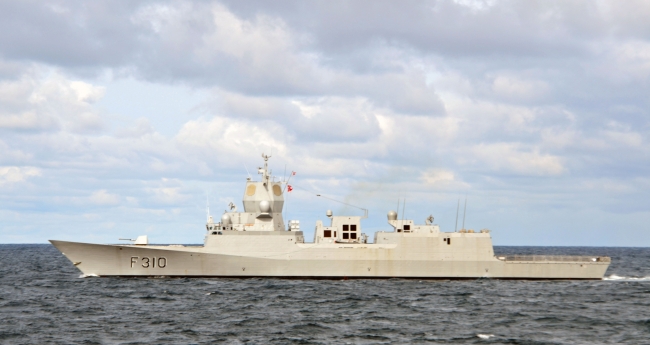
    KNM Thor Heyerdahl.

    Norway has decided to strengthen its security around Svalbard by sending its most modern warship to the archipelago.

    “Our main task is to show presence on Svalbard and in the surrounding waters”, Captain Per Rostad says to the Armed Forces’ web site.

    During the mission the frigate will conduct a series of drills, with other military units and the Norwegian Sea Rescue.

    Norway will send their best ship to Svalbard at least once a year but it has previously shown its presence when the Chinese icebreaker Xuelong sailed near Svalbard this summer.

    Source

    Barentsobserver

  • Over 300 people evacuated from oil rig

    Over 300 people evacuated from oil rig

    Oil rig in the northern sea

    Norway’s state-owned energy giant Statoil on Wednesday evacuated around 330 people from a North Sea platform off the coast of Norway after it began listing.

    “Around 330 people were evacuated and we’re halting the evacuation at this stage,” said Einar Knudsen, a spokesman for the Joint Rescue Coordination Centre Southern Norway. Just over 40 people were to stay on the rig for security work, he added.

    The Floatel Superior, effectively a floating hotel for staff working on the neighbouring Njord A production platform, was evacuated after the rig had tilted four degrees due to a leak in one of the ballast tanks, Statoil said.

    The rupture appeared to have been caused by a collision with an anchor.

    The Njord A itself, which lies about 50 nautical miles from land, is currently closed for maintenance, according to the Norwegian Petroleum Directorate.

    The rig was stabilized an hour later after other ballast tanks were partially flooded to balance it, but as a safety precaution all non-essential personnel, meaning the vast majority of the 374 people on board, were evacuated.

    “We normally have two layers of protection against leaks, and since there remained only one, we decided to bring non-essential personnel to safety,” group spokesman Ola Anders Skauby told AFP.

    “We take the situation seriously,” he said, adding that it was normal to prepare for a worst case scenario.

    Six helicopters were deployed to the area, in difficult weather, according to the rescue centre. Employees were airlifted from the Floatel to Njord A, Knudsen said.

    Source:
    The Local