Category: News & Press Releases

Arctic Portal News Portlet

  • Arctic Report Card 2012 is out

    Arctic Report Card 2012 is out

    arctic landscape

    The Arctic Report Cards produced by the National Oceanic and Atmospheric Administration (NOAA) are a source of reliable and brief information on the current state of the Arctic environment. The Arctic Council working groups CAFF and AMAP supported work on the 2012 Report Cards, which detail dramatic changes in the Arctic with record losses of sea ice and late spring snow.

    The Arctic Council, through the Arctic Monitoring and Assessment Programme (AMAP) and the Conservation of Arctic Flora and Fauna’s (CAFF) Circumpolar Biodiversity Monitoring Programme (CBMP), has contributed to the Arctic Report Card, an annual report released today by NOAA that monitors the often-quickly changing conditions in the Arctic.
    Click here to go to the Reports website.

    Full report is available here.
    The peer-reviewed report contains contributions from 141 authors from 15 countries. For this year’s issue CAFF’s CBMP developed and edited the terrestrial and marine ecosystem chapters in cooperation with others, while AMAP organized an independent peer-review process involving international experts.

    The Arctic region continued to break records in 2012—among them the loss of summer sea ice, spring snow cover, and melting of the Greenland ice sheet. This was true even though air temperatures in the Arctic were unremarkable relative to the last decade, according to the report.

    Major findings include:

    Snow cover: A new record low snow extent for the Northern Hemisphere was set in June 2012, and a new record low was reached in May over Eurasia.

    Sea ice: Minimum Arctic sea ice extent in September 2012 set a new all-time record low, as measured by satellite since 1979.

    Greenland ice sheet: There was a rare, nearly ice sheet-wide melt event on the Greenland ice sheet in July, covering about 97 percent of the ice sheet on a single day.

    Vegetation: The tundra is getting greener and there’s more above-ground growth. During the period of 2003-2010, the length of the growing season increased through much of the Arctic.

    Wildlife and food chain: In northernmost Europe, the Arctic fox is close to extinction and vulnerable to the encroaching Red fox. Additionally, massive phytoplankton blooms below the summer sea ice suggest estimates of biological production at the bottom of the marine food chain may be ten times too low.

    Ocean: Sea surface temperatures in summer continue to be warmer than the long-term average at the growing ice-free margins, while upper ocean temperature and salinity show significant interannual variability with no clear trends.

    Weather: Most of the notable weather activity in fall and winter occurred in the sub-Arctic due to a strong positive North Atlantic Oscillation. There were three extreme weather events including an unusual cold spell in late January to early February 2012 across Eurasia, and two record storms characterized by very low central pressures and strong winds near western Alaska in November 2011 and north of Alaska in August 2012.

    Sources
    Arctic Report Card

    Report video

    SWIPA

    Full report is available here.

  • Svalbard for petroleum activities?

    Svalbard for petroleum activities?

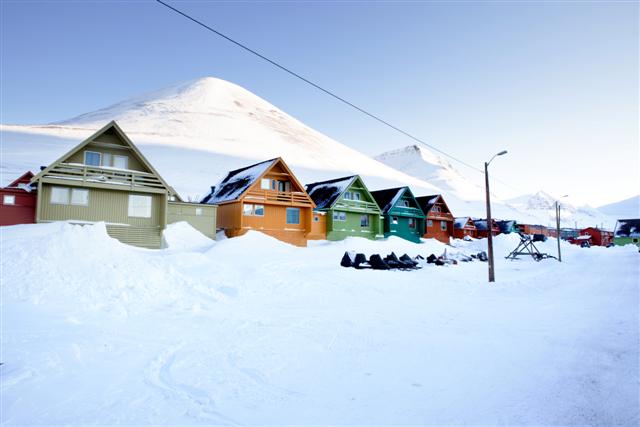
    Longyearbyen, Svalbard

    The Norwegian government is looking into the possibility of using Svalbard for oil and gas infrastructure. The unique nature of Svalbard has until now been thought to fragile for any kind of petroleum work.

    The increased petroleum activities in the northern seas are reaching Svalbard but it is said to be influenced heavily by geopolitics, politics, commercial interests and environmental protection.

    The Norwegian Ministry of Environment has asked for Svalbard to be evaluated as a world heritage site by UNESCO.

    In relation to that work, it will be assessed what impacts it would have on Svalbard to be any kind of use for petroleum activities in the northern Barents sea, these include logistics, supply, and land bases, says Eldbjørg Waage Melberg from the oil ministry.

    Oil analyst and former Secretary of State for Petroleum and Energy, Hans Henrik Ramm, believes it will be a huge mistake to look away from new business opportunities on Svalbard.

    „You must use balance different interests, including industrial opportunities. It is not reasonable to adopt protective measures to limit future choices, especially if it involves the transfer of decision making from Norway, as one does by seeking World Heritage status,” says Ramm.

    Norway produces coal in Svalbard but tourism and research are high on the agenda on the archipelago, as well as the Svalbard University Center.

    Sources

    Tekniske Ukeblad

    UNESCO

  • Next step in response to climate change

    Next step in response to climate change

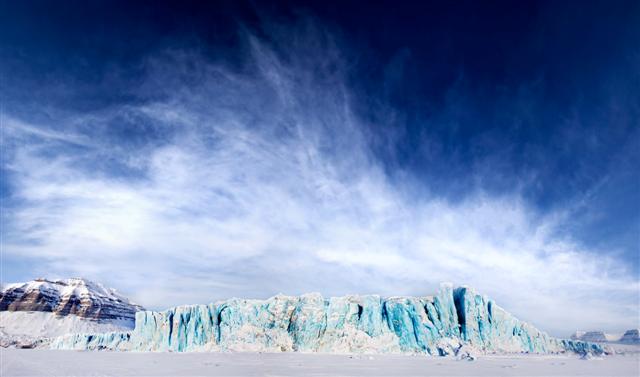
    Melting glacier in Greenland

    At the UN Climate Change Conference in Doha, Qatar (COP18/CMP8), governments have taken the next essential step in the global response to climate change.

    Countries have successfully launched a new commitment period under the Kyoto Protocol, agreed a firm timetable to adopt a universal climate agreement by 2015 and agreed a path to raise necessary ambition to respond to climate change. They also endorsed the completion of new institutions and agreed ways and means to deliver scaled-up climate finance and technology to developing countries.

    “Doha has opened up a new gateway to bigger ambition and to greater action – the Doha Climate Gateway. Qatar is proud to have been able to bring governments here to achieve this historic task. I thank all governments and ministers for their work to achieve this success.

    Now governments must move quickly through the Doha Climate Gateway to push forward with the solutions to climate change,” said COP President Abdullah bin Hamad Al-Attiyah.

    The Executive Secretary of the UN Framework Convention on Climate Change (UNFCCC), Christiana Figueres, called on countries to swiftly implement what has been agreed in Doha so that the world can stay below the internationally agreed maximum two degrees Celsius temperature rise.

    “I congratulate the Qatar Presidency for managing a complex and challenging conference. Now, there is much work to do. Doha is another step in the right direction, but we still have a long road ahead. The door to stay below two degrees remains barely open. The science shows it, the data proves it,” said Ms Figueres.

    “The UN Climate Change negotiations must now focus on the concrete ways and means to accelerate action and ambition. The world has the money and technology to stay below two degrees. After Doha, it is a matter of scale, speed, determination and sticking to the timetable,” she said.

    In Doha, governments also successfully concluded work under the Convention that began in Bali in 2007 and ensured that remaining elements of this work will be continued under the UN Climate Change process.

    The next major UN Climate Change Conference – COP19/ CMP9 – will take place in Warsaw, Poland, at the end of 2013.

    Sources

    COP18

  • Final remarks and project’s next steps

    Final remarks and project’s next steps

    AMATII logo

    Today, 6th of December 2012, the AMATII workshop (Arctic Transportation Infrastructure Response and Capacity and Sustainable Development in the Arctic) that for the past week has been taking place in the capital city of Iceland, comes to an end.

    The dialogue that has been taking place between representatives of public and private sector, policy makers and scientists, provided with better understanding of Arctic region and development of its maritime and aviation infrastructure.

    The matter of advanced economic development in the remote region in order to finance the development of Arctic infrastructure was highlighted. Funding infrastructure development in the High North has been recognized as a major issue for today’s policy makers.

    Gaps in knowledge were addressed by scientists from all of the Arctic states and future of the AMATII database as the main source of aviation and maritime information has been discussed. International instruments that are already in place should be used and employed by the project.

    The conference treated not only the current but also future activities in the Arctic in relation to maritime an aviation transportation sector.

    The Arctic Maritime and Aviation Transportation Infrastructure Initiative (AMATII) was a platform for addressing critical needs in the Arctic’s aviation and maritime environment.

    The Initiative approached Arctic air and maritime transportation policy, education, and research from various vantage points and facilitated on going and increased communication and collaboration throughout the Arctic.

    It was agreed that in the future, today’s initiative will serve as a coordination point for research and it will facilitate technology transfer within and between Arctic nations.

  • Marine disaster incident under AAMSR

    Marine disaster incident under AAMSR

    Walter & Duncan Gordon Foundation

    The third day of AMATII workshop takes place today in capital city of Iceland, Reykjavik. After small – group meetings that have been going on since Monday afternoon, specialists were able to define the lacking infrastructure among the Arctic states.

    Wednesday’s opened with the speech given by Liane Benoit and Sara French from Munk-Gordon Arctic Security Program.

    The speaker stressed out that the tragic events that took place in the Arctic have highlighted the desperate need for the knowledge and tools necessary to address emergency scenarios and adaptation plans.

    The Gordon Foundation was established to ensure northern voices were heard while leveraging this topic as a focus of research and as a tool for promoting research skills with the youth. The traditional knowledge participatory model will be central to bridging age-old methods of surviving on the land with the new realities of a North in transformation.

    The Walter and Duncan Gordon Foundation is a private, philanthropic foundation based in Toronto, Canada. The Foundation undertakes research, leadership development and public dialogue so that public policies in Canada reflect a commitment to collaborative stewardship of our freshwater resources and to a people-driven, equitable and evolving North. Over the past quarter century the Gordon Foundation has invested over $27 million in a wide variety of Northern community initiatives and freshwater protection initiatives.

  • Perspectives on public Arctic policies

    Perspectives on public Arctic policies

    The Arctic sea ice

    The first International Conference on Public Policy will be held in France in the summer of 2013. It is calling for abstracts for this interesting conference entitled Perspectives on public policies in the Arctic region.

    The conference website states that “developments in the Arctic have mostly been studied through defense studies, international relations, geopolitics, and to a lesser extent, economics. Public policies of Arctic states in the High North have attracted far less attention, with the exception of indigenous peoples rights.”
    The conference will run from the 26th of June until the 28th in Grenoble, France.
    The conference will see a panel analyzing and discussing these topics:

    1. To what extent climate change and the economic prospects in the Arctic have changed public policies
    2. To what extent public policies are limiting or motivating economic development, through legislation, infrastructure development, direct or indirect subsidization, particularly in the mining and hydrocarbon sector and in transport (shipping)
    3. The capacity to act by the elected representatives at the local level, and to analyze to what extent citizens and communities are engaged in the development of public policies
    4. How conflicting interests between economic sectors are considered (e.g. tourism versus mining, petroleum activities versus fisheries and traditional subsistence)
    5. How social cohesion between various categories of the population (indigenous/non indigenous, permanent/transient) appears as an issue in current public policies
    6. If public policies are shaped by regional frameworks of cooperation and international agreements and norms
    7. How Arctic policy making can be seen as an imaginary and symbolic construction.

    The abstracts are to be delivered by the 1st of February 2013. Comparative approaches of public policies in the Arctic are particularly welcome. To propose a paper an abstract of approximately 300 word should be sent directly to the chair of the panel, Cécile Pelaudeix (e-mail: cecile.pelaudeix@sciencespo-lyon.fr).

    Website of the conference.

  • Two working groups, one aim

    Two working groups, one aim

    Interactive Data Map

    Today, the 4th of December, Arctic Transportation Infrastructure Response and Capacity and Sustainable Development in the Arctic workshop brings together aviation and maritime specialists from eight Arctic states in order to discuss gaps in infrastructure around the remote Arctic.

    Two separated groups, during two hours sessions try to create terms that are going to be used internationally in future AMATII database. What is more, maritime and aviation working groups try to find the answer on what legal, regulatory and fiscal mechanisms facilitate inter-modal infrastructure investment.

    Mrs Sarah Barton, facilitator for maritime working group and Mr James Hemsath for the aviation will review and summarize team’s efforts in order to communicate the outcome to international and regional policy makers.

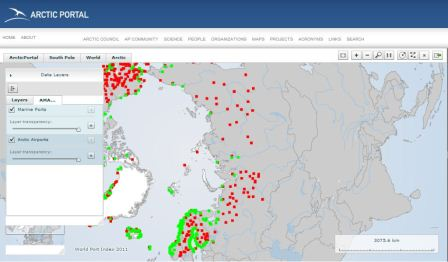
    Later today, participants will have a chance to view and evaluate the Arctic Port and Airport Database and web-based interactive map, which is the primary deliverable of this project. Subject matter expert input will help refine and strengthen this tool.

    The workshop will end with an interactive plenary session, discussing next steps and outlining areas of consideration for a Guidance Document, a deliverable for this Arctic Council project.

    The Conference will continue daily until Thursday.

  • Norway takes part in exploration in Iceland

    Norway takes part in exploration in Iceland

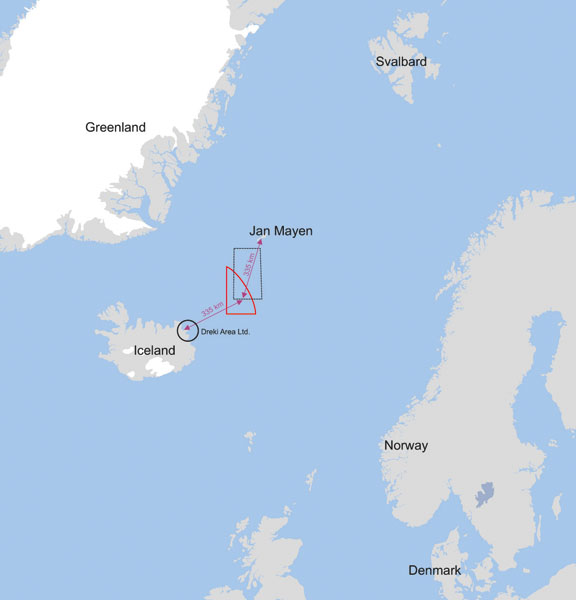
    The Dreki area on a map

    The National Energy Authority of Iceland (NEA) has today finished processing two applications for licences for exploration and production of hydrocarbons in the Dreki Area. The Ministry of Petroleum and Energy in Norway has today, 3 December 2012, notified NEA of their decision to participate in both licences to a 25 % share in accordance with the agreement between Iceland and Norway.

    NEA sought the opinions of the Ministry for the Environment and the Ministry of Fisheries and Agriculture in accordance with the hydrocarbons act and evaluated the opinions based on the applications and the work programmes involved.

    Furthermore, NEA made a careful evaluation of the technical and geological capacity of the applicants to handle the extensive activities associated with the licence. Finally, NEA studied the financial capacity of the parent companies of the applicants in order to ensure that the applicants have sufficient financial strength to conduct the activities for the long-term and can handle the corresponding environmental and safety elements.

    Following the processing of NEA of the applications

    Blue: Valiant Petroleum ehf. and Kolvetni ehf.  Red: Faroe Petroleum Norge AS, Branch in Iceland and Iceland Petroleum ehf.

    at the end of October, NEA made a decision to grant licences to Faroe Petroleum Norge AS, Branch in Iceland and Iceland Petroleum ehf., on the one hand, and Valiant Petroleum ehf. and Kolvetni ehf., on the other.

    Furthermore, the Norwegian authorities were notified of the decision, draft licences sent for their perusal and a formal answer requested on whether they intended to participate in the licences in accordance with the agreement between Iceland and Norway from 1981, which entails the right of Norway to participate in licences within the area of the agreement up to a 25 % share.

    The anticipated licensees have read the draft licences and submitted their comments, which NEA has taken into account as has been agreed by the parties involved. Norway has also participated in this process through the Ministry of Petroleum and Energy, i.e. gone through the draft licences and submitted comments to NEA.

    The Ministry of Petroleum and Energy in Norway has today, 3 December 2012, notified NEA of Norway’s decision to participate in both licences to a 25 % share in accordance with the agreement between Iceland and Norway.

    The licences cannot by issued before the Norwegian Parliament has approved the decision on the participation by the Kingdom of Norway through the State-owned oil company Petoro AS. Following this and the signing of the parties to the licences of their joint operating agreements, NEA will grant the licences, probably in the beginning of January of next year.

    A third application was received from Eykon Energy ehf. The processing of this application was delayed and the applicant given a respite until 1 May 2013 to find an additional participant in the licence that receives approval by NEA on having sufficient expertise, experience and capacity to undertake the licenced activities. NEA will take the application for final processing subsequent to receiving information on such a new participant in the application.

    Sources

    NEA

    Map of potential oil and gas areas

  • AMATII Workshop starts today

    AMATII Workshop starts today

    AMATII

    Monday, 3rd of December 2012 the workshop on Arctic Transportation Infrastructure Response and Capacity and Sustainable Development in the Arctic starts today in Hotel Natura in the capital city of Iceland – Reykjavik.

    The registration opens at 14.00 after which the small group brainstorming and crowd sourcing of definitions and terminology will take place.

    Arctic experts will meet in both plenary and work sessions to discuss infrastructure vis-à-vis response, technology and investment. Case studies and illustrative stories of northern aviation and marine infrastructure – contributed by participants – will serve to highlight the challenges of infrastructure development in the Arctic and its role in facilitating sustainable development.

    Participants will also have a chance to view and evaluate the Arctic Port and Airport Database and web-based map, which is the primary deliverable of this project. Subject matter expert input will help refine and strengthen this tool.

    The workshop will end with an interactive plenary session, discussing next steps and outlining areas of consideration for a Guidance Document, a deliverable for this Arctic Council project.

    Please, follow the links to read about the Arctic shipping and aviation challenges on the Arctic Portal Shipping Portlet.

    Source

    Institute of the North

  • EU in the Barents region addressed

    EU in the Barents region addressed

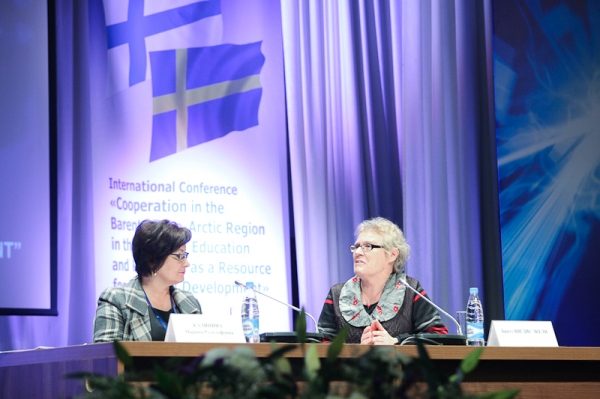
    NArFU conference discussions

    Leading researches and experts, politicians, representatives from business and authorities are attending the conference “Cooperation in the Barents Euro-Arctic Region in the field of education and research as a resource for regional development”.

    The conference is held in the Northern (Arctic) Federal University (NArFU). 

    The conference yesterday started with the plenary session. Ingvild Broch, Coordinator External Review made a short overview of cooperation in the spheres of education and research in the BEAR and pointed out some future challenges. She touched upon some important historical facts of international cooperation between Russia and Scandinavian countries. Marina Kalinina, Vice-rector of International cooperation, NArFU spoke about “University as a Driving Force of Change” and named the priority goals of the Northern (Arctic) Federal University.

    Harry Malinen, Senior expert of the University of Lapland and Lapland University Consortium (Finland) talked about the opportunities for the universities within EU framework. He paid special attention to existing international programs in the Barents region and EU relevant for those who work within research and education area. Anatoly Smirnov, the President of the National Institute for Research of Global Security finished the plenary session with his report about information technologies in the Barents region.

    Later this day a new cooperation agreement was signed between NArFU and Finnmark College. Ingvar Hauge, the senior advisor of Finnmark University College and Elena Kudryashova, the Rector of NArFU signed the document that marks the beginning of a new stage in the history of collaboration between two universities. This agreement aims to develop partnership in educational and exchange programs as well as other important issues.

    “Murmansk and Arkhangelsk universities are the most important partners for us in Russia. I would like to bring forward cooperation in the fields like language, tourism, economics, social works, management of natural resources. And the most important sight of this cooperation is perhaps student and academic exchange, what I think we can bring forward,” Ingvar Hauge commented.

    After a short coffee break the participants of the conference went on parallel sessions that focused on different issues of Barents region cooperation and its connections to cooperation with business and industry, challenges in education, and carrier paths in BEAR for youth.

    Consul General of Sweden in St.Petersburg Mr. Jan Nyberg, visited NArFU in the framework of the conference this day as well. During a working meeting with Elena Kydryashova and Marina Kalinina he discussed the issues of cooperation between Russian and Swedish universities. Jan Nyberg also had an excursion around the campus and had a meeting with the students and lecturers from the Institute of Philology and Cross-Cultural Communication, who study Swedish language.

    During closing plenary session the participants had a possibility to sum-up the result of intensive sessions’ work and to share their findings and proposals for the new Kirkenes Declaration.

    Source

    NArFU