Category: News & Press Releases

Arctic Portal News Portlet

  • New Icelandic guard ship celebrated

    New Icelandic guard ship celebrated

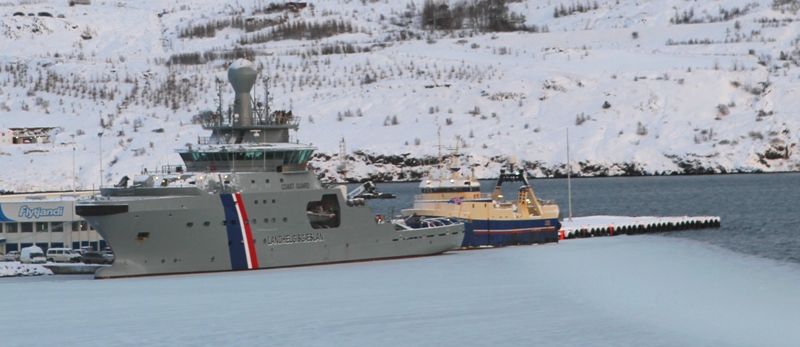
    Thor in the port of Akureyri.

    “No, congratulations to you!” one of the crew in new Icelandic guard ship Þór (named after the God of Thunder) told me as I walked aboard to have a look around. “This belongs to all Icelanders, and they should all be proud if it,” he said and smiled.

    And what a revolution it is!

    The ship is designed to be efficient in a number of challenging circumstances. It can serve as headquarters for national emergencies, it has an oil rinsing system built to prevent oil spills to disperse, it has a powerful system to fight fires and countless other activities.
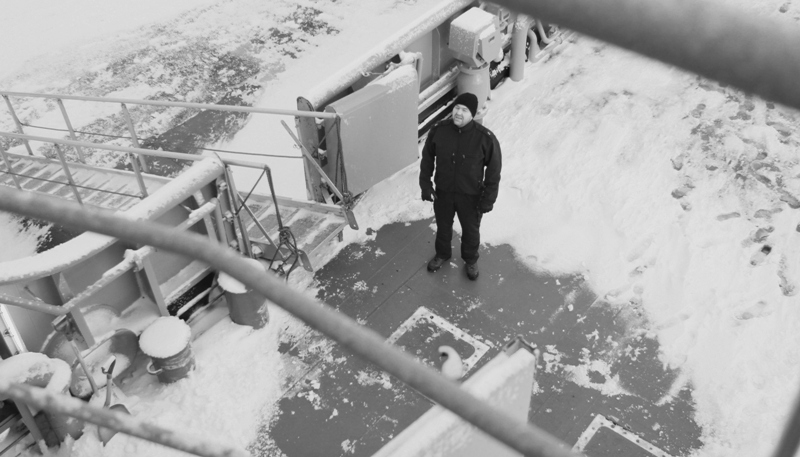
    Crew member on board

    It can give helicopters fuel; it can measure depth and search underwater, can carry up to six containers, cars and provide electricity to land if needed.

    “Yeah, its taken a while to learn all of the things we need to learn on a new ship,” a crew member admitted.

    It also has a gun, but as the captain said, “it’s mostly for decoration. I think it is from World War 2!” The cannon is active, but its role is more symbolist than for usage. The guard ship is therefore mostly unarmed.
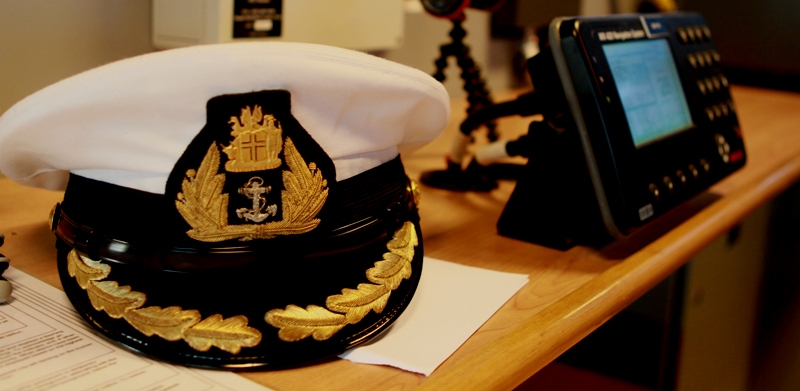
    Property of the Captain

    The shape is a tow boat, and the impressive thickness of the tow wires is actually built to tow up to 250 tons. The complex system also allows the ship to GPS-lock in a position with another ship, for example staying North-East and 70 meters from another ship.

    The ship is 93.80 meters long, 16 meters wide, 32 meters high and 3920 tons. Its maximum speed is 19.5 knots.

    It is specially built for sailing in ice covered waters, the strength is 1B (1A Super is for 1.0 m thick ice, 1A for 0.8m and 1B: 0.6 m. thick ice.
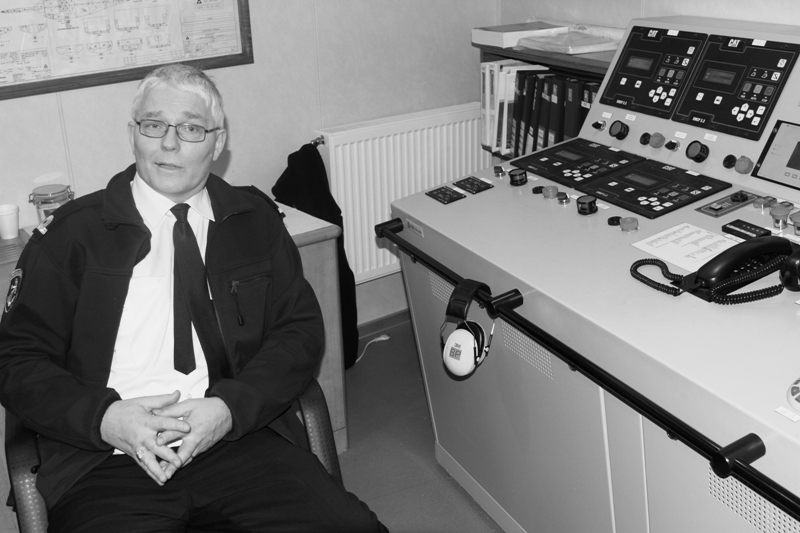
    Chief engineer at the coast guard ship Thor

    Increased shipping around Iceland meant that a new ship was a necessity. With the Northern Sea Route increased traffic, this is a great addition to the Icelandic fleet.

    It can help monitoring and with search and rescue in the Arctic Ocean. With Iceland also drilling for oil in the Dreki Area, a guard ship is essential, especially if production will begin in the area.

    The multi-tasking ship brings a smile to the Icelandic coast guard, and the celebration by going around Iceland, opening it up for the people, shows their pride.

    “This ship is truly a revolution,” the captain proudly states. And rightly so.
  • Climate change leads to starving dogs

    Climate change leads to starving dogs

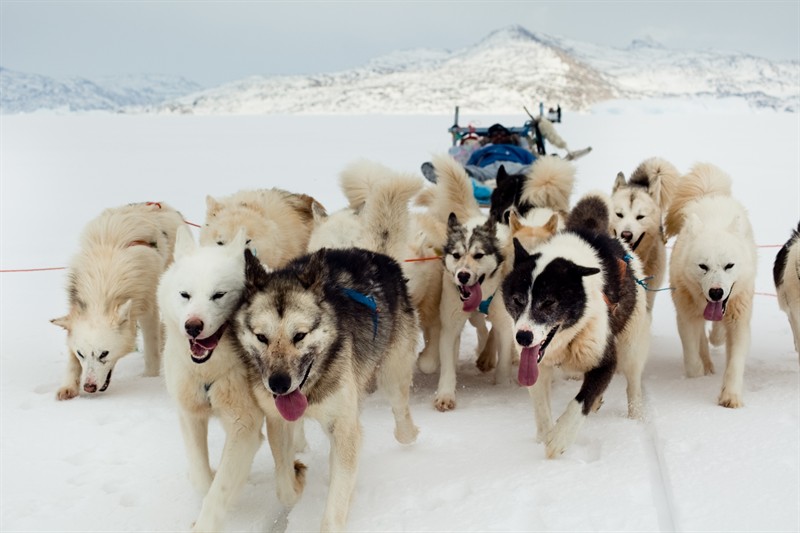
    Sled Dogs in Greenland

    Lack of ice is hindering hunting in Greenland. Humans are not the only one who rely on hunting in, the dogs in Qaanaaq are starving.

    This led to animal friends all over Greenland sending dog food for up to 500 dogs in Qaanaq.

    “We are doing this to help animals in need, weather it is in Nuuk or in Qaanaaq,” Susanne A. Markdal, president of Animal Friends of Greenland, told the Greenlandic Radio.

    She also hopes that more organizations will join in for the cause.

    “We expect this to feed the dogs for a few days but that is not enough. We hope more will join us,” she said.

    The weather and climate change are causing problems in Greenland. Five years ago the sea ice had frozen in early november, making hunting for dog food easy, hunting both seals and fish.

    This year it is unforseen when the ice will freeze.

    The people of Qaanaaq are hoping for a bigger quota of walrus in order to help them solve the problem. The annual quota of 64 animals is almost over.

    Source: Mbl.is and KNR.

  • New laws on the Northern Sea Route

    New laws on the Northern Sea Route

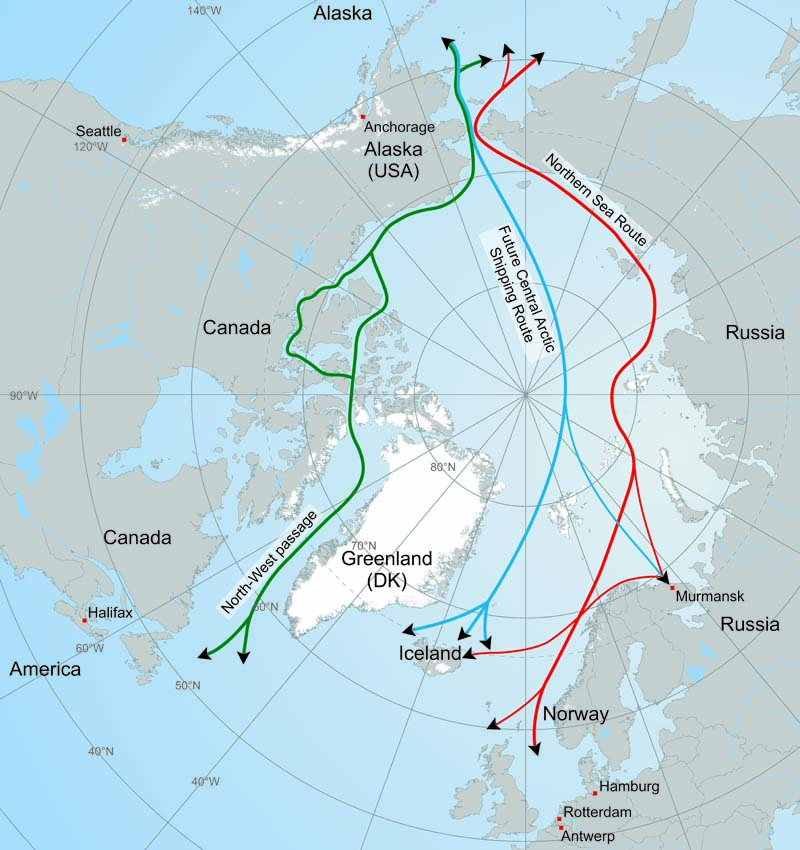
    Map of the Arctic Shipping Routes

    The Ministry Transport in Russia has introduced a new bill regarding “state regulation of merchant shipping in the waters of the Northern Sea Route. The website of the Ministry reads that Minister of Transport, Sergey Aristov, introduced the bill in Duma.

    This will be the first law on the sea route, adding to international law like UNCLOS. Read more about shipping governance here and see the UNCLOS agreement here.

    Russia plans to introduce new specialized organizations for this purpose. Transport operators will have the same access to the Northern Sea Route according to the bill which has articles on navigation, environmental protection and icebreaker assistance.

    This will ensure modern infrastructure that provides safe navigation of vessels in the Arctic seas.

    The bill has not been passed yet but the laws will take effect as soon as possible.

    The Northern Sea Route is in Russian waters, all the way from Murmansk to the Bering Strait.

    Sources: BarentsObserver and Ministry of Transport website.

  • Big hope for oil in Dreki Area

    Big hope for oil in Dreki Area

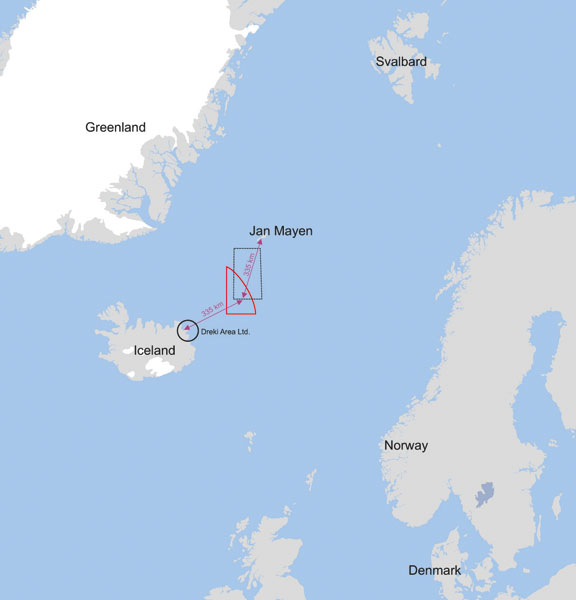
    Map of the dreki area

    New research strengthens the belief that there is oil in the seabed around Jan Mayen.

    Jan Mayen is a Norwegian archipelago north of Iceland. The Map shows the EEZ around Jan Mayen, which Norway is entitled to. However, the Dreki Area is also within Iceland’s jurisdiction so the country could benefit if oil is found.

    “The samples from the seabed around Jan Mayen is stunning, the oldest bedrocks are 260 million years old. The analysis of the material is surprising,” Sissel Eriksen, exploration director of Norwegian Petroleum Directorate told Geo365.no.

    “We had hoped, but not expected, to find so ancient sedimentary rocks around Jan Mayen. The influence of volcanic rocks in the area is less than we previously thought – volcanic rocks generally have no potential for oil and gas. But this means we have rocks that may contain material that forms the oil and gas. Two important prerequisites for potential petroleum deposits are thus met,” says Eriksen.

    The expedition was in July this year with agreement with Icelandic authorities. The samples were taken from both the Icelandic and Norwegian side of the Jan Mayen ridge.

    Environmental impact assessment will be next in line for the oil research in the Dreki area.

    Source: Geo365.on

  • PhD course in Abisko on snow

    PhD course in Abisko on snow

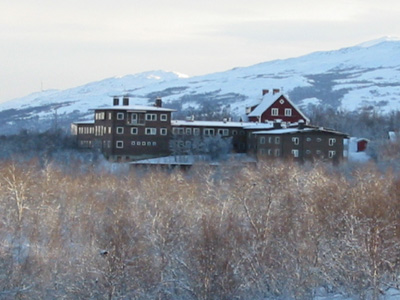
    Abisko

    The Abisko Scientific Research Station introduces a PhD training course on multidisciplinary issues related snow and climate change effects on it. “Snowtalks” will be held on the 19th of March til the 23rd of 2012.

    It is held in a co-operation with University of Arctic Thematic Networks on Global Change and Arctic Medicine.

    There are four topics for this course:

    1. Long-term environmental changes (climate, permafrost, feed-back mechanisms, ecology).
    2. Changes in snow, what snow and ice means to Sámi and impacts of changes in snow.
    3. People’s health and wellbeing, infections, injuries and security, genetics, adaptation to climate change.
    4. Adaptation to climate change, sustainable land and resource use.

    The course includes student presentations and assignments which will be informed in second circular. The course also includes outdoor activities. Students will be awarded 5-6 ECTS of completion of the whole course with the presentation (short presentation = 5 ECTS, long presentation with written abstract 6 ECTS).

    The course is funded by Nordforsk Top-level Research Initiative “Effect studies and adaptation to climate change” as the fourth course organized by the Nordic Network “People and Ecosystems in a changing world”. The participation for the whole week will give PhD students certificates for gaining credits in their home organizations. Nordic PhD students are asked to apply for free participation including the travel grant, free admission and free accommodation when submitting the registration form.

    Registration opens at course website in January 2nd, 2012, deadline February 17th 2012. Number of PhD students for the course is limited to 20.

    The course is tought in English.

    University of the Arctic

  • Gold and Thorium found in Tromsö

    Gold and Thorium found in Tromsö

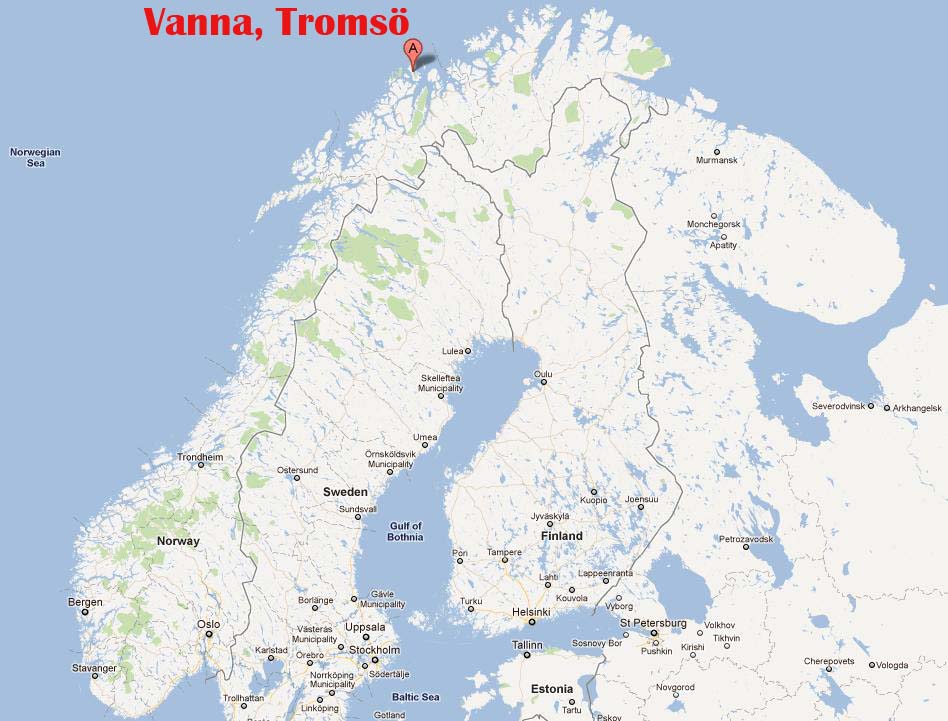
    Map of Vanna, Tromsö

    High gold prices have led to extensive search for the material. In northern Norway a new gold discovery could become very valuable, but the expedition not only found gold.

    In Vanna in Tromso, Norway, industrial chemicals were newly found; one of them is Thorium, a rare earth element.

    Thorium is a natural radioactive chemical element which countries plan to use for their nuclear power for various reasons, including its safety benefits, its high absolute abundance and relative abundance compared to uranium.

    It was discovered in 1828 and named after Thor, the god of thunder.

    Other material includes copper, platinum, nickel, zinc, lead and especially gold.

    Airplanes and helicopters were used for the studies the found was confirmed with further studies.

    Although the discovery has been made, there is no confirmation as of yet if production in the area will begin. Despite a lot of interest in the area, the amount still has to be calculated more accurately, the availability, distance to markets, capital, environmental, local interests, and many more will have to be taken into consideration first.

    Source: Aftenposten

  • Arctic shipping season over

    Map of The North Eastern Sea Route

    The Northern Sea Route shipping season is now over. To much ice in the Arctic ocean hinders any more shipping.

    This is the longest season ever in the route, one month longer then last year.

    The Perseverance was both the first and last vessel this year to go the route, the first one was the 29th of June and the last one today.

    The ship transported stable gas condensate from Murmansk in Russia to China, with the help of a Russian icebreaker.

    Russia’s Ministry of Transport believes cargo transport through the NSR will increase from 1,8 million tons in 2010 to 64 million tons by 2020.

    Source: Barentsobserver

    Click here to read more about the Northern Sea Route.

  • Arctic Portal and Bioviversity in Arctic waters site opens

    Arctic Portal and Bioviversity in Arctic waters site opens

    Arctic Portal news

    Arctic Portal is proud to introduce its latest project, about biodiversity in Arctic waters. In cooperation with the Fisheries Science Center of the University of Akureyri, Vistey has opened.

    Click here to take a look at the site, which is available in Icelandic and a large part in English. The translation is a work in progress to be completed soon.

    The purpose of the project is to educate and introduce the unique ecosystem of the Arctic waters.

    The possibilities of the project are huge but the first step is Vistey, about the biodiversity in Eyjafjörður fjord, in the Northern part of Iceland. Akureyri is located in Eyjafjörður, where the Arctic Portal headquarters are.

    The website is designed, programmed and hosted by Arctic Portal. The Fisheries Science Center provided the material and diver Erlendur Bogason from Strytan.is provided the photographs and the videos.

    The site is a work in progress and it will be constantly updated with new material.

    The future holds more locations in the Arctic for similar projects, finding these locations is a work in progress.

    Click here to take a look at Vistey.

  • New source for science news

    Science Nordic website

    Science Nordic is a newly opened independent website for science news in english from the Nordic countries. The web site is a welcomed forum for Arctic research available in English.

    ScienceNordic is the result of a joint effort from two well-established science news services in the region, Forskning.no in Norway and Videnskab.dk in Denmark, who work in close collaboration with partners in Sweden, Finland, Iceland, Greenland, the Faroe Islands and Åland.

    The site covers everything from human sciences to natural science, health and technology.

    On the site now are articles on things like the connection between glaciers and the brain and another and many others.

    The site wants to rech out to the research community across the globe: researchers, students, the business sector, innovation clusters, international institutions and media – along with anybody else whose heart and mind is moved by science.

    Click here to visit Science Nordic.

  • Polar bears a special concern

    Polar bears a special concern

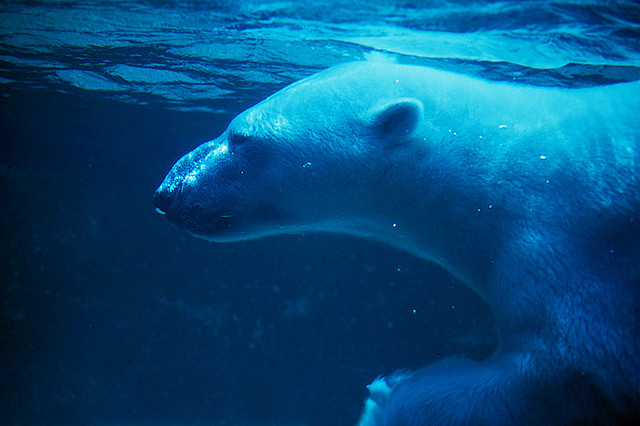
    Polar bear swimming underwater

    Canada will take special measures to protects its polar bears. Federal Environment Minister Peter Kent has declared the polar bear a “species of special concern”.

    Officials will now create a management plan in hopes of easing human threats to the species.

    “Canada is home to two-thirds of the world’s polar bear population and we have a unique conservation responsibility to effectively care for them”, Kent said.

    Currently, about 534 polar bears are hunted each year in Canada but the population is around 15.500.

    Source: NTN24