Category: News & Press Releases

Arctic Portal News Portlet

  • Surprising amount of methane found

    Surprising amount of methane found

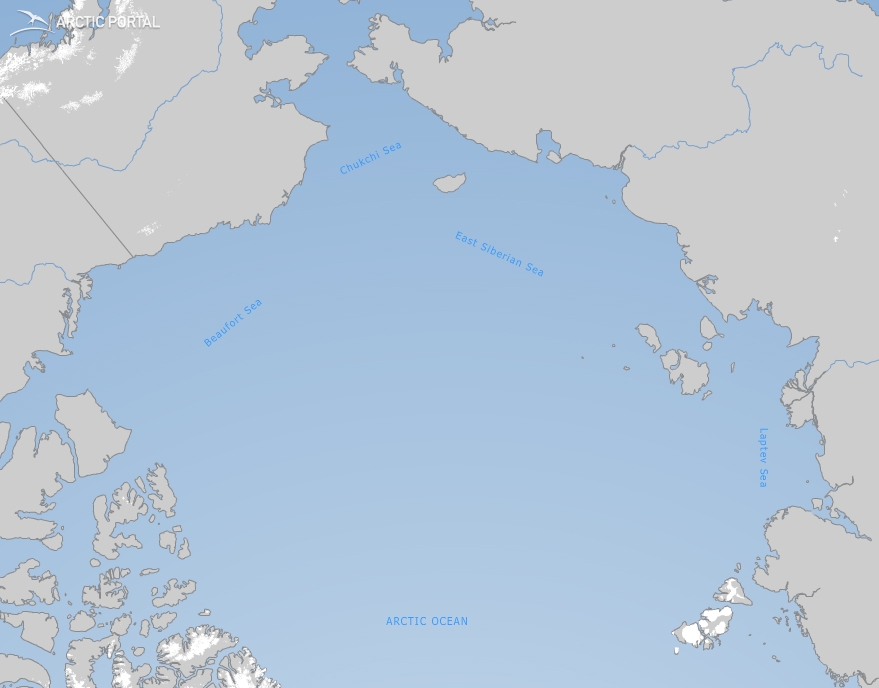
    Map of The Laptev Sea

    Russian scientists are baffled after finding plumes of methane in the Arctic Ocean. The scale and volume of the methane was a huge surprise to the researchers.

    The team was doing research in the East Siberian Arctic Shelf, in the Laptev Sea. The methane, a greenhouse gas 20 times more potent than carbon dioxide, was released from the Arctic seabed.

    Igor Semiletov, of the Far Eastern branch of the Russian Academy of Sciences, said that he has never before witnessed the scale and force of the methane.

    “Earlier we found torch-like structures like this but they were only tens of metres in diameter. This is the first time that we’ve found continuous, powerful and impressive seeping structures, more than 1000 metres in diameter. It’s amazing,” Dr Semiletov said in the Independent.

    “I was most impressed by the sheer scale and high density of the plumes. Over a relatively small area we found more than 100, but over a wider area there should be thousands of them.”
    Source: The Independent

  • Antarctica research proposals requested

    Antarctica research proposals requested

     InBev-Baillet Latour

    Doctoral and post-doctoral researcher anywhere in the world (under 35 years old) are invited to propose research project to the InBev-Baillet Latour Fund, which will we granting 150.000 Euros to the projects.

    Call for Proposals has the deadline of 1st of March in 2012.

    This year’s Call for Proposals is restricted to the following disciplines: glaciology, microbiology (excluding marine microbiology), and geology.

    The research activities are to be carried out at, or in the vicinity of, the Princess Elisabeth Antarctica research station located in the Sør Rondane Mountain Range, Dronning Maud Land, East Antarctica.

    International Polar Foundation

  • Amazing 100 year old photos from Antarctica

    Amazing 100 year old photos from Antarctica

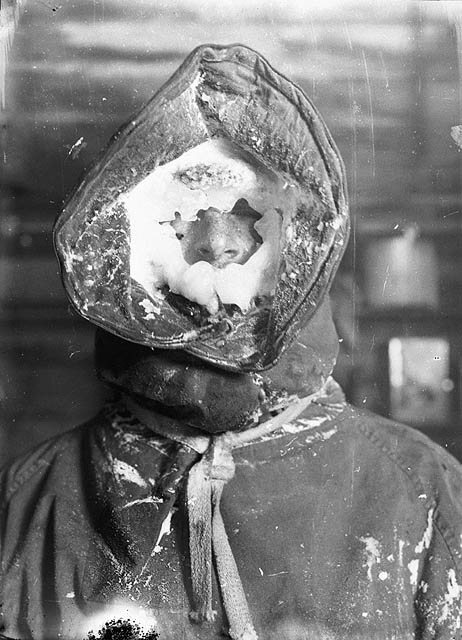
    A man with an ice mask

    As reported here on Arctic Portal today is 100 years since Roald Amundsen step foot on the South Pole, the first person to do so.

    At the State Library of South Wales amazing photographs from Antarctica, 100 years old, are stored.

    The pictures were taken by Frank Hurley in an Australian expedition in 1911. The pictures are diverse and range from landscape photos to pictures of humans. The expedition spent three years at the South Pole but did not go to the Pole itself.

    Its only around 200 years since Antarctica was first seen by humans and thr Australian expedition was one of the first to really explore the region.

    The photos are a unique source from the time  and can be seen here on this website.

    Radio operator Arthur Sawyer

  • 100 years from Amundsens South Pole trip

    100 years from Amundsens South Pole trip

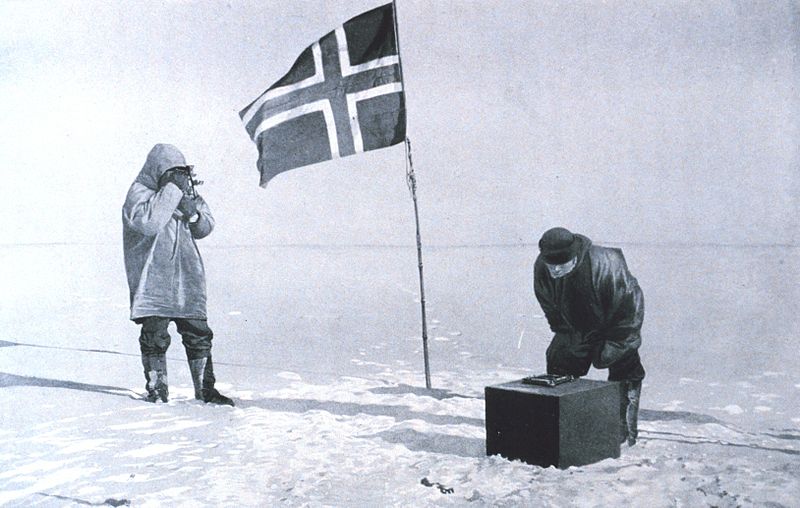
    Amundsen on the Pole

    Today marks the 100 year anniversary of Norwegian explorer Roald Amundsen being the first person to reach the South Pole. Celebrations in Antarctica will last over a month.

    Norways foreign minister Jens Stoltenberg has travelled to Antarctica because of this occasion and has spent his time skiing around the pole and talking to people working on site.

    He also unveiled an ice sculpture of Amundsen. “This is one of the biggest achivements of mankind,” Stoltenberg stated.

    The plan is to welcome an expedition led by Vegard Ulvang, a six time Olympic medalist for cross country skiing which travelled the same route as Amundsen. The group has had a rough time and it is unclear if they will reach the south pole today.

    Amundsen famously beat Robert Scott to the pole by a few weeks, and the celebrations at Antarctica will continue until January, the date Scott reached the pole.

    With amundsen were Helmer Hanssen, Sverre Hassel, Olav Bjaaland og Oscar Wisting. They reached Antarctica in January, the same time as Scott. But their expedition was thought to be better organized, and they used dogsleds whilst Scott used horses.

    Click here to read about Amundsens trip.

    Source: Reuters

  • Canada first to withdraw from Kyoto

    Canada first to withdraw from Kyoto

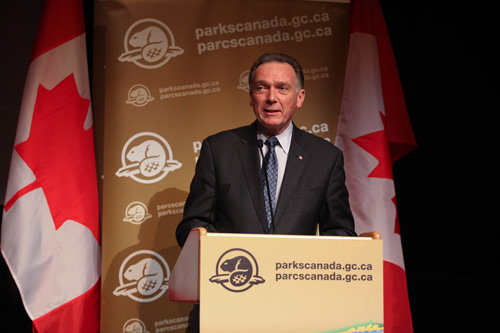
    Peter Kent minister of the environment

    Canada has announced it will withdraw from the Kyoto protocol. Peter Kent, minister of the environment, confirmed this last night.

    Canada will be the first country to withdraw from the global treaty. “It does not represent a way forward for Canada,” Kent said.

    The Kyoto Protocol was established in Japan in 1997 and restricts emissions of pollutants and fights climate change by more means.

    He said meeting Canada’s obligations under Kyoto would cost $13.6bn (10.3bn euros): “That’s $1,600 from every Canadian family – that’s the Kyoto cost to Canadians, that was the legacy of an incompetent Liberal government”.

    Kent also critizised that USA and China were not a part of Kyoto and therefore greenhouse emissions would continue to rise.

    He also said that the text of the Durban agreement agreed this weekend “provides a loophole for China and India”, it represents “the way forward”.

    Source: BBC

    See also: New climate deal at COP17


    New climate deal at COP17

  • Polar bear eating own cub pictured

    Polar bear eating own cub pictured

    polar bear cub

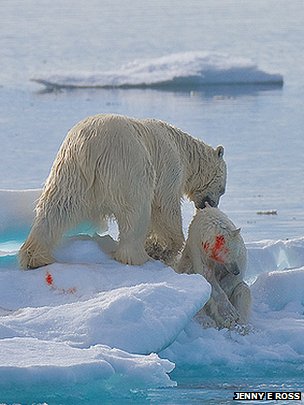
    Pictures of a polar bear dragging its own cub after killing it has shook many. The telling pictures by nature photographer Jenny Ross were published yesterday.

    She took the pictures in Svalbard but polar bears are known to kill their cubs for food if everything else fails.

    The actions are not common and have not been filmed often.

    “This type of intraspecific predation has always occurred to some extent. However, there are increasing numbers of observations of it occurring, particularly on land where polar bears are trapped ashore, completely food-deprived for extended periods of time due to the loss of sea ice as a result of climate change,” she told BBC News.

    Jenny was on a boat with here telephoto lens but did not realize the bear hd its cub until she was close.

    “As soon as the adult male became aware that a boat was approaching him, he basically stood to attention – he straddled the young bear’s body, asserting control over it and conveying ‘this is my food’,” she said.

    Source: BBC

    See also: Jenny Ross’s website.

  • New climate deal at COP17

    New climate deal at COP17

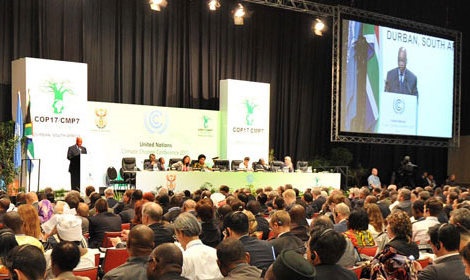
    COP17 - From the meeting in Durban

    “Today, we saved tomorrow,” the chair of the UN Climate talks in South Africa stated, after lengthy negotiations led to a new climate agreement.

    COP17 was extended from Friday and after more talks overt the weekend the agreement was reached late on Saturday.

    This means that the European Union will follow the request of developing countries to place its current emission-cutting pledges inside the legally-binding Kyoto Protocol.

    Talks on a new legal deal covering all countries will begin next year and end by 2015, coming into effect by 2020. Management of a fund for climate aid to poor countries has also been agreed, though how to raise the money has not.

    South Africa’s International Relations Minister, Maite Nkoana-Mashabane, said. “We came here with plan A, and we have concluded this meeting with plan A to save one planet for the future of our children and our grandchildren to come. We have made history.”

    The EU and India had a feisty battle over the “roadmap” for a new global deal. India did not want the deal to be legally binding but it was resolved in the end with the deal including “legal force”.

    The big four countries, Brazil, South Africa, India and China felt they were pressured to much. The tight timetable and excessive legality was a problem for them.

    India called for equity and it believes in maintaining the current stark division where only countries labelled “developed” have to cut their greenhouse gas emissions. Western nations, she said, have not cut their own emissions as they had pledged; so why should poorer countries have to do it for them? Xie Zhenhua, head of the Chinese delegation, agreed.

    A management framework was adopted for the Green Climate Fund, which will eventually gather and disburse finance amounting to $100bn (£64bn) per year to help poor countries develop cleanly and adapt to climate impacts.

    Source: BBC
    COP17 website


  • Greenland rises after melt

    Greenland rises after melt

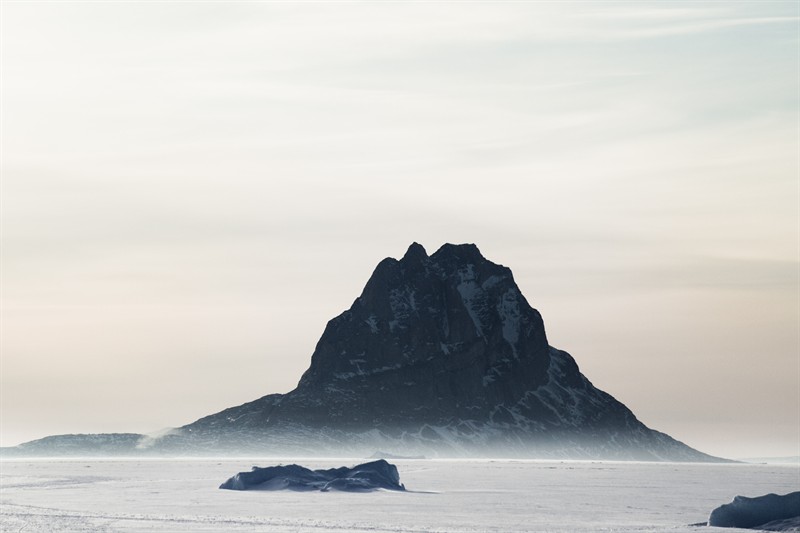
    Foggy peak in Uummannaq, Greenland

    Greenland is rising from the sea. A new study released on Friday shows a startling revelation to scientists who study global warming.

    Scientist from Ohio State University used a network of high profile GPS stations to measure the uplift. The results show that the rate of ice loss has accelerated in southern Greenland by 100 billion tons.

    Michael Bevis led the exploration. “Pulses of extra melting and uplift imply that we’ll experience pulses of extra sea level rise,” he said about the results.

    This means the sea has risen and splashed further, and with more power, on the ice which then melts faster. He states that this is partly due to global warming.

    Previous studies have recorded measurements indicating that as that ice melted away, the bedrock beneath it rose. In some places the land rose 5cm in only 5 months. The medium rise was 0.5 cm.

    Source: The State Column

  • Iceland stands by its name

    Iceland stands by its name

    Iceland, covered with snow and ice.

    Iceland showed last week why it is indeed ice-land. This amazing photograph taken by a NASA satellite is from the Earth Science department of the University of Iceland.

    The picture was taken the 9th of December at 12.58.

    The freezing temperatures last week went down to -27 in Northeast Iceland, in Mývatn. The record low temperature is for Iceland is -38, the year 1918 often dubbed the “Frosty Winter”.

    The image, which you can expand by clicking, shows that sea ice is stretching from the North to Iceland.

    Only a few days later the temperature was above 0 again.

    This truly is Iceland.

    University of Iceland
    NASA

  • Promising tests for new wave energy device

    Promising tests for new wave energy device

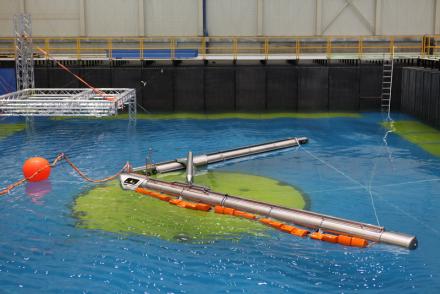
    New Wave Energy Device

    Danish researchers believe they have a breakthrough in tidal power, using the waves of the ocean to generate energy.

    Weptos is a small power plant which lies on the ocean, tied to the ocean bed. The waves move flaps on the two arms of the device which spin an axel, which then generates the power.

    Each machine is a separate unit, so they are very easy to move around, adjust and fix.

    Each devise also moves its two arms as the weather conditions change. In severe weathers it narrows meaning it is more stable and does not lose its energy-making capabilities.

    The device is also scalable, which means the bigger the unit, the more energy, up to a certain degree of course.

    In total over 200 tests has looked “exceedingly promising,” according to the developers.

    “I think this unit has a very good chance of making a breakthrough in this field,” says Jens Peter Kofoed, an associate professor at Aalborg University’s Department of Civil Engineering, where Weptos is being developed.

    Previous attempts to make profitable wave power plants have faltered because they have not met the three vital parameters: the ability to turn waves into electricity, a robust construction to withstand the impact of powerful waves, and relatively low construction and maintenance costs.

    The next version will be 10-15 size the prototype, which is only a medium sized one to the envisaged final version

    Source: Science Nordic

    Video about the device.

    http://www.youtube.com/watch?v=kmJpCoFnEsY&feature=player_embedded#!