Category: News & Press Releases

Arctic Portal News Portlet

  • Warm summer means cold winter

    Warm summer means cold winter

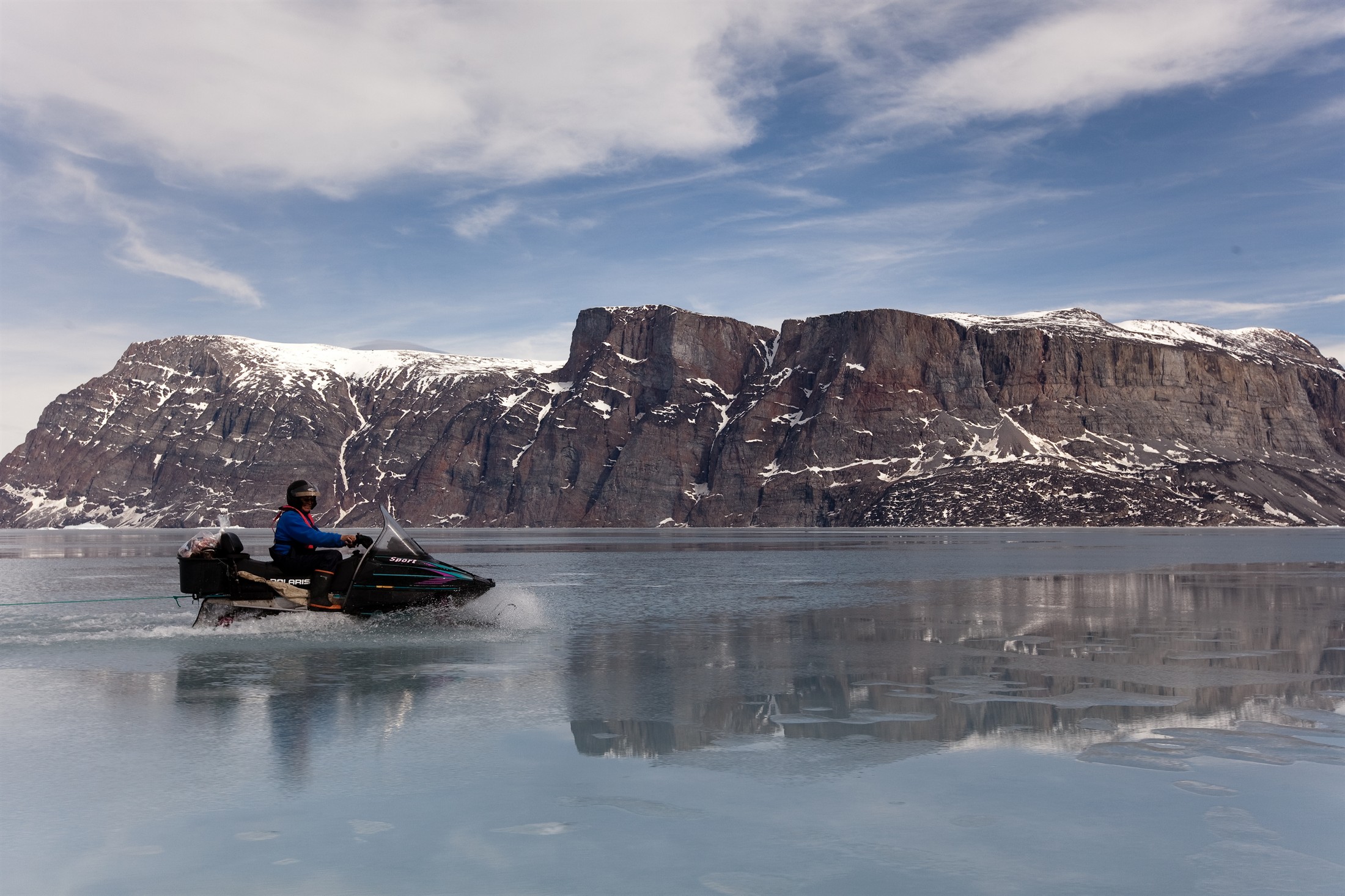
    Snowmobile driving on open water

    Warmer climate, spurred by climate change, can cause colder winters. This is the result of a new study by Jodah Cohen, released this week.

    The study explains the Rube Goldberg-machine of climatic processes that can link warmer-than-average summers to harsh winter weather in some parts of the Northern Hemisphere.

    Average temperatures have risen for over 200 years, most rapidly for the past 40 years. And average temperatures in the Arctic have been rising at nearly twice the global rate, says Cohen, a climate modeler at the consulting firm Atmospheric and Environmental Research in Lexington, Massachusetts.

    A close look at climate data from 1988 through 2010, including the extent of land and sea respectively covered by snow and ice, helps explain how global warming drives regional cooling, Cohen and his colleagues report.

    The strong warming in the Arctic in recent decades, among other factors, has triggered widespread melting of sea ice. More open water in the Arctic Ocean has led to more evaporation, which moisturizes the overlying atmosphere, the researchers say. Previous studies have linked warmer-than-average summer months to increased cloudiness over the ocean during the following autumn.

    That, in turn, triggers increased snow coverage in Siberia as winter approaches. As it turns out, the researchers found, snow cover in October has the largest effect on climate in subsequent months.

    Source: American Association for the Advancement of Science

  • WWF celebrates 20 years of Arctic program

    WWF celebrates 20 years of Arctic program

    WWF The Circle

    The WWF’s Global Arctic Programme celebrates this year its 20th anniversary of the creation of a WWF body to champion conservation in the Arctic.

    When WWF was founded in 1992 it says that there was very limited understanding of the Arctic and its importance. That has however changed, and interest today is great from all over the world.

    The WWF issues a magazine produced by the WWF Global Arctic Programme called The Circle, four times a year. Each issue focuses on a specific Arctic-related topic.

    The Circle is distributed free to around 3,000 arctic stakeholders worldwide, including government officials and publicly-elected representatives, indigenous organisations, conservationists, scientists, NGOs, libraries, and business executives.

    Its goal is to inform decision-makers, scientists and the interested public about arctic environmental and development issues.

    The latest issue is fresh and it celebrates the history of the Global Arctic Programme, and its ongoing mission to ensure a resilient, sustainable future for the Arctic.

    Click here to download the latest magazine.

    Sources

    WWF

  • Video shows enourmous glacier melt

    Video shows enourmous glacier melt

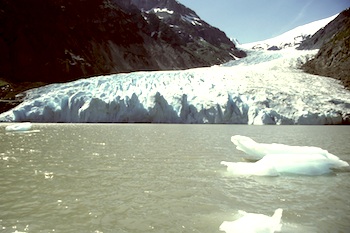
    A melting glacier

    A new time lapse vide footage shows the Columbia glacier in Alaska diminishing fast in only four years.

    James Balog is responsible for the footage, to be shown in a new documentary on climate change later this month.

    Balog is the founder of Extreme Ice Survey, a photographic study of glaciers, most around the Arctic. The EIS team has 27 time lapse cameras in 15 places in Greenland, Iceland, Alaska and in the Rocky Mountains in Colorado, USA.

    “Shrinking glaciers are the canary in the global coal mine. They are the most visible, tangible manifestations of climate change on the planet today,” he told the Idaho Press.

    Click here to see the video.

    Sources

    Idaho Press

    Huffington Post

  • Three polar bears in Kulusuk

    Three polar bears in Kulusuk

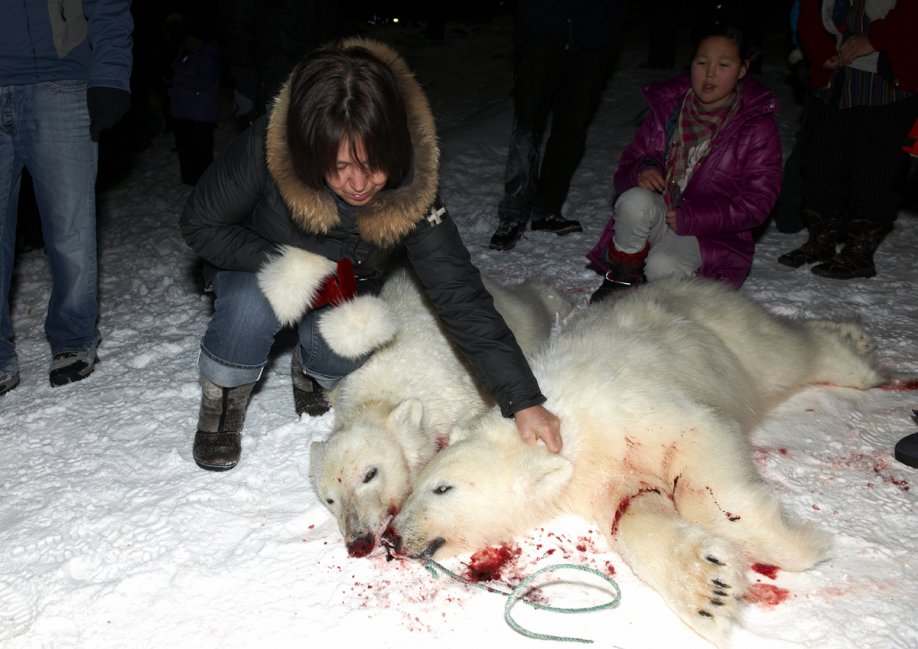
    Polar Bears dead

    Three polar bears were shot in Kulusuk, Greenland, yesterday. They drifted with sea ice to the town and were in search for food.

    A young girl approached the bears but the 13 year old thought they were dogs. Luckily she was not harmed, as the bears were shot shortly after. The mother and here two cubs were close to the airport in Kulusuk when they were first seen.

    The people tried to scare them away and thought they had succeeded. But the bears kept coming back and when the girl saw them yesterday afternoon they were shot.

    Although it was not the ideal end to the story, it was a necessity in this instance. The local elderly peoples home were given the meat but the fur was given to the government of Greenland.

    Source: Sermitsiaq

  • High hopes for Dreki oil

    High hopes for Dreki oil

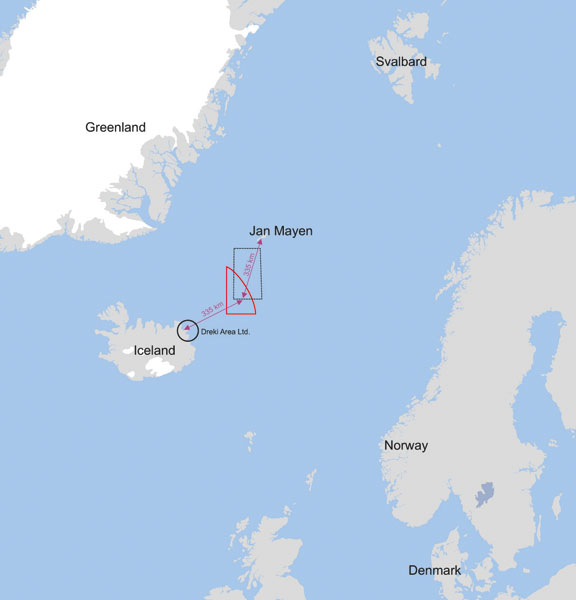
    Map of the Dreki area

    There are high hopes for oil in the Dreki Area, south of Jan Mayen and North of Iceland.

    Norway and Iceland are joint owners of the area and could potentially benefit both countries.

    New samples are impressive and could increase interest in the area. Although the samples are positive, they are confidential, and will only be given to those who will search in the area.

    Specialist from Norway met their colleagues from Iceland last week. These samples were on the agenda, and next explorations which will be conducted soon.

    Þórarinn Sveinn Arnarsson, project manager for the Icelandic Energy Administration, told RÚV that further exploration is mostly on the Norwegian side.

    “A new exploration will most likely go to the area next summer, but that will also depend on what else we find from the last survey, samples are still being researched,” he said.

    A report from the company that conducted the research will be ready next month.

    Bidding for the search will then open in April.

    Sources

    RÚV (Icelandic National Television)

  • Barents-region ice free

    Barents-region ice free

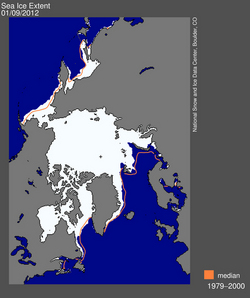
    The satellite image shows the difference from the median ice edge and the ice today

    Very little sea ice is in the Barents region for this time of year. This indicates that this trend will continue and sailing will become easier by every year.

    Satellite images show that the waters north of Spitsbergen and north of Novaya Zemlya is not covered with ice, which is unusual for this time of year.

    A NSIDC map from 9th of January clearly shows how little ice is in the area. The Kara gate and the Pechora Sea in the eastern Barents Sea are both usually ice-covered this time of the year, but not now.

    The entire west coast of Novaya Zemlya is also ice-free.

    Sources

    Barents Observer

  • Greenland seeks help to lift EU ban

    Greenland seeks help to lift EU ban

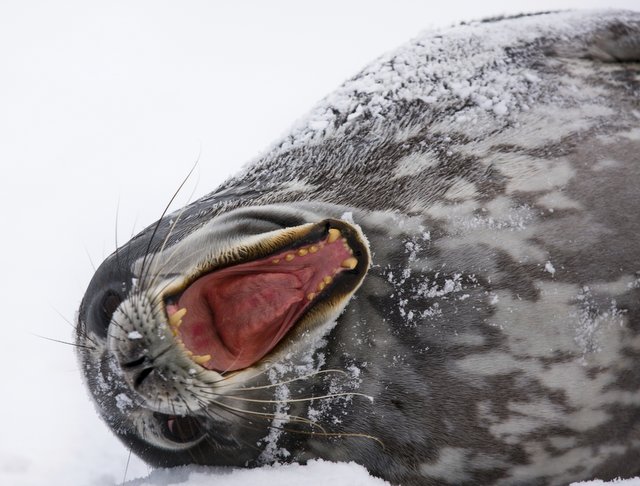
    Seal is yawning

    Greenlanders are counting on Denmark to raise the issue of EU ban on import seal products, due to a burgeoning seal population in the Arctic regions. Denmark has the presidency of the EU which it took over i the beginning of 2012.

    Politiken reports that the Greenland Fisheries and Hunters Organisation KNAPK is hoping that the important seal hunting will be lifted so the seal population will continue to grow normally, and fish stocks as well.

    “Hunting seal and sealskin production ensures employment throughout Greenland and in particular in the outlying regions. Seal hunting and skin production helps raise living standards and livelihoods for hunters in our country,” KNAPK Chairman Leif Fontaine told Sermitsiaq in Greenland.

    Fontaine says that the EU’s ban has wrecked the worldwide trade in indigenous seal products, but equally importantly is threatening both the seal population and fish stocks in the Arctic regions. “We are concerned that the import ban on seal products is harming the eco-systems in our waters,” Fontaine says, adding the increasing population of seals is a ‘ticking bomb’ under the Greenland fishing industry.

    “Greenland’s Nature Institute has documented that the 17.5 million seals in the North Atlantic at 16 million tonnes of fish and shellfish each year,” Fontaine says. “At the same time we are seeing emaciated seals across all of the Arctic and are concerned that the seals are dying of hunger,” he adds.

    Fontaine notes that Denmark is legally bound to secure the livelihoods of indigenous Greenland hunters.

    Sources

    Politiken

    Sermitsiaq

  • Another major oil find for Norway

    Another major oil find for Norway

    Oil rig

    Norway has found the cornerstone of its oil production for the next year. The Barents Region of Skrugard is thought to give Norway up to 900 million barrels of oil.

    Aker Barents oil rig made the discovery in the Havis area. Statoil announced the found today.

    The Havis area will produce 200-30 million barrels but the surrounding area up to 600 million barrels.

    This is the second major discovery in the last nine months, much to the delight of Norwegians.

    “This found will be profitable both for Statoil and for Norway,” the president of Statoil, Helge Lund, announced.

    This is a new area which is very rich in oil. The one who searches, will find oil. There is a lot of research behind this,” Lund said.

    “Since the last major finding in 1997 we have made around 250 researches which is a major task,” he said.

    Sources

    NRK

  • Norway to send gas through the NRS

    Norway to send gas through the NRS

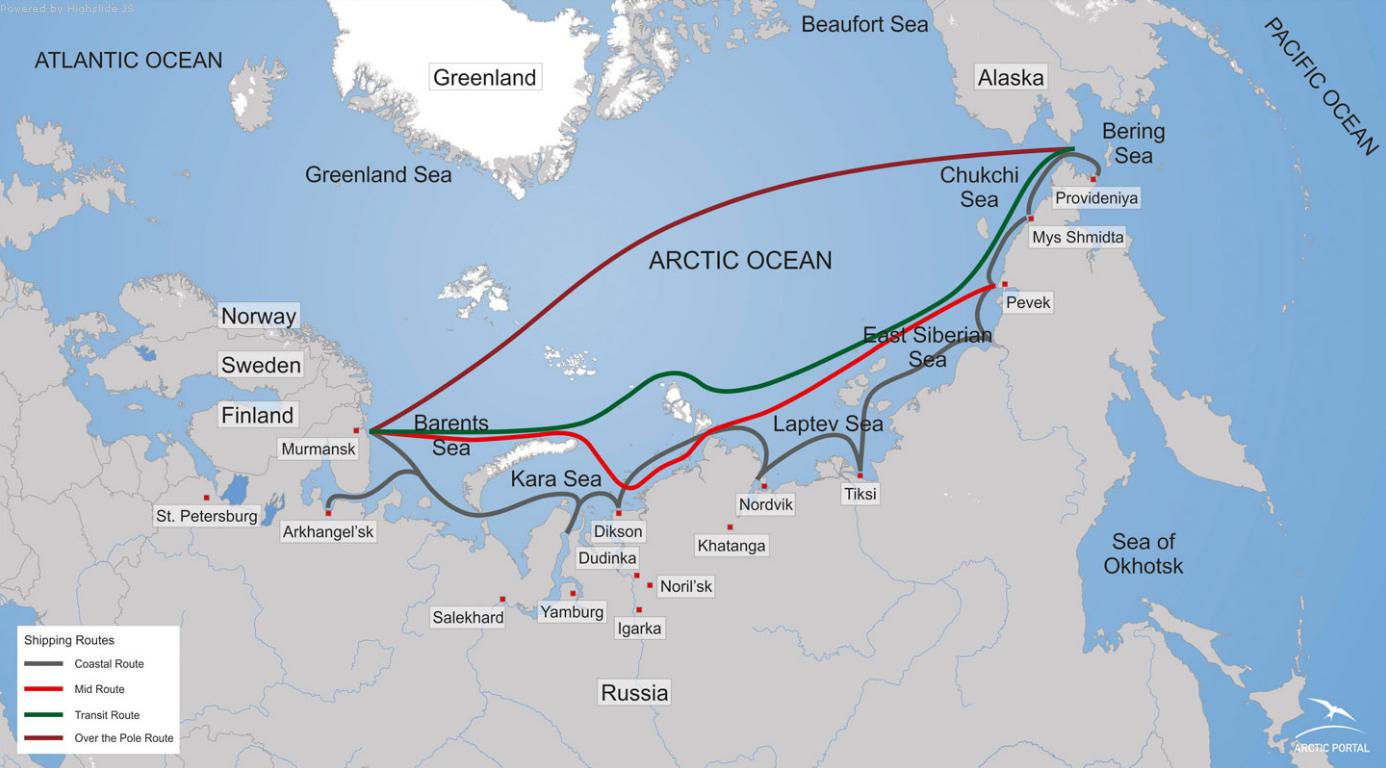
    Map of the Northern Sea Route

    Norway hopes to use the Northern Sea Route in a few months. Increased shipping saw 27 vessels using the route last year, a huge increase like indeed in the Northern Sea route.

    They want to transport gas from the Snowhite area to Asia. An LNG tanker will sail between Hammerfest in Norway to Japan as soon as the ice is thin enough.

    The vessel, Ribera del Duera Knutsen, is strentghened for sailing in sea ice. In fact it is the only LNG tanker in the world with an 1A class permission for sailing in ice.

    The sailing would take around 20 days, a big improvement from the route through the Suez Canal used today. This means the ship can go three tours next summer.

    “We have not been in contact with Statoil about the transport but technically it is possible,” Synnøve Seglem from OAS Shipping said to the NRK. “It is of course a feasible option for everybody,” he added.

    Sources

    NRK

  • 18.000 tons of junk to be removed

    18.000 tons of junk to be removed

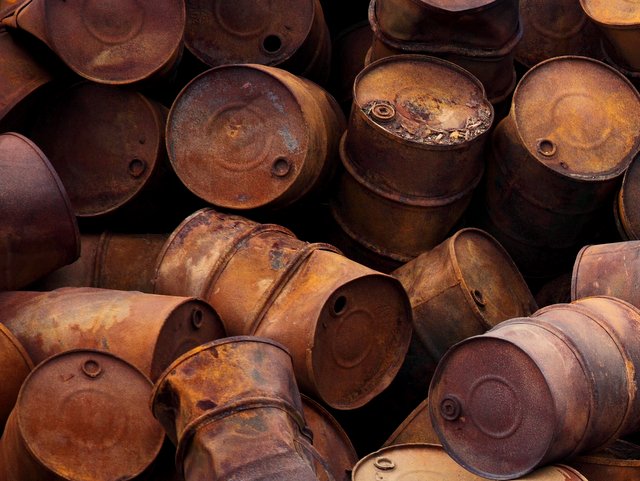
    Old oil barrel dump

    Around 18.000 tons of scrap metal will be removed from the Arctic in 2012 by Russia. The country is cleaning up the Arctic and hundreds of millions of rubles will be injected to the program.

    The Arctic Islands of Russia are full of junk, causing environmental hazards. This year the program will focus on Svalbard and Amderma.

    Amderma is planned to become a key site in the development of offshore oil and gas fields in the western part of the Russian Arctic and an important base for traffic along the Northern Sea Route.

    A staggering 114.000 tons of local scrap stockpiles are thought to be in Amderma.

    Over 1800 empty fuel barrels were transported from Wrangel Island to Arkhangelsk last year. That is only a drop in the bucket since 250,000 barrels holding some 40 to 60,000 tons of oil products are still in the area.

    Other kinds of waste include abounded aircrafts, rusty broken radar stations, different kind of Arctic vehicles and other leftover garbage.

    Sources

    BarentsObserver

    Nyaryana Vynder