Category: YAR & Features

Young Arctic Researchers & Features

  • Iceland to join WTO complain on EU trade ban on seal products

    Iceland to join WTO complain on EU trade ban on seal products

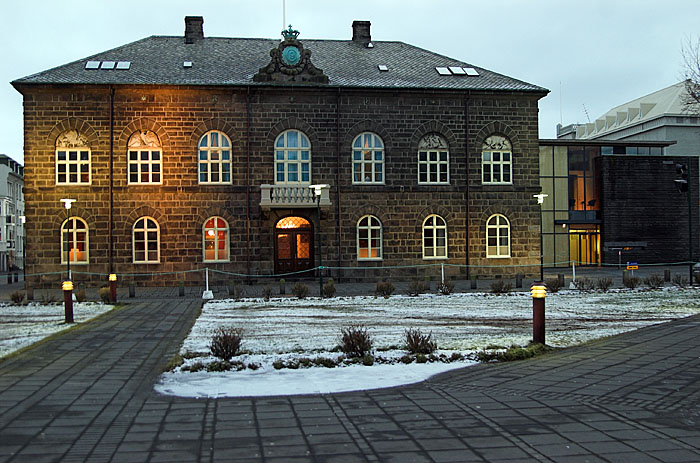
    althingishusIceland has decided to support Canada and Norway in the case against the EU trade ban on seal products. This was decided on a meeting on dispute settlement on the 25th of March. It was also decided on the meeting that Iceland will join the case as a third party member against the EU trade ban.
    Iceland is one of six countries where seal hunting is still practiced. The others are Canada, Norway and Russia, which are not EU members states; Greenland, which is a Danish region but has autonomy in its domestic affairs; and Namibia in southern Africa.

    This decision of Iceland is in harmony with previous statements of the country. The ban, which was adopted by the EU Council on 27th of July 2009 and came into effect on the 20th August 2010 was also opposed by the Icelandic government in April 2009, where the minister of Fisheries- and agriculture sent a letter to the EU Directorate-General for Maritime Affairs and Fisheries. Worries about impending legislation where mentioned along with other reasons opposing the trade ban. The Icelandic minister for fisheries had also declared his support about the case at the 15th North Atlantic Fisheries Ministers Conference, which was held in Canada in July 2010.

    Photo by: Bergvin Snær Nesmann AndréssonIceland´s opposition is also shown in the NAMMCO statement on EU import ban on seal products. There, the bans is seen as contrary to international principles for conservation and sustainable management. Along with Iceland, the Faroe Islands, Greenland, and Norway, as well as observer nations to NAMMCO, Canada, the Russian Federation and Japan, reiterated their serious concerns about the EU ban on the import of seal products into the European Union.

    In the NAMMCO statement it is mentioned that the trade ban ignores and undermines the internationally recognized principles on which conservation and management of marine resources in the North Atlantic are firmly based. It has serious and detrimental consequences for the economies of the many communities dependent on abundant seal stocks across the North Atlantic. Therefore the incorporation of the ban into European Union legislation is said to be a huge step backwards for sustainable development and international trade.

    It is further states that the nations cooperating through NAMMCO are committed to promoting the principle of sustainable development in all areas of cooperation in the region, including the sustainable use of seals. Such cooperation is based on mutual respect and recognition of the rights of all peoples to use their resources responsibly and sustainably for their economic development, including the right to benefit from international trade.
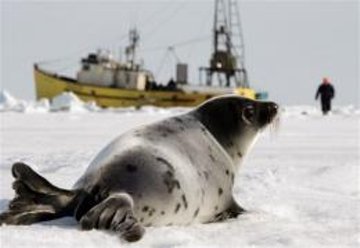
    seal1It is finalized in the NAMMCO statement that conservation and management of all living marine resources should be science-based and should take account of the marine ecosystems and the interrelation between species, stocks and habitats in which fishing and hunting activities occur.
    Canada appealed to the European Union the trade ban on seal products to the World Trade Organization. Canadian Fisheries Minister, Gail Shea, has stated that she does not believe the government’s fight for seal hunters will damage other industries that employ more people. Fisheries minister has mentioned that other Canadian industries might be damaged if the country does not take a stand on what she insists is a matter of principle and needs to be ruled on facts, not emotions. A decision from the WTO could take a year or more.
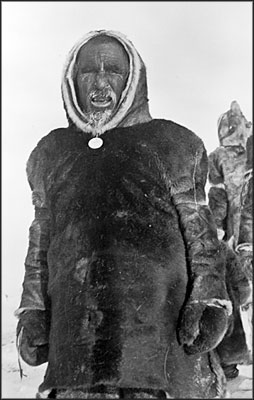
    The EU trade ban on seal products has affected Canada’s Inuit community. Despite the fact that the Inuit are exempt from the ban, they no longer have a market for sealskins; a by-product of their subsistence hunt.

    A documentary has been made that brings together commentary from Inuit hunters, community leaders and an emotional testimonial from local people.

    Seal Ban: The Inuit Impact – Documentary

    Sources:

    The Icelandic Ministry of Fisheries and Agriculture
    NAMMCO

    Eye on the Arctic

  • Single mother stops Alaska oil construction project

    Single mother stops Alaska oil construction project

    polar bear family

    Construction workers at an Alaskan oil construction project had just finished building the ice road connecting their land-based operations to a nearby island when a worker made a discovery that would bring them to a halt for days. There, on the edge of the manmade island not too far from where the road entered, was a polar bear. This wasn’t just any polar bear. There, in the Beaufort Sea close to an oil industry drilling project, appeared a mother bear and her cub.

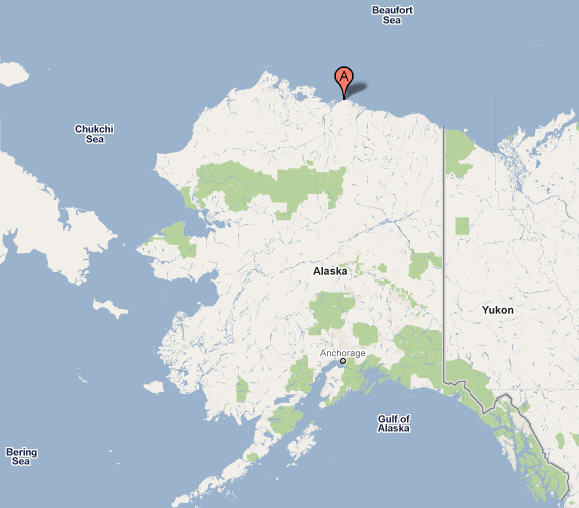
    The Alaska´s newest oil producer, ENI, just brought online earlier this year its shore-based Oliktok Point drilling operation, which sits east of Barrow along Alaska’s north slope close to Prudhoe Bay. Work at the nearby island, known as the Spy Island Development site, was under way to prepare the manmade island for drilling that’s expected to begin this fall. But the discovery of the polar bear den triggered an immediate pause that only the bear’s departure could lift.

    Alaska North Slope map

    Activities at the island could resume as early as Wednesday evening provided the bears, which haven’t been seen for at least two days, do not resurface.
    Bruce Woods at the U.S. Fish and Wildlife service says It’s rare for a bear sighting and den to force a shut-down of work altogether.

    It’s not uncommon for industry to run across polar bears, and avoidance rules are in place to help minimize the impacts to the animals and the danger they may pose to humans. Roads may have to be rerouted and people may have to change the routes they take. When an inhabited den is discovered, a one mile quiet zone must be established around the site, states Tom Evans, a polar bear biologist with the USFWS Anchorage office. Due to this, all operations are ceased until the bears are gone from the den site.

    In the two decades that Evans has worked for the service, he has heard of a bear den forcing work to stop only a handful of times.

    After ENI’s employees immediately stopped what they were doing and made the call about the Spy Island bears, biologists from Evans’ office traveled to the site to monitor the situation. They set up cameras and used an infrared scope to measure whether any heat was present.

    This particular mother bear apparently made her winter home by burrowing into a snowdrift that had formed along a series of large gravel sacks on the perimeter of the island that are used to help protect it from ice and erosion. It’s thought that by Monday, three days after the bears were first seen, that the duo had moved on. Biologists followed tracks leading away from the site for several miles and never found evidence that the bear had circled or turned back. It’s likely, Evans said, that she headed off in search of seals to eat. With a young cub, though, she’s not likely to try to do much deep water swimming and will probably stay on the ice pack that’s still connected to the shore rather than venture out to the southward-floating pack ice, Evans said.

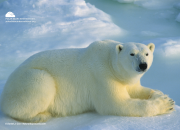
    lazy polar bear

    The biologists monitoring the bears didn’t personally witness their departure, but workers apparently saw the bears leaving the area on Sunday, according to Evans. And, he said, the scientists haven’t had time to review their surveillance footage to find out if they captured any images of the bears.

    Biologists are aware of two other dens in the same region — one on Howe Island, and another on a section of gravel along the coastline known as the “staging pad” — but neither have impacted industry operations.

    Bears typically make their dens in November. Cubs are born in January, and mid-March to mid-April is generally when they start to emerge, and a mother bear’s hunger level will determine how much time she spends with her cub hanging around the den. Sometimes, bears will wait up to two weeks before moving on, he said.

    polar bear relaxing

    ENI Petroleum, headquartered in Italy, was unable to immediately respond to questions about the bear sighting or the shutdown of its construction operations, according to Hans Niedig, the company’s Anchorage-based government and external affairs manager, citing the company’s formal protocol for receiving and responding to questions from the press.

    Provided the bears don’t show up again, the U.S. Fish and Wildlife Service had planned to let ENI resume operations at Spy Island.

    Everybody did the right thing, Woods said, which resulted in a good outcome. “There was no harm to anybody, and no harm to the bears,” he said.

    Reported by Alaska Dispatch

    Pictures:

    Google Maps

    Polar Bear International

  • Icelandic Arctic Policy under development

    Icelandic Arctic Policy under development

    Össur SkarphéðinssonAlthing, the Icelandic parliament is now developing an Arctic policy for the Icelandic government. The work is being conducted under the management of the Icelandic foreign minister Össur Skarphéðinsson. Icelandic authorities are becoming aware of the state’s significant status within the Arctic and regional cooperation and have thus decided that a declared policy is needed for the Icelandic state to have impact on future developments in the area. The main aim of the policy is to secure Icelandic interests within the region and strengthen relations with other Arctic states and various stakeholders.

    One significant political aspect can be found in the proposed policy, namely to make sure Iceland is considered to be an Arctic coastal state. This is thought to be important in order to reverse the recent development of the Arctic five meetings. Icelandic authorities do not welcome any deliberate undermining of the Arctic Council as the forum for regional cooperation on Arctic matters and would rather want the Council to be strengthened. In addition to this political view, the Icelandic government wants international obligations and agreements to be observed in decision-making and settlements of disputes.

    In discussions on the proposed Arctic policy in the Althing, some concerns have been raised regarding the Arctic five meetings and there does seem to be a general view within the parliament that this development should be obstructed as possible. However, the clear will of the Icelandic government to secure the state’s spot as an Arctic coastal state seems to imply that such “Arctic six” meetings could be more welcomed with Iceland on board. In reality, this deliberation is rather improbable as the Icelandic government is keen on prevent the exile of small state actors such as the Faroe Islands and the non-Arctic coastal states within the Arctic Council, Finland and Sweden.

    AlthingishusidAnother significant aspect of the proposed Icelandic Arctic policy is react against armament in the Arctic region has been raised in the parliament. This point has been discussed to a certain degree in the Althing, where the foreign minister has tried to water down the concerns of direct military confrontation or severe armament. The third significant political aspect of the discussions in the Althing about the policy is the EU negotiation phase and the outcome in Arctic matters for the European Union. Some concerns have been raised that the argument for Iceland as an Arctic coastal state is meant to secure the interests of the EU instead those of Iceland specifically. Even though this concern might be a bit farfetched, it was officially declared by the EU that Arctic matters were the primary gain for the EU with the membership of Iceland.

    The Icelandic Arctic policy will consist of eleven general elements that together represent the main concerns of Icelandic authorities, in addition to interests that will be pursued. There are no big surprises in the proposed policy, with the development of Iceland’s status as an Arctic costal state as the exception. The focus of Icelandic government on the rights of indigenous peoples and other inhabitants of the Arctic is, however, also a significant attribute that could be seen as unusual.

    The eleven elements of the proposed Arctic policy of the Icelandic government are as follows:

    1. Secure the status of Iceland as an Arctic coastal state regarding decisions on Arctic issues. This will be based on the geographical, economic and ecological reasons.
    2. Increase global understanding on that the Arctic region is not restricted to the area north of the Arctic Circle, but other areas based on various ecological, economic and geopolitical reasons.
    3. Strengthen the Arctic Council as the main cooperative body on Arctic issues and press for decisions to be made within the Council.
    4. Build on the United Nations Convention on the Law of the Sea which sets out the universal principles of marine governance.
    5. Strengthen and increase cooperation with the Faroe Islands and Greenland with the aim of increasing the economic and political status of the three states.
    6. Secure and support the rights of indigenous peoples in the Arctic and secure their involvement in decision making.
    7. Build on international agreements and encourage cooperation with other states and stakeholders on Arctic issues regarding Icelandic interests in the Arctic.
    8. Safeguard civil security interest in the Arctic and react against armament in the area. Increase cooperation with other states on preservation of wildlife, research, and preparedness in surveillance, search and rescue and pollution prevention in order to secure environmental, communal and sustainable development interests.
    9. Develop commercial cooperation between Arctic states and secure Icelandic opportunities in economic development within the region.
    10. Increase national knowledge on Arctic issues and introduce Iceland as a forum for conferences, meetings and discussions on Arctic issues. Effort shall be made to establish centers, research institutes and educational institutions on Arctic affairs in cooperation with other states and international institutions.
    11. Increase national consultation and cooperation on Arctic issues to secure increased knowledge on the status of the Arctic, democratic dialogue and solidarity on the implementation of the official Arctic policy. The foreign minister shall develop and implement the Arctic policy in consultation with the Althing’s committees on foreign affairs and environment.

    No major changes are expected to be made on the eleven elements mentioned above. A few might, however, become more precise in order to make implementation easier. The implementation of the policy and the making of an Arctic strategy will be initiated after the proposed Arctic Policy has been developed. The proposed Arctic strategy will most likely be finalized in early summer of 2011.

  • The Shared Future: A Report of the Aspen Institute Commission on Arctic Climate Change.”

    The Shared Future: A Report of the Aspen Institute Commission on Arctic Climate Change.”

    The Aspen InstituteRecognizing that the circumpolar Arctic region is experiencing significant ecological change due to global climate change, the Aspen Institute convened a civil society Dialogue and Commission to consider the implications of this impending transformation for the region’s inhabitants and resources. The Aspen Institute released a final report and recommendations of Commission, entitled “The Shared Future: A Report of the Aspen Institute Commission on Arctic Climate Change.”

    The report features a very special foreword by President Jimmy Carter and presents the Commission’s recommendations, foremost of which is that governance in the Arctic marine environment should be sustained and strengthened by a new conservation and sustainable development plan based on using an ecosystem-based management approach.

    The Commission believes marine spatial planning provides a workable method to begin implementation of ecosystem-based management. Governance of the Arctic can and should be strengthened through an inclusive and cooperative international approach that allows greater participation in information gathering and sharing, and decision-making, leading to better information policy choices and outcomes.
    The report is issued under the auspices of the Aspen Institute and the members of the Aspen Institute Commission on Arctic Climate Change, with support from the Prince Albert II of Monaco Foundation.

    Aspen Climate Change Report

    Aspen Climate Change Report – Handout

    Arctic OceanThe report presents the Commission’s recommendations, foremost of which is that governance in the Arctic marine environment, which is determined by domestic and international laws and agreements, including the Law of the Sea, should be sustained and strengthen by a new conservation and sustainable development plan using an ecosystem-based management approach. The Commission believes marine spatial planning provides a workable method or approach to begin implementation of ecosystem-based management. According to the Commission, Arctic governance can and should be strengthened through an inclusive and cooperative international approach that allows greater participation in information gathering and sharing, and decision-making, leading to better informed policy choices and outcomes.

    gullThe Commission recognizes that this Aspen Dialogue has been a preliminary step toward a fuller discussion on the future of the Arctic marine environment. Its major discovery is that a more modern, holistic and integrating international plan is needed to sustainably steward and govern the Arctic marine environment. The Commission has made significant progress in understanding the needs and requirements for action to sustain the Arctic and realizes that in order to implement its recommendations the entire Arctic community must be engaged.

    The Aspen Commission on Arctic Climate Change has identified the following initial Principles of Arctic Governance as forming the guiding foundation of its recommendations and the standards by which future governance and sustainable management of human activities in the Arctic marine environment should be measured. Specifically, governance and sustainable management of human activities in the Arctic marine environment should seek to:

    1. Optimize ecosystem resilience, integrity and productivity by maintaining food-web (trophic) structure and protecting and restoring biodiversity and available habitat.
    2. Maintain the full suite of Arctic ecosystem services to support human well-being on a continuing basis.
    3. Promote investment in scientific research and related infrastructure necessary to ensure sustainable development and environmental protection.
    4. Avoid exacerbating changes that may be difficult or impossible to reverse in temperature, sea-ice extent, pH, and other key physical, chemical and biological ecosystem parameters.
    5. Assess, monitor and manage multiple human activities using an integrated, adaptive, ecosystem-based management system that takes into account risks and cumulative and interacting effects.
    6. Apply ecosystem-based management processes based on science and traditional knowledge, particularly to new and expanded human activities which are subject to prior evaluation and analysis. Prudent measures to reduce or eliminate impacts are to be taken when there are reasonable grounds for concern that such activities, directly or indirectly, will bring about hazards to human health, harm living resources and ecosystems, damage amenities or interfere with other legitimate uses.
    7. Fully respect the rights, including human rights, of Arctic residents and Arctic indigenous peoples, and maximize participation in and transparency of decision-making for all interested stakeholders.
    8. Link global policy discussions to the need to conserve and manage Arctic ecosystems and dependent communities.
    9. Promote cooperation among Arctic states to arrive at appropriate standards for managing activities in the Arctic to meet the special conditions of the Arctic region, while promoting sustainable development.
    10. Inform, in a timely manner, national and international decision-makers as well as the public of the consequences of climate change impacts in the Arctic, and needed actions required to meet the above noted principles.

    shippingThe Aspen Institute Commission on Arctic Climate Change believes that existing frameworks can be enhanced and new frameworks can be established to improve governance and strengthen resilience in the Arctic marine environment in response to climate change impacts and the need for adaptation readiness. The Commission developed its recommendations against the backdrop of at least three observable strategies currently discussed internationally to strengthen the Arctic Council; expand and strengthen the existing system of bilateral and multilateral agreements; and/or establish a new Framework Convention for Arctic governance.

    Aspen Commission Recommendations

    1. Arctic governments should take immediate steps to begin developing an Arctic Marine Conservation and Sustainable Development Plan by 2012, in collaboration with civil society and other interested parties.
    2. Arctic governments, independently and collectively, should implement an integrated ecosystem-based management approach in the Arctic marine environment utilizing appropriate marine spatial planning, as well as regulatory rules and standards that address the special conditions of the Arctic region.
    3. In addition to an Arctic marine conservation and sustainable development plan, a number of specific actions should be initiated through the development of agreements or standards that foster consistent implementation among and across Arctic governments.
    4. An open-source Arctic network, focused on ecosystem-based management, should be developed through the Arctic Council and used to complement the existing system of national and international governance mechanisms in the Arctic.
    5. Arctic governments should call for a special diplomatic conference in 2012, which includes participation by Indigenous Peoples and the eight Arctic nations, to establish a timetable for designing and implementing the preceding recommendations.
    6. All Arctic residents, including Indigenous Peoples, should play a pivotal role in planning the future of the Arctic and should share in the benefits of its resources as well as responsibility for its sustainable future.
    7. An Arctic science program should be implemented and integrated as part of the Arctic Marine Conservation and Sustainable Development Plan using an open-source information network.
    8. The Commission urges that the Arctic Council be reinforced as an effective, multilateral organization for the region and that it be given the resources and a revised architecture to ensure that the planning, participation, management and accountability recommendations put forward in this report are implemented.

    About the Aspen Institute

    The Aspen Institute mission is twofold: to foster values-based leadership, encouraging individuals to reflect on the ideals and ideas that define a good society, and to provide a neutral and balanced venue for discussing and acting on critical issues.

    The Institute is based in Washington, DC, Aspen, Colorado, and on the Wye River on Maryland’s Eastern Shore and has an international network of partners. Further information.

  • The St. Matthew Island

    The St. Matthew Island

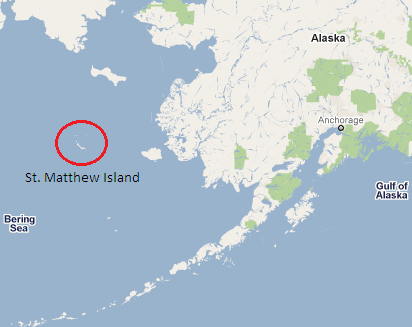
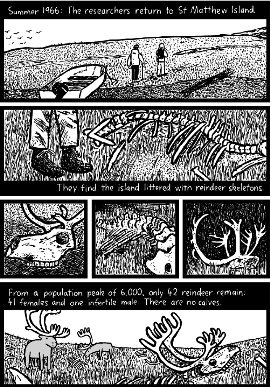
    St. Matthew Island feature comicComic short stories author Stuart McMillen from Brisbane, Australia brings to his attention the case of the St. Matthew Island, which is a remote island in the Bering Sea in Alaska. The story is about the prosperity of specie that was introduced to the island but in the end collapsed. View the McMillen story.

    The case of the St. Matthew Island

    During World War II, while trying to stock a remote island in the Bering Sea with an emergency food source, the U.S. Coast Guard set in motion a classic experiment in the boom and bust of a wildlife population. The island was St. Matthew, an unoccupied 32-mile long, four-mile wide sliver of tundra and cliffs in the Bering Sea, more than 200 miles from the nearest Alaska village. In 1944, the Coast Guard installed a loran (long range aids to navigation) station on St. Matthew to help captains of U.S. ships and aircraft pilots pinpoint their locations. The Coast Guard stationed 19 men on St. Matthew Island to operate the station. Those men—electrical technicians, cooks, medics, and others—made up the entire human population of the island.
    In August 1944, the Coast Guard released 29 reindeer on the island as a backup food source for the men. Barged over from Nunivak Island, the animals landed in an ungulate paradise: lichen mats four inches thick carpeted areas of the island, and the men of the Coast Guard station were the reindeer’s only potential predators.

    The men left before they had the chance to shoot a reindeer. With the end of World War II approaching, the Coast Guard pulled the men from the island. St. Matthew’s remaining residents were the seabirds that nest on its cliffs, McKay’s snow buntings and other ground-nesting birds, arctic foxes, a single species of vole, and 29 reindeer.

    St. Matthew Island on a World MapSt. Matthew then had the classic ingredients for a population explosion—a group of healthy large herbivores with a limited food supply and no creature above them in the food chain. That’s what Dave Klein saw when he visited the island in 1957. Klein was then a biologist working for U.S. Fish and Wildlife Service. He is now a professor emeritus with the University of Alaska Fairbanks’ Institute of Arctic Biology. The first time he hiked the length of St. Matthew Island in 1957, he and field assistant Jim Whisenhant counted 1,350 reindeer, most of which were fat and in excellent shape. Klein noticed that reindeer had trampled and overgrazed some lichen mats, foreshadowing a disaster to come.

    Klein did not get a chance to return to the island until the summer of 1963, when a Coast Guard cutter dropped him and three other scientists off on the island. As their boots hit the shore, they saw reindeer tracks, reindeer droppings, bent-over willows, and reindeer after reindeer.
    “We counted 6,000 of them,” Klein said. “They were really hammering the lichens.” The herd was then at a staggering density of 47 reindeer per square mile. Klein noted the animals’ body size decreased since his last visit, as had the ratio of yearling reindeer to adults. All signs pointed to a crash ahead.
    St. Matthew Island feature comic storyOther work commitments and the difficulty of finding a ride to St. Matthew kept Klein from returning until the summer of 1966, but he heard a startling report from men on a Coast Guard cutter who had gone ashore to hunt reindeer in August 1965—the men had seen dozens of bleached reindeer skeletons scattered over the tundra.

    When Klein returned in the summer of 1966, he, another biologist and a botanist found the island covered with skeletons; they counted only 42 live reindeer, no fawns, 41 females and one male with abnormal antlers that probably wasn’t able to reproduce. During a few months, the reindeer population of St. Matthew had dropped by 99 percent. By piecing together clues found amid the bones, Klein figured that thousands of reindeer starved during the winter following his last visit, when he counted 6,000 animals on the island. Weather records from St. Paul and Nunivak islands for the winter of 1963-1964 showed an extreme winter in both cold and amount of snowfall.

    With no breeding population, the reindeer of St. Matthew Island died off by the 1980s. The unintended experiment in population dynamics and range ecology ended as it began—with winds howling over the green hills of a remote island in the Bering Sea, a place where arctic foxes are once again the largest mammals roaming the tundra.

    Sources:
    Alaska Science Forum
    Stuart McMillen – Recombinant Records
    Google Maps

  • Arctic Oscillation brings record low January Ice extent

    Arctic Oscillation brings record low January Ice extent

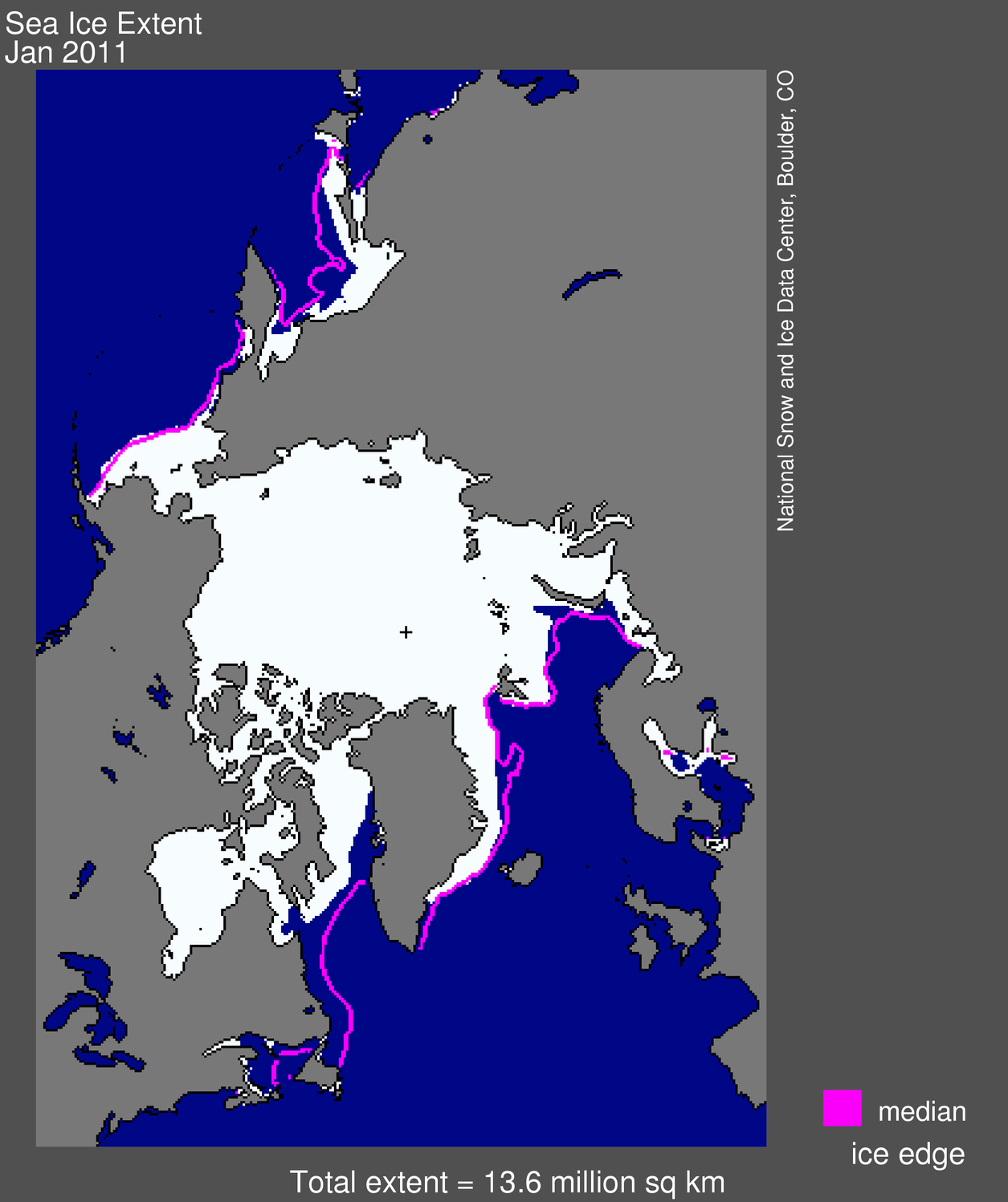
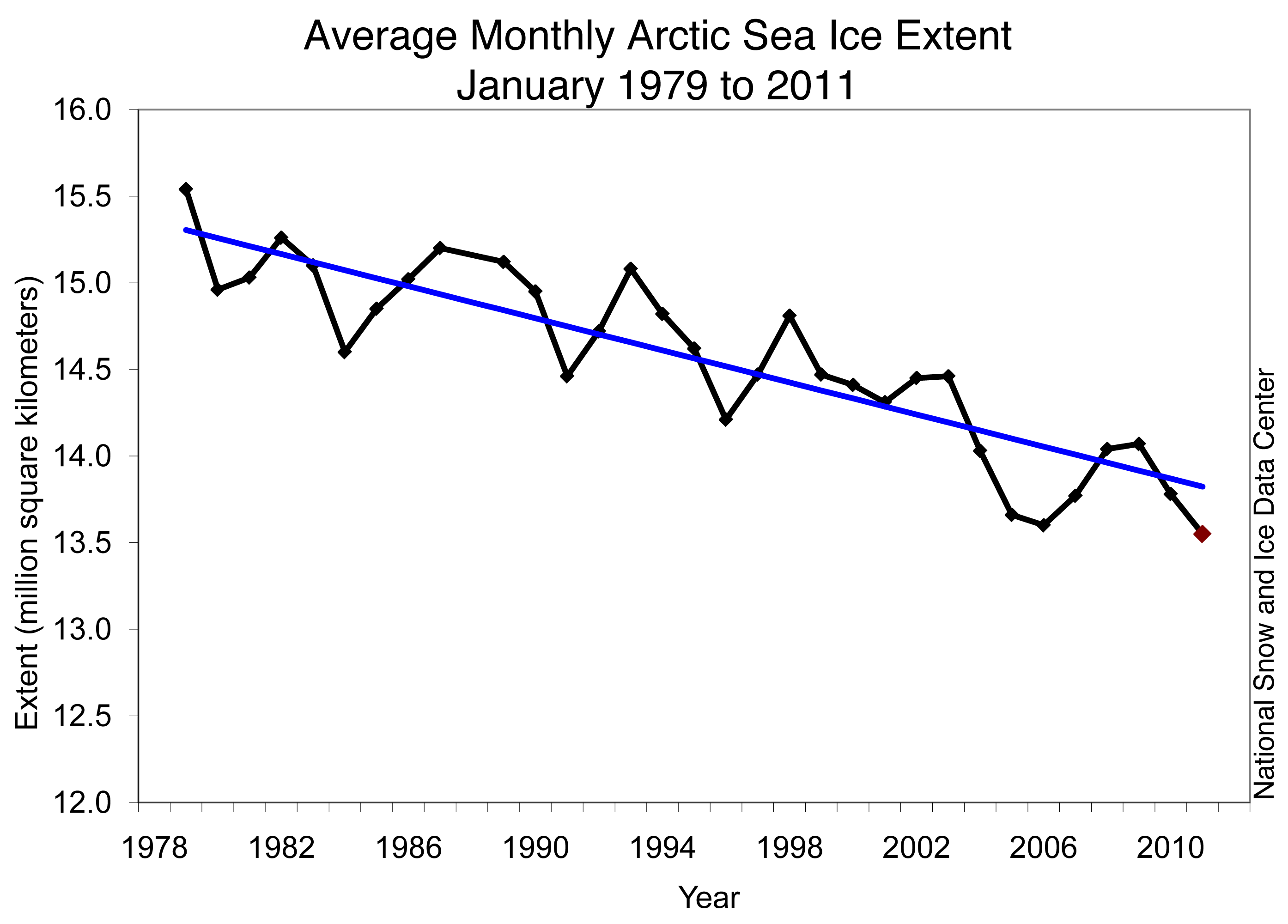
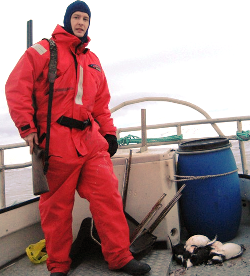
    seal huntersArctic sea ice extent for January 2011 was the lowest in the satellite record for that month due to slow regional ice growth compared to past years. This is reported at the National Snow and Ice Data Center. For example Hudson Bay did not completely freeze up until mid-January, about a month later than normal according to Canadian Ice Service analyses. Arctic sea ice extent averaged over January 2011 was 13.55 million square kilometers (5.23 million square miles). This was the lowest January ice extent recorded since satellite records began in 1979. It was 50,000 square kilometers (19,300 square miles) below the record low of 13.60 million square kilometers (5.25 million square miles), set in 2006, and 1.27 million square kilometers (490,000 square miles) below the 1979 to 2000 average.

    January 2011 sea ice extentAir temperatures over much of the Arctic were 2 to 6 degrees Celsius (4 to 11 degrees Fahrenheit) above normal in January. Over the eastern Canadian Arctic Archipelago, Baffin Bay/Davis Strait and Labrador Sea, temperatures were at least 6 degrees Celsius (11 degrees Fahrenheit) higher than average. Temperatures were near average over the western Canadian Arctic Archipelago and Scandinavia.

    Warm conditions in the Arctic and cold conditions in northern Europe and the U.S. are linked to the strong negative mode of the Arctic oscillation. Cold air is denser than warmer air, so it sits closer to the surface. Around the North Pole, this dense cold air causes a circular wind pattern called the polar vortex , which helps keep cold air trapped near the poles. When sea ice has not formed during autumn and winter, heat from the ocean escapes and warms the atmosphere. This may weaken the polar vortex and allow air to spill out of the Arctic and into mid-latitude regions in some years, bringing potentially cold winter weather to lower latitudes.

    sea ice average January annually 2011Some scientists have speculated that more frequent episodes of a negative Arctic Oscillation, and the stormy winters that result, are linked to the loss of sea ice in the Arctic. Dr. James Overland of NOAA Pacific Marine Environmental Laboratory (PMEL) recently noted a link between low sea ice and a weak polar vortex in 2005, 2008, and the past two winters, all years with very low September sea ice extent. Earlier work by Jennifer Francis of Rutgers University and colleagues also suggested a relationship between autumn sea ice levels and mid-latitude winter conditions. Judah Cohen, at Atmospheric and Environmental Research, Inc., and his colleagues propose another idea—a potential relationship between early snowfall in northern Siberia, a negative phase of the Arctic Oscillation, and more extreme winters elsewhere in the Northern Hemisphere. More research on these ideas may shed light on the connections and have the potential to improve seasonal weather forecasting.

    The Arctic Oscillation

    The Arctic Oscillation refers to opposing atmospheric pressure patterns in northern middle and high latitudes.

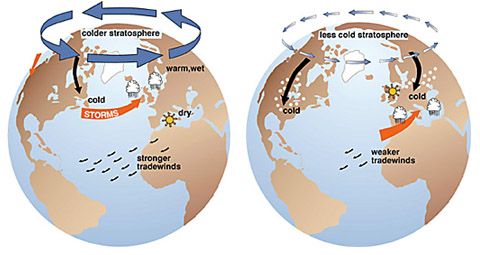
    Arctic_oscillationThe oscillation exhibits a “negative phase” with relatively high pressure over the polar region and low pressure at midlatitudes (about 45 degrees North), and a “positive phase” in which the pattern is reversed. In the positive phase, higher pressure at midlatitudes drives ocean storms farther north, and changes in the circulation pattern bring wetter weather to Alaska, Scotland and Scandinavia, as well as drier conditions to the western United States and the Mediterranean. In the positive phase, frigid winter air does not extend as far into the middle of North America as it would during the negative phase of the oscillation. This keeps much of the United States east of the Rocky Mountains warmer than normal, but leaves Greenland and Newfoundland colder than usual. Weather patterns in the negative phase are in general “opposite” to those of the positive phase, as illustrated below.

    Over most of the past century, the Arctic Oscillation alternated between its positive and negative phases. Starting in the 1970s, however, the oscillation has tended to stay in the positive phase, causing lower than normal arctic air pressure and higher than normal temperatures in much of the United States and northern Eurasia.

    Source: NSIDC

  • Mercury Assessment report by AMAP

    Mercury Assessment report by AMAP

    Arctic Monitoring and Assessment Working Group - AMAP

    The Arctic Monitoring and Assessment Working Group (AMAP) have released a handout showing key scientific findings from their 2011 Mercury Assessment report. The hand-out describes why mercury is a concern in the region, how and why mercury continues to present risks to the health of Arctic peoples and wildlife; where mercury in the Arctic environment comes from, how it gets there, and what controls mercury levels in the Arctic. A particular concern is the fact that—despite reductions in emissions from human activities—in large areas of the Arctic, mercury levels continue to rise in some Arctic wildlife.

    Mercury in the Arctic

    hunterOwing to their traditional local diet some Arctic peoples receive high dietary exposure to mercury, raising concern for human health. Arctic wildlife also exhibit mercury levels that are above thresholds for biological effects raising concern for the environment. The Arctic is a remote region, far from major human sources of mercury releases. Despite this, a substantial amount of the mercury is carried into the Arctic region via long-range transport by air and water currents from human sources at lower latitudes. This situation calls for urgent global action to reduce mercury emissions.

    Mercury in the Arctic environment transfers into food chains where, as a result of biomagnifications, it can reach levels of concern, particularly in the animals at the top of the Arctic’s aquatic food webs. This is a serious problem for Arctic indigenous peoples who rely on hunting and fishing for their nutritional, social and cultural well-being. Their traditional diet, which includes marine mammals, some species of seabirds and their eggs, and marine and freshwater fish, can expose these Arctic residents to high levels of mercury. Although risks communications which may include dietary advice are helping to reduce mercury exposure for some high-risk Arctic residents, this is only a short-term solution. The only true long-term solution is to reduce mercury concentrations in the environment, particularly in species of importance to the traditional/local diet by reducing global emissions.

    Reducing human and environmental exposure to mercury in the Arctic will ultimately depend on global action to reduce the quantities of mercury entering the ‘environmental reservoirs’, in which mercury has already been accumulating as a result of human activities during the last 150 years. It is therefore vital that the momentum for global action is maintained.

    Where does mercury in the Arctic environment come from, and how does it get there?

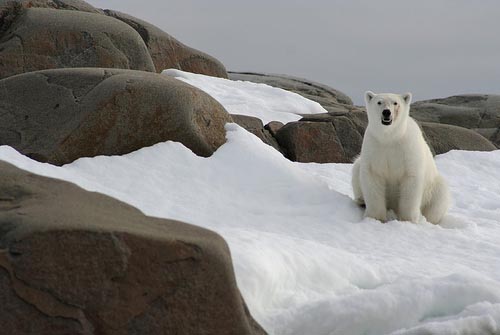
    Polar bear in SvalbardGlobally, about 2000 tons of mercury are emitted to the atmosphere each year as a result of human activities. A similar amount is emitted each year from natural sources. In addition, mercury that has accumulated in soils and ocean waters can be re-emitted to the air. This means that mercury contamination, a large part of which is derived from human activities, is recycled in the environment. Studies indicate that if no action is taken, mercury emissions from human sources are likely to increase in the next decades, but if implemented, existing technologies could significantly reduce emissions. Mercury is transported to the Arctic by air currents (within a matter of days) and ocean currents (that may take decades) and by rivers from human activities in lower latitudes. Coal burning outside the Arctic Region is the most significant source of mercury that can reach the Arctic via long-range transport. The chemical form in which mercury is released, and the processes that transform mercury between its various chemical forms are a key in determining how mercury is transported to the Arctic and what happens to it when it gets there.
    The AMAP 2011 assessment estimates that considerable amounts of mercury are delivered to the Arctic Ocean from the air each year, with similar amounts arriving in inflow from the Atlantic and Pacific Oceans, rivers and coastal erosion. Recent budget calculations suggest that the Arctic Ocean accumulates large quantities of mercury each year.

    What controls mercury levels in the Arctic and what are the effects on Arctic biota?

    Inuit child
    Previous AMAP assessments raised fundamental questions regarding what controls mercury levels in the Arctic, and how (and when) these levels are likely to fall in response to controls on emissions. The cycling of methyl mercury (one of the most toxic forms of mercury) is paramount in this respect. The report indicates that future climate change is likely to alter mercury delivery and fate in the Arctic in important ways. The effects of mercury on biota may be particularly detrimental for species at the limits of their tolerance to other environmental stressors.

    Arctic Council Calls for Global Action

    Arctic CouncilThe Assessment on Mercury in the Arctic documents how mercury continues to present risks to the health of Arctic human populations and wildlife. A particular concern is the fact that in large areas of the Arctic mercury levels are continuing to rise in some Arctic wildlife despite reductions in emissions from human activities over the past 30 years in some parts of the world. Based on the results of the assessment the Arctic Council confirms the need for concerted international action if mercury levels in the Arctic and in the rest of the world are to be reduced. The AMAP 2011 assessment will be presented at the Arctic Council Ministerial Meeting to be held on 12 May 2011 in Nuuk, Greenland.

    AMAP 2011 Mercury Assessment handout

    AMAP

    Arctic Council

  • Anti whaling campaign against Iceland

    Anti whaling campaign against Iceland

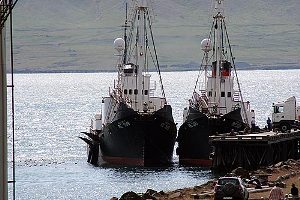
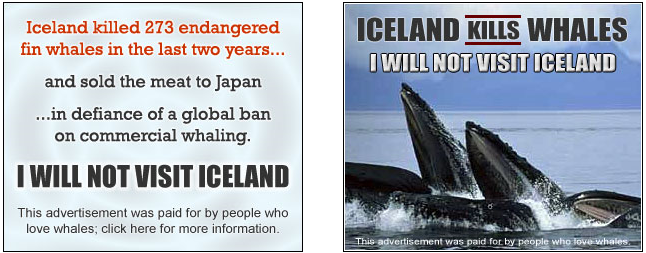
    Icelandic whaling boatsA website has been launched where tourists are encouraged to boycott Iceland as their vacation destination due to the country’s whaling policy. Iceland is among other nations, such as Canada, Norway, Japan and the United States that carry out whaling. The website “rescuethewhales.org” maintains that Iceland is whaling endangered species. The misunderstanding might arrive from the hunt of fin whales in Icelandic and adjacent waters. According to the International Whaling Commission (IWC) fin whales are endangered in the Southern Hemisphere but not in the North Atlantic Ocean. Assessments of the population status in the central North Atlantic and off West Greenland have shown populations to be in a healthy state.

    The aim of the group behind the website, rescuethewhales.org is to damage Icelandic economy by appealing to the public not to visit the country and therefore try to undermine its tourism. It is stated in the website that Iceland is a small country where the economy is small and dependent on few large industries, such as tourism. Icelandic economy is similar to other small economies within the Arctic region, being dependent on natural resources and increasingly on tourism. Actions based in many occasions on emotions, as mentioned at the website, rescuethewhales.org could therefore have severe consequences to economies such as Iceland.

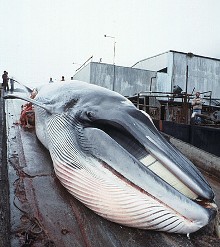
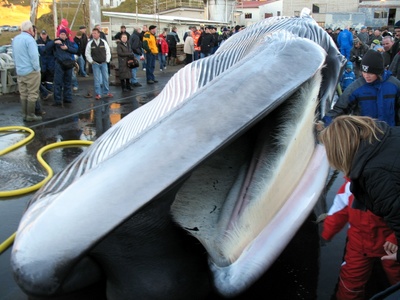
    minke-whale-is-dragged-up-rampAccording to the Icelandic fisheries portal, at least 12 species of whales, dolphins, and porpoises occur regularly in Icelandic waters and 11 other have been recorded more sporadically. Out of those 23 species that are recorded around Iceland, two are scientifically assessed and annual catch recommendations based on that, fin whale and minke whale. The Icelandic Ministry of Fisheries and Agriculture considers whaling as sustainable and the Icelandic whaling policy is based on precautionary approach. This means that the whale stocks benefit of the doubt. In context with whaling, a quota is issued where number of whales captured does not exceed future sustainable development of the stock.
    The Icelandic Marine Research Institute, in collaboration with the North Atlantic Marine Mammal Commission (NAMMCO) and the IWC estimates that the stock of fin whale around Jan Mayen, Greenland and Iceland is from 21.000 – 24.000 animals. On the basis of the assessment conducted within the Scientific Committees of the IWC and NAMMCO, the Icelandic Marine Research Institute recommended annual catches of up to 150 fin whales as sustainable and precautionary. The catch can go up to 200 animals if adjacent waters in East of Greenland and Jan Mayen are taken into consideration.

    As reported by the Icelandic Marine Research Institution, the minke whale stock around Iceland is considered to be close to pre-exploitation abundance, and historic catches were not thought to have affected the stock langreydurappreciably. An aerial survey conducted in coastal Icelandic waters in 2007 showed lower abundance estimates than previous surveys, or 10 700 and 15 100, depending on the method of analysis. A survey conducted in 2008 showed much higher densities, indicating that the unusually low densities in 2007 were due to a temporary shift in distribution within the population area. Based on a stock assessments conducted by the Scientific Committees of NAMMCO and the IWC, it was recommend by the Icelandic Marine Research Institute that annual catches of common minke whales from the Central North Atlantic stock do not exceed 216 animals in the Icelandic continental shelf area.

    The Icelandic Ministry of Fisheries and Agriculture followed the scientific recommendations of the Marine Research Institute and issued annual quota for 2009 – 2014 of 200 fin whales and 200 minke whales. However, in the last two years Icelandic whalers whaled less than 400 animals, meaning that the maximum quota was not reach. As published on the web of the Icelandic Ministry of Fisheries and Agriculture, the country has conducted responsible harvest of marine creatures for years and aims to continue to do, for it is known that the country needs to rely on its renewable marine resources.
    The issue of whaling is highly sensitive matter. The discourse, however, should be about responsible and sustainable harvesting of living resources, where current utilization does not threat future development and growth of those resources. Sustainable use of North-Atlantic renewable marine resources and harvest of whales and other species is an important issue and should be applied whenever possible.

    Whaling is wrong Statements

    The aim of the anti whaling campaign against Iceland is to damage its economy by appealing to people to boycott Iceland as a travel destination. Whaling is a sensitive issue where advocates portray their views. However some mistakes are sometimes made, as with the rescuethewhales.org campaign. Their logos state that Iceland whales endangered species, which is incorrect. Another mistake is to use humpback whales in the logo to the right. Humpback whales are preserved in Iceland, as in Alaska where the photo is taken.

    Sources and further information:

    International Whaling Commission

    North Atlantic Marine Mammal Commission

    Icelandic Marine Research Institute

    Icelandic Ministry of Fisheries and Agriculture
    Fisheries.is

  • High Temperature in the North – Cold in the south

    High Temperature in the North – Cold in the south

    temperature in Nuuk

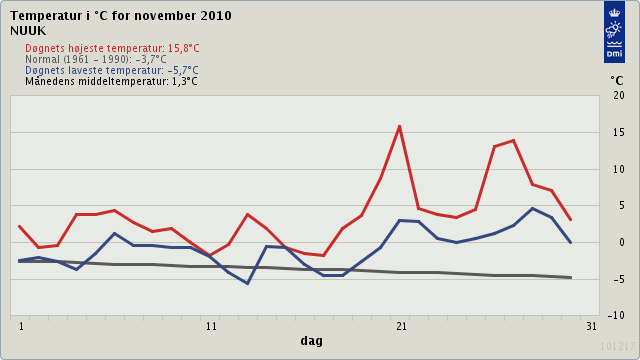
    During November and the beginning of December, there has been unusual weather phenomenon over Greenland and Iceland causing unusual high temperature in the area. It is reported on the 29th of November that in the capital of Greenland, Nuuk, that the temperature was as high as 16° C (61°). According to the Danish Meteorological office, the mean temperature in November 2010 in Nuuk was 1,6° C (36° F), while the annual mean temperature in November is -3,7°C (25° F). So far in December, the mean temperature has been 1° C (34° F), which is seven degrees over the annual mean temperature, which is -6,2°C (21° F). This unusual high temperature has though not occurred in Iceland were the mean temperature was close to the annual mean. Still, the temperature went as high as 12, 4°C (11 °F) along the south coast. In December, the temperature at the south coast of the island went as high as 15° C (59 °F). Such high numbers in Iceland are not common in Iceland even though for the mean temperature is quite high, due to the Gulf Stream. However, this is unusual in Greenland.

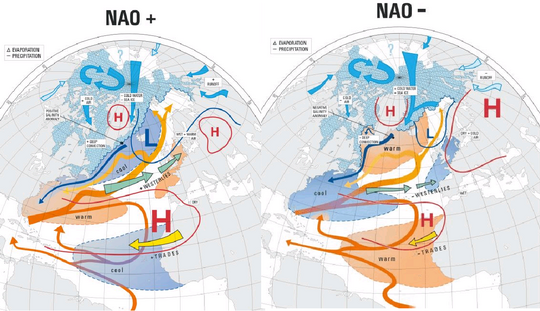
    This unusual weather conditions might be explained with the so called North Atlantic Oscillation (NAO). This weather phenomenon in the North Atlantic Ocean is fluctuation in the difference of atmospheric pressure at sea level between Iceland in the north and the Azores in the south. There is a correlation between those two areas, meaning that when there is a high pressure over Iceland, there is a low pressure over the Azores and vice versa. The east-west oscillation motion of this pressure difference then controls the strength of the direction of the westerly winds which are the main cause for abnormal weather activity in the North Atlantic region and in Central Europe.

    NAO positive/negative effects on the weather

    In November till April, the NAO is responsible for much of the variability of weather in the North Atlantic region, causing wind speed and direction to change, which further cause changes in temperature and moisture. When the NAO is positive it causes mild temperature in West and Central Europe and cool climate in Greenland and Labrador. When the NAO is negative it causes a shift, meaning that West and Central Europe becomes colder when it warms up in Greenland, Labrador and Iceland.

    The winter of 2009-10 in Europe was unusually cold, especially during December, January and February and caused many inconveniences in the continent. It is theorized that this may be due to solar activity but this cold winter is also coincided with an exceptionally negative phase of the NAO.

    Sea ice

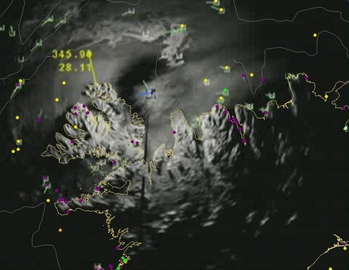
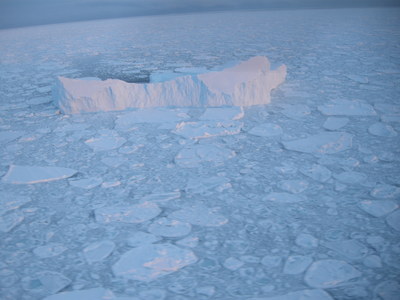
    The NAO also causes changes in sea ice distribution at the east coast of Greenland. The NAO is in negative position, causing more westerly wind to blow. Also, the NAO generates better conditions for the sea is to formulate at the north east coast of Greenland. Du to this, a sea ice warning has been issued by the Icelandic Metrological Office in Iceland. According to surveillance of the Icelandic Coast Guard on the 9th of December the sea ice edge was around 20 nautical miles from the North west coast of Iceland. A day later, on the 10th of December, the sea ice edge was only 10 nautical miles from the shore. This is caused by a strong westerly wind, caused by the NAO, which blows sea ice into Icelandic waters. The sea ice has drifted further west into Icelandic waters but away from shore. However, with strong northern winds, the ice might reach shore at some northern peninsulas. This can cause inconvenience for sea-farers and fishermen since the sea ice can block the sea route North West of Iceland. Due to this, transportation of fish needs to be on land since vessels can be shut from the home harbour. The Ice is however sparse with denser ice in between. Five large icebergs have been also spotted and is the highest one estimated to be around 110 meters (360 feet). Such large icebergs are as not usual in this area. A reason for increased icebergs might be due to warmer climate. Warmer climate causes the ice-shelf around Greenland to weaken and break up, causing increased icebergs in adjunct waters.

    The NAO phenomenon is negative position now, causing unusual weather in Greenland and somewhat in Iceland. However, the most of the inconvenience caused by the NAO occurs in Central Europe. The winter in Europe has been very cold so far in 2010 and is predicted to stay so until the beginning of the new year of 2011. This has been linked to the NAO, however, there might be another reason. For example, the Icelandic low pressure – which normally sits between to the west of Iceland and Greenland – has appeared regularly to the east of Iceland and so allowed exceptionally cold air into Europe from the Arctic. Together those two form a unusual weather conditions in the area. However, there is no doubt of an unusual and or a changing climate.

    Iceberg in Icelandic waters

    Sources:

    Icelandic Meteorological Office
    Danish Meteorological Institute
    The Icelandic Coastguard

  • The many faces of snow

    The many faces of snow

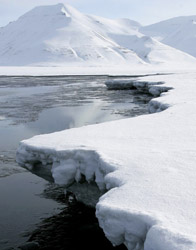
    Ice in the arcticNow that the holiday season is approaching most of us wish it would snow, at least a little. White Christmas is at the top of the list for most kids and even we adults would not mind sliding a sledge down some nice hill every once in a while. For Arctic indigenous peoples snow is almost an all year round experience and throughout the centuries snow has played an important role in their way of life. However, for Arctic residents snow is not just snow. In most Arctic indigenous languages can be found various expressions for different types of snow and for example in Icelandic there can be found at least 10 different words for snow of which many are also popular names, such as Fönn, Fannar, Mjöll and Snær.

    The Icelandic repertoire is though nothing compared to the Inuktitut one, which has more than 200 different words for snow depending on the type of snow as well as the surrounding conditions. Qanniq means falling snow, maujaq deep, soft snow, kinirtaq wet, compact snow, katakartanaq crusty snow marked by footprints, uangniut snowdrift made by northwest wind and munnguqtuq compressed snow softening in spring.

    shamanThe Saami languages also categorize snow according to texture and context. For example, words used in connection with skiing and reindeer husbandry are different, even though the snow would be the same. It is also interesting to notice that even though Saami and Finnish are related languages and many of the words for snow in Saami sound familiar to Finnish speakers, the Finnish language itself only has three different official words for snow.  The Saami word vahtsa means one or two inches of new snow on top of old snow. New wet snow is called slahtte and falling rain mixed snow slabttse. Falling wet snow lying on the ground is called släbtsádahka or släbsát. Skilltje, bulltje and tjilvve are words for snow and ice that fall on objects, reindeer moss and trees. Large lumps of snow hanging on the ridge are nearly always called bulltje. Åppås on the other hand is virgin, clear snow.