Tag: Alaska

  • From Alaska to Iceland: six years later

    From Alaska to Iceland: six years later

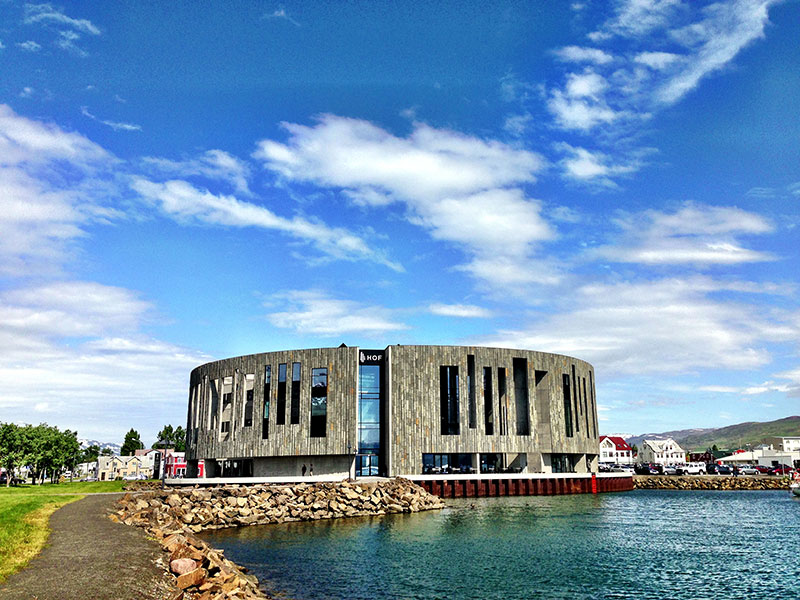
    HOF - Culture House in Akureyri and the conference venue

    Once again, after highly successful 2007 Arctic Energy Summit and Technology Conference, The Institute of the North, together with its Icelandic partner – the Arctic Portal, is organizing The 2013 Arctic Energy Summit.

    The event will take place 8th – 10th October in Akureyri, northern Iceland and relate to thematic areas such as richness, resilience and responsibility. More information about the conference and its topics is available here.

    Foe those, who do not remember, the first Arctic Energy Summit was held in 2007 in Anchorage, Alaska and gathered close to 300 representatives from 13 different countries.
    The technology conference provided a forum for the presentation of international, interdisciplinary technical research papers on the Arctic as an emerging province.

    Presentations covered fields of extractive energy, rural power and sustainability of energy in the Arctic. To read more about topics covered by Arctic Energy Summit 2007, please visit the IoN Website.

    This year´s speakers will include David J.Hayes, Deputy Secretary of the Department of the Interior in the United States, David Garman, the former Under Secretary of Energy at the U.S. Department of Energy, and Aqqaluk Lynge, the former President of the Inuit Circumpolar Council (ICC) and its current international Chair.

  • Conoco’s drilling now on hold

    Conoco’s drilling now on hold

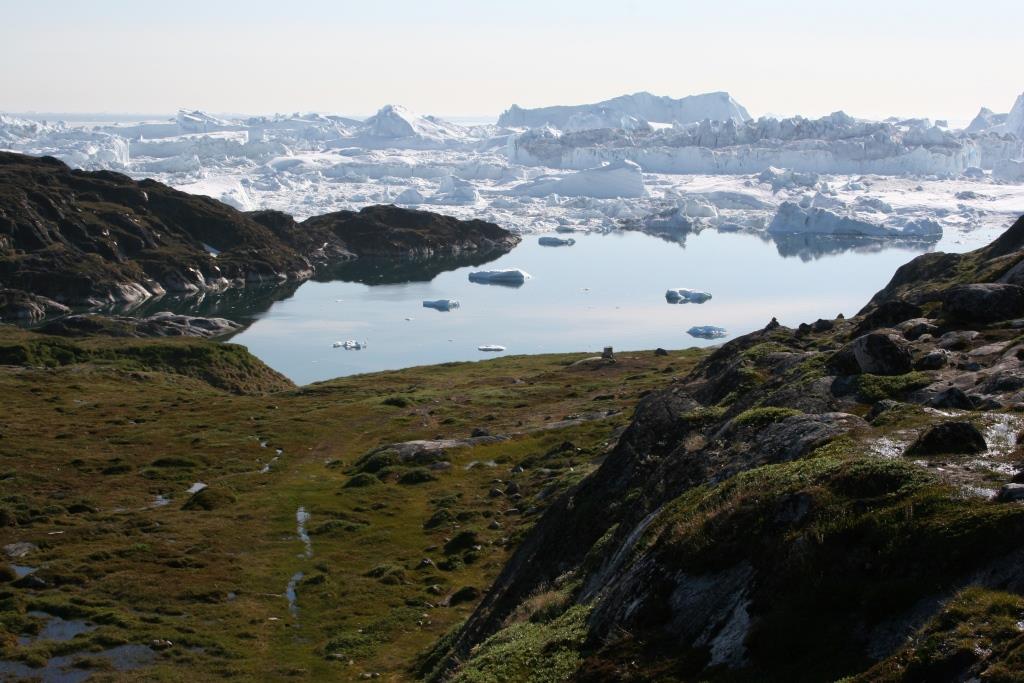
    Alaskan landscape

    In a big blow to Arctic exploration, Conoco’s offshore-drilling program was put on hold.

    Not long after Royal Dutch Shell and Russian Gazprom signed the memorandum on their Arctic Ocean drilling program, ConocoPhillips Alaska announced early Wednesday that an uncertain regulatory environment has forced the company to put the brakes on exploratory drilling it planned for next summer.

    The news is consequential for Alaskans hoping new discoveries will replenish the dwindling flow in the trans-Alaska pipeline, the 800-mile long corridor shipping black crude that funds most state government services.

    The announcement means there may be little oil activity on Alaska’s outer-continental shelf this summer, in part because other companies, including Norwegian oil giant Statoil, have followed the lead of Shell and Conoco.

    ConocoPhillips Company is an American multinational energy corporation with its headquarters located in the Energy Corridor district of Houston, Texas in the United States. It is the world’s largest independent pure-play exploration & production company.

    In the year 2007 Conoco Phillips became the first U.S. oil company to join the U.S. Climate Action Partnership, an alliance of big business and environmental groups. Today, it is a signatory participant of the Voluntary Principles on Security and Human Rights.

    Source

    Alaska Dispatch

  • Shell puts Alaska plans on ice

    Shell puts Alaska plans on ice

    Oil tanker gets a refill

    Oil giant Shell has put its controversial plans to drill for oil in Alaska on ice, at least for this year. The company had multiple problems with the two drilling platforms to be used for exploration.

    Concerns over safety in the platforms have been raised and the plans critized. Shell pushed hard for permission to explore and in the end got its permission.

    Shell has now sent the two platforms to Asia to be repaired and improved and plans to drill in the Chukchi Sea and Beuforthaven in 2014.

    “We have made progress in Alaska, but this is a long term program that we intend to implement in a safe and thoughtful way,” said Shell president Marvin Odum.

    Shell drilled two test holes last year, according to the company went according to plan.

    “The drilling was perfectly safe, with no serious injuries or impact on the environment,” said in a statement.

    Source

    Offshore

  • Cold winter conditions in the Arctic

    Cold winter conditions in the Arctic

    Climate conditions have been negative

    States for 2012 was climate conditions in Scandinavia, Siberia, Alaska and Canada have been colder than average this winter.

    The National Snow and Ice Data Center reports that the Arctic sea ice extent for December 2012 was well below average, driven by anomalously low ice conditions in the Kara, Barents, and Labrador seas.

    NSIDC states that the winter has been dominated by the negative phase of the Arctic Oscillation, bringing the cold climate around the Arctic.

    The Arctic Oscillation is an Arctic climate index with positive and negative phases, which represents the state of atmospheric circulation over the Arctic. The positive phase brings lower-than-normal pressure over the polar region, steering ocean storms northward, bringing wetter weather to Scotland and Scandinavia, and drier conditions to areas such as Spain and the Middle East.

    Reports today also show that the average temperature for USA for 2012 was above average, showing different climate than in the Arctic, outside of Alaska.

    Sources

    NSIDC

    NOAA 1

    NOAA 2

  • Alaska drilling season over

    Alaska drilling season over

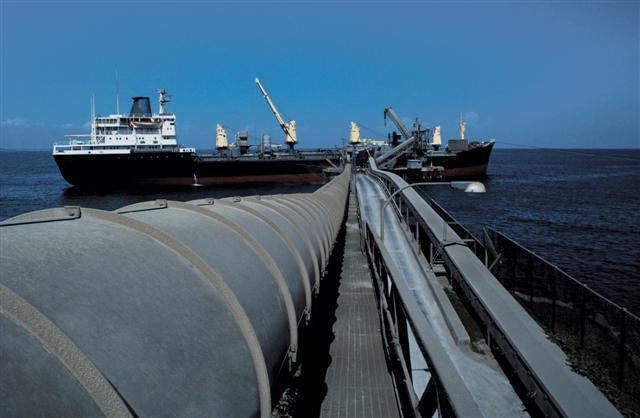
    Pipeline to an oil tanker

    The first drilling for natural resources in Alaskan waters for over two decades has been completed for this year. Shell was drilling and intends to return next year to go even deeper.

    Shell only had permission to go to 1400 feet with two boreholes, well short of oil and gas deposits. But potential deposits will be sought next year.

    Early this summer, at the start of a narrow window for exploratory drilling in the region, thick sea ice clinging to Alaska’s shores prevented Shell’s ships from cruising to the drill sites.

    “The mandatory close of the drilling window offshore Alaska brings to an end a season in which we once again demonstrated the ability to drill safely and responsibly in the Arctic,” said Curtis Smith, a Shell spokesman, in a statement Wednesday.

    “The work we accomplished in drilling the top portion of the Burger-A well in the Chukchi Sea and the Sivulliq well in the Beaufort Sea will go a long way in positioning Shell for a successful drilling program in 2013.”

    Oil companies bored 30 exploratory wells in the Beaufort Sea and another five in the Chukchi Sea between 1982 and 1997, but Shell’s work this summer may signal a new Arctic oil rush. Other companies waiting in the wings with leases in the Chukchi and Beaufort Seas include Repsol and ConocoPhillips.
    Sources:
    Alaska Dispatch
    FuelFIx

  • Video shows enourmous glacier melt

    Video shows enourmous glacier melt

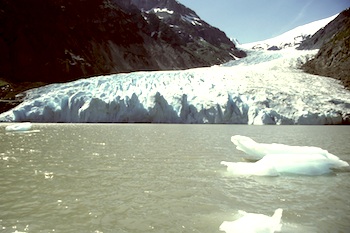
    A melting glacier

    A new time lapse vide footage shows the Columbia glacier in Alaska diminishing fast in only four years.

    James Balog is responsible for the footage, to be shown in a new documentary on climate change later this month.

    Balog is the founder of Extreme Ice Survey, a photographic study of glaciers, most around the Arctic. The EIS team has 27 time lapse cameras in 15 places in Greenland, Iceland, Alaska and in the Rocky Mountains in Colorado, USA.

    “Shrinking glaciers are the canary in the global coal mine. They are the most visible, tangible manifestations of climate change on the planet today,” he told the Idaho Press.

    Click here to see the video.

    Sources

    Idaho Press

    Huffington Post

  • ICC sues the United States

    The Inuit Circumpolar Conference

    The Inuit Circumpolar Conference (ICC) provides a major international collective voice for more than 155.000 Inuit from Alaska, Canada, Greenland and the Chukotka Peninsula. On behalf of people in Alaska the ICC in 2005 filed a legal petition against the government of the United States of America, saying its climate change policies violate human rights.

    The ICC claimed the USA failed to control emissions of greenhouse gases, which damaged the livelihood in the Arctic. It demanded that the US limited its emission

    The lawsuit was against the USA because it is the largest emitter of greenhouse gasses in the world, and it has refused to sign and ratify the Kyoto protocol. When filing the petition Ms. Sheila Watt-Cloutier, then the elected Chair of the ICC said this:

    “We submit this petition not in a spirit of confrontation—that is not the Inuit way—but as a means of inviting and promoting dialogue with the United States of America within the context of the climate change convention. Our purpose is to educate not criticize, and to inform not condemn. I invite the United States of America to respond positively to our petition. As well, I invite governments and non-governmental
    organizations worldwide to support our petition and to never forget that,
    ultimately, climate change is a matter of human rights.”

    As she said, the purpose is to educate, and that is exactly what the lawsuit did. The ICC lost but it gained huge reaction from the public about climate change and what it was doing to the lifestyles of indigenous peoples.

  • E-Trip to Alaska to Discuss Issues Facing the Arctic

    National Ocean Council

    The US Arctic Research Commission (USARC) and Alaska Center for Climate Assessment and Policy at the University of Alaska-Fairbanks will host an interactive “Webinar” to discuss issues concerning the Arctic tonight April 19 at 1800 GMT.

    The Webinar will focus on initial efforts to develop a national strategic action plan for the U.S. — called for by President Obama in his July 2010 National Ocean Policy—to address changing conditions in the Arctic.

    To register to the webinar and to get additional information, please read the US National Ocean Council news item HERE

  • Single mother stops Alaska oil construction project

    Single mother stops Alaska oil construction project

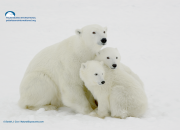
    polar bear family

    Construction workers at an Alaskan oil construction project had just finished building the ice road connecting their land-based operations to a nearby island when a worker made a discovery that would bring them to a halt for days. There, on the edge of the manmade island not too far from where the road entered, was a polar bear. This wasn’t just any polar bear. There, in the Beaufort Sea close to an oil industry drilling project, appeared a mother bear and her cub.

    The Alaska´s newest oil producer, ENI, just brought online earlier this year its shore-based Oliktok Point drilling operation, which sits east of Barrow along Alaska’s north slope close to Prudhoe Bay. Work at the nearby island, known as the Spy Island Development site, was under way to prepare the manmade island for drilling that’s expected to begin this fall. But the discovery of the polar bear den triggered an immediate pause that only the bear’s departure could lift.
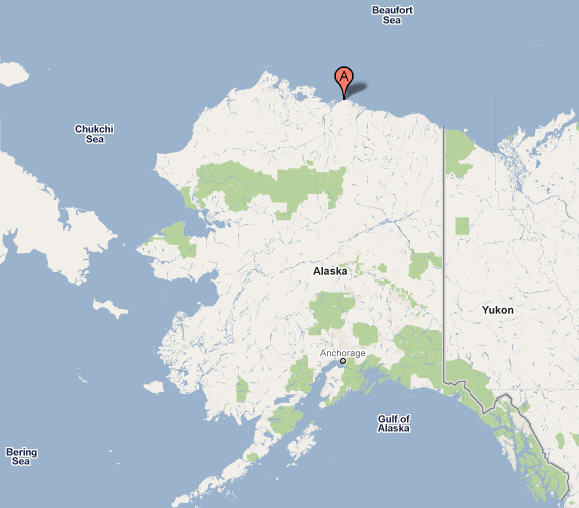
    Alaska North Slope map

    Activities at the island could resume as early as Wednesday evening provided the bears, which haven’t been seen for at least two days, do not resurface.
    Bruce Woods at the U.S. Fish and Wildlife service says It’s rare for a bear sighting and den to force a shut-down of work altogether.

    It’s not uncommon for industry to run across polar bears, and avoidance rules are in place to help minimize the impacts to the animals and the danger they may pose to humans. Roads may have to be rerouted and people may have to change the routes they take. When an inhabited den is discovered, a one mile quiet zone must be established around the site, states Tom Evans, a polar bear biologist with the USFWS Anchorage office. Due to this, all operations are ceased until the bears are gone from the den site.

    In the two decades that Evans has worked for the service, he has heard of a bear den forcing work to stop only a handful of times.

    After ENI’s employees immediately stopped what they were doing and made the call about the Spy Island bears, biologists from Evans’ office traveled to the site to monitor the situation. They set up cameras and used an infrared scope to measure whether any heat was present.

    This particular mother bear apparently made her winter home by burrowing into a snowdrift that had formed along a series of large gravel sacks on the perimeter of the island that are used to help protect it from ice and erosion. It’s thought that by Monday, three days after the bears were first seen, that the duo had moved on. Biologists followed tracks leading away from the site for several miles and never found evidence that the bear had circled or turned back. It’s likely, Evans said, that she headed off in search of seals to eat. With a young cub, though, she’s not likely to try to do much deep water swimming and will probably stay on the ice pack that’s still connected to the shore rather than venture out to the southward-floating pack ice, Evans said.
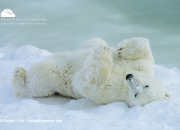
    lazy polar bear

    The biologists monitoring the bears didn’t personally witness their departure, but workers apparently saw the bears leaving the area on Sunday, according to Evans. And, he said, the scientists haven’t had time to review their surveillance footage to find out if they captured any images of the bears.

    Biologists are aware of two other dens in the same region — one on Howe Island, and another on a section of gravel along the coastline known as the “staging pad” — but neither have impacted industry operations.

    Bears typically make their dens in November. Cubs are born in January, and mid-March to mid-April is generally when they start to emerge, and a mother bear’s hunger level will determine how much time she spends with her cub hanging around the den. Sometimes, bears will wait up to two weeks before moving on, he said.
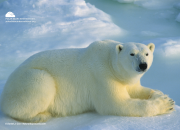
    polar bear relaxing

    ENI Petroleum, headquartered in Italy, was unable to immediately respond to questions about the bear sighting or the shutdown of its construction operations, according to Hans Niedig, the company’s Anchorage-based government and external affairs manager, citing the company’s formal protocol for receiving and responding to questions from the press.

    Provided the bears don’t show up again, the U.S. Fish and Wildlife Service had planned to let ENI resume operations at Spy Island.

    Everybody did the right thing, Woods said, which resulted in a good outcome. “There was no harm to anybody, and no harm to the bears,” he said.

    Reported by Alaska Dispatch

    Pictures:

    Google Maps

    Polar Bear International
  • The St. Matthew Island

    The St. Matthew Island

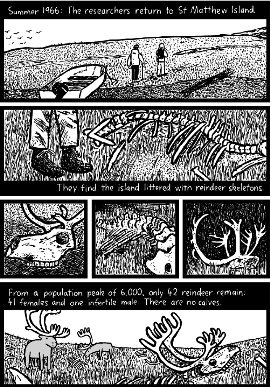
    St. Matthew Island feature comicComic short stories author Stuart McMillen from Brisbane, Australia brings to his attention the case of the St. Matthew Island, which is a remote island in the Bering Sea in Alaska. The story is about the prosperity of specie that was introduced to the island but in the end collapsed. View the McMillen story.

    The case of the St. Matthew Island

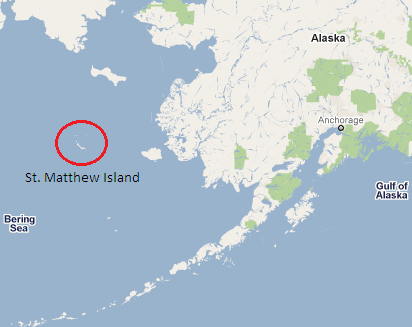
    During World War II, while trying to stock a remote island in the Bering Sea with an emergency food source, the U.S. Coast Guard set in motion a classic experiment in the boom and bust of a wildlife population. The island was St. Matthew, an unoccupied 32-mile long, four-mile wide sliver of tundra and cliffs in the Bering Sea, more than 200 miles from the nearest Alaska village. In 1944, the Coast Guard installed a loran (long range aids to navigation) station on St. Matthew to help captains of U.S. ships and aircraft pilots pinpoint their locations. The Coast Guard stationed 19 men on St. Matthew Island to operate the station. Those men—electrical technicians, cooks, medics, and others—made up the entire human population of the island.
    In August 1944, the Coast Guard released 29 reindeer on the island as a backup food source for the men. Barged over from Nunivak Island, the animals landed in an ungulate paradise: lichen mats four inches thick carpeted areas of the island, and the men of the Coast Guard station were the reindeer’s only potential predators.

    The men left before they had the chance to shoot a reindeer. With the end of World War II approaching, the Coast Guard pulled the men from the island. St. Matthew’s remaining residents were the seabirds that nest on its cliffs, McKay’s snow buntings and other ground-nesting birds, arctic foxes, a single species of vole, and 29 reindeer.

    St. Matthew Island on a World MapSt. Matthew then had the classic ingredients for a population explosion—a group of healthy large herbivores with a limited food supply and no creature above them in the food chain. That’s what Dave Klein saw when he visited the island in 1957. Klein was then a biologist working for U.S. Fish and Wildlife Service. He is now a professor emeritus with the University of Alaska Fairbanks’ Institute of Arctic Biology. The first time he hiked the length of St. Matthew Island in 1957, he and field assistant Jim Whisenhant counted 1,350 reindeer, most of which were fat and in excellent shape. Klein noticed that reindeer had trampled and overgrazed some lichen mats, foreshadowing a disaster to come.
    Klein did not get a chance to return to the island until the summer of 1963, when a Coast Guard cutter dropped him and three other scientists off on the island. As their boots hit the shore, they saw reindeer tracks, reindeer droppings, bent-over willows, and reindeer after reindeer.
    “We counted 6,000 of them,” Klein said. “They were really hammering the lichens.” The herd was then at a staggering density of 47 reindeer per square mile. Klein noted the animals’ body size decreased since his last visit, as had the ratio of yearling reindeer to adults. All signs pointed to a crash ahead.
    St. Matthew Island feature comic storyOther work commitments and the difficulty of finding a ride to St. Matthew kept Klein from returning until the summer of 1966, but he heard a startling report from men on a Coast Guard cutter who had gone ashore to hunt reindeer in August 1965—the men had seen dozens of bleached reindeer skeletons scattered over the tundra.

    When Klein returned in the summer of 1966, he, another biologist and a botanist found the island covered with skeletons; they counted only 42 live reindeer, no fawns, 41 females and one male with abnormal antlers that probably wasn’t able to reproduce. During a few months, the reindeer population of St. Matthew had dropped by 99 percent. By piecing together clues found amid the bones, Klein figured that thousands of reindeer starved during the winter following his last visit, when he counted 6,000 animals on the island. Weather records from St. Paul and Nunivak islands for the winter of 1963-1964 showed an extreme winter in both cold and amount of snowfall.

    With no breeding population, the reindeer of St. Matthew Island died off by the 1980s. The unintended experiment in population dynamics and range ecology ended as it began—with winds howling over the green hills of a remote island in the Bering Sea, a place where arctic foxes are once again the largest mammals roaming the tundra.

    Sources:
    Alaska Science Forum
    Stuart McMillen – Recombinant Records
    Google Maps