Tag: Alaska

  • Shell pushing to win approval for its plan to drill for oil in the Alaskan Arctic

    Shell

    Royal Dutch Shell is beginning a public lobbying campaign, including national advertising, on Monday. The giant oil company is promising to make unprecedented preparation to prevent the kind of disaster that polluted the Gulf of Mexico earlier this year. With the turmoil and damage created by the BP spill it can be imagined that they have quit a job to do.

    The plan is to drill in Alaska’s Beaufort and Chukchi seas is not a new venture but something that has been stalled by lawsuits and regulatory delays four years. The company was close to overcome all hurdles when the BP accident occurred. Due to the BP accident the Obama registration suspended most new offshore drilling, including within the sesitive waters of the Arctic. Since then the moratorium on gulf drilling has been lifted,Shell is pressing the Interior Department to grant final approval for its Arctic projects by the end of this year so that the company has enough time to move the necessary equipment to drill next summer, when the ice clears.

    following the BP accident, both individuals and official parties have become more aware of the environmental risks involved with such ventures which will hopefully lead to strenghtendend security meassures and the strengthening of response units, if such an accident is to o cure again.

  • Annual Environmental Justice Conference: Call for Presentations

    Annual Environmental Justice Conference: Call for Presentations

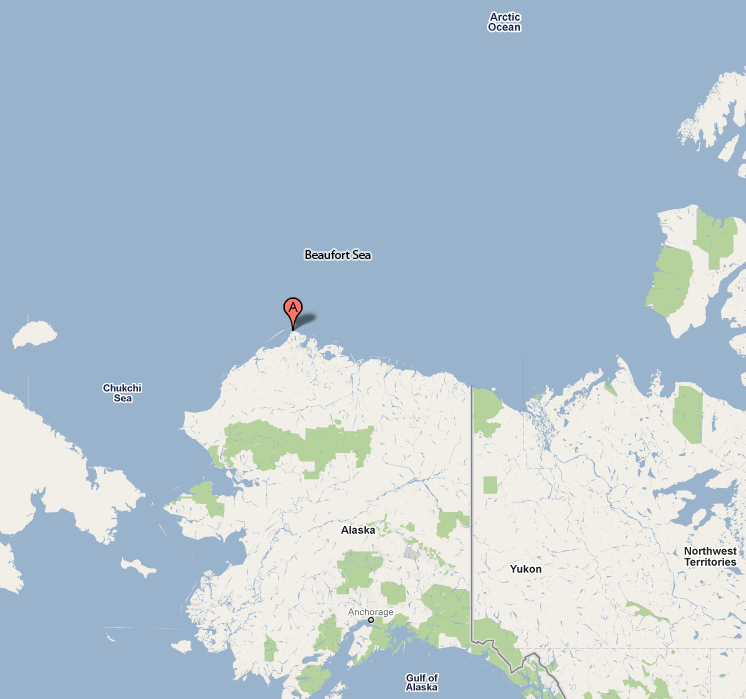
    Barrow on the map

    The Board of Directors of the Inupiat Community of the Arctic Slope (ICAS), Barrow, Alaska, respectfully request you to be a presenter at our annual Environmental Justice Conference to be held in Barrow, AK, January 11th and 12th, 2011.

    The conference theme is Effects of Industrial Development on the Arctic Inupiat with an emphasis on environmental justice. Our purpose is to prepare for off shore and on shore development in and near the Beaufort and Chuckchi Seas and learn about the potential for new shipping lanes in the Arctic Ocean.

    The Federal EPA describes Environmental Justice as:

    -the fair treatment and meaningful involvement of all people regardless of race, color, national origin, or income with respect to the development, implementation, and enforcement of environmental laws, regulations, and policies. EPA has this goal for all communities and persons across this Nation. It will be achieved when everyone enjoys the same degree of protection from environmental and health hazards and equal access to the decision-making process to have a healthy environment in which to live, learn, and work.

    Potential topics are:

    • Environmental Justice History
    • Planned Projects in oil and gas development
    • Barriers to Inupiat participation in the development process
    • How these developments currently and in the future affect Inupiat communities (Village speakers)
    • Potential effects of development on the Arctic environment, ice cellars, and subsistence culture
    • Current Environmental laws including the environmental impact statement
    • Proposing changes to environmental reviews to include traditional knowledge
    • Strengthening efforts to integrate environmental justice into EPA
    • Off shore development
    • General discussion on the Arctic environment
    • Related legislation
    • Shipping
    • Impact on development of employment for Inupiat communities
    • Existing resources
    • International movement of environmental justices (what works)
    • Human Environmental Impact
    • Global Warming/Climate Change

    To be considered as a presenter, you must send an outline of your presentation to Price Leavitt by November 18th, 2010. You will be notified by email and telephone if you are accepted as a presenter. Send presentations to: Price Leavitt, P.O. Box 934, Barrow, AK 99723 or icas.executive@barrow.com.

    Should there be a large number of appropriate presentations received, a few may be requested to present in panel form.

    Presenters are responsible for travel related costs. ICAS has reserved a block of rooms at Top of the World at a cost of $159.00 per night plus 5% tax for single or double occupancy. The rooms are being held under the group name: ICAS Conference and will be held until December 21, 2010 and thereafter will be available to the general public. Reservations may be made by emailing hotelreservations@nmsusa.com or by calling (907) 852-3900. Scholarships may become available.

    Hot breakfasts and lunches will be provided for all participants. Presenters will need to provide their own equipment and handouts for presentations.

  • Dinosaurs in the Arctic

    Dinosaurs in the Arctic

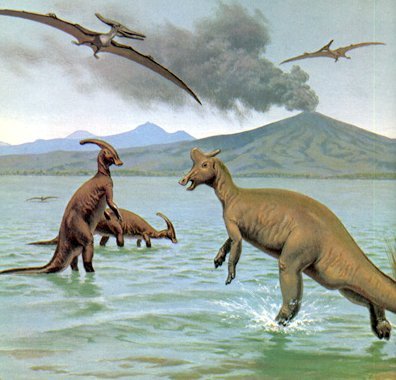
    T-RexIt may come as a surprise to many that dinosaurs are known to have lived in the high north. Paleontologists have over the years found remains in Canada’s and Alaska’s Arctic regions establishing that the region once had a Jurassic era. And possibly challenging existing theories claiming that dinosaurs died out due to a meteorite causing darkness witch led to the dinosaurs demise.

    Alaska’s North Slope was home to eight types of dinosaurs during the period they lived there, from 75 million to 70 million years ago, say paleontologists including UAF’s Roland Gangloff and Tony Fiorillo of The Dallas Museum of Natural History. Four of the dinosaurs ate plants, and four others ate the plant eaters and other creatures, Fiorillo wrote in a recent Scientific American article. The most common far-north dinosaur was the duck-billed Edmontosaurus, a plant-eating hadrosaur that weighed between 3,000 and 4,000 pounds.

    How could these cold-blooded creatures have survived on Alaska’s North Slope? As I type this in early February, it’s -20 F at the weather station closest to the fossil beds on the Colville River. By examining fossil pollen, leaves, and wood, scientists have found that northern Alaska was a much warmer place at the time of the dinosaurs, possibly with average annual temperatures well above freezing, Fiorillo wrote.

    dinosaursEven though northern Alaska was warmer then, it was still probably cold enough for occasional snow and was farther north than it is today, so the sun didn’t rise for weeks in midwinter. Today, the North Slope’s grizzly bears are tucked away in hillside dens, but it’s tough to picture a 35-foot hadrosaur hibernating, Fiorillo wrote. Dinosaurs may have dialed down their metabolism to require less food, and some researchers have suggested they might have migrated south during the deep dark of midwinter. To check the migration hypothesis, Fiorillo and Gangloff compared bone length and body masses of hadrosaurs to the north’s master of migration, the caribou. They decided that juvenile hadrosaurs were relatively much smaller than juvenile caribou, and that it was unlikely the hadrosaurs migrated.

    If dinosaurs remained on the North Slope during the winter, biologists expect their bodies would show some adaptations to darkness. Numerous scattered teeth of the meat-eating Troodon found in Alaska suggest it was a common dinosaur, and one of Troodon’s main characteristics was a set of very large eyes, possibly an adaptation to low light.

  • The Location of the 5th NRF Open Assembly

    Nestled between the Chugach Mountains to the east and the shoreline of Cook Inlet to the west, Anchorage is a unique combination of a wilderness and modern city life. Within just a few minutes from downtown, you can be alone in a forest or hiking in the mountains. Anchorage has many parks and bike trails and it is quite common to spot the moose and other wildlife that make their home in the city.

    Anchorage residents value their access to the wilderness and the abundance of outdoor activities including two spectacular marine environments: Prince William Sound and Kenai Fjords National Park. Both offer spectacular scenery and wildlife viewing as well as opportunities for fishing and other outdoor excursions.

    Anchorage is Alaska’s largest city, with nearly half of the entire state population residing here! Though it is a young city by most standards – it was founded in 1915 – Anchorage has a rich and fascinating history that extends back to the original indigenous population. What you see today began as a tent city to house Alaska Railroad workers and has grown to encompass a vibrant and diverse population. The city is known for being the crossroads for air transportation, home of Alaska’s largest university, the University of Alaska Anchorage, as well as enjoying rich cultural diversity from the indigenous Alaska Natives to the immigrant populations who choose to make Anchorage their home.

    This mingling of cultures and traditions makes Anchorage known for great restaurants, world class museums and art, friendly people and stunning natural beauty.

  • The Fifth Open Assembly of the Northern Research Forum

    Anchorage, Alaska, 24 – 27 September 2008

    The 5th Open Assembly of the Northern Research Forum, Seeking Balance in a Changing North, will take place in Anchorage, Alaska, USA on September 24th – 27th 2008. The event is being organized by the Northern Research Forum, together with the 5th NRF Host Organizing Committee representing the Office of the Governor of Alaska, Office of the Mayor of Anchorage, US Arctic Research Commission, Inuit Circumpolar Council, Institute of the North, University of Alaska Anchorage, Alaska Native Science Commission, The Northern Forum, Chickaloon Village Traditional Council, Anchorage Museum of History and Art, Cinza Research, and Anchorage Convention & Visitors Bureau.

    The purpose of the Northern Research Forum is to promote intensive dialogue among members of the research community and a wide range of other northern stakeholders. This dialogue addresses the critical issues, problems and opportunities facing circumpolar peoples in the context of social and environmental changes and economic globalization. The Forum provides an open meeting for policy-relevant discussion on the role of research in addressing issues of sustainable development, community viability, peace and security, social and environmental policy, and the impacts of global change.

    The purpose of the Northern Research Forum is to promote intensive dialogue among members of the research community and a wide range of other northern stakeholders. This dialogue addresses the critical issues, problems and opportunities facing circumpolar peoples in the context of social and environmental changes and economic globalization. The Forum provides an open meeting for policy-relevant discussion on the role of research in addressing issues of sustainable development, community viability, peace and security, social and environmental policy, and the impacts of global change.