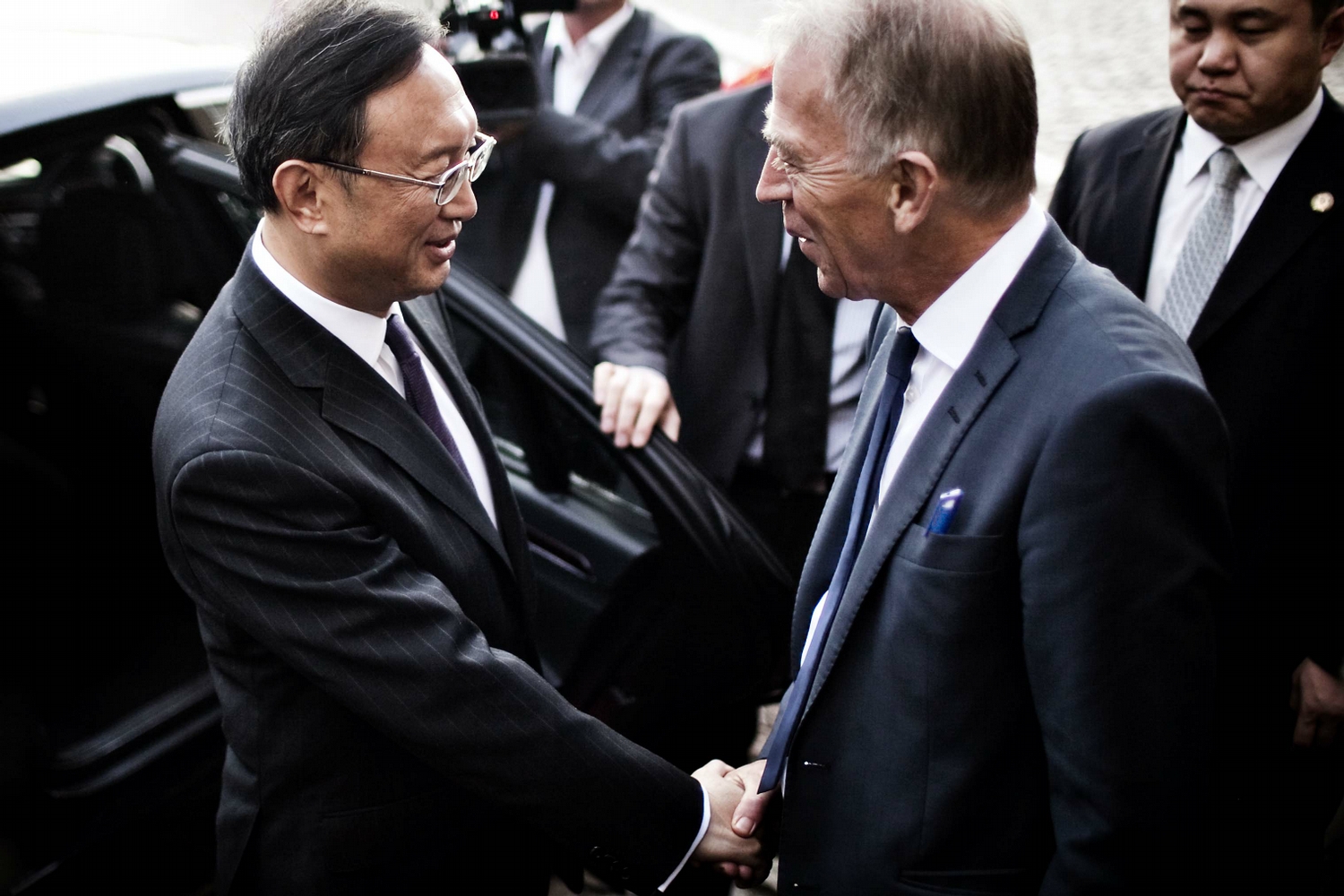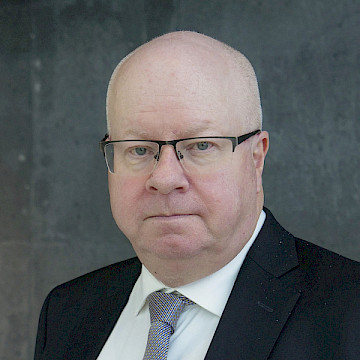
Morten Høglund Chair of the senior Arctic Official
Norway Chairship, 2023-2025
The overall objective for Norway’s Chairship of the Arctic Council will be to promote stability and constructive cooperation in the Arctic. Norway will focus on the core issues the Council deals with, including impacts of climate change, sustainable development, and efforts to enhance the well-being of people living in the region. Through four priority topics: the oceans; climate and environment, sustainable economic development; and people in the North, Norway will continue to pursue the long-term approach taken by the Council in its important efforts to ensure a vibrant and sustainable Arctic region. Arctic youth and Arctic Indigenous Peoples are cross-cutting priorities of the Norwegian Chairship.
For more than 25 years the Arctic Council has played a central role in Arctic cooperation. The Working Groups produce crucial knowledge on the state of the Arctic, including climate change, which feeds into national and international management regimes.
Priorities
The four thematic priorities of Norway’s Chairship reflect long-term Norwegian priorities for the Arctic and for Norway’s Arctic policy, which are founded on knowledge and the principles of responsible and sustainable management.
The Oceans
A combination of increasing activity, rapid climate change and loss of sea ice is putting growing pressure on the Arctic marine environment. To promote healthy and productive oceans and enhance sustainability of Arctic Ocean industries, Norway will continue to focus on integrated ocean management.
We will continue the efforts to support and strengthen international ocean research collaboration and increase joint action to combat marine litter. The coastal areas play a vital role in maintaining dynamic local communities in the north. Strengthening cooperation on emergency preparedness and safe shipping in the Arctic is therefore a priority for Norway.
Clmate and Environment
Climate change is particularly rapid in the Arctic. Changes in the Arctic have impacts at a global level. Climate change is by far the most serious threat to Arctic biodiversity. During the Norwegian Chairship, we will focus on the impacts of climate change in the Arctic, the need to adapt the management regime to climate change, and the environmental problems associated with expanding human activity. A shared, robust knowledge base is vital to dealing with these challenges.
Sustainable Economic Development
The rich natural resources of the Arctic are already playing a role in economic development and supporting dynamic communities in the Arctic. At the same time, the region has considerable potential for economic development in connection with the green transition. During its Chairship, Norway will highlight sustainable economic development as an essential basis for social development in the Arctic. The green transition, the blue economy, sustainable shipping, and Arctic food systems will be special thematic priorities.
People in the North
Global climate change is altering the framework for livelihoods, settlement patterns and living conditions for people living in the Arctic, often in new and different ways. Through its Chairship of the Arctic Council Norway will seek to develop resilient, diverse, and inclusive Arctic communities that are attractive places to live in, for everyone.
To this end, Norway will seek to strengthen Arctic health cooperation, including cooperation on enhanced medical preparedness in the region. Norway will also work to enhance Arctic cooperation in the cultural field.
Nikolay Korchunov SAO Chair
Russia Chairship, 2021-2023
Responsible Governance for a Sustainable Arctic
A cross-cutting priority of the Russian Chairmanship in the Arctic Council will be “Responsible Governance for Sustainable Arctic” through promoting collective approaches to the sustainable development of the Arctic, environmentally, socially and economically balanced, enhancing synergy and cooperation and coordination with other regional structures, as well as implementation of the Council’s Strategic Plan, while respecting the rule of law.
The Comprehensive Program of the Russian Chairmanship Involves Multi-laterial Cooperation in the Following Priority Areas:
1. People of the Arctic, including Indigenous Peoples
The sustainable development of the Arctic is largely determined by the quality of human capital. The Russian Chairmanship’s main focus will be given to enhancing sustainability, resilience and viability of the Arctic communities, climate change adaptation measures, improving the well-being, health, education, quality of life of the Arctic inhabitants, as well as ensuring sustainable socio-economic development in the region. Promotion of scientific, educational and cultural exchanges, tourism and contacts between peoples and regions will also be high on its agenda. Special attention – to the preservation of linguistic and cultural heritage of Indigenous peoples of the Arctic, to the youth cooperation across the borders.
2. Environment protection, including Climate Change
Taking into account the rapid climate change in the Arctic, most notably accompanied by degradation of permafrost and the icy gas hydrides emissions, the Russian Chairmanship will continue supporting efforts to mitigate the negative effects of climate change, increase adaptation of life activities and ensuring resilience to its consequences, preservation and restoration of the environment, sustainable use of natural resources, maintaining the health of the Arctic ecosystems, including marine environment, preserving biodiversity, in particular, the Arctic migratory birds. In the context of further development of the region it is important to take into account not only the vulnerability of the Arctic to climate change, but also its long-term contribution – due to its natural, energy and transport resources and solutions – in facilitating the transition to a low-emission economy and, accordingly, to the implementation of the goals of the Paris Agreement. Equally topical task is to promote the introduction of advanced sustainable innovative technologies into the transport sector, industry, infrastructure and energy, including the use of renewable energy sources to improve the standards of living of the Arctic inhabitants.
3. Socio-Economic Development
A key condition for the well-being and prosperity of the Arctic is its sustainable economic development. The Russian Chairmanship will be further promoting constructive economic cooperation in the region, developing of reliable energy infrastructure, sustainable transport routes, including shipping, telecommunication systems, food production sector, improving the conditions for sustainable investment flows, encouraging innovations and entrepreneurship, business financing.
4. Strengthening of the Arctic Council
The Russian Chairmanship will continue supporting the establishment of the Arctic Council as the leading format for international Arctic cooperation, improving its work, increasing the effectiveness of its Working and Expert groups, the Secretariat, as well as developing mechanisms for financing the Council’s activities, including its projects and programs, implementing decisions and recommendations, as well as encouraging the dialogue and interaction with the Observers to provide their meaningful and balanced engagement in the Council’s activities. It intends to further intensify collaboration of the Arctic Council with the Arctic Economic Council, the Arctic Coast Guard Forum, the University of the Arctic. Among the priorities of the Russian Chairmanship – promoting international scientific cooperation, in particular, exploring the possibility to conduct an Arctic Council scientific expedition to the Arctic Ocean.

Einar Gunnarsson SAO Chair
Iceland Chairship, 2019-2021
The theme of the Arctic Council Chairmanship program for 2019-2021 reflects Iceland’s commitment to the principle of sustainable development and refers to the necessity of close cooperation between the states and peoples of the region and beyond. With sustainable development as an overarching theme, Iceland will highlight four priorities: The Arctic Marine Environment, Climate and Green Energy Solutions, People and Communities of the Arctic, and a Stronger Arctic Council.
The Arctic marine environment
During its Chairmanship, Iceland will highlight plastic pollution in the Arctic marine environment, drawing on the findings of the first desktop study on marine litter in the Arctic. The Arctic Council will work on the development of a Regional Action Plan to reduce marine litter, including micro-plastics, along with other efforts to monitor and limit its impacts.
Innovative methods to improve the utilization of living marine resources may have considerable potential for driving sustainable economic growth in coastal communities. Iceland is leading the development of a project on the Blue Bioeconomy in the Arctic, exploring opportunities to increase the value of marine products.
Iceland will continue to promote safe and sustainable shipping in the Arctic. With increasing marine traffic and activities, it is essential to maintain close and effective cooperation among the Arctic States on search and rescue, as well as emergency prevention, preparedness and response. Circumpolar meteorological and oceanographic cooperation also serves to improve safety at sea and should be developed further, in collaboration with the World Meteorological Organization.
Climate and green energy solutions
on gender equality in the Arctic and strengthen a network of experts and stakeholders in the field.
Stronger Arctic Council
Iceland’s Chairmanship will strive to enhance the constructive cooperation that has always been a key strength of the Arctic Council. Close consultations between the Member States and the Permanent Participants must continue, and further opportunities for mutually beneficial collaboration with Observers should be explored.
Iceland wishes to strengthen cooperation between the Arctic Council and the Arctic Economic Council, on the basis of a new Memorandum of Understanding, with the shared objective of promoting responsible economic development.
Aleksi Härkönen SAO Chair

René Söderman Senior Arctic Official
Finland Chairship, 2017-2019
Finland builds the 2017–2019 Chairmanship of the Arctic Council on strong Arctic traditions and expertise.
Finland wants to highlight two recent milestones which have major relevance to the Arctic.
The international community adopted a universal, legally binding climate agreement in Paris in 2015. Global warming is still expected to continue for decades with considerable impact on the Arctic. It is necessary to continue working to mitigate climate change and strengthen resilience and adaptation, and to raise awareness of Arctic issues in global climate talks.
The goals of the 2030 Agenda for Sustainable Development, adopted by the United Nations in 2015, are global in scope and apply also in the Arctic. Sustainable development is at the core of the Arctic Council mandate. Accordingly, Finland proposes to explore how the Agenda 2030 framework can be used in Arctic cooperation for the benefit of humans and nature.
The Arctic is developing into an important hub of the twenty-first century. The economic potential of the region should be harnessed in a way that brings prosperity to, and guarantees the livelihood and social progress of, Arctic inhabitants and communities. Sustainable economic development is the key to resilient communities.
Finland strives to increase the cooperation between the Arctic Council and the Arctic Economic Council to support the goal of facilitating business-to-business activities and responsible economic development. Common areas of interest include capacity building, risk management, connectivity, cold-climate technologies and services, maritime transport, energy, bioeconomy, tourism, housing and mining.
In 2017 Finland celebrates the 100 anniversary of its independence. Among the planned Arctic events are the international Rovaniemi Arctic Spirit conference and a scientific expedition in Arctic waters on board a Finnish icebreaker.
Environmental protection lies at the core of Arctic cooperation. The Arctic region is often equated with a clean environment and plentiful natural resources. Healthy ecosystems and human well-being in the Arctic require effective environmental protection measures. Finland invites the Arctic Council to further focus on biodiversity conservation and pollution prevention, as well as mitigation and adaptation to climate change.
The Arctic Council and its Working Groups have produced a wealth of top-quality assessments on the state of the Arctic environment, along with recommendations for action. Finland encourages Member States to put the recommendations into practice and to communicate the results also in global forums. Finland proposes intensified exchange of information on best practices and emerging technologies to promote sustainable and responsible development in the Arctic.
Further information
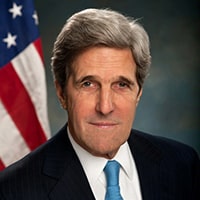
U.S. Secretary of State John Kerry, Chair of the Arctic Council (photo: www.arcticcouncil.org)

Ambassador David Balton, Chair of the Senior Arctic Officials
U.S. Chairship, 2015-2017
During the Arctic Council Ministerial Meeting held in Iqaluit, (Nunavut, Canada) on 24 April 2015, the U.S. has taken over the Arctic Council Chairmanship, previously hold by Canada.
The U.S. chairmanship theme, One Arctic: Shared Opportunities, Challenges, and Responsibilities, reflects the U.S. commitment to a well-managed Arctic, marked by international cooperation. In partnership with the other Arctic States and Permanent Participants, the United States is proud to initiate wide-ranging work to protect the marine environment, conserve Arctic biodiversity, improve conditions in Arctic communities and address the rapidly changing climate in the Arctic.
U.S. Secretary of State John Kerry is the current chair of Arctic Council.
The program of the U.S. focus on four priorities:
Arctic Ocean: With the increase in human and maritime activity in the Arctic, Arctic Council members are working together to promote Arctic Ocean safety, security and stewardship, including by exercising Arctic State agreements on search and rescue cooperation and oil pollution preparedness and response.
Arctic Communities: A rapidly warming Arctic is threatening Arctic communities through coastal erosion, thawing permafrost and changing ecosystems. The Arctic Council’s work on energy and water security seeks to improve economic and living conditions in the region by pursuing innovative technologies to mitigate the significant challenges faced by remote Arctic communities.
Arctic Climate: The impacts of climate change in the Arctic, a region where people, animals and plants have thrived for thousands of years, threaten communities and their ways of life, as well as the ecosystems upon which these communities depend. The Arctic Council is addressing the impacts of climate change in the Arctic by targeting short-lived climate pollutants through reductions in black carbon and methane emissions.
Arctic Awareness: The Arctic is a socially vibrant and biologically diverse region that requires resources for sustainable development and environmental protection. By raising awareness of the Arctic and its role in the global ocean and climate systems, the Arctic Council seeks to educate and inform the public worldwide that the Arctic should matter to everyone.
Download the U.S. Chairship Highlights









 Arctic Contaminants Action Program (ACAP)
 Arctic Monitoring and Assessment Programme (AMAP)
 Conservation of Arctic Flora and Fauna (CAFF)
 Protection of the Arctic Marine Environment (PAME)