Tag: Arctic Council

  • AMSA Recommendations

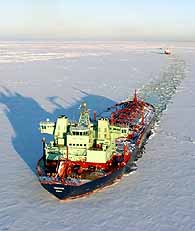
    shipping_harbour

    The focus of the AMSA is marine safety and marine environmental protection, in accordance with the Arctic Council’s mandates of environmental protection and sustainable development. Based on the findings of the AMSA, recommendations were developed to provide a guide for future action by the Arctic Council, Arctic states and others. The AMSA recommendations are presented in three broad themes that are fundamental to understanding the AMSA:

    1. Enhancing Arctic Marine Safety

    One of the key issues that are prominent in Arctic shipping is the question if there is a need to develop mandatory regulations for ships operating in Arctic Ice-covered waters. Voluntary guidelines that touch upon the subject from the International Maritime Organization (IMO) and the International Association of Classification Societies (IACS) are however available.

    The AMSA report comes to the conclusion that such regulation drawn up in accordance to international customary law as reflected in United Nations Convention on the Law of the Sea (UNCLOS) would be an effective way to enhance marine safety and environmental protection in Arctic waters. Such guidelines would contribute to ensure the safety of seafarers in these challenging surroundings.

    shipping_kid

    2. Building Arctic Marine Infrastructure

    Support infrastructure in the Arctic region is lacking to ensure safety and environmental protection.

    Ice navigation training, navigational charts, communications systems, port services which are equipped to deal with ship generated waste, timely ice information and access to icebreakers when needed, are the most urgent issues in that field.

    Arctic Marine Traffic Systems also need to be improved with increased monitoring and tracking of marine activity.

    Preparedness and response plans because of oil spills and environmental disasters needs to be significantly strengthened in addition to search and rescue of seafarers.

    3. Protection of the environment and Arctic People

    Protecting Arctic People and the environment is one of the key issues identified in AMSA.

    It includes gathering information on indigenous marine use to assess the impacts from Arctic shipping activities and engage Arctic communities to ensure that mechanisms are in place enabling these communities to communicate and coordinate with the shipping industry.

    Cultural and ecological areas of great importance need to be protected of invasive species, monitoring and assessing impacts on marine mammals need to be conducted and reduction of air emission has to be a priority.

  • Arctic Council report on SLCF released

    Arctic Council report on SLCF released

    Arctic Portal news

    The Arctic Council has released a new report on its webpage. The report is from The Task Force on Short-Lived Climate Forcers.

    SLCF (Short-Lived Climate Forcers) are subsets of greenhouse gases and aerosols that alter Earth’s energy balance. Unlike long-lived greenhouse gases like Carbon Dioxide (CO2), SLCF´s remain for a much shorter time in the atmosphere.

    The task force was established with the 2009 Tromsø Declaration and focused initially on black carbon. SLCF´s also include directly emitted greenhouse gases like methane.

    The report states that the largest sources of BC emissions in Arctic Council nations have been identified. Overall, total BC emissions from Arctic Council nations are projected to decrease in the coming decades, primarily due to the effective implementation of transportation-related PM controls.

    To maximize climate benefits, the report states that PM control programs must aim to achieve maximum BC reductions. Several mitigation measures have been identified to further reduce major emission source categories.

    The task force also claims that additional measurements, research, and analyses are needed to better identify the specific BC mitigation measures—both inside and outside of the Arctic Council nations—that will lead to the largest Arctic climate benefits.

    The Task Force has been requested to continue its work on short lived climate forcers and will focus on methane and tropospheric ozone, as well as further black carbon work where necessary and provide a report to the next Ministerial Meeting in 2013.

  • Arctic Council Nuuk Ministerial Meeting

    Arctic Council Nuuk Ministerial Meeting

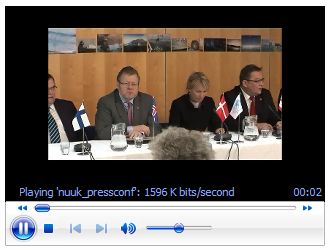
    The Arctic Council Nuuk Ministerial Meeting participants

    The Arctic Council Nuuk Ministerial Meeting participants held a press conference at the end of the meeting, where they expressed their satisfaction with the results of the meeting.

    The Search and Rescue Agreement was considered ground-breaking, as it is the first legally binding agreement negotiated under the auspices of the Arctic Council and an important step towards safe shipping in the Arctic. The shipping and resource management will be a priority in the Swedish chairmanship agenda Swedish Foreign Minister Carl Bildt stating, that “Arctic Countries need enhanced cooperation on many future challenges in the Arctic, not least prevention, preparedness and response to oil spills. As incoming chair we will press forward with this agenda.”

    Arctic Council Permanent Participants had a different perspective, stating that the environmental issues are the most important for their communities. To maintain a healthy Arctic environment is a prerequisite for the survival of their culture and livelihoods. In the coming Swedish chairmanship period they will also “commit to working on improving health by establishing adaptive measures to protect our traditional food sources and to support and strengthen indigenous languages”, stated Rodion Sulyandziga, Chairman of the Indigenous Peoples Secretariat.

    Sources: AC, IPS

  • Historical Agreement signed today at the Arctic Council Nuuk Ministerial Meeting

    The foreign Ministers of the Arctic countries and leaders of the Arctic Indigenous Peoples witnessed a historical moment today at the Nuuk Ministerial Meeting, when the first legally binding agreement established under the auspices of the Arctic Council was signed.

    The Agreement on Cooperation on Aeronautical and Maritime Search and Rescue in the Arctic lays down a framework to strengthen search and rescue cooperation and coordination in the Arctic airspace and waters.

    The Parties commit themselves to broad cooperation and agree to seek cooperation also with other countries who may be able to contribute to the Arctic search and rescue operations. The agreement further delimits operational regions for the Parties, who each will bear their own costs deriving from the implementation of the Agreement.

    For the full text of the Agreement click the Agreement name here above or go to the Arctic Council.

    The Nuuk Declaration

    The Ministers also gave out a Declaration marking the policy for the next biennial period. The ministers decided to strengthen the capacity of the Arctic Council to respond to the challenges and opportunities facing the Arctic by establishing a permanent Arctic Council secretariat in Tromsø, Norway. They also call for an assessment of the current state of human development in the Arctic and its relationship with climate change and recognize the need for an integrated assessment of multiple drivers of Arctic change as a tool for Indigenous Peoples, Arctic residents, governments and industry to prepare for the future.

    In above photos are Hillary Clinton, the Secretary of State of the US and Össur Skarphéðinsson, the Minister of Foreign Affairs of Iceland at the SAR signing.

  • Marine Governance

    Marine Boundaries

    Governance of Arctic shipping occurs through a mix of domestic and international legal instruments and “soft law” regional agreements. There is no comprehensive international legal regime for the Arctic and no multilateral political organisation with the power to regulate activities or make legally binding decisions.

    However, a cooperative mechanism, the Arctic Council, was created by the eight states in the region as a forum for discussion of all issues in the Arctic, in particular the protection of the environment, sustainable development and the affairs of native people.

    A number of international treaties apply in the Arctic, in particular the UNCLOS,[1] which provides rules concerning maritime boundaries, claims to an outer continental shelf, sovereign rights over resources and the protection of the marine environment.

    All the Arctic states are parties to the UNCLOS, except the United States. The International Maritime Organization has developed shipping rules with global application that also apply in the Arctic and a few regional “soft law” regional instruments also apply in the region.

    International Maritime Organization – IMO

    Internaitonal Maritime Organization - IMO

    The Convention establishing the International Maritime Organization (IMO) was adopted in Geneva in 1948 and IMO first met in 1959. The IMO is the most important institution in the field of international shipping law and its main task is to develop and maintain a comprehensive regulatory framework for shipping. IMO’s mandate includes establishing measures regarding safety, environmental concerns, legal matters, technical co-operation, maritime security and the efficiency of shipping.

    The work of IMO has led to massive body of international conventions, supported by hundreds of recommendations dealing with every angle of shipping. The international legal regime for the regulation of maritime shipping therefore contains a wide number of categories of standards.

    The conventions of IMO deal, in theory, with certain issues but can additionally, have legal effects on more than single set of standards. The main categories of substantive standards or requirements are; CDEM (construction, design, equipment and manning) standards, navigation standards, discharge and emission standards, contingency planning and preparedness standards and liability, compensation and insurance standards.

    The mandate of IMO is global and thus, most of its legally binding instruments have a global scope of application and apply in principle to the entire Arctic marine area. The IMO has, however, developed voluntary guidelines that apply in the Arctic waters and might become mandatory in the near future.

    The Arctic Council

    Arctic Council

    The Arctic Council has been successful in preparing assessments, developing a regional identity and setting the Arctic agenda but does not have powers to impose internationally binding rules. The Arctic Council Members have committed themselves to implementing the Arctic Environmental Protection Strategy (AEPS) in conformity with the LOS Convention.

    In 2000, the Arctic Council adopted the Action Plan to Eliminate Pollution in the Arctic (ACAP) and determined that the ACAP would be a basis for developing and implementing actions under the Council’s auspices with respect to pollution prevention and remediation.

    The most recent relevant output The Arctic Council regarding Trans-Arctic shipping is the Arctic Marine Shipping Assessment (AMSA) of PAME, which was released at the Arctic Council Ministerial Meeting in Tromsø, April 2009. The AMSA contains a considerable number of Recommendations categorized under the headings Enhancing Arctic Marine Safety, Protecting Arctic People and the Environment and Building the Arctic Marine Infrastructure. AMSA was approved by the Ministerial Meeting later that month means of the Tromsø Declaration of 29 April 2009.

    The Arctic Councils’ main Working Group concerned with shipping activities is the Emergency Prevention, Preparedness and Response Working Group (EPPR) Among its’ main products are; ArcticGuide (updated annually), Field Guide for Oil Spill Response in Arctic Waters (1998), Environmental Risk Analysis of Arctic Activities (1998), Circumpolar Map of Resources at Risk from Oil Spills in the Arctic (2002) and Shoreline Clean-up Assessment Technique (SCAT) Manual (2004).

    United Nations Convention on the Law of the Sea (adopted 10 December 1982, entered into force 16 November 1994) 21 ILM 1245

  • New Cooperation Agreement on Search and Rescue in the Arctic

    New Cooperation Agreement on Search and Rescue in the Arctic

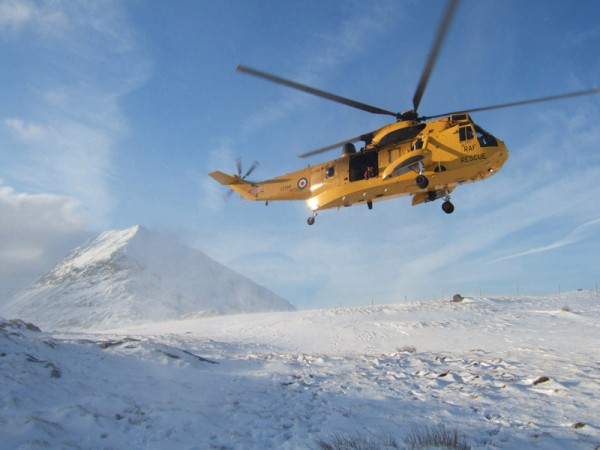
    Helicopter in the air

    Member states of the Arctic Council, Canada, Denmark on behalf f the Faroe islands and Greenland, Finland, Iceland, Norway, Sweden, Russia and The US have finished drafting a cooperation agreement on search and rescue in the Arctic in a meeting held in Reykjavík 14.-16.

    December. In addition to state representatives, around 50 academics and experts from the respective states and International Civil Aviation Organization participated in the meeting, which is a final part of a year long work process.

    The agreement targets the changed reality in the Arctic where due to the climate change increasing transportation opportunities have emerged in recent years and are only to increase in coming years. Until now, there have lacked a coordinated emergency response scheme for the Arctic ocean and airspace. The new agreement will divide the Arctic into specific search and rescue areas, each Arctic state being liable for specific territory.

    jaanmurtaja

    The agreement is historical also in political sense, since it is the first international agreement between the eight Arctic states brought about under the auspices of the Arctic Council.  It is anticipated that this new agreement will follow other agreements targeting issues as important for the Arctic region, such as pollution and renewable natural resources.

    The agreement on search and rescue will have its final seal in the Arctic Council Ministerial Meeting in May 2011 in Nuuk, Greenland, where it will be signed by the eight Arctic States.

    Source: Icelandic Foreign Ministry

  • Arctic Council – the venue for Arctic decision making

    Arctic Council – the venue for Arctic decision making

    Short history of the Arctic Council

    Through times the unknown has always fascinated people. New cultures and undiscovered lands have allured adventurers of all sorts and great stories are told about people who have courageously travelled through landscapes that traditionally have been thought inaccessible. For many centuries, the Arctic was remote and pristine region left outside of scientific exploration as well as world politics. It was not before after second world war with technical advancement and ever increasing need for resources and space that world’s eyes turned to the Arctic. But instead of becoming a new scientific playground furthering our understanding on world’s ecology, the Arctic became militarized region of both the east and the west for four long decades or until the emergence of the perestroika in the Soviet Union which gradually brought the cold war enemies closer and eventually to the same table in 1989.

    The first purely Arctic oriented meeting of the eight Arctic countries – Canada, Denmark, Finland, Iceland, Norway, Sweden, Russia and the U.S. – took place in Rovaniemi Finland in September 1989. The topic of the meeting was the fragile Arctic environment and a potential for joint effort in tackling the very delicate but urgent issue. After intensive cooperation for the next two years, the Arctic Environmental Protection Strategy was initiated in 1991. The AEPS concentrated on cooperation in scientific research and sharing of data on effects of pollution as well as assessing the potential environmental impacts of development activities in the Arctic through its four specific measures, namely Arctic Monitoring and Assessment Programme, Protection of the Marine Environment in the Arctic, Emergency Prevention, Preparedness and Response in the Arctic and Conservation of Arctic Flora and Fauna. The cooperation around the AEPS was quite untraditional for many reasons. First, it was one of the first venues where the cold war parties cooperated together to reach a common goal and secondly it became one of the very few inter-governmental institutions including indigenous peoples of the region in the work from the beginning.

    Arctic sea ice polar bearsIt became, however, soon clear that the Arctic issues and the change happening in the Arctic environment would have such an immense impact globally that it was decided that the AEPS would step aside and new inter-governmental high level forum would be created to deal Arctic environmental issues. In 1996, the Arctic Council, with membership of all eight Arctic states and permanent participation of regional indigenous peoples associations, was established to promote cooperation, coordination and interaction in issues of sustainable development and environmental protection.

    Arctic Council and its Working Groups

    The Arctic Council consists of eight Arctic states; Canada, Denmark, Finland, Iceland, Norway, Sweden, Russia and the U.S and six permanent participants; Aleut International Association, Arctic Athabaskan Council (AAC), Gwich’in Council International (GCI), Inuit Circumpolar Council (ICC), Russian Arctic Indigenous Peoples of the North (RAIPON) and Saami Council. The Arctic Council is governed by Senior Arctic Official (SAO) meetings, which are held twice a year and biennial Ministerial meetings. The chairmanship of the Council rotates between the eights states, each state holding the position for two years at a time. The chair state establishes a secretariat for the period to deal with administrative matters.

    During the past fourteen years the Arctic Council has advanced knowledge about the Arctic environment through its working groups CAFF, PAME, EPPR, SDWG, AMAP and ACAP. In 2009, PAME published a comprehensive assessment on Arctic Marine Shipping pointing out both possibilities as well as downsides of Arctic shipping. CAFF has conducted various large researches and reviews on Arctic biodiversity, latest being the Arctic Biodiversity Trends 2010. ACAP, EPPR and SDWG have as well all introduced valuable material concerning various urgent issues facing the Arctic and AMAP releases regularly assessments on various issues relating to contaminants.

    Contemporary challenges of the Arctic Council

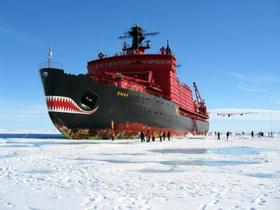
    Icebreaker in the arcticSince the end of the cold war the Arctic has been changing in ever increasing speed. Not only does the international community face immense environmental challenges that will influence every part of the world, but also will the Arctic states face territorial claims, issues concerning maritime transportation and infrastructure, natural resource exploitation and a whole new political setting. The Arctic is becoming a lively international region rich of natural resources and high economic potential. The fact is, however, that there is lacking a common political agenda for the future in the Arctic and a legal framework for the emerging maritime activities. Infrastructure on the Arctic coastline is not ready to welcome the incipient economical activities and the participation procedure of the indigenous peoples in developing the area has not yet been fully established. Most of these activities must be undertaken jointly by all the Arctic nations for them to have real impact. The shortage of the Arctic Council mandate to deal with issues other than environment has led to a situation where decisions are made in isolation creating thus incomplete and fragmented framework for the Arctic region.

    This situation has been understood in the Arctic states and in every established national Arctic Policy the need for stronger Arctic Council is recognized. In the next few years then, the states have a challenge of reforming the Arctic Council to better correspond to the contemporary challenges. The mandate must be broadened to cover issues other than environment as well and the restructured Council must be presented with a higher level image to equal other international actors in the Arctic region.

  • The Arctic Ocean – Challenges in Governance

    The Arctic Ocean – Challenges in Governance

    InuitOne of the major issues in discourse of Arctic related matters has in recent years been the governance of the Arctic region. Often in public debate it has got forgotten that the Arctic is an area situated on land of eight Arctic states as well as a large sea area defined as high seas under international law. In a following short feature, the contemporary governance scheme of the Arctic region will be discussed and the different legal and political settings participating in the Arctic governance introduced.

    Contemporary Legal Regime

    UNCLOS logoAs stated in the introduction, the land mass defined as part of the Arctic is situated on a land of eight states, namely Canada, Denmark, Finland, Iceland, Norway, Russia, Sweden and the US. These states govern their territory under international law as sovereign states.  Each coastal state occupies in addition a 200 nm Exclusive Economic Zone (EEZ) in the Arctic Ocean, which still today is covered in the most part by snow and ice. The global warming and predicted melting of Arctic sea ice have, however, stimulated the discourse on extended EEZ towards the north pole in a hope of possible natural resource discoveries. All such claims are dealt within the United Nations Commission on the Limits of the Continental Shelf (CLCS) on the bases of the article 76 of the United Nations Convention on the Law of the Sea (UNCLOS). The much publicity gained Russian flag incident does not , therefore, have any legal consequences concerning the sovereignty over the sea bed of the Arctic Ocean.

    Beyond the national EEZ’s opens up an area of high seas which under international law is open to all States, whether coastal or land-locked. The freedom of the high seas includes that all states, whether coastal or land-locked, have a right to navigate, overfly, lay submarine cables and pipelines and construct artificial islands and other installations permitted under international law in the area. Further, in the high seas there exists freedom of fishing, though subject to international fisheries regulation and freedom of scientific research, subject as well to international regulation and cooperation.
    IMOArctic shipping on the other hand is regulated under the International Maritime Organization (IMO) framework. The IMO regulations cover both environmental issues, including oil pollution, pollution by chemicals, goods in packaged form, sewage, garbage and air pollution (MARPOL 73/78) and safety issues including collision regulations and global standards for seafarers, regulations concerning search and rescue, the facilitation of international maritime traffic, load lines, the carriage of dangerous goods and tonnage measurement (SOLAS, etc.).

    What is still lacking, however, are legally binding standards for Arctic shipping. According to the AMSA Report 2009, an Arctic Council Protection of the Arctic Marine Environment (PAME) working group prepared large Arctic shipping assessment report, the lack of mandatory regulations for ships operating in Arctic Ice-covered waters is one of the major safety issues still unsolved. In addition, lack fo proper coastal infrastructure and pressure to develop alternative shipping lanes due to pressure on existing lanes such as the Panama and Suez canals are issues that still need to be resolved.

    Arctic Political Regime

    The regional governance of the Arctic takes place in different multilateral settings. The major international forum for Arctic governance is the Arctic Council. The Council was established in 1996 with a mandate to promote cooperation, coordination and interaction among the Arctic States in the fields of sustainable development and environmental protection. Member states of the Arctic Council are all the eight states situated in the Arctic region in addition to the Arctic Indigenous representatives who hold a formal status of Permanent Participants in the Council. Further, the Arctic Council welcomes observers in to the meetings. Observer status in the Council have various non-arctic states, inter-governmental and inter-parliamentary organizations and non-governmental organizations.

    Since the mandate of the Arctic Council is strictly bound to environmental issues, there seems to be a void in discourse concerning other issues. The Nordic countries released common proposals for closer foreign and security policy cooperation between the Nordic countries in beginning of the year 2009 in the so called “Stoltenberg report“. Further, Barents Euro-Arctic Council deals with various issues concerning the area both in inter-governmental and inter-regional level. Canada and the US made bilateral agreement on Arctic cooperation in 1988 that allows for practical cooperation regarding matters relating to the Northwest Passage despite the disagreement about the status of the passage under applicable international law.

    However, contemporary international jurisdictional issues do not fall within the existing Arctic governance regimes, which has led to an establishment of a yet new cooperation regime between the five Arctic Coastal states, Canada, Denmark, Norway, Russia and the US. This party of five met for the first time in Ilulissat, Greenland in May 2008 in Arctic Ocean Conference to discuss the Arctic Ocean and the unresolved issues of maritime safety, environmental protection and potential shipping routes. The conference issued a declaration where the five Arctic Coastal states reassured compliance of existing legal framework without any intention to initiate new international Arctic legislation. The three Arctic states left outside the meeting as well as the Arctic indigenous peoples were not satisfied with the procedure and felt that the issues should have been dealt with either in the Arctic Council or in a meeting where all the Arctic states and peoples could have had a representation.

    The Arctic Indigenous Peoples have yet again expressed their discontent for the upcoming meeting of foreign ministers of the five Arctic Ocean coastal states on March 29, 2010, in Chelsea, Quebec and called for an invitation to the meeting. It is clear that if the five coastal states want to strengthen the cooperation and create a permanent forum for Arctic dialogue they have to include the Arctic indigenous peoples somehow into the cooperation. Question is, however, how a forum of this kind will affect the status of the Arctic Council and how the three non-coastal Arctic states, who despite their geographical situation will one way or another be affected by the decisions made in the coastal states meetings, will be taken into consideration.

  • COP15 Arctic Venue

    COP15 Arctic Venue

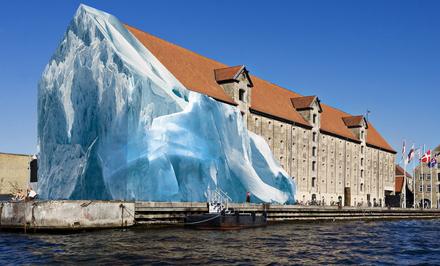
    COP15 iceberg in Copenhagen

    Arctic Council – During the COP15, December 7- December 18, an Arctic Venue will be held at The North Atlantic Quay in Copenhagen.

    In the Venue, Arctic cooperation and the latest Arctic research will be introduced as well as the Arctic reality as it appears today to the Arctic residents presented in various exhibitions, booths, posters, lectures and debates. The Quay itself will be wrapped up as an iceberg, an installation designed by Greenlandic artist Inuk Silis Høegh.

    The Venue is open daily during the COP15 between 12.00-18.00.

    (image: Arctic Council)

  • Arctic Venue at Copenhagen Climate Conference

    Arctic Venue at Copenhagen Climate Conference

    COP15 iceberg

    Arctic Council – During the COP15, December 7- December 18,  an Arctic Venue will be held at The North Atlantic Quay in Copenhagen.

    In the Venue, Arctic cooperation and the latest Arctic research will be introduced as well as the Arctic reality as it appears today to the Arctic residents presented in various exhibitions, booths, posters, lectures and debates. The Quay itself will be wrapped up as an iceberg, an installation designed by Greenlandic artist Inuk Silis Høegh.

    The Venue is open daily during the COP15 between 12.00-18.00.