Tag: arctic

  • Sea Ice drift

    Map - Sea Ice Drift

    Blocks of sea ice break annually from large ice caps in the Arctic. These blocks of ice can be up to kilometers in width.

    The ice blocks cause problems where they go.

    As the map shows, the largest blocks break off Greenland.

    This causes problems for shipping, especially for smaller ships.

    Blocks of ice melt in time but they have on a few occastions brought polar bears to Iceland, for example. They come from Svalbard and Greenland for the most part.

    In 2008 two polar bears drifted to Iceland, one in 2010 and one in 2011. They were all shot consequenly.

  • The Cree in James Bay

    Map of James Bay and Cree communities

    The Cree just make it into the Arctic; they are on the border of the line made in the Arctic Human Development Report. They live in James Bay, which is a region of northern Quebec, in the northeastern part of Canada.  Its area is a vast wilderness area and can only be reached by a single road. The remoteness is immense.

    The James Bay Cree count around 12.000 people who live in nine communities from 550 in population to around 3300, the Chisasibi. The fewest live in Nemaska, 560 in total.  Much like in the Arctic region as a whole, the population has been growing.

    This has resulted in a change for the Cree, especially regarding food. With more population they have adjusted by importing more food so they would not harm the environment and endanger stocks of species they hunt.

    The Cree have lived off their land for 9000 years for food and resources. Among other they hunt geese, ducks, moose’s, beavers, otters, lynxes, fish, beavers, muskrats and waterfowls.

    They speak their own dialect but have learned English in schools. Their dialect is only one of few indigenous people’s languages in Canada which is not in endangerment due to few speakers. The majority of the Cree are Christian and they emphasize egalitarianism.

    They respect the competence and needs of the individuals and in their world humans and their societies are a part of the universe. It is made up of social beings. Animals are willful beings and phenomena and objects as well.

    For the Cree their main problems are regarding forestry clear-cutting, pollution of the land, the movement to declare the province of Canada a country separate to Canada and the one that made the Cree famous amongst indigenous peoples around the world, and a true example for them, the hydro projects.

    The shock of one of the biggest hydropower projects in the backyard of the Cree must have came as a shock to the people, learning from it in newspapers in 1971. “I feel like I have been punched,” one of them said about the decision.

    They started a campaign against the project but it was too little and too late. A court case in the years 1972-1973 stopped work on the hydro project for a short time but in the end the project started again and was completed. In 1975 the Cree signed a treaty, the James Bay and Northern Quebec Agreement,  giving the Cree ownership rights to areas around their communities, exclusive hunting and fishing rights over a large territory, regional self-government powers, cash compensation and other privileges, in exchange for allowing Hydro-Quebec, the power company, to proceed with development.

    The Cree benefitted from the project in other ways. Hydro-Quebec invested heavily in infrastructure in the area so the Cree gained more social welfare and health care for example.

    They were pioneers in seeking their rights for the land they have lived on for thousands of year as indigenous people. They became leaders in the struggle to gain international rights and an example for others. As well as gaining symphony from the rest of Canada and people all over the world because their land was being destroyed for electricity, the Cree raised awareness in nature and the roles of humans in the environment. The Cree raised discussions by the public and gained much attention and raised questions about large development projects.

    Change in the Arctic has been and remains constant. Not only are there changes in the nature but for the people in the Arctic as well. Often these go together as earlier stated about Greenland. The culture and society of the Cree has been changing like most indigenous societies in the north. I think they adapted to circumstances, learning how to live of the land as it changed. It a species came in, they learned how to hunt if they could and would, with Moose for example.  Because of that, as I states in the text, change itself is not a threat to Cree. They have adopted very well, for example with the growing population and import of food.  Some indigenous people have died out because of changes, the Arctic Human Development Report (AHDR) states.

    The Arctic Human Development Report says that human colonization in the Arctic is comparatively recent; it started at least fifteen millennia ago. From what I have learned, there are two major changing points for the Cree. First was the introduction of colonization of Europeans in the 17th century. The Europeans wanted fur and the Cree became dependant on the Europeans for steel tools, cloth, guns and powder which they used for hunting for the fur and later food like tea, flour and.  The World War II changed many things in the Arctic and for many cultures; totally new living habitants and concepts were introduced. That was the case with the Cree. After the Second World War, fur prices fell. That meant dramatic transformation in the social-economic organization of the Cree.

    Decreasing fur prices altered the function of the posts and the Cree had to settle in the government sponsored communities. They became the centers for schools, medical aid, family-allowance cheques, and subsidized housing. This further increased the number of Cree living near the posts. The villages, however, lacked a Cree identity. This is very much in line what happened elsewhere in the Arctic. The AHDR states that mandatory school education was introduced after the war and many children had to move to border schools to get education. The Cree were the same, they were unhappy about letting the children go and minimizing the use of their lands, but in the same time they did want their children to go to school. The Cree learned English in schools, which they gained very much from. The AHDR also states that health care vastly improved in the Arctic, which was the case with the Cree, and the same with wage employment and cash economy.

    As mentioned earlier, the villages lacked a Cree identity, but the Cree always stood by their use of the land, even when the government told them that hunting was a dying way of life. The government stated that energy resource industries, mining and forestry were the future. The Cree disagreed. They did not want that, unlike Greenlanders for example who rely heavily on hydropower. The government has failed miserably and the Cree are many unemployed. Only five members of the Cree wanted to work for the Hydro power project in their own land. The AHDR states that it was common in the Arctic that symbolic values were being maintained or even increased after WWII, which is exactly what happened with the Cree. They never stopped hunting, even if it was not theyr sole living bread.

    The trading posts created a new generation of Cree´s, based on the young generations who went to school together. New communication was introduced, joint decision making with the establishment of the Grand Council of the Cree and new regional leadership.

    The second thing as a major change for the Cree was the signing of the James Bay and Northern Quebec Agreement in 1975. That gave the Cree money which they used to change. They used some of the compensation fund for agreeing to the Hydro project to be completed to purchase several businesses. That included a regional airline, a construction company, community buildings and food and dry good distributor. That led to a new society that changed and suddenly restaurants were opening, taxi services, gas stations and even hardware stores. I think this is a key in the history of the Cree, how they used the government money.

    Drivers for social and cultural change are amongst others technological innovations, and contacts with other populations, according to the AHDR. This is what happened for the Cree after the agreement was signed. They gained more technological awareness and because the constructor of the hydro project had to build, on demand from the Cree, new roads, that led to more contact with other populations.

    The Cree felt autonomous when they could use their land. That was under threat in the Hydro projects.

    They value their autonomy and have shown how they have taken steps toward even more autonomy with the changes in their culture. To be autonomous you have to be self-sufficient, and the Cree are making their way.

  • Polar Graduate Programmes

    Polar Graduate Programmes

    Foreign students at the University of AkureyriAre you interested in learning more about the Arctic, Antarctic or the cryosphere in general? Thinking of going to graduate school or gaining extra credibility through a certificate programme or another degree?

    APECS has gathered information to help prospective students finding their way in Arctic studies.

    On APECS.is you can find a searchable database which includes graduate programmes that have a focus or specialty in any field of Arctic, Antarctic, Alpine or other areas within the cryosphere – ranging from social sciences and law to ecology, geology, physics and more.

    The purpose is to provide prospective students with information on those programmes, such as disciplinary focus areas, website links, typical program duration, application deadlines, costs and, where available, financial support.

    APECS encourages universities and individuals to enter programme information to the database, as well as posting current openings for graduate research and teaching assistantships on the APECS jobs page.

    APECS, the University of the Arctic, and the International Antarctic Institute are working collaboratively to compile this inventory of programmes worldwide.

    Click here to access the database.

  • No armed forces in the Arctic

    No armed forces in the Arctic

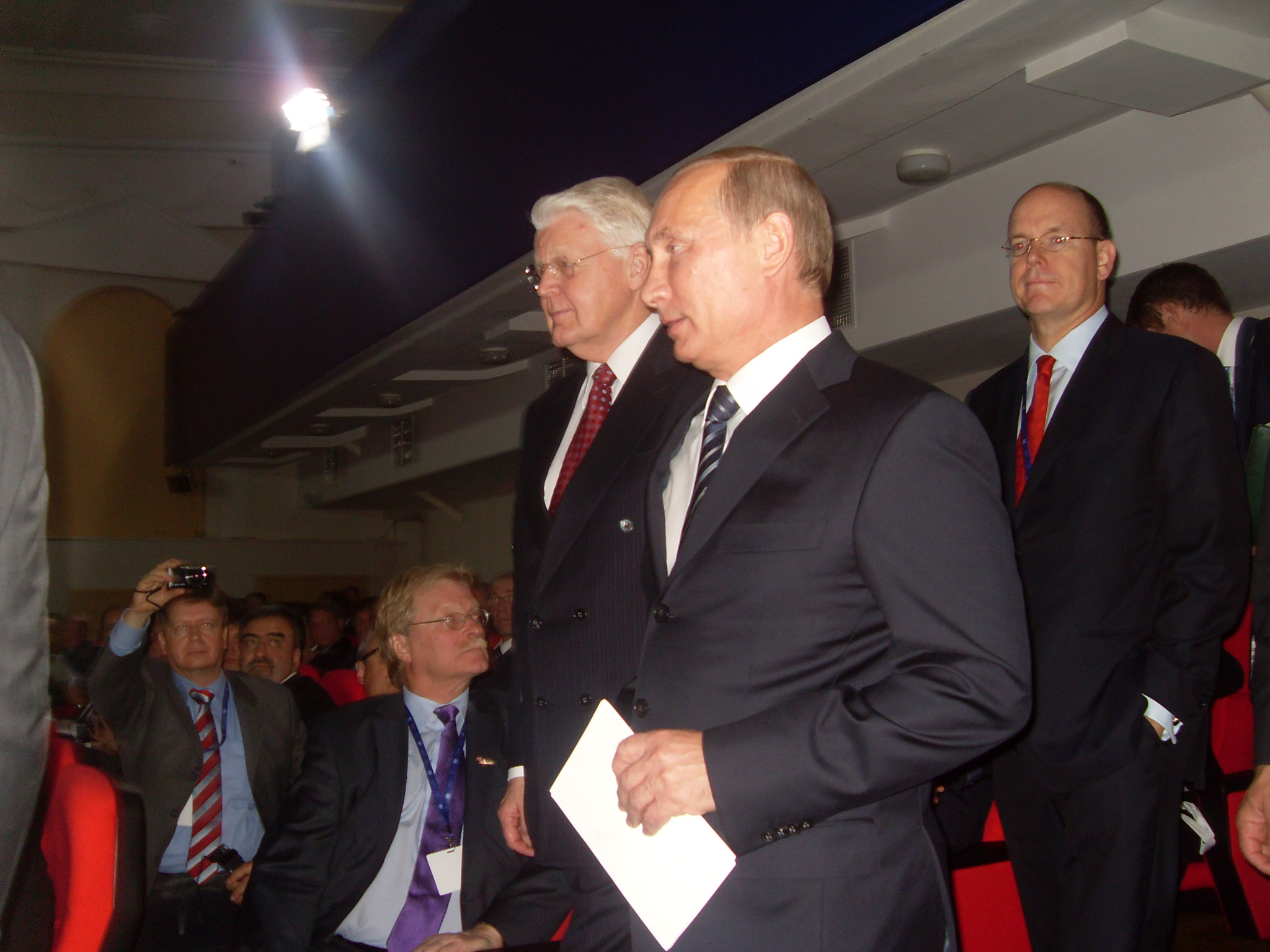
    Vladimir Putin and Ólafur Ragnar Grímsson

    Military presence in the Arctic should not be a reality, a senior Russian diplomat has claimed. At the The Arctic: Territory of Dialogue international forum, held in Arkhangelsk last week the issue was raised.

    “We do not see problems [in the Arctic] that could lead to the use of force, and we do not see the need to place military-political blocs there,” said Anton Vasilyev, ambassador-at-large on Arctic issues at the Russian Foreign Ministry., according to RIA Novosty.

    “We have an efficient international treaty framework to resolve any potential conflicts [in the region],” Vasilyev added.

    The idea of a “mini-NATO” in the Arctic region was a subject discussed at a summit of Northern European countries in London on January 19-20, 2011. The name refers to a proposed military bloc of Scandinavian countries, ex-Soviet Baltic republics and the United Kingdom, which many describe as the “response to Russian efforts in the north.”

    “So far this idea has not been followed by any practical development, but we are keeping an eye on the situation,” the Russian diplomat said.

  • Fossil Fuel Exploitation

    Fossil Fuel Exploitation

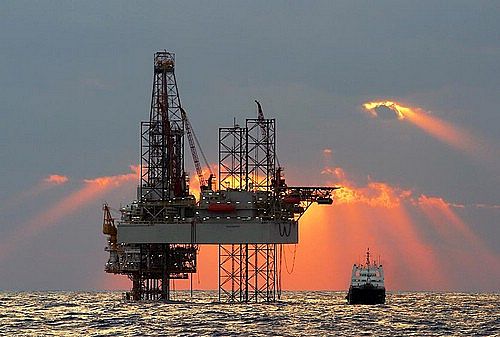
    Oil rig

    It is safe to say that the Arctic is one of the most fossil fuel laden areas in the world, even though massive exploitation has still not begun. In addition, other non-renewable resources are also immense; e.g. nickel, diamonds and gold.

    However, the exploitation of fossil fuels is more dependent on Arctic shipping and is likely to be one of the main driving forces for Trans-Arctic shipping to become a norm in the international trade industry.

    Some regions, which have experienced major prosperity, some of it quite recently, have literally been opened to massive exploitation in support of national policies for industrial development or energy security.

    Most of the regions in the Arctic have both onshore and offshore production and exploration of a variety of non-renewables. The Arctic holds a great share of the world’s oil, coal and gas reserves. At the present, the Arctic produces about 10 percent of the world’s oil and a quarter of its gas and for these critical commodities the region’s role is estimated to be greater in the future.

    Increased activity in the field of extraction of non-renewable resources is expected not only from climate change-related factors, such as increased access caused by receding sea ice, but also from changes such as improvements in offshore technology, oil-price development, and the political landscape in the Arctic. The International Energy Agency has estimated that the cost of petroleum extraction in the Arctic is about three times higher than in other petroleum provinces.

  • Geopolitical Landscape

    shipping mining

    The Arctic has in recent years, been subject to a manifold growth in its geo-strategic importance due to its rich natural resources of fossil fuel and military-political reasons. In addition to that, the Arctic faces tough challenges concerning global security and environmental issues.

    There are also international governmental organizations and major powers from outside the region which take an interest in the North. In addition, northern issues are finally being given a higher priority on the EU’s agenda and matters relating to the north have been an important concern of the United Nations for years.

    The Arctic regions represent stable political and institutional conditions, providing opportunity for permanent involvement for oil companies that elsewhere face diminishing access to oil provinces operated by national oil companies. There is a growing world wide, economic and political interest toward the northernmost regions of the globe, particularly due to the estimated fossils in the shelves of the northern seas and visions of new Trans-Arctic sea routes.

    Similarly, the new threat of piracy around the Suez Canal does not exactly deter multinational corporations from investments in utilizing energy resources or sea routes in the Arctic.

    At the beginning of the 21st century, the strategic importance of the North is becoming high on the agenda in geopolitics and world economics. Furthermore, due to a growing need for energy resources and even competition over them, rivalry and claims on northern sea areas and shelves have been developing.

    Further, significant geopolitical, socio-economic and environmental changes are occurring in the North with relevant consequences, such as risks to the environmental and human security and threats to local autonomy and sovereignty. These developments have given rise to a need for broader and deeper international cooperation both within the region and on a global level.

  • Russia to improve infrastructure

    Russia to improve infrastructure

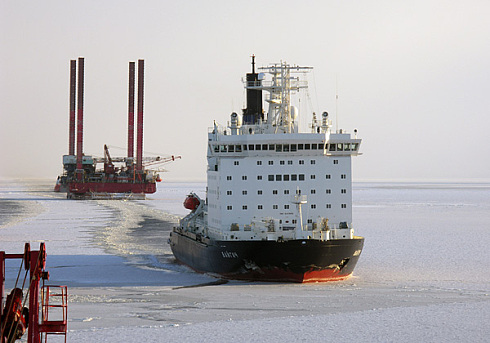
    Russian Icebreaker

    Russia’s infrastructure has been criticized when comes to oil issues in the Arctic. Now the Emergency minister Sergei Shoigu says that the country will respond to this and develop environmental protection infrastructure as soon as possible.

    “There [in the Arctic] we will need navigation safety projects and bases to deal with all kinds of tasks: from fuelling and navigation to communication systems and rescue. We must also set up centers to deal with – God forbid – oil spills,” Shoigu said at a news conference ahead of an international forum to discuss problems of the Arctic in Arkhangelsk next week. This year, the forum will focus on transport issues.

    The Russian emergencies minister said the next year’s forum should focus on environmental safety of hydrocarbon extraction and transportation in the Arctic.

    “In our opinion, safety issues during hydrocarbon extraction and transportation deserve to be the main topic of a separate forum. We will propose it for the next year, as we are convinced that this problem becomes a real threat when ignored,” the minister said.

  • Boiling water to shrink icebergs?

    Boiling water to shrink icebergs?

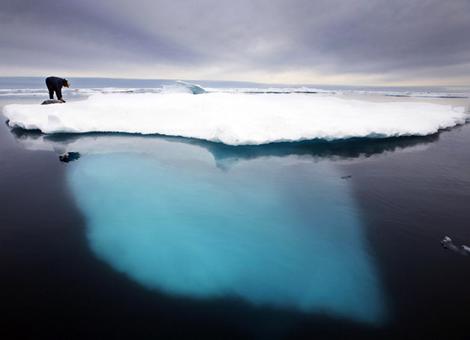
    Polar bear walking on iceberg

    Icebergs are a huge problem in the Arctic. In short, they can be in the way! Vessels are scared of these sometimes huge and unpredictable blocks of ice.

    Add that only 1/10th of the icebergs are visible above water, they can be a huge hazard in Arctic Sailing.

    Oil giant Gazprom has now developed a way to use boiled water to melt the icebergs. They would melt anyway but to speed up the process might help, especially ships that are not strengthened for sailing in ice.

    The method includes the use of helicopters to cover an approaching iceberg with a water-proof coat and the subsequent injection of hot water.

    Gazprom knows the problem well so there is no wonder the company researched ways to help their vessels in ice layed waters.

  • Denmark releases Arctic strategy

    Denmark releases Arctic strategy

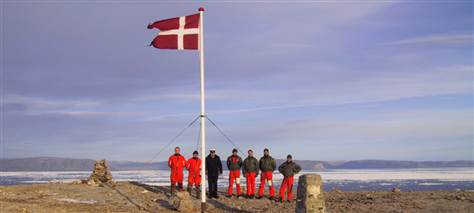
    Researchers standing with the Danish flag

    Denmark has released its Arctic Strategy up to the year 2020. Denmark reins both in Greenland and the Faroe Islands and their interest are numerous in the Arctic.

    The Arctic strategy will make it possible for the three parts of the Kingdom to address the challenges in a coordinated way, the strategy report states.

    “The purpose of this strategy is to focus attention on the Kingdom’s strategic priorities for future development in the Arctic towards 2020. The aim is to strengthen the Kingdom’s status as global player in the Arctic.”

    Denmark aims to strengthen its position in Arctic matters, but underlines close cooperation with its neighbors and partners in the area.

  • Eight days through the Arctic

    Eight days through the Arctic

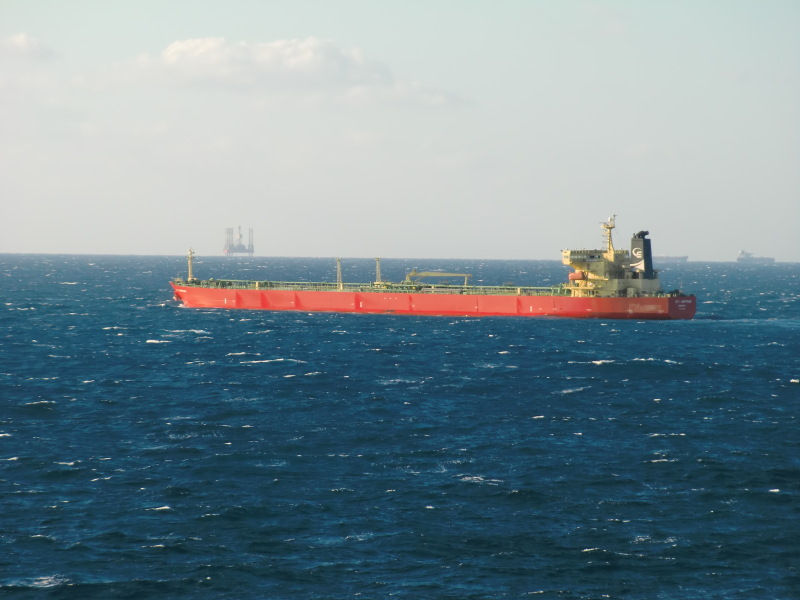
    STI Heritage tanker

    It took only eight days for the STI Heritage tanker to go from Murmansk in Russia and through the Arctic Ocean via the Northeast Passage.

    This is a new record for speed, bettering the 15 days it took Perservance earlier in the summer. The average speed of Perservance was 7,6 knots but STI Heritage averaged 14 knots.

    Twice as fast means a lot of money has been saved by Novatek which also plans to send the largest tanker through the Northeast Passage later in August.

    The STI Heritage sailed from Murmansk to its destination in Thailand, Map Ta Phut, in just under a month.

    See more about the Northeast Passage here.

    See also:
    Breakthrough of the Russians
    Sea ice levels at an all time low

    Photo: STI Heritage