Tag: arctic

  • Trans-Arctic Shipping

    Trans-Arctic Shipping

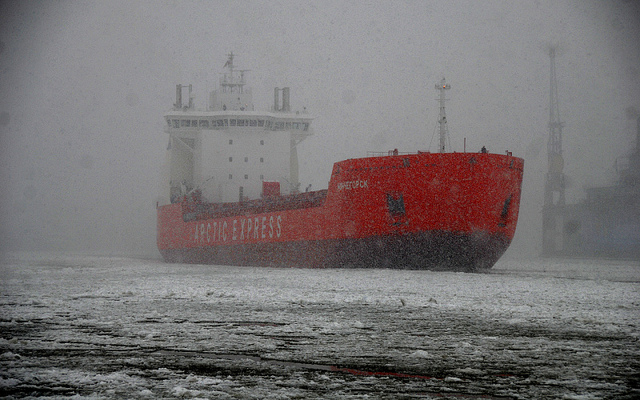
    Cargo Ship

    The Arctic is comprised of a large ocean area and land areas of eight states: Canada, Denmark (Greenland), Norway (Svalbard), Russia, USA (Alaska), Finland, Sweden and Iceland. The Arctic’s most pronounced feature, at least until very recently, has been the large ice-covered ocean. However, significant changes are taking place in the Arctic area, both on land and especially on the maritime areas.

    The 2004 Arctic Climate Impact Assessment listed the range of impacts that are occurring in a warming Arctic from human-influenced climatic change. The report concluded that the temperature has risen at twice the rate as in the rest of the world in the past few decades and there is increasing evidence of widespread melting of glaciers, permafrost and sea ice.

    The earth’s climate change, due primarily to increased emissions of carbon dioxide and other greenhouse gases, has been particularly intense in the Arctic. These changes have already reduced the extent and thickness of the sea ice in both the Arctic Ocean itself and the sea routes on each side.

    With its fleet of polar icebreakers, Russia has been able to use its Northern Sea Route for up to 6 months a year, although such use has thus far been limited to the support of exploration of its own resources and has not included international shipping. Such shipping, however, is bound to develop within the foreseeable future, particularly since the ice obstacle is not quite as severe on that side of the North Pole.

    Although Trans-Arctic shipping is commonly linked with favourable weather conditions, i.e. warmer climate, ice-free ocean and relatively calm weather, climate is not the only thing that encourages Trans-Arctic shipping.

    Other factors can make it even necessary for future development of the area and the world as a whole. However, those factors can change or even lose their weight in near future but as it stands they dominate the discourse on Trans-Arctic shipping.

    Why Trans Arctic Shipping?

    Currently the main driving force for shipping trough the Arctic Sea is transport of oil or gas from Arctic Russia. The discussion on Trans-Arctic shipping evolves, however, around the issues of global warming, Greenhouse Gas emission restrictions, changes in the geopolitical landscape, possible exploitation of fossil fuel fields in the Arctic and sustainable development in the Arctic. Although those factors do not possess predominant force to encourage Trans-Arctic shipping single-handedly, together they form a great pressure on the global society to prepare for new transportation routes.

    Preparations for ice fishing in Uummannaq, Greenland

    New technologies

    New technologies are important and sometimes essential for development in the Arctic. New ships with icebreaker abilities can shorten the transportation route from Yokohama (Japan) to Rotterdam from 11.212 nm (Suez Canal) to 7.825 nm which is roughly 30% shorter.

    This difference does however not have any relevance still, because the cost of these new ships are at average 150% on top of the cost of a normal new cargo ship.

    This means that it is unlikely that Trans-Arctic shipping can become lucrative, unless oil-price and charges for shipping canals rise and the building cost of Arctic-suitable ships drops.

    However, a significant reduction of sea-ice in the Arctic renders this formula obsolete so it is hard to point a finger on when Trans-Arctic shipping will emerge as a competitive commercial transport alternative.

    It is worth mentioning that technological advancement in the sector of extraction of non-renewable resources can also affect advancement in navigation. It would obviously not have any practical value to be able to pump oil from the seabed in -40°C if no ship would be able to transport the oil from the location.

    However, it is safe to say that this factor is largely dependant on the other factors but might become more important in the coming years. It should however be kept in mind that the race for resources in the Arctic really controls the development in this area.


    United Nations Framework Convention on Climate Change (adopted 9 May 1992, entered into force 24 March 1994) 31 ILM 849

  • EU-ARCTIC-Forum debate on EP Report A Sustainable EU Policy for the High North

    EU-ARCTIC-Forum debate on EP Report A Sustainable EU Policy for the High North

    EU Arctic Policy

    EU-ARCTIC-Forum will be hosting a debate with Arctic Stakeholders on the European Parliaments Report “A Sustainable EU policy for the High North” on 8. December 2010 in Brussels.

    Birgit Schnieber-Jastram, Chair of the EU-ARCTIC-Forum will host the meeting with the rapporteur Michael Gahler MEP and the shadow rapporteurs Anneli Jäätteenmäki MEP, Liisa Jaakonsaari MEP, Indrek Tarand MEP and Konrad Szymanski MEP before the December 9 vote of the Report in the Committee on Foreign Affairs.

    With the debate the EU-ARCTIC-Forum in the European Parliament wants to ensure a proper involvement of stakeholders facilitating thus well informed discourse in Brussels on Energy, Environment and Climate Change, Resources, World Trade Routes, Security, Sustainable Development etc, that are important subjects in the Arctic context.

    Those who want to participate and do not have an access badge to the EP yet, please send your details for registration (name, surname, date of birth, address) asap to Michael Gahler MEP. (michael.gahler(at)europarl.europa.eu)

    8. December at 17.15

    in Room ASP 3 H 1

    in the European Parliament in Brussels.


    Presentation and Consideration of the Draft Report on “A sustainable EU Policy for the High North” in the last meetings of the European Parliaments Committee on Foreign Affairs

    Summary

    Overall the Draft Report seems to be well perceived, both in the EU and in the Arctic. Thus there is justified hope that the Report will not only contribute to outline the EU’s Arctic policy, but also to contribute to confidence building with the Arctic stakeholders. The Draft Report undertakes to asses the existing legal and political framework in the Arctic as well as to establish a clear set of priorities of the European Union with regard to the Arctic. In the last part the Report is formulating suggestions and request to the European Commission and the Council and offering close cooperation to the Arctic states and stakeholders.

    The Draft Report is clearly stating that the Arctic Region is not a legal vacuum, but has a developed set of rules which nevertheless need to be further developed due to changing circumstances.

    Main priorities of the EU in the Arctic set out are:

    • The road to a sustainable socio-economic development and environmental protection
    • The potential of new world transport routes and their vital importance to the EU member’s states
    • The potential of developing resources like Hydrocarbons, Minerals, fish and biogenetic resources

    With regard to a sustainable socio-economic development the Eco-System based management approach as applied in the Barents today is recognized. The Report makes a clear statement as to the responsibility of the EU as one of the main contributors to pollution and climate change.

    In its conclusion the Report requests the Commission to set up a permanent Inter service on the Arctic and likewise in the future EEAS.
    Requests and suggestions are made as to a new circumpolar co-funding and co-programming research programme.
    Finally the importance of EU engagement in the further development of Northern Sea Routes is highlighted and suggestions as to the Galileo project are made.


    After an intense period of organized hearings, meetings and preparations on Tuesday, 9. November, the Draft of the European Parliaments Report on “A sustainable EU Policy for the High North” was presented and debated by the Parliaments Rapporteur Michael Gahler MEP.

    Draft Report

    List of Amendments


    About the EU-ARCTIC-Forum in the European Parliament

    Function

    The EU-Arctic-Forum was constructed to provide the European Institutions with a cross-party platform to foster a better understanding of changes in the Arctic Region and its implication for Europeans citizens politics and businesses, to facilitate a well informed and balanced debate, as well as to bolster the development of a coherent European Policy with regard to the Arctic Region.

    The EU-ARCTIC-Forum is the European Parliament’s platform working on all Issues with regard to the Arctic, providing not only for exchange and input of information but to interlink the so far too often fragmented debates on the Arctic.

    Participants

    The EU-ARCTIC-Forum is involving a number of MEP’s from all major political groups and several committees, Delegations and Intergroup’s such as the Committees on Foreign Affairs, Environment, Transport, Industry, Research and Energy, Development and Transport.

    Thus the EU-ARCTIC-Forum works as the European Parliaments platform interlinking all issues regarding the Arctic Region.

    It invites on a regular basis speakers from the scientific community, business, NGOs, and international institutions in the format of breakfast briefings, seminars or dinner speeches.

    Future Meetings are already organized and interest to participate was already expressed by several Commissioners and other High Officials, Foreign Ministers and Ambassadors of several Arctic States, as well as high profile leaders of the international or European Institutions such as the European Environmental Agency, the International Maritime Organization and the Nordic Council of Ministers, but also from Civil society, NGO’ s and the energy, fishing and shipping industry as well by leading academics in the field.

    Contributions

    In light of the ambition to stimulate and contribute to an informed debate, we call for contributions to the EU-ARCTIC-Newsletter by all interested participants and readers. We want to invite you to share your insights and opinions with the politicians, experts and stakeholders whose work will be addressed by this newsletter.

    The editor of the EU-Arctic-Newsletter and the organizers of the EU-ARCTIC-Forum look forward to your valuable comments and contributions and would like to draw your attention in particular to the forthcoming activities on the European Parliaments Report on “A sustainable EU Policy for the High North” in November and December in Brussels!

  • Last days of the Arctic – photographs by RAX

    Last days of the Arctic – photographs by RAX

    Last days of the arctic“The world turns its gaze toward the Arctic. Nowhere are the signs of climate change more visible; here global warming already affects the day-to-day lives of the local people. Still the circumpolar Arctic is one of the most disputed territories on Earth, with many nations laying claim to the mining and oil rights of the area as the sea ice retreats. For thousands of years the Inuit have built their communities based upon a sensitive understanding of the land and the frozen ocean, but rapid social and environmental change threatens their traditional way of life. The hunters of the North are a dying breed. This is the twilight of their society.” (rax.is)

    [http://www.youtube.com/watch?v=u3yxDnaben4]

    Ragnar Axelsson is an Icelandic photographer and photojournalist, born in 1958. He has worked for the Icelandic newspaper Morgunblaðið since 1976 and as a freelance shooting projects in various parts of the world for numerous magazines and agencies. The North has for a long time fascinated him and different aspects of north appeared in his photography regularly. In 2004, he published “Faces of the north“, a collection of his black and white photographs of traditional ways of life in Iceland, the Faroes and Greenland taken over a period of fifteen years, preserving that way a glimpse of a lifestyle that is gradually vanishing.

    His newest publication “Last days of the Arctic” is a breathtaking introduction to a life of Greenlandic hunters in the most remote communities in the world. Professor Mark Nuttall, one of the leading Arctic scholars, wrote the foreword for the book, which in sincere and simple way represents the part of world that we now watch changing.

    To learn more about Ragnar Axelsson, please visit his homepage.

    Here below you can see a documentary of him made by his son Jón Snær Ragnarsson. The film is in Icelandic only.

    [http://www.youtube.com/watch?v=PPdnjLSvG1Q]

  • First NATO headquarters in the Arctic as Norway moves it’s military leadership into the Arctic Circle

    First NATO headquarters in the Arctic as Norway moves it’s military leadership into the Arctic Circle

    Military headquarters

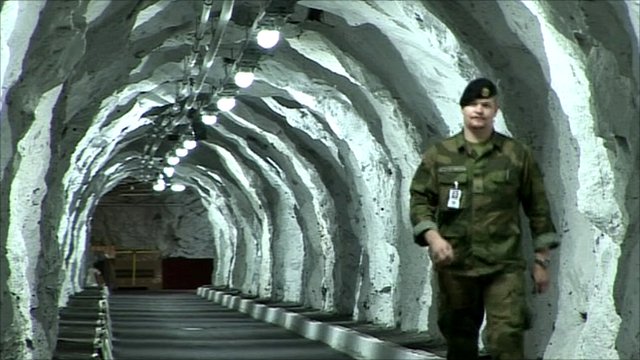
    Norway is the first of the NATO countries to move it’s military headquarters to the Arctic by formally opening a new high tech Operations Center located one kilometer inside the mountain at Reitan outside Bodø. North Norway.

    The operational center ,which has been described as unique in the world by H.M. King Harald of Norway, contains the most modern technology allowing military commanders to plan operations in different parts of the world simultaneously. The center contains Norway’s largest flat screen covering an approximitely 40 square meters. The complex was essentially a cold-war base, covering an aproximit 18.000 square meter five stories high and built to withstand a nuclear blast.

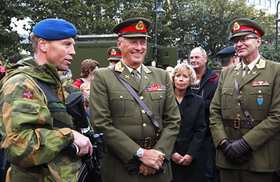
    Military generals

    The opening of the command center, is in line with the governments increased focus on the Arctic regions. The previous command center was located in Stavanger in southern part of Norway. The move can be estimated to bring the military command not only physically closer to the Arctic but mentally, including a first hand contact with all the questions concerning the High North and a deeper understanding of the stakeholders.

    To Take a look into the military complex follow this link

    To watch a video from the opening follow this link

    Source: Barents Observer & BBC News

  • Towards an Arctic Governance: What role for France and Europe

    Towards an Arctic Governance: What role for France and Europe

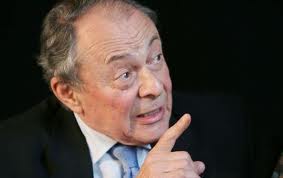
    Michel RocardMichel Rocard, a former Prime Minister and now a special representative for the President of France with regards to matters concerning the poles, Arctic and Antarctic, gave a lecture “Towards an Arctic Governance: What role for France and Europe?” at the University of Iceland on November 1, 2010. The lecture is part of a series organized by the President of Iceland, entitled “New Currents” in which various internationally known scholars and world leaders have taken part over the years.

    Michel Rocard has a long political career behind him. He has served as a Minister of Agriculture in France and was the Prime Minister of France between 1988-1991. He held a seat in the European Parliament for three terms and has been especially active in matters concerning foreign policy, education and employment. In this lecture he will share his vision for the North and discuss the role of Europe in the future of the Arctic region.

    Michel Rocard from Kennslumiðstöð Háskóla Ísl on Vimeo.

  • Finland’s strategy for the Arctic region

    Finland’s strategy for the Arctic region

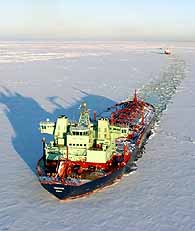
    Jaanmurtaja Icebreaker

    Over the past decade or so the world has become to realise the great importance of the Arctic region to the global ecology.

    New geopolitical situation that emerged after the end of the cold war enabled new scientific research and gradually the economical potential of the region came apparent. This notable change in how the Arctic is perceived has led to a series of new policy statements. Norway was the first Arctic country to establish an Arctic Policy in 2006 under the name “Norwegian High North strategy” and today, seven out of the eight Arctic Countries have an Arctic policy in addition to the EU Commission communication on European Union and the Arctic region.

    Finland was seventh Arctic country to draft an Arctic Policy. The Strategy was released June 4, 2010 and concentrates on seven priority sectors: security, environment, economy, infrastructure, indigenous peoples, institutions and the European Union. The strategy is not a final measure but rather a starting point in shaping Finland’s Arctic policy and will contribute to EU’s Arctic Policy, which is currently a work in progress.

    The strategy identifies as biggest security threats increasing seafaring and exploitation of the natural resources. Though there is no race to the natural resources in sight, activities in the region should continue to be based on the rule of international law and in order to protect the Arctic environment best practices and sustainable development should be pursued in activities throughout the region. The strategy recognizes that infrastructure is still lacking both onshore and offshore and needs to be improved in collaboration with neighboring countries. What comes to the economical potential of the region has Finland Arctic expertise in various sectors, especially in marine technology and logistics, which can be utilized in the large projects particularly in the Barents Region, but also in crosspolar transportation.

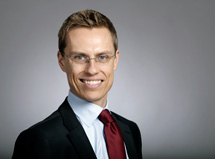
    Alexander Stubb

    According to the strategy will Finnish Sami continue to enjoy their rights as indigenous peoples and Finland will continue the work towards a national solution which will meet the minimum requirements of the ILO Convention on Indigenous and Tribal Peoples no.169.

    In the institutional level Finland emphasizes the importance of the Arctic Council as a forum for discussion and decision making. Finland lays down proposals for strengthening the Council so that the Council will be better prepared to act upon the contemporary situation. These proposals include revision of the mandate and working methods of the Council, better burden-sharing and a joint budget, establishment of a permanent secretariat, expansion of the normative role of the Council, enhanced interaction with non-Arctic actors and creation of a Communications and Outreach Strategy for the Council. In addition, Finland offers to host an Arctic Summit, a conference at the highest level, under the auspices of the Arctic Council to discuss and respond to the environmental concerns rising from the natural resource exploitation, to discuss the legitimacy of different actors in the Arctic and to the future development of the Arctic Council.

    But since Finland is an EU member state, as are Sweden and Denmark also, the EU Arctic Policy will play as well important role in Finnish Arctic strategy. The Strategy outlines that EU should consider the special features of the Arctic Region in the Union’s various policy sectors and increase its input in the area.
    Finland supports an establishment of EU Arctic Information Centre at the Arctic Centre of the University of Lapland and concurs the EU admittance as an permanent observer member of the Arctic Council.

  • Ice Strenghtened Passenger ship Clipper Adventurer hits Uncharted Rock in the Arctic Ocean

    Ice Strenghtened Passenger ship Clipper Adventurer hits Uncharted Rock in the Arctic Ocean

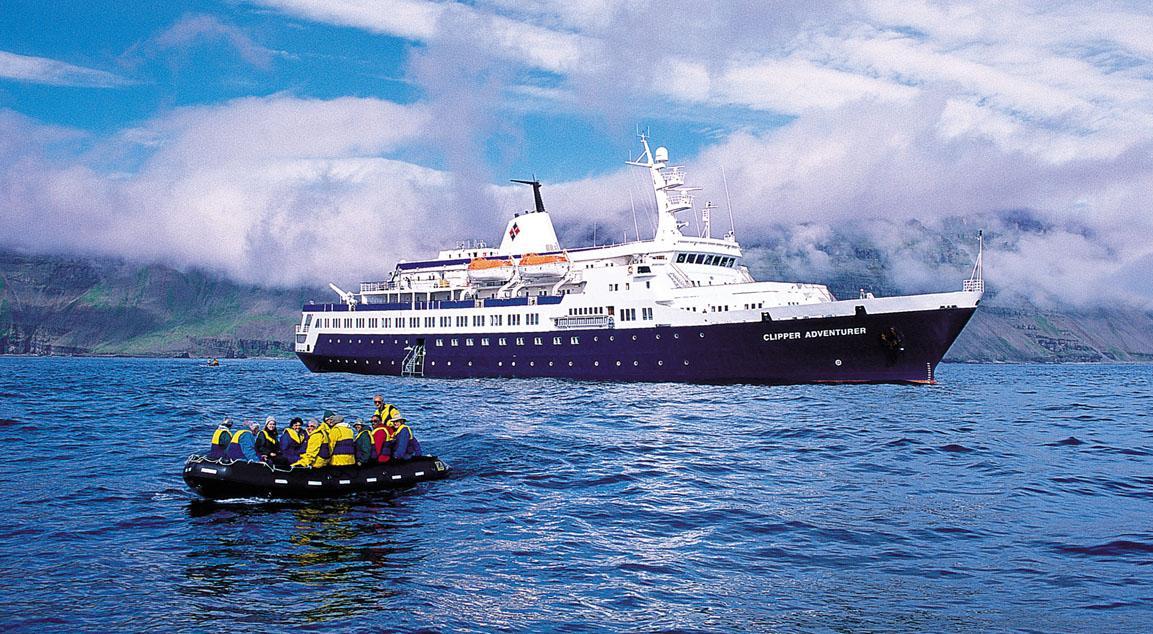
    Clipper Adventurer

    The ice strengthened passenger ship Clipper Adventurer( formally ALLA TARASOVA) ran aground on the 27. of August on a uncharted rock in the Arctic Ocean. The ship which is a 330 foot vessel equipped with an A-1 Ice class and was currently on a cruise with 128 passengers and 69 crew members.

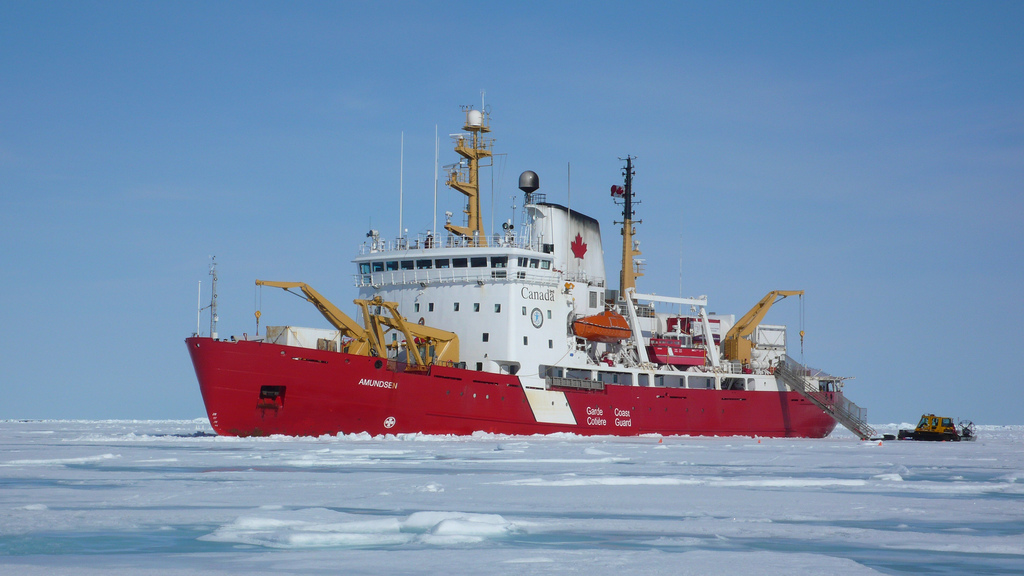
    Several attempts where maid to free the ship, with the passengers on board, with little or nor result. Yesterday the passengers where transported on board the icebreaker AMUNDSEN and transported to Kugluktuk in the Kitikmeot Region of Nunavut, Canada- From there the passengers will be flown to Edmonton in Canada.

    CCGS Amundsen

    Efforts to free the ship which remains upright will continue, the wheather is reported calm at the moment so it should offer good condition’s for such an activity

    Source: Maritimematters.com

  • Inuit Leaders Meet in Nuuk, Greenland

    Inuit Leaders Meet in Nuuk, Greenland

    Inuit leaders from Canada, Russia, USA and Greenland

    During the 28. June to July 2. The ICC holds it’s general assembly in Nuuk, Greenland.

    Inuit Leaders from Canada, Russia, USA & Greenland come together every four years to discuss the development in the arctic and their common concerns- and the meeting now is especially focused on during the meeting:

    • Environment, including Climate Change
    • Political and economic development
    • Health and Well-being
    • Hunting and Food Security
    • Governance
    • Inuit Arctic Policy

    Climate change and many other issues that are effecting the arctic, and thereby the Inuit, need to be discussed and a common policy or guidelines formulated.

    Further information can be found on Http://www.inuit.org

    Source: Arctic Council news

  • Arctic Species Trend Index

    Arctic Species Trend Index

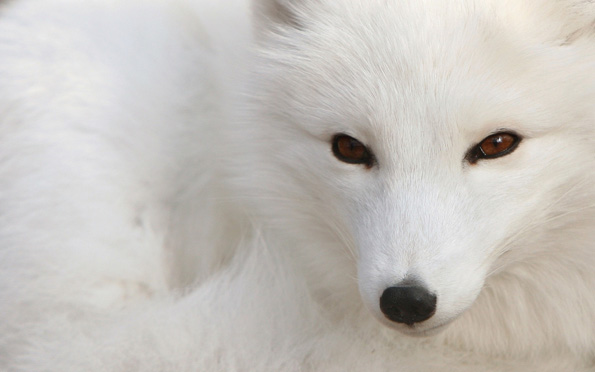
    Arctic foxArctic Species Trend Index (ASTI) is a biodiversity project commissioned and coordinated by the Arctic Council’s CAFF working group’s Circumpolar Biodiversity Monitoring Program. The ASTI keeps track how the Arctic’s ecosystems and the living resources dependent upon the ecosystems are responding to the environmental change taking place in the Arctic today. The Index, which was developed as a collaboration between the CBMP, the Zoological Society of London, UNEP World Conservation Monitoring Centre and the Worldwide Fund for Nature, uses population monitoring data to track trends in marine, terrestrial and freshwater Arctic vertebrate species. The index allows for a composite measure of the overall population trends of Arctic vertebrate populations. It can also be organized to display trends based on taxonomy, biome or region. Currently, the Index tracks almost 1000 Arctic vertebrate population data-sets by biome, taxa, migratory status etc. making it very important information source on Arctic biodiversity trends.

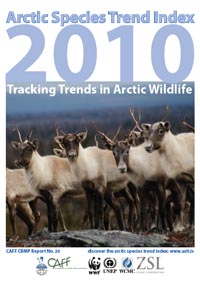
    ASTI coverThe ASTI has now released a new assessment on the Arctic’s biodiversity “Tracking Trends in Arctic Wildlife” according to which 26 per cent decline in species populations has occured in the high Arctic over the past 34 years. While some of these declines may be part of a natural cycle, there is concern that pressures such as climate change may be exacerbating natural cyclic declines.

    In contrast, population levels of species living in the sub-Arctic and low Arctic are relatively stable and in some cases, increasing. Populations of marine mammals, including bowhead whales found in the low Arctic, may have benefited from the recent tightening of hunting laws. Some fish species have also experienced population increases in response to rising sea temperatures.

    Because of the important role the Arctic ecosystem plays in the global ecology the results presented in the ASTI report are highly important for non-Arctic researchers as well. “Rapid changes to the Arctic’s ecosystems will have consequences for the Arctic that will be felt globally. The Arctic is host to abundant and diverse wildlife populations, many of which migrate annually from all regions of the globe. This region acts as a critical component in the Earth’s physical, chemical, and biological regulatory system,” says lead-author Louise McRae from the Zoological Society of London (ZSL).

    Further information on the project and the “Tracking Trends in Arctic Wildlife” report can be found on the ASTI homepage.

    For other complementary information, please see:

    The Circumpolar Biodiversity Monitoring Program (CBMP)

    The Zoological Society of London (ZSL)

    UNEP World Conservation Monitoring Centre (UNEP-WCMC)

    2010 International Year of Biodiversity

    Worldwide Fund for Nature (WWF)

  • Year of the Inuit 2010

    Year of the Inuit 2010

    2010 Year of the Inuit is an educational campaign spearheaded by Inuit Tapiriit Kanatami, the national organization representing Canadian Inuit. Its goal is to increase awareness among the general Canadian population about issues facing the Inuit of Canada and celebrate Inuit accomplishments and achievements.

    This project includes a number of educational events and projects such as;

    Inuit

    Inuit Qaujisarvingat: The Inuit Knowledge Centre:

    Mary SimonThe Inuit Qaujisarvingat is a centre that is intended to bridge the gap between Inuit knowledge and Western science and build capacity among Inuit to respond to worldwide growing interest in Arctic issues. In early January national Inuit leader Mary Simon, president of Inuit Tapiriit Kanatami, formally announced the creation of the centre in Ottawa. Associated to the event Mary Simon was quoted by CBC News saying “We could actually do the research that is related to the North and the Inuit from the centre so that’s it’s more related to what we feel are the priority areas”. Further involvement of indigenous people as researchers is clearly something to rejoice over and watching the future growth of the Inuit Knowledge Centre will be very interesting.

    A Taste of the Arctic: An Evening Celebrating Inuit Culture

    “A Taste of the Arctic” was the kickoff event for the 2010 Year of the Inuit. Presented by ITK at the National Gallery of Canada, it was a fundraising dinner for the Arctic Children and Youth Foundation. It featured a presentation by Susan Aglukark and performances by Takralik Partridge and the Ottawa Inuit Children’s Centre. The inaugural ITK Award for Excellence in Arctic Journalism was presented to CBC Television’s Peter Mansbridge.” The event was attended by approximately 250 people including a number of high-level officials.

    Inuit Tapiriit Kanatami & Students on Ice scholarship:

    The students on Ice program is intended to provide youth from across Canada and the world the opportunity to participate in ship-based educational adventures in the two polar regions. Students on Ice educates and inspires the next generation of polar scientists, researchers, and environmental leaders by introducing them to these magical regions and increasing their understanding and respect for nature. From 2000 Students on Ice have enabled almost 1000 high school and university students from thirty countries have been able to visit the polar regions.

    Polar Bear

    Students on Ice in cooperation with the International Polar Year Federal Programs Office of Canada, Inuit Tapiriit Kanatami, and First Air will offer fully-funded scholarships for Canadian youth to participate in the upcoming Arctic Expedition. Those eligible for the grant are high school students between the age of 14-18. The scholarships will be distributed between Aboriginal youth and other students from across the country.

    Glacier

    Selection Criteria:

    • Applicant must be a Canadian citizen between 14 and 18 years old at the time of application. Applicant must currently be attending high school at the time of application.
    • Applicant must submit a completed application form with 2 letters of reference.
    • Applicant must submit a copy of Aboriginal Status if the applicant is an Inuit, First Nations, or Métis beneficiary
    • Applicant must submit a completed application form with 2 letters of reference.
    • Applicant must understand that this is an educational expedition, not a vacation. He/she must be committed to participate fully in all aspects of the education program.
    • Applicant must demonstrate some or all of the following qualities: strong academics and/or passion for learning, interest in the environment; leadership qualities and/or potential to develop these qualities; a desire to make a difference, become a polar ambassador, and an environmentally responsible citizen.
    • Applicants must act as ambassadors for his/her community and must be prepared to share their journey with the community and country before, during, and after the expedition. Students will be expected to be available for media interviews and to submit journal entries for the SOI Expedition Website and other blogs.
    • Applicant must have current Government-issued identification (with photo, if possible). Ex: Health Card, Driver’s License, Birth Certificate.

    Download the Students on Ice Arctic Scholarships application form in English