Tag: Northeast Passage

  • Eight days through the Arctic

    Eight days through the Arctic

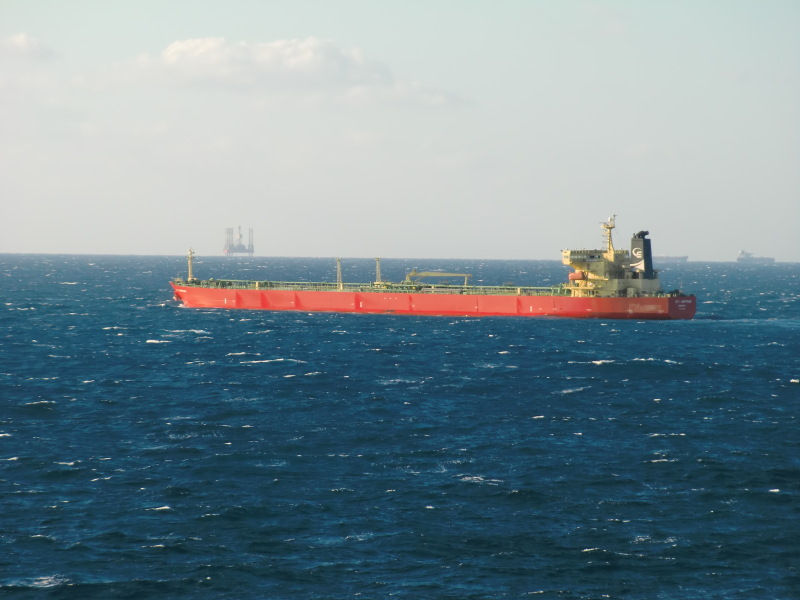
    STI Heritage tanker

    It took only eight days for the STI Heritage tanker to go from Murmansk in Russia and through the Arctic Ocean via the Northeast Passage.

    This is a new record for speed, bettering the 15 days it took Perservance earlier in the summer. The average speed of Perservance was 7,6 knots but STI Heritage averaged 14 knots.

    Twice as fast means a lot of money has been saved by Novatek which also plans to send the largest tanker through the Northeast Passage later in August.

    The STI Heritage sailed from Murmansk to its destination in Thailand, Map Ta Phut, in just under a month.

    See more about the Northeast Passage here.

    See also:
    Breakthrough of the Russians
    Sea ice levels at an all time low

    Photo: STI Heritage

  • Northeast Passage

    Northeast Passage shipping route

    The Northeast Passage is in reality a useful sea route. It runs from the northernmost parts of the North Sea across the icy waters of the Arctic Ocean north of Russia, east to the Chukchi Sea and Bering Straits where access to the North Pacific is reached.

    Several straits in the Passage can be classified as international.

    The Northern Sea Route (NSR) is an established commercial seaway that was used for domestic transportation and played an important economic role for the Soviet Union around World War II.

    The course of NSR was defined in a Russian regulation in 1990 and is in fact (rather than theoretically), the middle part of the Northeast Passage.

    To that extent, the Northern Sea Route can be equated with the Northeast Passage if this simple fact is known.

    As with the Northwest Passage, the Northeast Passage is limited for use because of extreme natural conditions based on the geographical location of the passage. However, if climate change continues to effectively bring warmer air to the area, condition of winds, ice and currents might result in more favourable sea route. But that does not resolve the legal issues and questions that rise if foreign ships use it as no specific universal agreement has been settled on that matter.

    In the summer of 2011 sea ice was at an all time low since measuring began. That resulted in extended shipping in the route. In August it took only eight days for the STI Heritage tanker to go from Murmansk in Russia to the Bering Sea. Russia is strengthening its fleet of icebreakers and will continue to use the route when it is possible, which is still only for a few months around the summertime.
  • First high capacity oil tanker throug the Northeast passage

    First high capacity oil tanker throug the Northeast passage

    Oil tanker

    On the 14 of August the ice-class tanker SCF Baltica began it’s voyage through the Northern sea-route. The tanker will be accompanied by three nuclear powered ice breakers during the two week sail. For the duration of the trip the crew till gather information on ice conditions in the area and the data used to estimate the commercial benefit of choosing the Northern sea-route vs. traditional routes in the south.

    What makes this trip special is the fact that it is the first time that a Aframax tanker of more than 100,00 dwt is navigating along the Northern sea route. The journey will cover 7,000 nautical miles where 3,000 are along the Northern sea route. The traditional southern shipping route connecting these two areas is around 12,000 nautical mile.  The ship started it’s voyage from the port of Murmansk, while the port of discharge in China is yet to be determined. The tanker is transporting gas condensate for Novatek, Russia’s largest independent gas producer. The voyage has been prepared by the ship’s technical manager, SCF Unicom and specialists from SCF’s head office in Moscow to make the voyage as safe as possible.

    The three nuclear icebreakers assisting the ship are the “Rossiya”, “Taymyr” and “50 years of Victory” the last one mentioned will be equipped with divers, equipment and specialists in dealing with oil spills and leakages.

    The northern sea route is open for less than two months in the late summer when the sea ice is at its minimum. The period can however be expected to lengthen gradually as sea ice continues to decline.

    Source: Barrentsobserver & MIC

  • Northeast Passage Open for a Cargo Ships

    Northeast Passage Open for a Cargo Ships

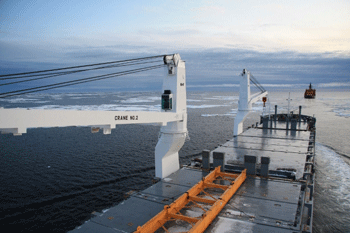
    German Vessel Beluga Fraternity

    Two German multipurpose heavy-lift vessels, Beluga Fraternity and Beluga Foresight, has managed to complete the first transit of the Northeast Passage by non-Russian commercial vessels.

    The carco vessels were assested by a nuclear-powered Russian Atomflot ice breaker “50 let Pobedy” through the East Siberian Sea and the Sannikov Strait into the Laptev Sea from were the vessels reached their Siberian destination of Novyy Port on Monday.

    The Northeast passage is ice-free only few weeks each summer and thus still unlikely that regular commercial shippin can take place in near future. The possibility of future shipping is, however, worth noticing since the Arctic Northeast passage will shorten the route between Asia and Europe approximately 5000km.