Tag: report

  • Jokkmokk Winter Conference 2013 report

    Jokkmokk Winter Conference 2013 report

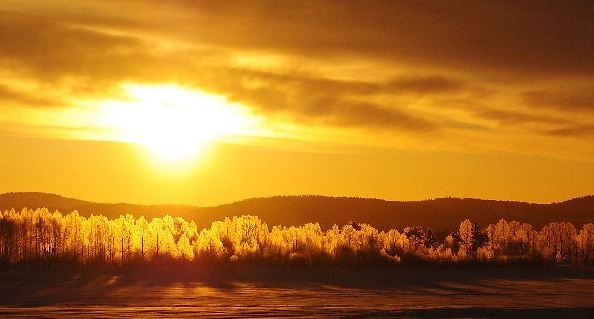
    arctic sunrise

    Jokkmok Winter Conference’s 2013 Report is now available for the download free of charge.

    A melting Arctic and the world’s hunger for energy and natural resources are leading to an increasing interest in exploring the vulnerable regions.

    This year’s Jokkomokk Winter Conference was trying to answer questions such as at what costs is that to happen and how will it affect people?

    Jokkmokk Winter Conference on climate change, energy and sustainable development is an annual international forum for students, decision makers, entrepreneurs and opinion builders from Northern Europe, North America and Russia.

    The annual Jokkmokk Winter Conference 2013 report is available here. More information about the Conference and its partners are available here.

    Source

    Northern Network on Climate Change

  • AFS 2012 report now available

    AFS 2012 report now available

    earth landscape from the above

    The International Polar Foundation releases the Arctic Futures Symposium 2012 report. Proceedings are available for free download on the IPF Website.

    The Symposium was held last October in Brussels and organized by the International Polar Foundation with sponsorship from Belgium’s Federal Public Service for Foreign Affairs and many other sponsors.

    Sponsors and co organizers were to include: Foreign Trade and Development Cooperation and the Prince Albert II of Monaco Foundation, as well as the support of the EU Committee of the Regions, the European External Action Service, and the European Commission.

    The highly successful symposium allowed Arctic stakeholders from diverse backgrounds (including EU and foreign policymakers, scientists, industry representatives, indigenous peoples and academics) to take part in lively discussions regarding current and future issues facing the Arctic.

    The next Arctic Futures Symposium is scheduled to take place on the 16th and 17th of October 2013.

    More information about the event are available on the IPF Website and under the e – mail:events@polarfoundation.org

    Source

    IPF

  • New report on melting glaciers

    New report on melting glaciers

    Melting glacier in Svalbard

    A new report of current rates of changes of land ice in the Arctic and North-Atlantic region has been released. It shows that the Greenlandic glacier shrinks by 200 square kilometers every year.

    Helgi Björnsson, a glaciologist at the University of Iceland, says that the Greenlandic glacier is melting rapidly, at twice the rate in the last 10-20 years. The glacier tongue is also stretching further out in the ocean than ever.

    The report states that the world oceans are rising of 3,3 mm every year, and almost 1/5 of that is because of the Greenlandic glacier. Only 20 years ago it was 2 mm less per year.
    The report included research on ice in Greenland, Iceland, Svalbard and Scandinavia.

    Glaciers in Iceland are also getting thinner, by 1 meter every year. Since 1990 glaciers in Iceland has shrunk by 150 square kilometers.

    The report is available here, in the Arctic Portal Library.

    This is the first Interim report of current rates of changes of land ice in the Arctic and North-Atlantic region from the Nordic Centre of Excellence ‘Stability and Variations of Arctic.

    Land Ice’ (SVALI). SVALI is one of three Nordic Centres of Excellence within the Nordic Top Research Initiative sub-programme ‘Interaction between Climate Change and the Cryosphere’. The report (Deliverable D.1.1-7 in the project) is written by the partners in Theme 1 “Observing the present – baseline and changes”.

    The report is a step towards answering one of the key questions to be addressed within SVALI: How fast is land-ice volume in the Arctic and North-Atlantic area changing?

    The report is available here, in the Arctic Portal Library.

    Sources

    Rúv

    SVALI report

  • Arctic Council report on SLCF released

    Arctic Council report on SLCF released

    Arctic Portal news

    The Arctic Council has released a new report on its webpage. The report is from The Task Force on Short-Lived Climate Forcers.

    SLCF (Short-Lived Climate Forcers) are subsets of greenhouse gases and aerosols that alter Earth’s energy balance. Unlike long-lived greenhouse gases like Carbon Dioxide (CO2), SLCF´s remain for a much shorter time in the atmosphere.

    The task force was established with the 2009 Tromsø Declaration and focused initially on black carbon. SLCF´s also include directly emitted greenhouse gases like methane.

    The report states that the largest sources of BC emissions in Arctic Council nations have been identified. Overall, total BC emissions from Arctic Council nations are projected to decrease in the coming decades, primarily due to the effective implementation of transportation-related PM controls.

    To maximize climate benefits, the report states that PM control programs must aim to achieve maximum BC reductions. Several mitigation measures have been identified to further reduce major emission source categories.

    The task force also claims that additional measurements, research, and analyses are needed to better identify the specific BC mitigation measures—both inside and outside of the Arctic Council nations—that will lead to the largest Arctic climate benefits.

    The Task Force has been requested to continue its work on short lived climate forcers and will focus on methane and tropospheric ozone, as well as further black carbon work where necessary and provide a report to the next Ministerial Meeting in 2013.

  • A new report on the deep seas

    A new report on the deep seas

    Deep seas drawing report

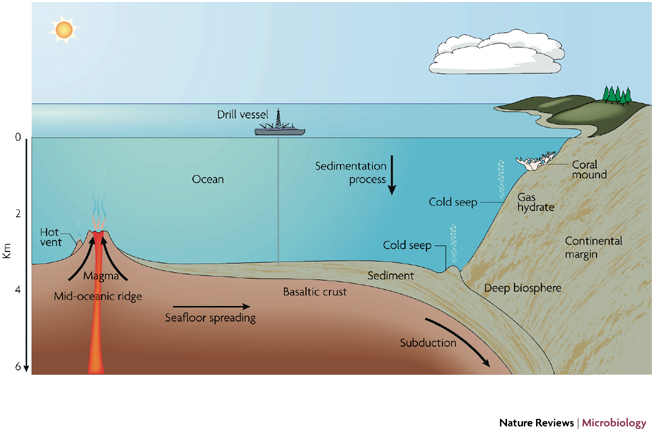
    Human actions have had adverse affects on the Arctic, even its deep sea ocean bed. A new report warns that better care needs to be taken of this vastly unknown area.

    It has been said that humans know less about the deep sea bed then the dark side of the moon. The average depth of 3.8 kilometers makes access for exploration inhospitable and only a handful of the approximately 326 million square kilometers deep ocean bed has been explored.

    “The main problem is that we still know very little of what we call the deep sea, making it difficult to evaluate accurately the real impact of industrial activities, litter accumulation and climate change in the deep sea habitats,” says the team conducting the deep sea project for the Census of Marine Life.

    The report, published in the journal PLOS One says that after dumping waste in the oceans for centuries, humans have introduced invasive species from one hemisphere to another. Climate change has also begun to alter the basic chemistry of marine life with dramatic increases in the concentrations of dissolved CO2 and overall world temperatures.

    The report: Man and the Last Great Wilderness: Human Impact on the Deep Sea

    It also reports that those who want to exploit the oceans must realize that their explorations and actions have consequences. But although human actions can have adverse effects, climate change will be the main factor in the future.

    “We predict that from now and into the future, increases in atmospheric CO2 and facets and consequences of climate change will have the most impact on deep-sea habitats and their fauna,” the report states.

    Finally, the report says that extracting methane hydrates from the seafloor could be more complicated and ecologically sensitive than first thought.

    “Most gas hydrates are buried beneath a thick sediment cap on the sea floor below 250 (meters),” the authors wrote. “In places where gas hydrates intercept the sediment surface … methane seep ecosystems are well developed. Should mass extraction of gas hydrates become a reality, many methane seeps might become subject to disturbance more significant than that of oil and gas extraction.”

    The report: Man and the Last Great Wilderness: Human Impact on the Deep Sea

    Picture: Nature Reviews

  • The Shared Future: A Report of the Aspen Institute Commission on Arctic Climate Change.”

    The Shared Future: A Report of the Aspen Institute Commission on Arctic Climate Change.”

    The Aspen InstituteRecognizing that the circumpolar Arctic region is experiencing significant ecological change due to global climate change, the Aspen Institute convened a civil society Dialogue and Commission to consider the implications of this impending transformation for the region’s inhabitants and resources. The Aspen Institute released a final report and recommendations of Commission, entitled “The Shared Future: A Report of the Aspen Institute Commission on Arctic Climate Change.”

    The report features a very special foreword by President Jimmy Carter and presents the Commission’s recommendations, foremost of which is that governance in the Arctic marine environment should be sustained and strengthened by a new conservation and sustainable development plan based on using an ecosystem-based management approach.

    The Commission believes marine spatial planning provides a workable method to begin implementation of ecosystem-based management. Governance of the Arctic can and should be strengthened through an inclusive and cooperative international approach that allows greater participation in information gathering and sharing, and decision-making, leading to better information policy choices and outcomes.
    The report is issued under the auspices of the Aspen Institute and the members of the Aspen Institute Commission on Arctic Climate Change, with support from the Prince Albert II of Monaco Foundation.

    Aspen Climate Change Report

    Aspen Climate Change Report – Handout

    Arctic OceanThe report presents the Commission’s recommendations, foremost of which is that governance in the Arctic marine environment, which is determined by domestic and international laws and agreements, including the Law of the Sea, should be sustained and strengthen by a new conservation and sustainable development plan using an ecosystem-based management approach. The Commission believes marine spatial planning provides a workable method or approach to begin implementation of ecosystem-based management. According to the Commission, Arctic governance can and should be strengthened through an inclusive and cooperative international approach that allows greater participation in information gathering and sharing, and decision-making, leading to better informed policy choices and outcomes.

    gullThe Commission recognizes that this Aspen Dialogue has been a preliminary step toward a fuller discussion on the future of the Arctic marine environment. Its major discovery is that a more modern, holistic and integrating international plan is needed to sustainably steward and govern the Arctic marine environment. The Commission has made significant progress in understanding the needs and requirements for action to sustain the Arctic and realizes that in order to implement its recommendations the entire Arctic community must be engaged.

    The Aspen Commission on Arctic Climate Change has identified the following initial Principles of Arctic Governance as forming the guiding foundation of its recommendations and the standards by which future governance and sustainable management of human activities in the Arctic marine environment should be measured. Specifically, governance and sustainable management of human activities in the Arctic marine environment should seek to:

    1. Optimize ecosystem resilience, integrity and productivity by maintaining food-web (trophic) structure and protecting and restoring biodiversity and available habitat.
    2. Maintain the full suite of Arctic ecosystem services to support human well-being on a continuing basis.
    3. Promote investment in scientific research and related infrastructure necessary to ensure sustainable development and environmental protection.
    4. Avoid exacerbating changes that may be difficult or impossible to reverse in temperature, sea-ice extent, pH, and other key physical, chemical and biological ecosystem parameters.
    5. Assess, monitor and manage multiple human activities using an integrated, adaptive, ecosystem-based management system that takes into account risks and cumulative and interacting effects.
    6. Apply ecosystem-based management processes based on science and traditional knowledge, particularly to new and expanded human activities which are subject to prior evaluation and analysis. Prudent measures to reduce or eliminate impacts are to be taken when there are reasonable grounds for concern that such activities, directly or indirectly, will bring about hazards to human health, harm living resources and ecosystems, damage amenities or interfere with other legitimate uses.
    7. Fully respect the rights, including human rights, of Arctic residents and Arctic indigenous peoples, and maximize participation in and transparency of decision-making for all interested stakeholders.
    8. Link global policy discussions to the need to conserve and manage Arctic ecosystems and dependent communities.
    9. Promote cooperation among Arctic states to arrive at appropriate standards for managing activities in the Arctic to meet the special conditions of the Arctic region, while promoting sustainable development.
    10. Inform, in a timely manner, national and international decision-makers as well as the public of the consequences of climate change impacts in the Arctic, and needed actions required to meet the above noted principles.

    shippingThe Aspen Institute Commission on Arctic Climate Change believes that existing frameworks can be enhanced and new frameworks can be established to improve governance and strengthen resilience in the Arctic marine environment in response to climate change impacts and the need for adaptation readiness. The Commission developed its recommendations against the backdrop of at least three observable strategies currently discussed internationally to strengthen the Arctic Council; expand and strengthen the existing system of bilateral and multilateral agreements; and/or establish a new Framework Convention for Arctic governance.

    Aspen Commission Recommendations

    1. Arctic governments should take immediate steps to begin developing an Arctic Marine Conservation and Sustainable Development Plan by 2012, in collaboration with civil society and other interested parties.
    2. Arctic governments, independently and collectively, should implement an integrated ecosystem-based management approach in the Arctic marine environment utilizing appropriate marine spatial planning, as well as regulatory rules and standards that address the special conditions of the Arctic region.
    3. In addition to an Arctic marine conservation and sustainable development plan, a number of specific actions should be initiated through the development of agreements or standards that foster consistent implementation among and across Arctic governments.
    4. An open-source Arctic network, focused on ecosystem-based management, should be developed through the Arctic Council and used to complement the existing system of national and international governance mechanisms in the Arctic.
    5. Arctic governments should call for a special diplomatic conference in 2012, which includes participation by Indigenous Peoples and the eight Arctic nations, to establish a timetable for designing and implementing the preceding recommendations.
    6. All Arctic residents, including Indigenous Peoples, should play a pivotal role in planning the future of the Arctic and should share in the benefits of its resources as well as responsibility for its sustainable future.
    7. An Arctic science program should be implemented and integrated as part of the Arctic Marine Conservation and Sustainable Development Plan using an open-source information network.
    8. The Commission urges that the Arctic Council be reinforced as an effective, multilateral organization for the region and that it be given the resources and a revised architecture to ensure that the planning, participation, management and accountability recommendations put forward in this report are implemented.

    About the Aspen Institute

    The Aspen Institute mission is twofold: to foster values-based leadership, encouraging individuals to reflect on the ideals and ideas that define a good society, and to provide a neutral and balanced venue for discussing and acting on critical issues.

    The Institute is based in Washington, DC, Aspen, Colorado, and on the Wye River on Maryland’s Eastern Shore and has an international network of partners. Further information.

  • European Parliament´s Report on a Sustainable EU policy for the High North

    European Parliament´s Report on a Sustainable EU policy for the High North

    EU Arctic Policy

    The European Parliament newly adopted a Report on Sustainable EU Policy for the High North – The Gahler report.

    The report is the Parliaments response to the accelerating activities in the Arctic and demonstrates the European Unions increased interest in the region.

    The Report emphasizes the European Unions role in the Arctic through its Arctic member states; Denmark, Sweden and Finland, but also recognizes the ongoing work in several other partnerships through the EU Northern Dimension, a common policy of the EU with Russia, Norway and Iceland, all of which are Arctic Council member states. It is especially interesting that the Report notices the Iceland’s status as a candidate country for accession to the EU and underlines the need for a coordinated Arctic policy at EU level for that reason. The report represents Iceland as a strategic opportunity for the EU to assume a more active role and contribute to multilateral governance in the Arctic region; considering that Iceland’ s accession to the EU would further consolidate the EU’s presence in the Arctic Council.

    The Report further recognizes the importance of new world transport routes through the Arctic Ocean, underlining the development of safety and security framework for the Arctic shipping and freedom of the seas and the right to free passage through international waterways for the EU and its Member States. Natural resources, Climate change and pollution, Sustainable socioeconomic development and institutional developments are also among the subjects of the Report, it acknowledging the importance of the establishment of an EU Arctic Information Centre as a forum of organizing permanent EU outreach to the major actors relevant to the Arctic and of channeling Arctic information and services towards the EU’s Institutions and stakeholders.

    To read the original Report, please go to the relevant section at the homepage of the European Parliament.

    For further information on Arctic matters in the European Union, please see the The EU-ARCTIC-Forum January 2011 Newsletter. The EU-ARCTIC-Forum is the European Parliament’s platform on issues concerning the Arctic providing exchange and input of information for the often fragmented discourse on the Arctic matters within the European context.

  • Mercury Assessment report handout

    Mercury Assessment report handout

    AMAP

    The Arctic Monitoring and Assessment Working Group (AMAP) have released a handout showing key scientific findings from their 2011 Mercury Assessment report. The hand-out describes why mercury is a concern in the region and key scientific findings from the 2011 Mercury Assessment report are listed, showcasing the Arctic region as a major area of impact.

    The hand-out describes why mercury is a concern in the region, how and why mercury continues to present risks to the health of Arctic peoples and wildlife; where mercury in the Arctic environment comes from, how it gets there, and what controls mercury levels in the Arctic. A particular concern is the fact that—despite reductions in emissions from human activities—in large areas of the Arctic, mercury levels continue to rise in some Arctic wildlife.

    Based on the results of the AMAP Mercury Assessment, the Arctic Council confirms the need for urgent global action to reduce mercury levels in the Arctic and in the rest of the world.

    Further information in the Feature of the week

    AMAP

    Arctic Council Webpage

  • EU-ARCTIC-Forum debate on EP Report A Sustainable EU Policy for the High North

    EU-ARCTIC-Forum debate on EP Report A Sustainable EU Policy for the High North

    EU Arctic Policy

    EU-ARCTIC-Forum will be hosting a debate with Arctic Stakeholders on the European Parliaments Report “A Sustainable EU policy for the High North” on 8. December 2010 in Brussels.

    Birgit Schnieber-Jastram, Chair of the EU-ARCTIC-Forum will host the meeting with the rapporteur Michael Gahler MEP and the shadow rapporteurs Anneli Jäätteenmäki MEP, Liisa Jaakonsaari MEP, Indrek Tarand MEP and Konrad Szymanski MEP before the December 9 vote of the Report in the Committee on Foreign Affairs.

    With the debate the EU-ARCTIC-Forum in the European Parliament wants to ensure a proper involvement of stakeholders facilitating thus well informed discourse in Brussels on Energy, Environment and Climate Change, Resources, World Trade Routes, Security, Sustainable Development etc, that are important subjects in the Arctic context.

    Those who want to participate and do not have an access badge to the EP yet, please send your details for registration (name, surname, date of birth, address) asap to Michael Gahler MEP. (michael.gahler(at)europarl.europa.eu)

    8. December at 17.15

    in Room ASP 3 H 1

    in the European Parliament in Brussels.


    Presentation and Consideration of the Draft Report on “A sustainable EU Policy for the High North” in the last meetings of the European Parliaments Committee on Foreign Affairs

    Summary

    Overall the Draft Report seems to be well perceived, both in the EU and in the Arctic. Thus there is justified hope that the Report will not only contribute to outline the EU’s Arctic policy, but also to contribute to confidence building with the Arctic stakeholders. The Draft Report undertakes to asses the existing legal and political framework in the Arctic as well as to establish a clear set of priorities of the European Union with regard to the Arctic. In the last part the Report is formulating suggestions and request to the European Commission and the Council and offering close cooperation to the Arctic states and stakeholders.

    The Draft Report is clearly stating that the Arctic Region is not a legal vacuum, but has a developed set of rules which nevertheless need to be further developed due to changing circumstances.

    Main priorities of the EU in the Arctic set out are:

    • The road to a sustainable socio-economic development and environmental protection
    • The potential of new world transport routes and their vital importance to the EU member’s states
    • The potential of developing resources like Hydrocarbons, Minerals, fish and biogenetic resources

    With regard to a sustainable socio-economic development the Eco-System based management approach as applied in the Barents today is recognized. The Report makes a clear statement as to the responsibility of the EU as one of the main contributors to pollution and climate change.

    In its conclusion the Report requests the Commission to set up a permanent Inter service on the Arctic and likewise in the future EEAS.
    Requests and suggestions are made as to a new circumpolar co-funding and co-programming research programme.
    Finally the importance of EU engagement in the further development of Northern Sea Routes is highlighted and suggestions as to the Galileo project are made.


    After an intense period of organized hearings, meetings and preparations on Tuesday, 9. November, the Draft of the European Parliaments Report on “A sustainable EU Policy for the High North” was presented and debated by the Parliaments Rapporteur Michael Gahler MEP.

    Draft Report

    List of Amendments


    About the EU-ARCTIC-Forum in the European Parliament

    Function

    The EU-Arctic-Forum was constructed to provide the European Institutions with a cross-party platform to foster a better understanding of changes in the Arctic Region and its implication for Europeans citizens politics and businesses, to facilitate a well informed and balanced debate, as well as to bolster the development of a coherent European Policy with regard to the Arctic Region.

    The EU-ARCTIC-Forum is the European Parliament’s platform working on all Issues with regard to the Arctic, providing not only for exchange and input of information but to interlink the so far too often fragmented debates on the Arctic.

    Participants

    The EU-ARCTIC-Forum is involving a number of MEP’s from all major political groups and several committees, Delegations and Intergroup’s such as the Committees on Foreign Affairs, Environment, Transport, Industry, Research and Energy, Development and Transport.

    Thus the EU-ARCTIC-Forum works as the European Parliaments platform interlinking all issues regarding the Arctic Region.

    It invites on a regular basis speakers from the scientific community, business, NGOs, and international institutions in the format of breakfast briefings, seminars or dinner speeches.

    Future Meetings are already organized and interest to participate was already expressed by several Commissioners and other High Officials, Foreign Ministers and Ambassadors of several Arctic States, as well as high profile leaders of the international or European Institutions such as the European Environmental Agency, the International Maritime Organization and the Nordic Council of Ministers, but also from Civil society, NGO’ s and the energy, fishing and shipping industry as well by leading academics in the field.

    Contributions

    In light of the ambition to stimulate and contribute to an informed debate, we call for contributions to the EU-ARCTIC-Newsletter by all interested participants and readers. We want to invite you to share your insights and opinions with the politicians, experts and stakeholders whose work will be addressed by this newsletter.

    The editor of the EU-Arctic-Newsletter and the organizers of the EU-ARCTIC-Forum look forward to your valuable comments and contributions and would like to draw your attention in particular to the forthcoming activities on the European Parliaments Report on “A sustainable EU Policy for the High North” in November and December in Brussels!
  • A sustainable EU Policy for the High North draft report presented and debated this week in Brussel

    A sustainable EU Policy for the High North draft report presented and debated this week in Brussel

    EU Arctic Policy flag

    The Draft report undertakes to asses the existing legal and political framework in the Arctic as well as to establish a clear set of priorities of the European Union with regard to the Arctic.

    The report suggests that the European Commission and the Council and offering close cooperation to the Arctic states and stakeholders. The draft report clearly recognizes that the Arctic is far from being a legal vacuum, but has developed a set of rules which will nevertheless need to be further developed due to changing circumstances.

    Main priorities of the EU in the Arctic set out are:

    • The road to a sustainable socio-economic development and environmental protection
    • The potential of new world transport routes and their vital importance to the EU member’s states
    • The potential of developing resources like Hydrocarbons, Minerals, fish and biogenetic resources

    With regard to a sustainable socio-economic development the Eco-System based management approach as applied in the Barents today is recognized.

    The report acknowledges the responsibility of the EU as one of the main contributors to pollution and climate change.

    In its conclusion the Report requests the Commission to set up a permanent Inter service on the Arctic and likewise in the future EEAS.

    Requests and suggestions are made as to a new circumpolar co-funding and co-programming research programme.

    Finally the importance of EU engagement in the further development of Northern Sea Routes is highlighted and suggestions as to the Galileo project are made.

    Overall the Draft Report seems to be well perceived, both in the EU and in the Arctic.

    Thus there is justified hope that the Report will not only contribute to outline the EU’s Arctic policy, but also to contribute to confidence building with the Arctic stakeholders.

    The Process will continue with the EU Arctic Forum hosting the Meeting with the European Parliaments Rapporteur to discuss the report on “A Sustainable EU policy for the High North” on 7. December 2010.

    The text from the official announcement can be seen here:

    Birgit Schnieber-Jastram, Chair of the EU-ARCTIC-Forum now has the pleasure to host a meeting with the rapporteur and several shadow rapporteurs before the vote of the Report in the Committee on Foreign Affairs takes place.

    The Rapporteur Michael Gahler MEP is looking forward to present and debate the Report on A sustainable EU Policy for the High North as well as amendments on 7. December at 09.00 (tbc) in the European Parliament in Brussels.

    To ensure fair involvement of Arctic stakeholders the Chair of the EU-ARCTIC-Forum in the European Parliament Birgit Schnieber-Jastram MEP is inviting you to participate in the debate and in particular welcomes any contributions, which should be made in due time by contacting the Adviser on the Report to Michael Gahler MEP: Mr. Steffen Weber, Or the respective shadow rapporteurs and members of the EU-ARCTIC-Forum: Anneli Jäätteenmäki MEP, Liisa Jaakonsaari MEP, Indrek Tarand MEP, Konrad Szymanski MEP and Sabine Lösing MEP.

    The EU-ARCTIC-Forum in the European Parliament thus wants to ensure the proper involvement of stakeholders and continues its work to facilitate and bolster a well informed debate on Arctic Issues in Brussels and to interlink debates on Energy, Environment and Climate Change, Resources, World Trade Routes, Security, Sustainable Development etc, that are important in the Arctic context.