Tag: Russia

  • Putin speaks at the Arctic Forum

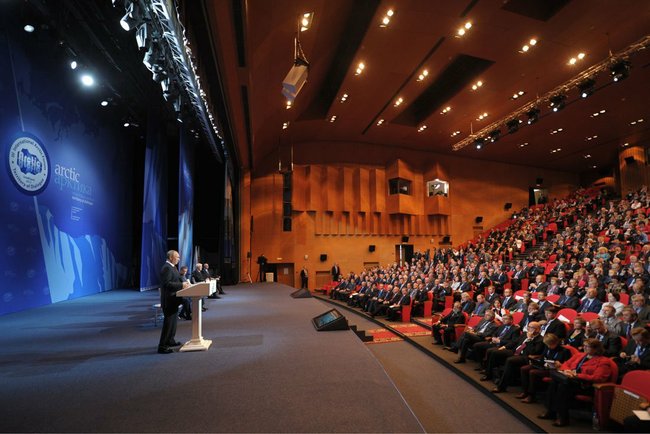
    Putin speaks at the Arctic Forum

    Putin during his speech.

    President of Russia, Vladimir Putin, held a speech at the third international Arctic Forum, in Salekhard. The first such forum was held in Moscow in September 2010, the second – in Arkhangelsk in 2011.

    Click here for the Arctic Portal mapping system

    The main theme of the current forum is environmental security. The forum participants will discuss possible scenarios of climate change in the Arctic, the current level of pollution, the impact of its industrial development on indigenous peoples and a number of other issues.

    Taking part in the third international Arctic forum will also be President of Finland Sauli Niinist, President of Iceland Olafur Ragnar Grimsson, Russian Defence Minister Sergei Shoigu and many others.

    “Today more than ever, the Arctic needs particular care and attention. Russia, where the Far North regions make up almost a third of the country’s territory, is conscious of its responsibility for preserving the Arctic’s environmental stability,” Putin said in his speech.

    “Many of you here today know that we have adopted the Arctic Environmental Protection Strategy. We are using it as the base for drafting our State Programme for the Russian Arctic’s Social and Economic Development until 2020.”

    President Putin also underlined Russis intentions to clean up the Arctic, and said that the federal budget allocated 45 million US dollars to the cleanup.

    “I also note that we plan to extend considerably the network of nature conservation areas in the Arctic region. These specially protected natural areas currently make up around 6% of the Russian Arctic, nearly 322,000 square kilometres. Our plan is to increase this area several-fold.”

    Putin also stressed that coperation is high on the Russian agenda: “I want to reaffirm today Russia’s commitment to this declaration’s principles, and also to our desire to do everything possible to make the Arctic in practice a territory of partnership, cooperation and dialogue between countries and between the public at the broadest level.”
    Read Presidents Putin speech here.

  • China plans to invest in Russia

    China plans to invest in Russia

    Russian harbor

    Chinese investors are interested in building deep water harbor in Arkhangelsk Oblast, according to Deputy Governor of the region. It is believed that a new deep water harbor is the natural ending point of the infrastructure development around the area.

    Alsufyev and Dmitry Deart, who is Head of the Department for Transport, have just returned from China, where they took part in the third meeting in the joint Russian-Chinese working group on the Belkomur project.

    They presented the deep-water harbor project to Chinese investors, who showed “principal interest” in developing the port of Arkhangelsk, the regional administration’s web site reads.

    The planned deep-water port in Arkhangelsk, which is included in Russia’s transport strategy for the period to 2030, will have an annual capacity of 30 million tons.

    Source

    Barents Observer

  • Sabetta port becomes a reality

    Sabetta port becomes a reality

    Computer image of future Sabetta port

    Construction of Sabetta port, a key component in the huge Yamal LNG project, is now planned to start this summer.

    It is predicted that the Sabetta port will become one of the biggest in the Russian Arctic. Located in the Yamal Peninsula, it will boost shipping in the icy waters of the Ob Bay and the Northern Sea Route.

    Project Manager – Maksim Minin officially announced that the project has been delivered to the contractor and is ready to be reviewed by the state expert panel.

    The new port, a joint initiative of the Novatek company and Russian federal authorities, will be a key component in the development of the gas-rich Yamal Penisula. Linked with the South Tambey field and a major projected LNG plant, the port will be built to handle more than 30 million tons of goods per year.

    Sabetta port is planned to be operational all-year-round, despite the highly complex ice conditions of the Ob Bay.

    The total investments in the Sabetta port project amount to 75 billion RUB (€1,82 billion). The Russian government is investing 49 billion RUB (€1,19 billion) while private investments amount to 25 billion RUB (€607 million).

    The Yamal LNG project is developed by the JSC Yamal LNG, a joint venture of Novatek (80%) and Total (20%), and in close cooperation with the Federal Agency of Sea and River Transport and the Rosmorport state enterprise.

    Source

    Barents Observer

  • Days of the Arctic in Russia

    Days of the Arctic in Russia

    Ship sailing in the Arctic Ocean

    The Days of the Arctic will be held by Arctic Federal Universities on 25th to 28th of February. The event will promote studies in the Arctic territories, strengthening the status of the university as a base platform for the discussion of problems and prospects of the Russian Arctic, its biodiversity, the history of exploration and development prospects, as well as drawing attention of local media to the Arctic theme.

    “Days of Arctic” will open a large scale exhibition “View of the Arctic”, where the rector of NArFU Elena Kudryashova and director of “National Park “Russian Arctic” R. Ershov will make welcome speeches.

    Unique photos which will be presented at the exhibition, were taken at one of the youngest and largest national park in Russia “Russian Arctic” and in the Federal Reserve “Franz Josef Land”. The photo exhibition will be held in the lobby of NArFU main building on February 25 at 2:00 P.M.

    Furthermore, in the framework of the event “Days of the Arctic” on 25-28 February the participants will be able to attend lectures given by the staff of “National Park “Russian Arctic” and to watch a movie “She, the Arctic” made by M. Menshikova.

    The final event of “Days of Arctic” on February 28 will be an international conference-webinar “Day of Arctic in the Presidential Library” on the platform of NArFU (Arkhangelsk) and the Presidential Library (St. Petersburg). The conference will be attended by the federal universities of Russia as well as the arctic universities of Finland, Norway, Sweden, Canada, Denmark, the United States and Iceland.

  • Mammal invasion in Russia?

    Mammal invasion in Russia?

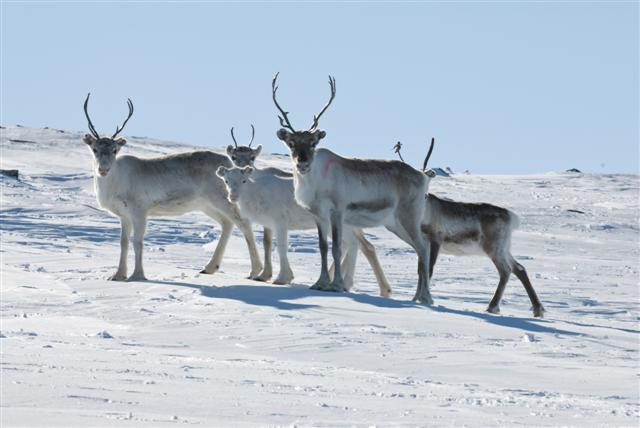
    Reindeers in the arctic

    By 2080, Russia might witness a vast mammalian invasion, as sub-arctic European animals flee global warming and adapt to a thawing tundra. This is the result of a newly published study in the journal PloS One.

    “North Western Russia will be some kind of hotspot of species richness,” said Christer Nilsson, an ecology professor, via Skype from Umeå University in Sweden to the website Mother Jones. “Species will be on the move and there will be new combinations of species.”

    Red and fallow deer, wild boar, the Eurasian badger, rabbits, mice and beaver will all be on the move as new tracts of habitable land open up.

    In a surprising twist, Professor Nilsson and his team found that most species in the Barents Region, which includes the northern half of Norway, Sweden, Finland and a big chunk of North Western Russian, will actually be favored by climate change.

    Forty-three out of the 61 animals studied will expand and shift their “ranges”—or habitats—mostly in a north-easterly direction, sometimes traveling hundreds of miles.

    But no one can predict how all the animals will interact in their new, climate-changed world, and far from helping animals, climate change might force new, and deadly, interactions: “Predators might be in contact with new prey,” Nilsson said.

    The report found something encouraging: No extinctions predicted in the area surveyed. “We couldn’t find any evidence that any species will disappear, given the climate change predictions we’ve used,” Nilsson said. Nevertheless, vulnerability of those already threatened may increase due to the introduction of new competing or predatory species.

    Sources

    Mother Jones

    Plosone

  • Moscow chosen over NSR-cities

    Moscow chosen over NSR-cities

    The Northern Sea Route.

    Russia has decided to host the administration for the Northern Sea Route in its capital, Moscow. The new headquarters will open late January this year.

    The Deputy Transport Minister of Russia, Viktor Olersky, said to RIA Novosti that a draft of the resolution has been made and it is being coordinated by federal agencies. The BarentsObserver states that both Murmansk and Arkhangelsk lost the fight for hosting the administration, after looking for having it in its respective cities for years.

    The reason given for choosing Moscow, instead of either of the two harbor cities in the route is “in order not to offend anyone”. Olersky also said that a branch could be opened later in Arkhangelsk.

    He said that although concerns may rise that Moscow is not at the sea route that it was a good location as the Emergency Situations Ministry was in Moscow, as well as other big companies and organizations who work and employ in the areas.

    The state owned enterprise will have a budget of 35 million Rubles. Only for days prior to the decision by Olersky, the Governor of Arkhangelsk Igor Orlov said that Arkhangelsk was ready to open a NSR office that would handle all practical tasks connected to traffic on the route – applications to use the route, coordination with the Agency on Hydrometeorology and Environmental Monitoring, use of Arctic aviation and so on.

    In 2012 total cargo transported through the Northern Sea Route was 1.261.545 tons, an increase of over 50 percent from 2011. The total number of ships also increased from 34 in 2011 to 46 in 2012, compared to only 4 in 2010.

    Sources

    RIA Novosti

    Barents Observer

  • Russian 100 million icebreaker to Finland

    Russian 100 million icebreaker to Finland

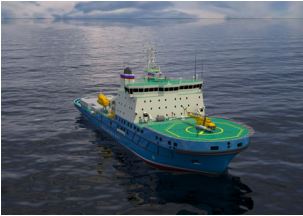
    Russian icebreaker

    Russia is building a new icebreaker in Finland, to be ready in 2015. The vessel is planned to be used in year-round operation in the Baltic Sea and in summer season in the Arctic seas. The vessel is able to operate in temperatures as cold as -40°С and the maximum icebreaking capability is 1.5 m.

    Arctech Helsinki Shipyard will build the 16 MW icebreaker with a total worth of the vessel about 100 million EUR. The contract has been awarded together with OJCS Vyborg Shipyard.

    The main tasks of the vessel are icebreaking and assisting of heavy-tonnage vessels in ice, towing of vessels and other floating structures in ice and open water. The vessel will also be used for fire fighting on floating objects and other facilities, assisting vessels in distress in ice and open water and also for cargo transportation.

    The vessel will measure 119.8 m in length and 27.5 m in breadth. The four main diesel generator sets have the total power of 27 MW. The total propulsion power is 18 MW consisting of two full-circle azimuth thrusters.

    Arctech Helsinki Shipyard Inc. specializes in arctic shipbuilding technology, e.g. building icebreakers and other Arctic offshore and special vessels. Arctech is a joint-venture, which is 50/50 owned by STX Finland Oy and Russian United Shipbuilding Corporation. The joint venture agreement was signed in December 2010. Arctech is located in Helsinki and has approximately 400 employees.

    Source

    Arctech

  • Electronic Memories in St. Petersburg

    Electronic Memories in St. Petersburg

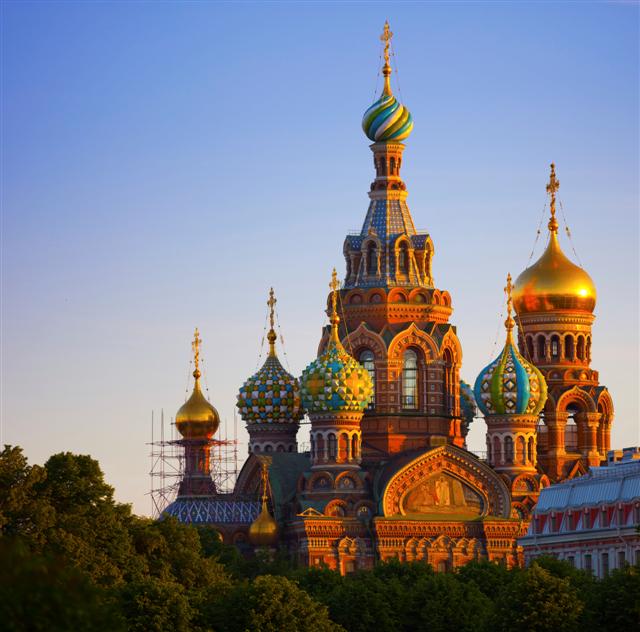
    The Church of the Resurrection of Jesus Christ

    St. Petersburg in Russia celebrates Arctic Days in December where the highlight is the conference “Electronic Memory of the Arctic – cultural communications of the circumpolar world”.

    The Conference has been organized by the joint effort of the National Library of Russia (NLR), Nonprofit partnership Center for the Preservation of Cultural and Historical Heritage “Electronic Memory of the Arctic” (NPP EMA), Center of International and Inter-regional Collaboration and is an important step towards creation of the “International Scientific Multifunctional Arctic Center in Salekhard.”

    December 12-15th are the Arctic Days, under support of the Arctic Council, RF Ministry of Foreign Affairs, RF Ministry of Culture and the Russian Geographical Society.

    The major event is the First international scientific and practical conference “Electronic Memory of the Arctic” taking place now on the premises of the National Library of Russia.

    The event is marked by the presence of the leading establishments of the world-wide Arctic community, including Arctic Council Secretariat, University of the Arctic (Norway-Russia), Arcticportal.org (Iceland), Arctic Centre (University of Lapland), The Academy of Finland, Foundation for Siberian Cultures, Scott Polar Research Institute (University of Cambridge), as well as of the representatives of the national libraries and archives of the Arctic Council countries, inter alia The National Library of Norway, The Sámi Archives (Norway), The Yukon Archives (Canada) and others.

    The Russian scientific community is to be represented by more than 20 institutions, among which there are The Library of the Russian Academy of Sciences, The Russian State Historical Archives, The Institute of the Peoples of the North (Herzen University), MGU, StPGU and other large specialised organisations.

    The Arctic days will see many interesting presentations and working sessions, click here to see the conference program.

    Sources

    Website of EMA

    Conference program

    Press release Electronic Memory of the Arctic

    Press release Arctic Days

  • Big grant for Russian-Norwegian projects

    Big grant for Russian-Norwegian projects

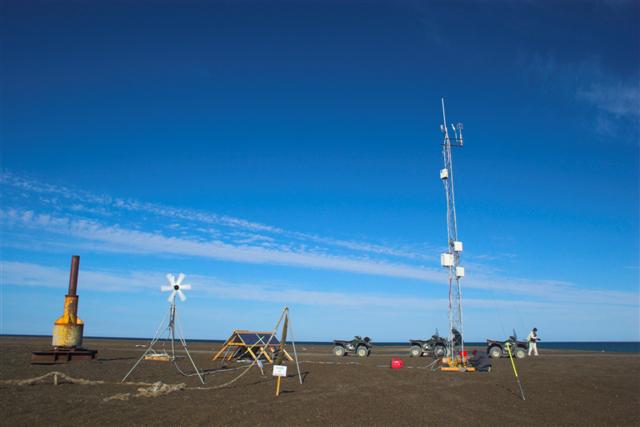
    Arctic research

    Norway and Russia have strengthened their joint research ventures by putting around €1,5 million Euros to three projects.

    “The projects will enhance public knowledge of Norway and Russia. In the long term knowledge to facilitate better management of areas and benefit including petroleum industry,” according to the Research Council of Norway.

    The three projects that have received grants are “4DARCTIC: Structure and evolution of Arctic crust and mantle based on multi-scale Geophysical studies”, which is a joint project between the University of Oslo and the Institute of Petroleum Geology and Geophysics; “CLIMate variability and change in the Eurasian ARCtic in the 21st century”, a cooperation project between the Nansen Center and Voeikov Main Geophysical Observatory; “Combined effects of Petroleum and the Environment in bivalves from the Norwegian-Russian Arctic”, a joint project between the University of Tromsø and the Karelian Research Centre, RAS Institute of Biology.

    All the three projects are cooperation projects between scientists in Norway and Russia. The project partners are covering half of the expenses, the rest is covered by the Russian research foundation Russian Foundation for Basic Research (RFBR) and the Research Council of Norway is covering the Norwegian part, the BarentsObserver reports.

    “This research cooperation will give an important contribution to a holistic management of the sea and the resources in Arctic areas through a common knowledge base”, says the Research Council of Norway’s Director Arvid Hallén to the council’s web site.
    Source:
    BarentsObserver

    Research Council of Norway

  • Russia opens second largest gas field

    Russia opens second largest gas field

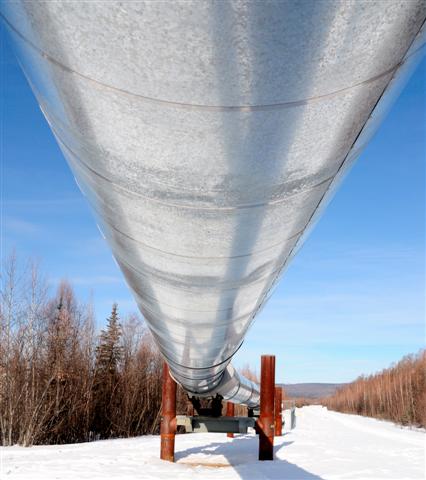
    Russian oil pipeline

    Russia opened its latest gas production site this week. President Vladimir Putin formally opened the commercial production at the Bovanenkovo field on the Yamal peninsula in extreme northwestern Siberia.

    The discovery of the site by the Soviets in the early 1970s created excitement and frustration in equal measure. The excitement was because of the huge potential, the frustration because of the severe ice conditions, permafrost and remoteness.

    Now the site has opened up and Russian energy giant Gazprom estimates to be 4.9 trillion cubic meters (177 trillion cubic feet) of natural gas in the field – making it one of the world’s three largest deposits.

    “The field will produce 115 billion cubic meters (4,060 billion cubic feet) of gas and that will go up to nearly 140 billion,” Putin told the field’s workers by live video.

    “This is nearly the equivalent of how much we export to Europe,” Putin stressed.

    The giant field is second in size in Russia only to Gazprom’s Urengoi deposit to the south. It is a part of an Arctic project that Gazprom has been pinning its hopes on as older wells run dry.
    Source:
    AFP
    See also:
    Gas in the Arctic

    Arctic Energy Portlet