Tag: Russia

  • Russias claim submitted next year

    Russias claim submitted next year

    artic-skipting2

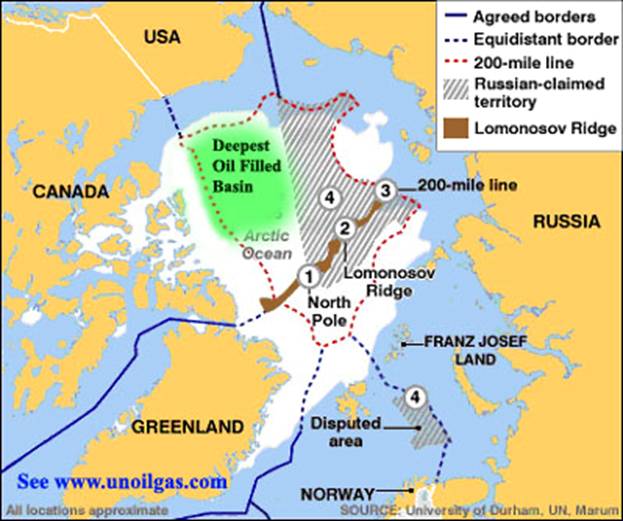
    Russia’s revised submission for their claim of the Arctic shelf boarders is almost complete. Russia was rejected earlier this year after submitting a claim for expanding its shelf borders to the UN commission, because of lack of information.

    The United Nations Convention on the Law of the Sea allows the coastal states in the Arctic to submit their claims for the continental shelf, outside their Exclusive Economic Zones.

    The potential resources in these areas are huge, so a competition between the states has begun. Russia is for example both claiming some of the same areas as Canada and Denmark (through Greenland).

    Norway is the only country who has gotten its claim approved, but the other claims are more complicated.

    “We have done a great deal of work, with the submission 90 percent complete, Russian Deputy Prime Minister Sergei Ivanov told at a press conference.

    The deputy prime minister said that Russian specialists are preparing a claim to be submitted to the UN Commission on the Limits of the Continental Shelf in 2012.

    Source: Barents Observer via RIA Novosti

  • Russia and Iceland sign agreement

    Iceland and Russia have signed a cooperation agenda regarding geothermal energy.

    The agreement was signed yesterday by Icelandic Minister of Industry Energy and Tourism, Katrín Júlíusdóttir, and Sergey Shmatko, the Minister of Energy in Russia.

    Russia wants to utilize geothermal energy better and Iceland seeks new ways to utilize the vast geothermal resources in the country.

    Both countries believe they will gain significantly from the cooperation.

    An energy summit in Moscow this week saw Ms. Júlíusdóttir address geothermal matters in Iceland and the forthcoming cooperation with Russia.

    As Arctic Portal has reported, Iceland has looked to Russia for more cooperation and the agreement signed this week was a step in that direction.
    Source: Ministry of Foreign Affairs in Iceland

  • New oil state program in Russia

    Energy pipes

    The government of Russia has finalized a state program for oil and gas exploration. The project is worth around 225-250 billion USD, the government putting in around 40 billion USD.

    The program is scheduled to run to 2030 and aims to provide an “energetically safe development of the national economy” through production of 40-80 million tons of oil and 190-210 billion cubic meters of gas per year.

    That counts for 8-16% of the current level of oil production and 32-35% of gas production in Russia, according to the Barents Observer.

    The state program is yet to be recognized by the president of Russia but a decision is to be made in November.

    Interest in exploration in the Russian waters is huge but according to the ministry, development of most projects is “economically inefficient” under the current legislation.

    The main causes that are hampering development are lack of funding for exploration, poor infrastructure development and presence of administrative barriers.

    The new state program is set to change that.

  • Russia puts €10 million in clean up

    Russia puts €10 million in clean up

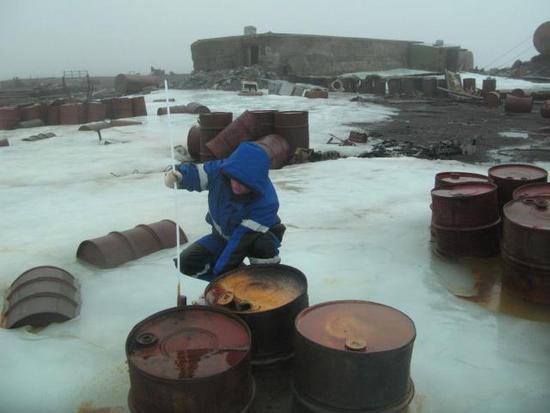
    Hundres of thousands of old barrels with waste-oil on Franz Josef Land

    Russia has put 10 million Euros into a project aiming at cleaning the Arctic. Environmental issues are high on the Russian Arctic agenda.

    “We want the Arctic to be clean,” says Yuri Trutnev, the Minister of Natural Resources and Environment in Russia.

    The Arctic Council has priority project regarding the Arctic environment and the 10 million Euros go into that pot, especially projects which concern pollution prevention.

    NEFCO (Nordic Environment Finance Corporation) will manage the funds and Magnus Rystedt, the Managing Director, was very pleased with Russia’s contribution.

    “We are extremely delighted with the fact that the Russian government is taking an active role in supporting environmental protection in the Arctic region. The financial boost provided under this agreement will enable us to finance a wide range of environmental projects in the Russian
    Arctic within the near future,” Rystedt said.
    Source: BarentsObserver

  • Iceland seeks Russian help

    Ólafur Ragnar Grímsson

    Iceland will seek cooperation with Russia to develop its geothermal energy projects. Vastly resources of geothermal resources in Iceland are being utilized but the next steps are somewhat unclear.

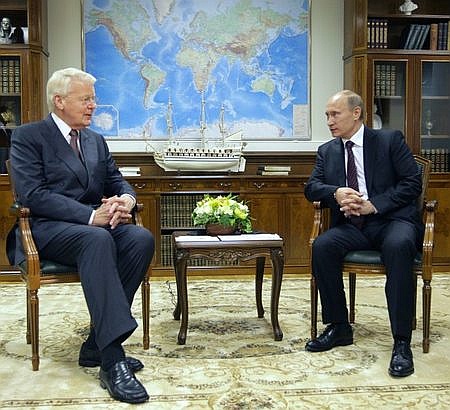
    Dr. Ólafur Ragnar Grímsson, president of Iceland, said this in Arkhangelsk yesterday at the second international forum The Arctic: Territory of Dialogue.

    “Even ten years ago no one in Iceland could imagine that we would need assistance while developing Arctic natural resources. But the time has come and we have needed such help from an economic and environmental point of view,” adding that Iceland also needed help from foreign companies to develop Arctic resources, including Russia.

    Russian Prime Minister Vladimir Putin, who met with Grímsson at the forum, said that Moscow had specific ideas on the issues of joint energy projects.

    President Grímsson also said that development of Russian-Iceland commercial navigation could be feasible, transport terminals (sea-ports and airports), and corridors like the Northern Sea Route, which could transform Russia’s ability to ship natural resources to the markets of Asia.

    “Our geographical position in North Atlantic gives us unique possibilities, and we would like to use them for a constructive dialogue with Russia,” Grímsson added.

  • Russia to explore Barents Sea Shelf

    Russia to explore Barents Sea Shelf

    Barents Sea

    Russia’s Natural Resources Minister Yury Trutnev confirmed this morning in Arkhangelsk at the second international forum The Arctic: Territory of Dialogue that Russia will begin geological exploration of the promising Barents Sea shelf located on the border with Norway in 2012.

    The exploration will begin at the Fedynsky Arch deposit, in the southern part of the Barents Sea. High hopes remain for the region where an estimated 10-12 billion metric tons of fuel equivalent are thought to be found.

    It was last year that Russia and Norway finally settled in the matter. “Forty-year-long talks have finished, we can now start working jointly. Norway has already begun seismic surveys in its part of the shelf. Russia plans to begin work in 2012. They will be funded from the federal budget,” Trutnev said this morning.

  • Archangelsk the place to be

    Archangelsk the place to be

    Ólafur Ragnar Grímsson talking to Vladimir Putin

    Archangelsk in Russia is the place to be this week. Hosting the Arctic Forum, the city also sports the biggest fair of the year this week, the famous Margaritinskaya fair.

    The 2nd International Arctic Forum “The Arctic: Territory of Dialogue” will take place at the Northern Arctic Federal University. The Russian Geographical Society organized the event which sports people like Prime Minister Vladimir Putin, Prince Albert II of Monaco and President of Iceland Dr. Ólafur Ragnar Grímsson.

    Up to 400 people are specially invited to the Forum, including noted scientists, representatives of NGOs, policy makers and businessmen.

    Arctic Portal has a representative at the forum. Project manager Halldór Jóhannsson is in Archangelsk for this week.

    The forum’s focus this year is on creating Arctic transportation infrastructure as a foundation for the development of the Arctic. This primarily involves the development of commercial and research navigation, transportation terminals (sea ports and airports) and corridors (the Northern Sea Route), polar aviation, cargo and passenger trans-polar and cross-polar transportation. Steady development of this infrastructure is vital for the very existence of the Arctic region.

    Special attention will be devoted to the full spectrum of safety issue in this difficult-to-develop region. From a technological perspective, it is necessary to ensure the safety of sea and air traffic using satellite, radio-navigation and hydro-meteorological monitoring. In terms of international law, it is necessary to create multilateral mechanisms for emergency warning and response, including search and rescue missions.

    The forum will also focus on cooperative efforts to protect the Arctic environment, environmental safety, the rational use of natural resources in the Arctic and improving the living standards of its indigenous people.

  • Russia to improve infrastructure

    Russia to improve infrastructure

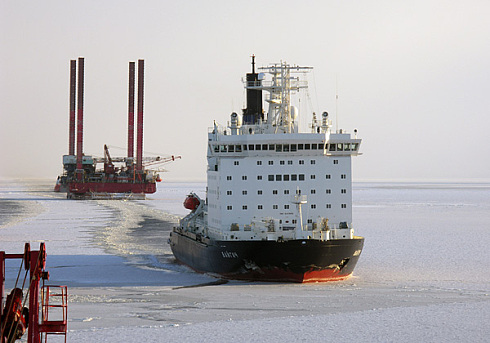
    Russian Icebreaker

    Russia’s infrastructure has been criticized when comes to oil issues in the Arctic. Now the Emergency minister Sergei Shoigu says that the country will respond to this and develop environmental protection infrastructure as soon as possible.

    “There [in the Arctic] we will need navigation safety projects and bases to deal with all kinds of tasks: from fuelling and navigation to communication systems and rescue. We must also set up centers to deal with – God forbid – oil spills,” Shoigu said at a news conference ahead of an international forum to discuss problems of the Arctic in Arkhangelsk next week. This year, the forum will focus on transport issues.

    The Russian emergencies minister said the next year’s forum should focus on environmental safety of hydrocarbon extraction and transportation in the Arctic.

    “In our opinion, safety issues during hydrocarbon extraction and transportation deserve to be the main topic of a separate forum. We will propose it for the next year, as we are convinced that this problem becomes a real threat when ignored,” the minister said.

  • New nuclear disposal vessel

    New nuclear disposal vessel

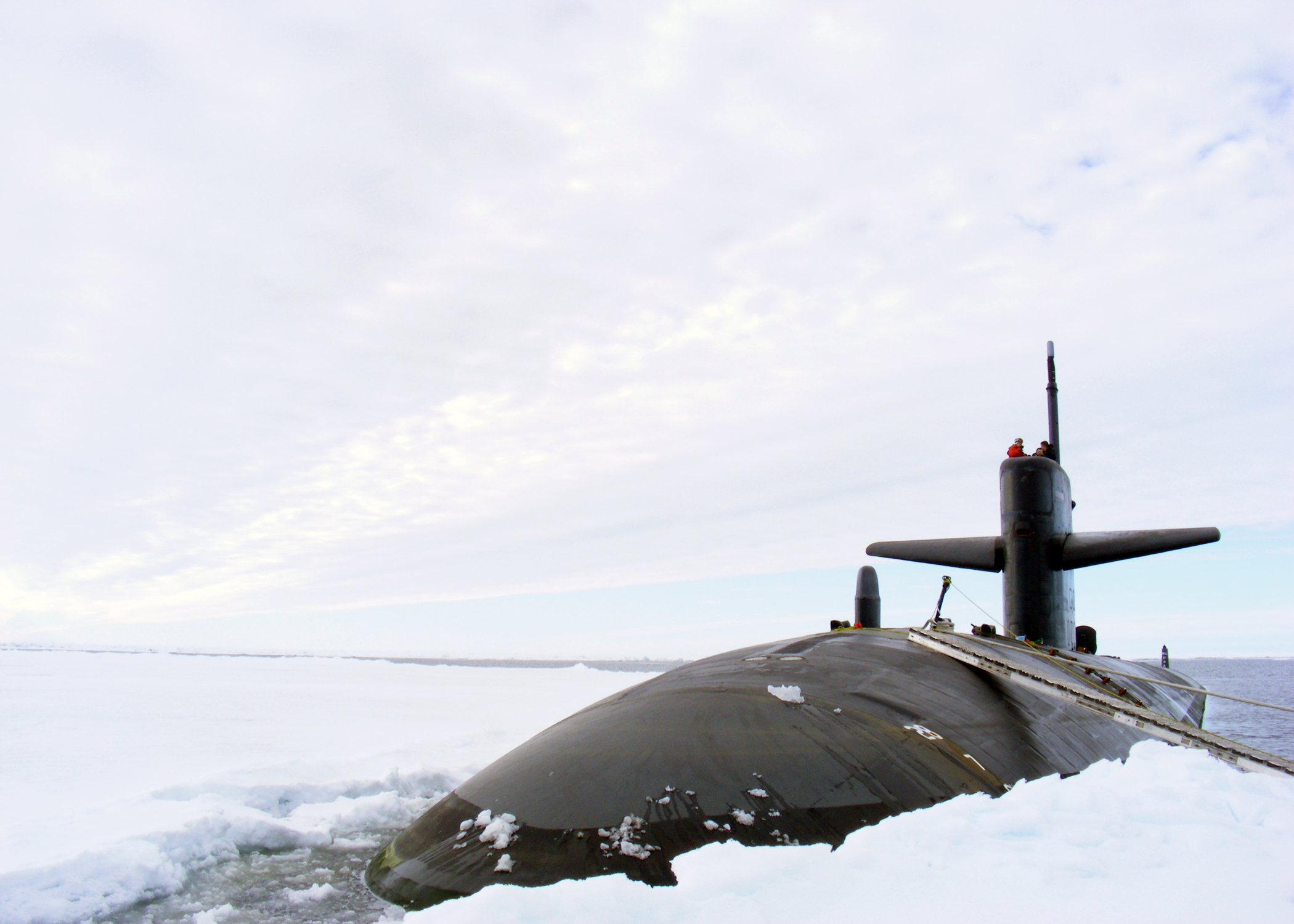
    Nuclear Submarine in the Arctic

    Nuclear waste is common in the Arctic. After eight years of waiting, Russia can finally embrace its new nuclear waste transporter, Rossita. Built in Italy, it can now start to collect waste from numerous locations in Russian waters.

    Spent nuclear fuel needs to be disposed from ships and submarines. They are pumped to storage tanks that are then emptied. Some of these tanks are deteriorating due to poor maintenance and the harsh Arctic climate. The need for Rossita was huge and it is warmly welcomed in the Arctic.

    Submarine scrap yards and the ports of Gremikha, Andreyeva Bay, Sayda Bay and Severodvinsk will be amongst its locations.

    The vessel has two isolated cargo holds with a capacity of 720 tonnes. They are equipped with special ventilation systems to maintain appropriate temperatures. The vessel is 76 meters long with a 14-meter-wide cargo capacity of 1700 tonnes and a four meter draught. Its diesel engine power two propellers give the Rossita a speed of 12 knots.

    The cost is around 70 million Euros.

    It was last year Russia started the disposal of nuclear waste from its bases. Amongst tasks are the removal of two submarines in the Barents- and Kara Seas.

    The two submarines in question are the November class nuclear submarines B-159 (K-159), which sank in the Barents Sea in August 2003, 248 meters down, with nine of her crew and 800 kilograms of spent nuclear fuel, while being moved for dismantling. The other one is the K-27, which was dumped in the eastern Kara Sea in 1982. Her reactor compartment was sealed before the sub was dumped at a depth of 33 meters.

    See also: Radiological assessment: Waste disposal in the Arctic Seas

    Picture: Nuclear submarine in the Arctic.

  • Eight days through the Arctic

    Eight days through the Arctic

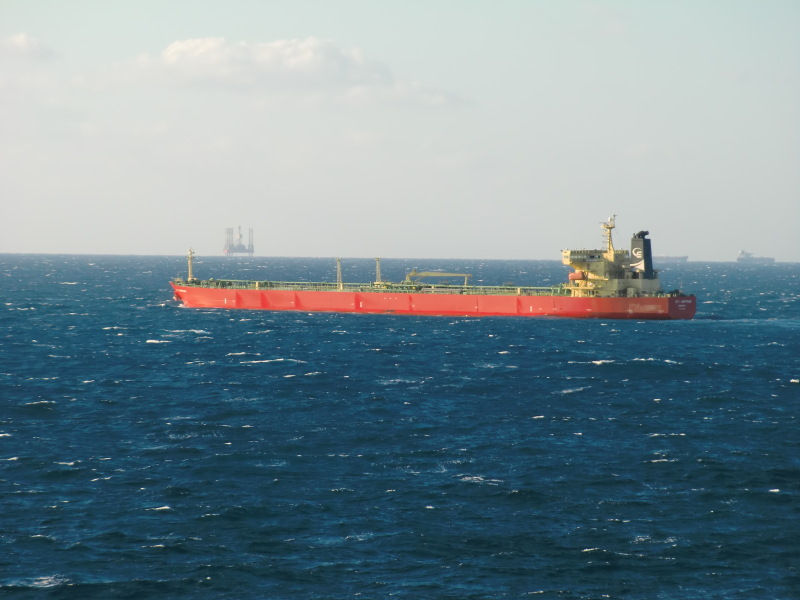
    STI Heritage tanker

    It took only eight days for the STI Heritage tanker to go from Murmansk in Russia and through the Arctic Ocean via the Northeast Passage.

    This is a new record for speed, bettering the 15 days it took Perservance earlier in the summer. The average speed of Perservance was 7,6 knots but STI Heritage averaged 14 knots.

    Twice as fast means a lot of money has been saved by Novatek which also plans to send the largest tanker through the Northeast Passage later in August.

    The STI Heritage sailed from Murmansk to its destination in Thailand, Map Ta Phut, in just under a month.

    See more about the Northeast Passage here.

    See also:
    Breakthrough of the Russians
    Sea ice levels at an all time low

    Photo: STI Heritage