Author: it@arcticportal.org

  • Will Norway back out from Shtokman?

    Will Norway back out from Shtokman?

    Arctic on the map

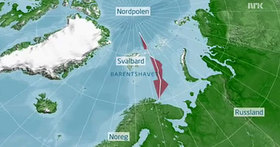
    Barents Observer reports that Vladimir Selin, Chief Research Scientist at the Kola Science Center shares his opinion that the Agreement between Russia and Norway on the delimitation of the Barents Sea will result in Norway moving out of the Shtokman gas field and believes that it is part of the agreement.

    ” It is hard to understand who’s behind the Russian side in the Russian-Norwegian agreement from September 15, Selin says to Regnum.ru. – It is also hard to see why Russia needs this agreement – the pluses for Russia are unclear, but the minuses are evident”

    According to Selin Russia does not possess the necessary technology needed to develop the fields covered by the agreement and will not do so for years to come. Selin theorizes that, with Shtokman as the main priority for Russia and the fact that Norway has used up all its rich resources, a side agreement was made on the two nations priorities as the gain for Russia is not nearly as visible as the gain by Norway.

    He further states that Statoil will not necessarily officially withdraw from the shtokman gas field, but reduce their activities to next to nothing.

    Source: Barents Observer

  • Increased border cooperation between Europe and Russia

    Increased border cooperation between Europe and Russia

    Norway_Russia_border_agreement

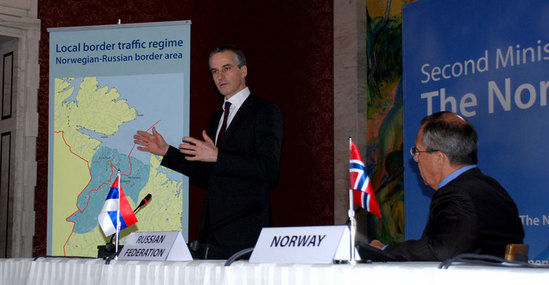
    Barents Observer – Norway and Russia signed yesterday a milestone agreement on visa-free travel between Russia and a Schengen-member state in Oslo.

    The agreement between Norway and Russia on Facilitation of Mutual Travel for Border Residents establishes an Arctic cross-border zone, including the Norwegian town of Kirkenes and the two Russian towns of Nikel and Zapolyarny on the Kola Peninsula, from where the population can cross the border without valid visa by showing only a specific ID-card. The ID-card is intended for locals who have been living in the zone for more than 3 years and have either Russian or Schengen member state citizenship. The new visa-free zone will facilitate the 20 percent increase in traffic crossing the Russian-Norwegian border in the first six months of 2010 compared with the same period last year and is in line with wider European policy of increased cross-border cooperation along the eastern rim of the European Union.

    European Border Dialogues conference, attended by 16 states, reseantly issued a Declaration on Cross-Border Cooperation in a Wider Europe identifying key challenges in current cross-border cooperation in Europe, among which are visa regulations and border crossing procedures. The new Norwegian-Russian agreement is thus a step towards abolishing the visa-regime which discourages cooperation between Europe and Russia and enhancing regional cooperation in the Barents region.

  • Student registration open for Master’s level course on Adaptation to Globalization in the Arctic: The Case of Reindeer Husbandry

    Student registration open for Master’s level course on Adaptation to Globalization in the Arctic: The Case of Reindeer Husbandry

    Virtual Learning Tools

    The Virtual Learning Tools project is a cooperation between the Arctic Portal, University of the Arctic, APECS, ICR, SVS and Hsvest to create a virtual learning tool specifically designed for Northern residents. During this January a pilot course led by Phillip Burgess at the ICR will commence within the system, prior to a formal launch in June 2011.

    Below is the Course announcement released by the University of the Arctic:

    Climate variability, climate change and the societal/cultural transformations associated with globalization have been, and continue to be, responsible for major changes in the physical environment, the biota and the cultures of the indigenous and other communities in the Arctic.

    Human-ecological systems in the Arctic are particularly sensitive to change, perhaps more than in virtually any other region. This is due in part to the variability of the Arctic climate and the livelihoods of Arctic peoples. Production systems of Arctic peoples in variable and unpredictable climates are based on the sequential utilization of, often, a large number of ecological or climatic niches. The essence of such systems is flexibility and the distribution of risk through diversity.

    Understanding vulnerability requires assessment of systems’ ability to adapt to impact and the extent to which freedom to adapt is constrained. International law has established the right of indigenous people like reindeer herders to participate at all levels of decision making in issues that concern their rights, livelihoods and future, and it is therefore an issue to consider in discussing adaptation.

    The course uses reindeer husbandry as a case based study for understanding rapid change in the Arctic. The cumulative impacts of climate change and globalisation on reindeer husbandry will be looked at and examined in terms of their impacts on the livelihood. Key drivers of change, vulnerability and adaptation will be identified and tools and barriers for adaptation for reindeer herders will assessed.

    The course has been created in a joint collaboration between IPY EALÁT, the EALÁT UArctic Institute for Circumpolar Reindeer Husbandry, the International Centre for Reindeer Husbandry, the Sami University College, Kautokeino, Norway, the Thule Institute, the University of Oulu Finland and the UArctic.

    This course is a following up of the ACIA Report to the Arctic Council and is a delivery from IPY EALAT # 399 consortium with its diverse activities from 2007 -2010 including workshops, lectures, seminars, speed talks, outreach and research activities which were all video recorded for teaching purposes.

    The course development has been supported by the Nordic council of Ministers Arctic co-operation funding (2006-2009, Thematic Network on Global Change in the Arctic, 2009- 2011, Arctic Virtual Learning Tools).

    Course is open for students registered in any of the University of Arctic member organizations (www.uarctic.org). There will be no pre selection to the course but 20 students will be accepted in the order of registration. Please note that for successful completion of the course, students will need to have sufficient English language reading, writing and comprehension skills.

    Acceptance for the course with login and technical information will be emailed directly to students in December 2010. The course is hosted by the University of Oulu, Finland (Faculty of Humanities & Thule Institute).

    The deadline for registration is December 10th, 2010 and enrollment and further information registration is only available online at www.vlt.is
  • Putin urges Arctic deal for resources

    Putin urges Arctic deal for resources

    Vladamir Putin

    Former Russian president, and current prime minister of Russia Vladimir Putin Urges Arctic nations to reach an agreement on the areas rich mineral resources. Further he states that he is confident that all such agreements will be peaceful and in accordance to international law. During last month a historic border deal between Norway and Russia was signed, which hopefully can be looked upon as a example of how these matters should be sorted out.

    The Arctic nations are amongst those which are working on mapping their seabed, which in accordance with the United Nations Law of the Sea (UNCLOS) determines where the 200 nautical mile Exclusive Economic Zone starts.

    Mr. Putin was quoted saying ” Serious political and economic interests are indeed crossing over in the Arctic. But I have no doubt that problems, including the continental shelf problem, can be solved in the spirit of partnership, It is well known that it is difficult to survive in the Arctic on your own. Nature itself makes people, nations and states help each other there,”

    Russia is currently the world´s top energy supplier, and it has been stated that they estimate that it’s entire Arctic territory holds twice as much oil and gas reserves as Saudi Arabia today.

    It will be interesting to see how the Arctic states negotiate exact territorial claims, but there seems to be a consensus from most parties that an agreement will be made under UNCLOS, which has been ratified by all the Arctic states exempt the U.S, which still admit that they will abide to UNCLOS as it has become international customary law.

  • Arctic Biodiversity Assessment – Arctic Biodiversity Trends 2010: Selected indicators of change report

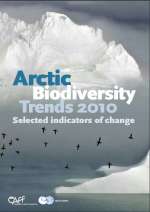
    Arctic Biodiversity Assessment – Arctic Biodiversity Trends 2010: Selected indicators of change report

    CAFF - Arctic Biodiversity Trends 2010CAFF – The Arctic Biodiversity Trends 2010 Report, produced by some of the world’s leading experts of Arctic ecosystems and biodiversity, is the Arctic Council’s contribution to the United Nations International Year of Biodiversity in 2010 and will be a preliminary product under the Arctic Council project ‘Arctic Biodiversity Assessment’ (ABA).

    In 2008, the United Nations Environment Program passed a resolution expressing ‘extreme concern’ over the impacts of climate change on Arctic indigenous peoples, other communities, and biodiversity. It highlighted the potentially significant consequences of changes in the Arctic. The Arctic Biodiversity Trends – 2010: Selected Indicators of Change report indicates that some of those anticipated impacts on Arctic biodiversity are already occurring.

    The report is based on twenty-two indicators and provides a snapshot of the trends being observed in Arctic biodiversity today. The polar bear is one of the most well-known species impacted by changes in the Arctic, but it is not the only one. The indicators show that the Arctic has changed dramatically during recent decades and that unique Arctic habitats for flora and fauna are disappearing. Furthermore, some species of importance to Arctic people or species of global attention are declining.

    The report presents 7 key findings;

    • Unique Arctic habitats for flora and fauna, including sea ice, tundra, thermokarst ponds and lakes, and permafrost peatlands have been disappearing over recent decades.
    • Although the majority of Arctic species are not currently declining, some harvested species of importance to Arctic people or species of global significance are declining.
    • Climate change is emerging as the most far reaching and significant stressor on Arctic biodiversity. However, contaminants, habitat fragmentation, industrial development, and unsustainable harvest levels continue to have impacts. Complex interactions between climate change and other factors have the potential to magnify impacts on biodiversity.
    • Since 1991, the extent of protected areas in the Arctic has increased, although marine areas remain poorly represented.
    • Changes in Arctic biodiversity are creating both challenges and opportunities for Arctic peoples.
    • Long-term observations based on the best available traditional and scientific knowledge are required to identify changes in biodiversity, assess the implications of observed changes, and develop adaptation strategies.
    • Changes in Arctic biodiversity have global repercussions.

    To download the report and to learn more about the Arctic biodiversity please go to the Conservation of Arctic Flora and Fauna (CAFF) Working Group under the Arctic Council homepage or Arctic Biodiversity Trends 2010 reports homepage

  • Thermometer-wearing Narwhals contribute to our knowledge of the Arctic seas

    Thermometer-wearing Narwhals contribute to our knowledge of the Arctic seas

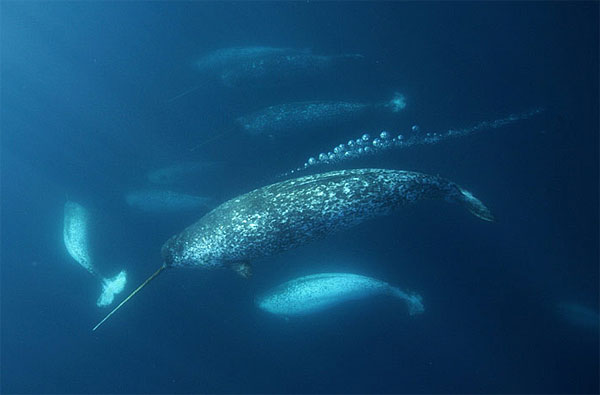
    Narwhal

    Scientists have started using thermometer- wearing narwhals to obtain temperature readings from beneath the winter pack ice in Baffin Bay. The diving mammals fill in a geographical and seasonal gap in the region’s climate records, as winter temperatures have not been available from the area before.

    The outcome of the temperature reading show that the ocean temperature beneath the pack ice is getting warmer , the data also confirm a warming trend visible based on sumer readings only continued in the three years to 2007.

    Using marine mammals in to obtain scientific data is not a new idea and has been done by using for example elephant seals and bearded seals, but this is the first time that narwhals have undertaken such an assignment.

    It will be of great benefit to the science community to have access to this type of data and will increase the understanding of climate change and help in the creation of future climate change models.

    For further information about the others and a more detailed description of the work carried out pleas follow this link

    Source: Naturenews

  • Increased Arctic Shipping to Accelerate Climate Change

    Increased Arctic Shipping to Accelerate Climate Change

    Arctic Portal news

    Arctic Shipping is a topic that is of great interest to both nation states as well as local Northern communities. The last four years have shown a trend of record low ice extent, and it is generally believed that the melt will continue to increase.

    This development in already leading to increased shipping within the Arctic. During this summer we saw the first high capacity tanker go through the northern passage to Asia as well as the first non-Russian bulk carrier to go through the same route. The opening of the Northern Sea route would have immense effects on global shipping as it would shorten shipping from Asia to Europe and North America significantly.

    Such a sea-route and all the benefits which it would entail are however not without consequence as recently been published from a team of U.S and Canadian researchers, including scientists from the University of Delaware. Growing Arctic ship traffic will bring with it air pollution that has the potential to accelerate climate change in the region. Engine exhaust particles is could increase warming by some 17-78 percent.

    James J. Corbett, Professor of marine science and policy at UD states ” One of the most potent ‘ short-lived climate forces’ in diesel emission is black caron, or soot. Ships operating in or near the Arctic use advanced diesel engines that release black carbon into one of the most sensitive regions for climate change.

    Produced by ships from the incomplete burning of marine fuel, these tiny particles of carbon act like ‘heaters’ because they absorb sunlight — both directly from the sun, and reflected from the surface of snow and ice. Other particles released by ship engines also rank high among important short-lived climate forcers, and this study estimates their combined global warming impact potential.

    To better understand the potential impact of black carbon and other ship pollutants on climate, including carbon dioxide, methane and ozone, the research team produced high-resolution (5-kilometer-by-5-kilometer) scenarios that account for growth in shipping in the region through 2050, and also outline potential new Arctic shipping routes.”

    Among the research team’s most significant findings:

    • Global warming potential in 2030 in the high-growth scenario suggests that short-lived forcing of ~4.5 gigatons of black carbon from Arctic shipping may increase the global warming potential due to ships’ carbon dioxide emissions (~42,000 gigagrams) by some 17-78 percent.
    • Ship traffic diverting from current routes to new routes through the Arctic is projected to reach 2 percent of global traffic by 2030 and to 5 percent in 2050. In comparison, shipping volumes through the Suez and Panama canals currently account for about 4 percent and 8 percent of global trade volume, respectively.
    • A Northwest Passage and Northeast Passage through the Arctic Ocean would provide a distance savings of about 25 percent and 50 percent, respectively, with coincident time and fuel savings. However, the team says tradeoffs from the short-lived climate forcing impacts must be studied.
    • To calculate possible benefits of policy action, the study provides “maximum feasible reduction scenarios” that take into account the incorporation of emissions control technologies such as seawater scrubbers that absorb sulfur dioxide emitted during the burning of diesel fuel. Their scenario shows that with controls, the amount of Arctic black carbon from shipping can be reduced in the near term and held nearly constant through 2050.

    What this work highlights is that the development path that trans-arctic shipping must take is one that is environmentally friendly. That scientists cooperate closely with the Arctic Council and the eight nation states there within on climate policy in connection to trans-arctic shipping. 

    The Northern Sea Routes on map

  • Annual Environmental Justice Conference: Call for Presentations

    Annual Environmental Justice Conference: Call for Presentations

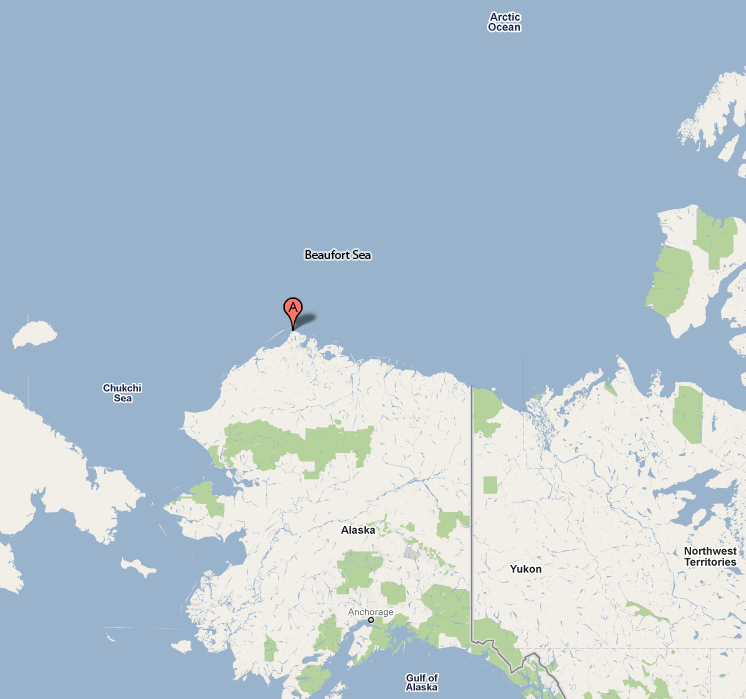
    Barrow on the map

    The Board of Directors of the Inupiat Community of the Arctic Slope (ICAS), Barrow, Alaska, respectfully request you to be a presenter at our annual Environmental Justice Conference to be held in Barrow, AK, January 11th and 12th, 2011.

    The conference theme is Effects of Industrial Development on the Arctic Inupiat with an emphasis on environmental justice. Our purpose is to prepare for off shore and on shore development in and near the Beaufort and Chuckchi Seas and learn about the potential for new shipping lanes in the Arctic Ocean.

    The Federal EPA describes Environmental Justice as:

    -the fair treatment and meaningful involvement of all people regardless of race, color, national origin, or income with respect to the development, implementation, and enforcement of environmental laws, regulations, and policies. EPA has this goal for all communities and persons across this Nation. It will be achieved when everyone enjoys the same degree of protection from environmental and health hazards and equal access to the decision-making process to have a healthy environment in which to live, learn, and work.

    Potential topics are:

    • Environmental Justice History
    • Planned Projects in oil and gas development
    • Barriers to Inupiat participation in the development process
    • How these developments currently and in the future affect Inupiat communities (Village speakers)
    • Potential effects of development on the Arctic environment, ice cellars, and subsistence culture
    • Current Environmental laws including the environmental impact statement
    • Proposing changes to environmental reviews to include traditional knowledge
    • Strengthening efforts to integrate environmental justice into EPA
    • Off shore development
    • General discussion on the Arctic environment
    • Related legislation
    • Shipping
    • Impact on development of employment for Inupiat communities
    • Existing resources
    • International movement of environmental justices (what works)
    • Human Environmental Impact
    • Global Warming/Climate Change

    To be considered as a presenter, you must send an outline of your presentation to Price Leavitt by November 18th, 2010. You will be notified by email and telephone if you are accepted as a presenter. Send presentations to: Price Leavitt, P.O. Box 934, Barrow, AK 99723 or icas.executive@barrow.com.

    Should there be a large number of appropriate presentations received, a few may be requested to present in panel form.

    Presenters are responsible for travel related costs. ICAS has reserved a block of rooms at Top of the World at a cost of $159.00 per night plus 5% tax for single or double occupancy. The rooms are being held under the group name: ICAS Conference and will be held until December 21, 2010 and thereafter will be available to the general public. Reservations may be made by emailing hotelreservations@nmsusa.com or by calling (907) 852-3900. Scholarships may become available.

    Hot breakfasts and lunches will be provided for all participants. Presenters will need to provide their own equipment and handouts for presentations.

  • 2010 Arctic Report card released

    Climate Change and Sea Ice Portal

    The 2010 Arctic Report card has been released. Of particular interest this year is the short video visible below.

    Highlights:

    • Four years of record minimum sea ice extents
    • Record temperatures and ice loss in Greenland
    • Strong links between the Arctic and mid-latitude weather in winter 2009-2010

    [http://www.youtube.com/watch?v=NjmHMSv2Amk]

  • EU and Greenland broil over Arctic Environment

    EU and Greenland broil over Arctic Environment

    Diana Wallis

    Vice president of the EU, Diana Wallis has accused Greenland and other Arctic nations of failing to ensure the environment in the Arctic is properly protected Wallis said she could imagine “people on the streets” protesting if wider international stewardship is not guaranteed. These allegations go hand in hand with the E.U pushing for a ban on deep water drilling since the BP accident in the Gulf of Mexico.

    Holm Oslen

    Greenland’s deputy foreign minister Inuuteq Holm Oslen, has as a response accused the EU of suffering “panic reactions” after the BP spill and said that though he welcomes focus and attention on environmental issues he was suspicous towards the motives behind the statement. Oslen was quoted saying ” What we don’t welcome is the notion that there should not be any industrial development in the name of environmental protection. What the rest of you have been benefiting from should not be denied to us in the Arctic,” he said.

    Source: Arctic Focus