Category: News & Press Releases

Arctic Portal News Portlet

  • Statoil biggest in 2011

    Statoil biggest in 2011

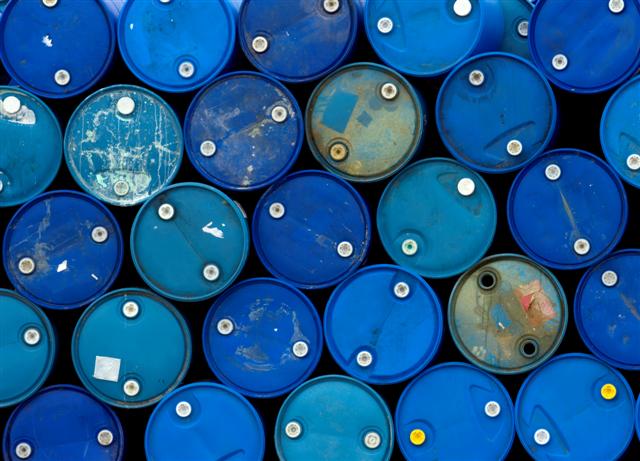
    Oil Barrels

    The most value of resources in 2011 in the oil and gas industry was found by Norwegian company Statoil.

    In 2011 Statoil discovered six so called high class drilling sites, each giving more than 250 million barrels of oil.

    According to Rystad Energy, this is the biggest founds last year over all oil companies in the world. The value of the resources is thought to be around 5 billion dollars.

    The research also found that Norway was the biggest production oil company in 2011.

    One of the discoveries was outside of Tanzania, an enormous well almost as big as the highly productive Snow White area, north of Norway.

    Statoil´s vice president, Tim Dodson, says that three things explain the success. Firstly, how quickly the company can move in search for new areas when the competition is this big, secondly the ability to drill a selection of boreholes in highly productive areas, meaning they take high risks, and lastly the positioning of the company which has high stakes in rich areas such as Norway and the gulf of Mexico.

    Dodson said the company spends three billion dollars each year in research. “That means we must have high success to justify the expenditure,” sais Dodson.

    Source
    Tekniske Ukeblad

  • Framing China and Australia in the Antarctic

    Framing China and Australia in the Antarctic

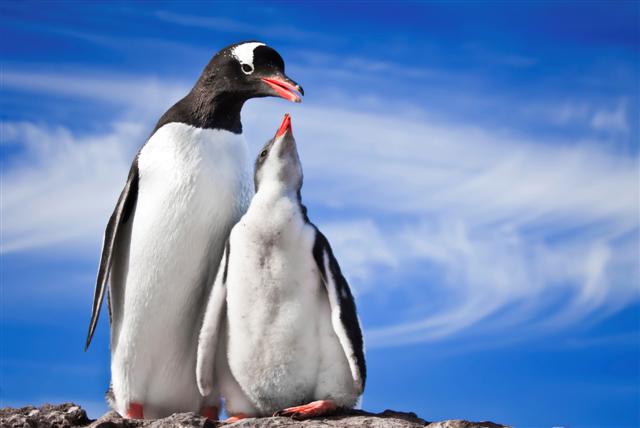
    Penguins in Antarctica

    Framing of the Antarctic is different between states. In a new interview with Anne-Mary Brady, we look at the framing theory, identifying two prominent Antarctic players, Australia and China.

    Australia claims 42% of Antarctic territory, while China has three bases in Antarctica (two of them on the Australian claim) and is rapidly expanding its operations there.

    Official framing is an important tool by which Antarctic players can boost the legitimacy of their right to engage in Antarctica. State’s utilise official frames when there is a perceived legitimacy deficit that must be addressed and as part of an ongoing process of legitimation of their interests, according to Brady.

    Here is the interview:

    Sources

    IPY Interview

  • Concerns about Arctic methane release

    Concerns about Arctic methane release

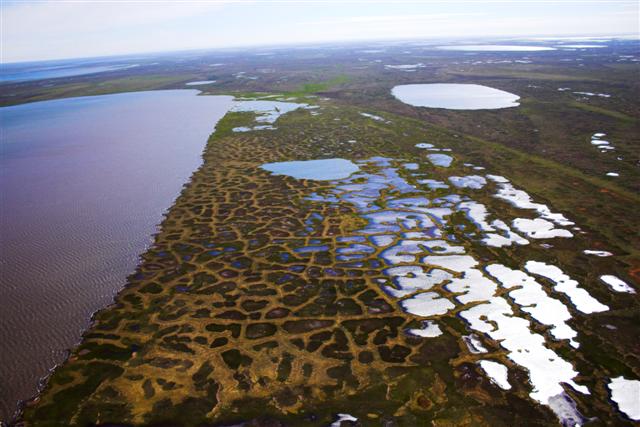
    Permafrost in the Arctic

    New concerns have emerged about methane release i Arctic. A new study, where aerial and ground-based surveys were used to identify sources of methane release, discovered around 150.00 sources.

    The methane seeps found are in Alaska and Greenland in lakes along the margins of ice cover.

    Samples showed that some of these are releasing the ancient methane, perhaps from natural gas or coal deposits underneath the lakes, whereas others are emitting much younger gas, presumably formed through decay of plant material in the lakes.

    “We observed most of these cryosphere-cap seeps in lakes along the boundaries of permafrost thaw and in moraines and fjords of retreating glaciers,” the report, led by Katey Walter Anthony from the University of Alaska at Fairbanks (UAF), said.

    Emphasizing the point that warming in the Arctic is releasing this long-stored carbon.

    “If this relationship holds true for other regions where sedimentary basins are at present capped by permafrost, glaciers and ice sheets, such as northern West Siberia, rich in natural gas and partially underlain by thin permafrost predicted to degrade substantially by 2100, a very strong increase in methane carbon cycling will result, with potential implications for climate warming feedbacks.”

    The region stores vast quantities of the gas in different places – in and under permafrost on land, on and under the sea bed, and – as evidenced by the latest research – in geological reservoirs.

    “The Arctic is the fastest warming region on the planet, and has many methane sources that will increase as the temperature rises,” commented Prof Euan Nisbet from Royal Holloway, University of London, who is also involved in Arctic methane research.

    “This is yet another serious concern: the warming will feed the warming.”

    Source

    BBC

  • Arctic Shipping an Evolution , not a Revolution

    Arctic Shipping an Evolution , not a Revolution

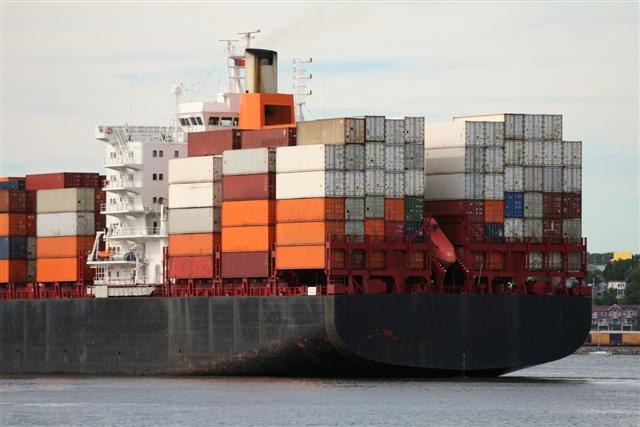
    Cargo Container ship

    What is the future of shipping in the Arctic? Many are following the developments in the Arctic closely, not only the nature and its ways, but the legal regime and environment as well.

    Amongst those are the shipping companies who could utilize the Arctic Shipping routes. Arctic Portal met up with a CEO of a shipping company in Norway, the Tschudi shipping company.

    Tschudi Shipping Company is a privately controlled Norwegian shipowning company operating within the international maritime industry. The company focuses on active ownership and management of vessels and shipping related projects and companies.

  • Architecture in Antarctica

    Architecture in Antarctica

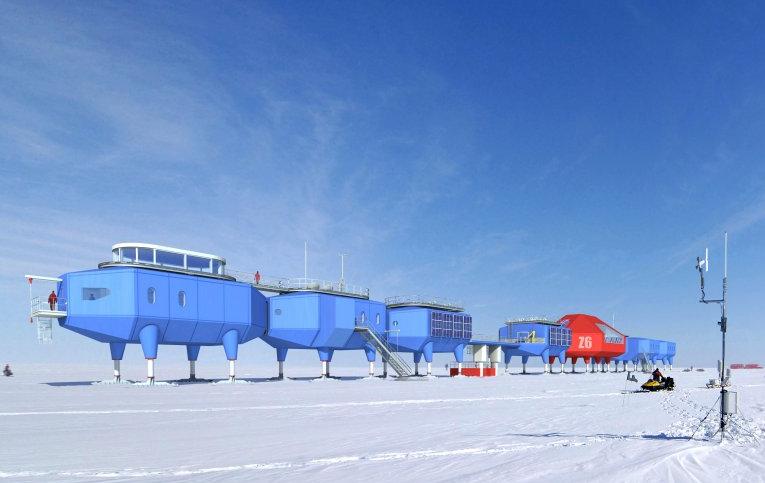
    Halley station in Antarctica

    It was down to faith. That is the reason Hugh Broughton, architect, started designing buildings for the extreme conditions in Antarctica.

    Blistering wind and temperatures below 0 every day of the year calls for unique designs. BUt there are more concerns. Moving ice and long distances do not make the designing any easier.

    In a fascinating interview with the Arctic Portal, Hugh described the design of infrastructure in the South Pole. He gave us an insight to the British Station, Halley, he designed.

    He has also looked at other projects in Antarctica and even considers the designs usable in other locations.

  • Yacht sail and research this summer

    Yacht sail and research this summer

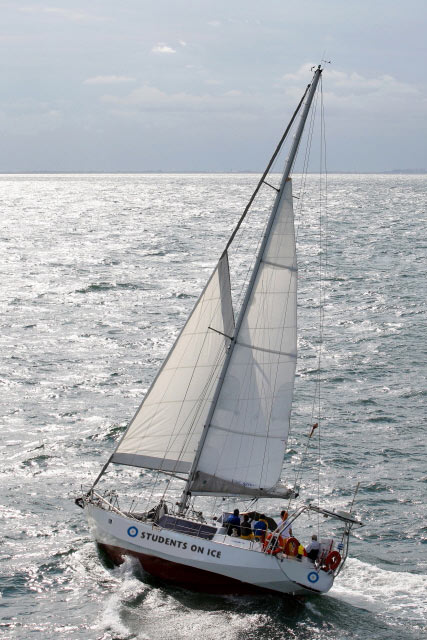
    The Arctic Tern

    Researchers have a unique opportunity to travel around the Arctic this summer. The Association of Polar Early Career Scientists invites researchers to join WWF and the Students on Ice Foundation on a summer expedition to the high latitudes of Greenland and the Canadian Arctic.

    The mean of travel is the expedition sailboat Arctic Tern, which will sail between communities whilst researchers can do their research on land, the sea or in the communities themselves.

    The Arctic Tern is a 50 ft. expedition sailing yacht with a retractable keel to meet the risks of sailing in ice-bound areas which also enables it to sail onto a beach.

    The journey will include experiences polar sailors. It was acquired by Students on Ice in September 2009 to serve as a platform for education, science research, film and media.

    Research areas will include ecosystem productivity, sea ice, flora and fauna, permafrost, ocean currents and cultural adaptations. Application deadline is May 21st and only seven places are available.

    Sources

    APECS

  • Key findings of the ASTI program

    Key findings of the ASTI program

    Mike Gill at the IPY 2012 conference in Montreal.

    The Arctic Species Trend Index is the latest headline indicator by the Circumpolar Biodiversity Monitoring Program. Arctic Portal talked to the chair if CBMP, Mike Gill, about ASTI and the latest key findings just released.

    ASTI tracks trends in over 300 Arctic vertebrate species and they are presented in the reports, available on the ASTI website.

    Mike presented the key findings report in Montreal at the IPY 2012 conference.

    Click the video below to see the interview.

    Sources

    IPY Interview

  • Cod growing due to global warming

    Cod growing due to global warming

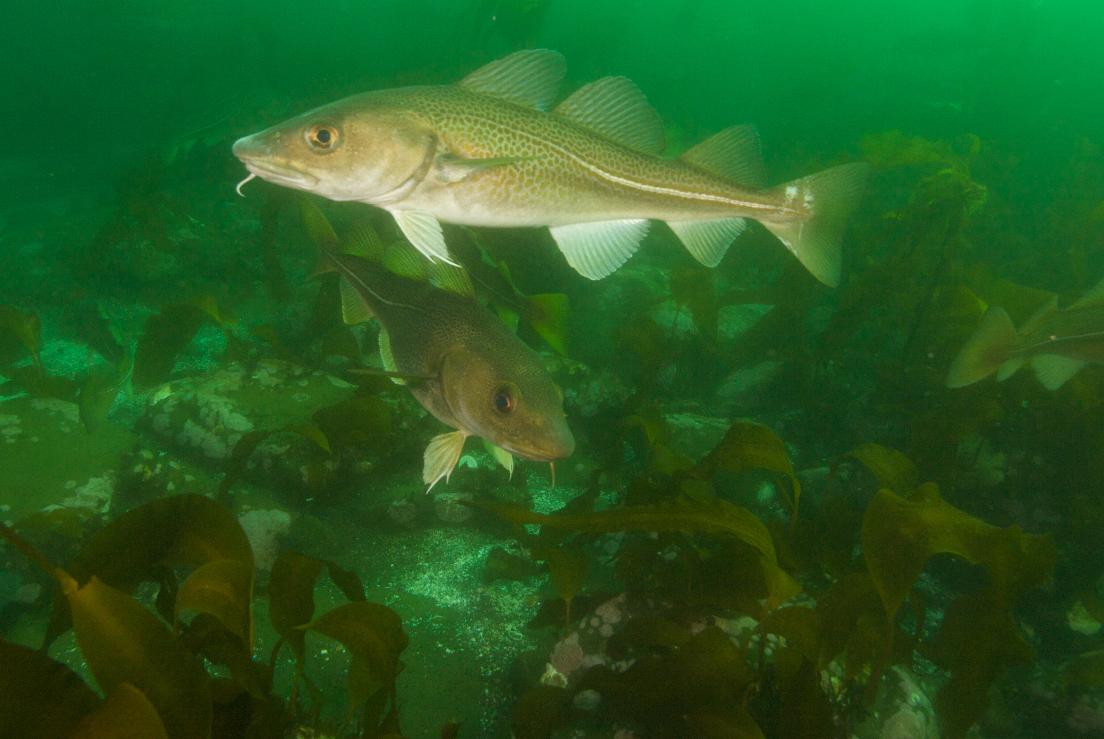
    Cod in Icelandic waters

    Researchers in agriculture had anticipated the North Sea cod to get smaller over time due to global warming. A new study shows quite the opposite, they are actually growing due to global warming.

    The study was introduced in Global Change Biology, an international journal.

    “When the seawater gets warmer, all life processes in the cod speed up,” says Peter Grønkjær, an associate professor of marine ecology at the Department of Biological Sciences at Aarhus university, who headed the study. “This causes the cod to digest their food faster and makes them convert it into extra muscle tissue,” he added.

    Overfishing has started a process in which the cod spend their energy on reproducing themselves rather than on growing bigger.

    “But over the past 30 years the increased ocean temperatures have compensated for the anticipated decrease in cod size,” says Grønkjær.

    He also states that global warming seldom has positive effects on the cod, but this change is the odd point. “But this doesn’t mean that the warming of the North Sea is generally good for the cod. The higher temperatures alter the ecosystem, which causes the composition of the crustaceans that the cod feed on to change too. And that makes it harder for the fry to survive.”

    The researchers made the discovery by reviewing figures from the International Council for the Exploration of the Sea (ICES).

    These figures showed that the ocean temperatures at various times that the average sizes of the fish at various times, that the location of the fish at various times and that when the fish became sexually mature at various times.

    “By linking all this data together, we can conclude that the weight change is caused by changes in the temperature,” says Grønkjær.

    The new findings will be used for developing strategies for how cod stocks in the North Sea can be preserved.

    Sources

    Science Nordic
    Videnskab

  • Lack of information on Arctic oil spill

    Lack of information on Arctic oil spill

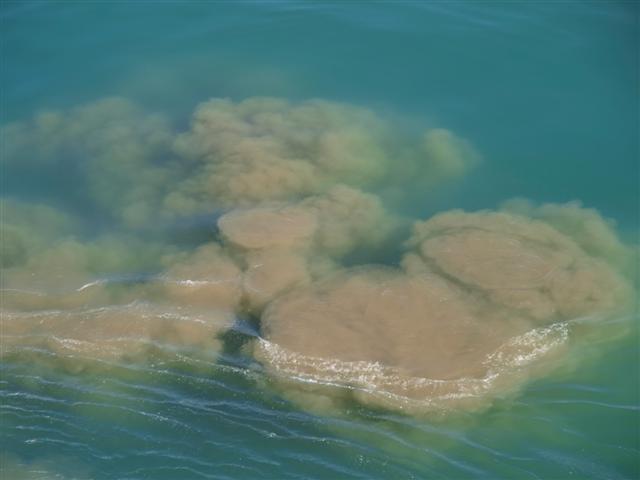
    Oil spill in an ocean

    Too little information about damage from the Trebs oil field spill is being criticized by environmentalists. The spill happened in April but little information has been released about its extent.

    According to some sources a total of 400 cubic meters of oil, or some 800-900 tonnes, leaked daily for more than two days. The field holds about 153 million tons of oil.

    The information is lacking from the oil companies in question, and the lack of an independent observation of the cleanup efforts, according to Barents Observer.

    According to Vadim Krasnopolsky, who works at the WWF’s Barents Sea regional office in Murmansk, that the spill covers more than 40.000 square meters. However information recognized from satellite images of the field was not passed directly to public.

    Krasnopolsky states that the companies which cause the damage do not have an obligation to inform the community how big is the spill, if it does not affect people directly.

    Lack of communication with the oil, gas and shipping companies does not allow to estimate how long the cleanup will take or how big the pollution extent is.

    Much of the oil has been absorbed by snow, and that has helped to minimize the ecological damage. However, the snow needs to be removed from the area before it melts with the spring thaw, which usually begins around the end of May. Krasnopolsky said to Barents Observer that the snow removal is “quite difficult work” and most of it needs to be done by hand.

    The Russian oil companies, Lukoil and Bashneft, have put out boons to encircle the spill and are making efforts to clean the site, Krasnopolsky explained. The WWF did propose that an independent representative would have a look at the area, once the cleanup was completed. But the problem is that there is no possible way to check the quality of the cleanup job, because independent observers have not been allowed to check the rural site so far.

    “Accidents will happen. No technology is 100 per cent safe,” Krasnopolsky says. “But we always have to be sure the companies have the necessary capacity to deal with the spills.”

    Source

    Barents Observer

    Oil voice

  • Read about IPY 2012 in Montreal

    Read about IPY 2012 in Montreal

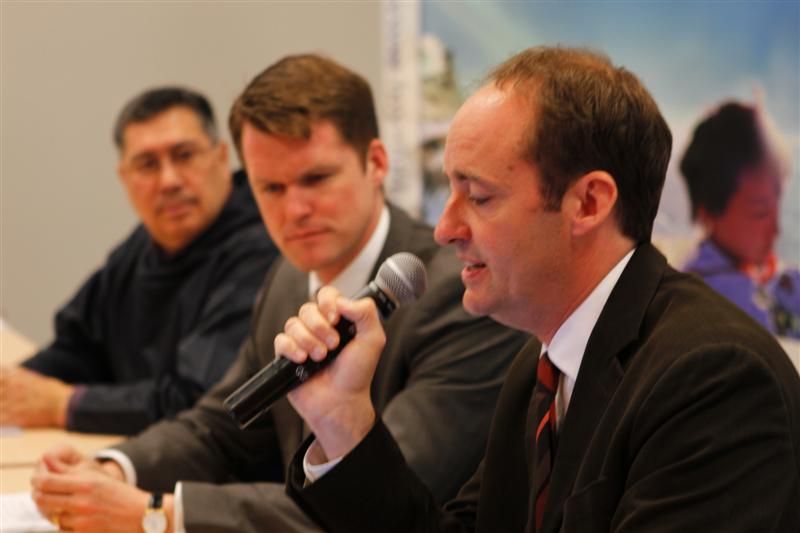
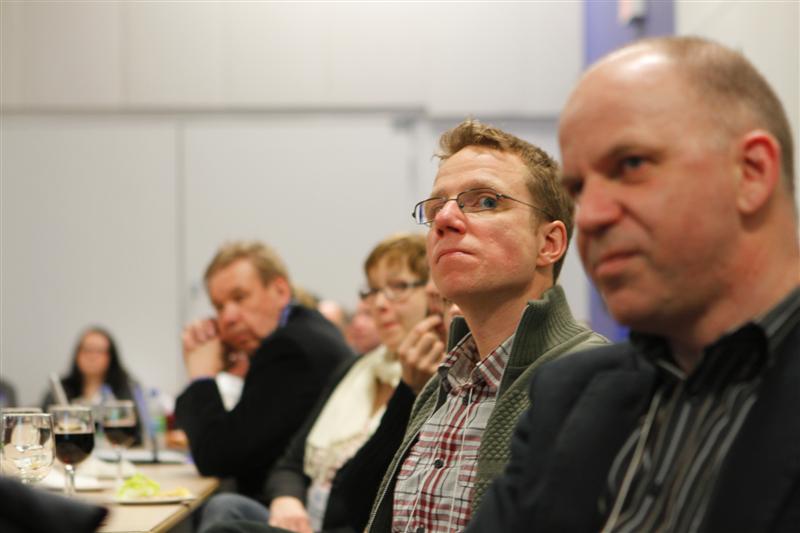
    From the Arctic Portal side event

    The IPY 2012 conference in Montréal, Canada, was a fitting end to the International Polar Year. Around 3000 people attended the conference in the Palais de Congrés.

    Arctic Portal had four representatives in the conference, where our work was presented at various locations.

    We also took over 100 photos in Montréal.

    Click here to read about the conference and IPY.