Category: News & Press Releases

Arctic Portal News Portlet

  • No radioactive materials leaked after fire

    No radioactive materials leaked after fire

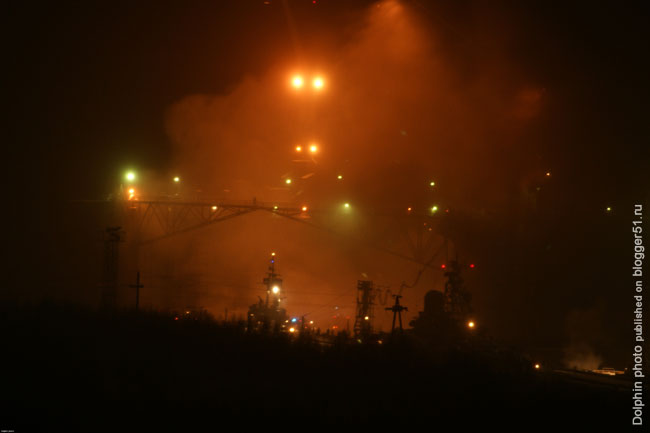
    Yekaterinburg submarine on fire

    No radioactive materials leaked from the nuclear submarine Yekaterinburg who caught fire yesterday. The submarine was in a floating dock which caught fire.

    Helicopters and boats were used to put out the massive fire which could be seen miles away.

    Russian oficcials say that no real danger was in place of radioactive materials leaking. The reactors were shut down before the ship docked and all missiles were removed.

    Nine people were sent to a local hospital with injuries because of the massive smoke.

    The naval yard is located in a close military area. The nearby city of Severomorsk is the headquarters of the Russian Northern fleet.

    Sources

    BarentsObserver

    Ria Novosti

  • Russian fishing vessel freed from ice

    Russian fishing vessel freed from ice

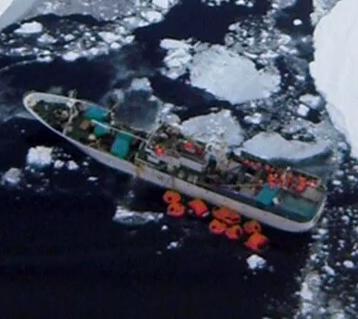
    Sparta in the ice.

    The Russian fishing vessel Sparta is free from the ice which held the ship for nearly two weeks.

    The 48-metre (157-feet) Sparta, with a crew of 32, had been anchored to the Antarctic ice shelf around 2,000 nautical miles (3,700 km) southeast of New Zealand after ice ripped a hole in its hull and it started taking on water on Dec 15.

    The ship will be escorted to open water where it will meet its sister ship.

    No heavy fuel leaked from the ship, only a small amount of light hydrolic oil.

    Here is a video from Reuters where the ship is shown, and its repairs as well.

    Sources

    Reuters

  • Western Greenlands melts fast

    Greenland heat map

    The melting of the Greenlandic glacier is rapid. The record of 2010 was not broken this year, yet it was over the long term average melt.

    The National Oceanic and Athmospheric Administration (NOAA) has compiled the melting days in an image which shows where the melting occurs.

    Melting was exceptionally high over the western mid-elevations, and the map shows the area swathed in orange.

    In some places, the melt season lasted up to 30 days longer than average (the top of the scale corresponds to anomalies 25 days or more), and it affected 31 percent of the ice sheet surface, making 2011 one of just three years since 1979 where melt area exceeded 30 percent.

    According to the Arctic Report Card, ice mass loss from Greenland in 2011 was about 430 gigatons, enough ice to raise global sea level by just over 1 millimeter.

    Source: NOAA

  • CrySat to enhance marine safety

    CrySat to enhance marine safety

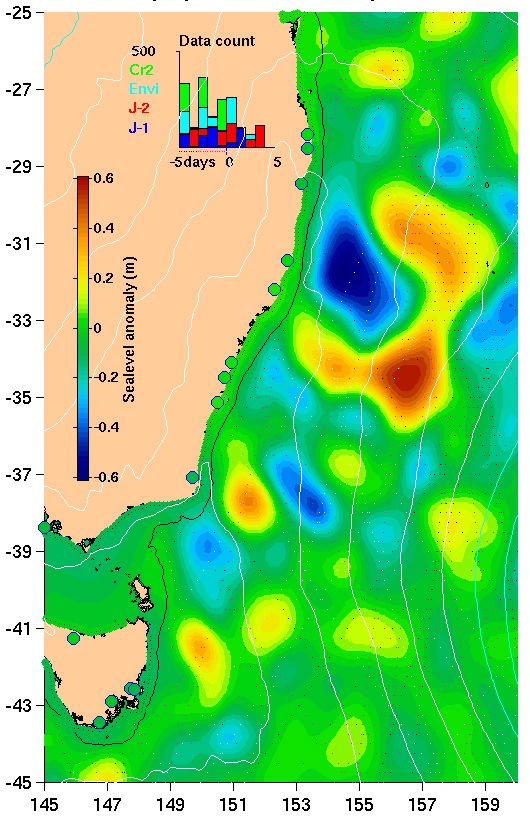
    Demonstration of the measurement of sea level.

    The European Space Agency will use its powerful satellite for monitoring weather conditions to enhance marine safety. This will benefit the Arctic as the CryoSat is designed for measuring thickness of ice.

    ESA’s CryoSat mission has been gathering detailed information on the thickness of Earth’s ice since its launch in 2010. Through international collaboration, this state-of-the-art mission will broaden to monitor the weather.

    With the satellite scientists now have data to research and conclude about the understanding of the relationship between ice, climate and sea level.

    The CryoSat moves from pole to pole and will now measure the measure the sea level and the height of waves.

    From February this new technology will start for this important work which will benefit throughout the world.

    The image on the right shows mweasurments of sea level, when tested near Australia. The green is 0 but the yellow to red is high and light blue to dark blue belov sea level.

    Sources

    European Space Agency

  • Vaygach breaks off as fire kills two

    Vaygach breaks off as fire kills two

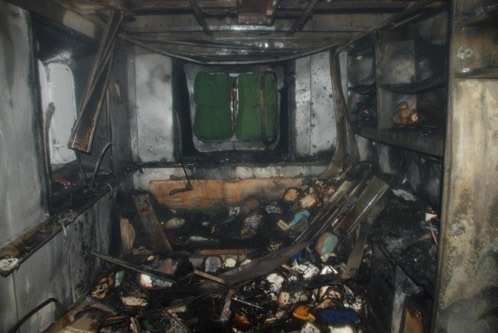
    Vaygach Fire

    The Russian nuclear powered icebreaker Vaygach is up and sailing again after a fire last week. The tragic accident cost two lives.

    It was the night of 15th of December that the fire broke out in the living compartments of the icebreaker. Two people could not be saved which is another tragic accident in Russian waters after an oil rig sank earlier in the week, costing many people their lives.

    Vaygach went through inspection in Dudinka and then kept breaking ice like usually, in the Northern Sea Route.

    It took two hours for the crew to get the fire under control. The fire did not reach the reactor compartment so a nuclear accident was not a threat.

    The source of the fire is thought to be a short-circuit.

    Sources

    BarentsObserver

    Rosatomflot

    Blogger51

  • Climate research in Norway at final stage

    Climate research in Norway at final stage

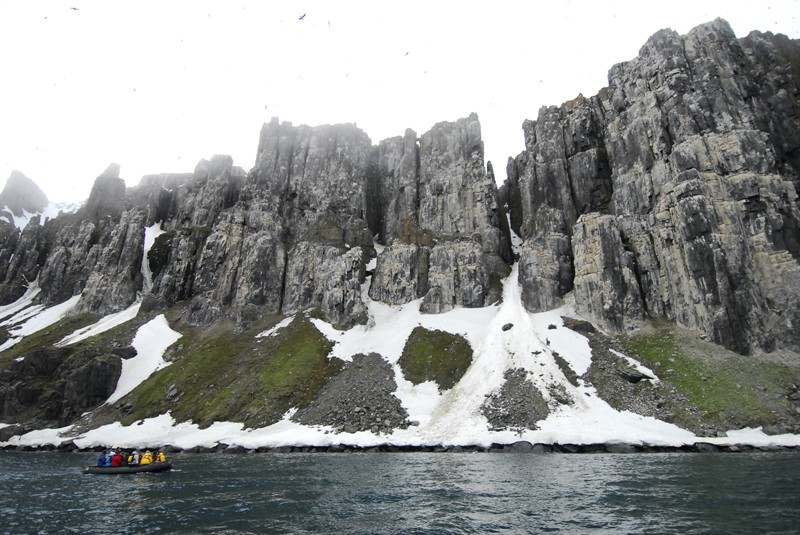
    A rocky coast in Svalbard

    A huge project in Norway enters its final year in January. The NORKLIMA project, The Research Council of Norway’s 10-year Large-scale programme on Climate Change and its Impacts in Norway, is entering its final stages.

    Continued activities for climate change research in Norway are under way.

    “Now we want to hear the thoughts of the various national and international stakeholders regarding future needs for knowledge about climate issues,” says Camilla Schreiner, Director of the Department for Climate and Polar Research at the Research Council.

    In cooperation with Norway’s universities, the Research Council is hosting dialogue meetings around the country to gather input and viewpoints from research institutions and trade and industry. In addition, a separate dialogue meeting with relevant ministries, agencies and administrative bodies will be held.

    The institute wants to do a thorough overview of the situation before it released its final report in 2013.

    Although this seems to be political rather then scientific, a host of research programs will go on until the summer of 2012.

    “We don’t yet know the future model for Norwegian climate research in the post-NORKLIMA era,” continues Dr Schreiner. “But the objective is clear: its targets and structure will enable Norwegian researchers to make a significant contribution to dealing with climate change effectively – at both the national and the global level.”

    Source: The Research Council of Norway

  • Tragedy after oil rig sinks

    Tragedy after oil rig sinks

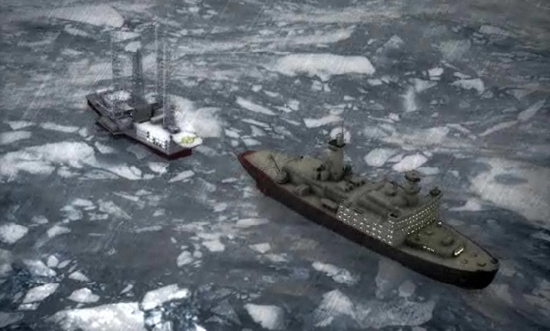
    The tug boat and the Kolskoya before the accident

    An oil rig sunk yesterday in the Sea of Okhotsk where 14 people lost their lives. Many are still missing but 67 were on the rig.

    The wind was blowing at 25 m/s and the waves were 5 to 6 metres high. The rig overturned and started taking in water. It sank in only 20 minutes and the temperature of the ocean was around 1°.

    14 people were rescued. They were on duty on deck during the towing and were wearing survival suits and life-jackets.

    The Russian Media is criticising rescue operators because the whole crew was in the oil rig when it was being towed.

    According to Russian instructions for safety at sea, only a required minimum of personnel should be onboard a vessel that is being towed. The Russian Agency for Transport Supervision has started investigation of the accident.

    “Kolskaya” belongs to the Murmansk-based company Arktikmorneftegazrazvedka and had just finished work under a contract with energy giant Gazprom in the Sea of Okhotsk.

    The weather conditions are thought to be the reason for the accident, not any other problems have been found.

    Source: Barents Observer

  • Fishermen stuck in ice in danger

    Fishermen stuck in ice in danger

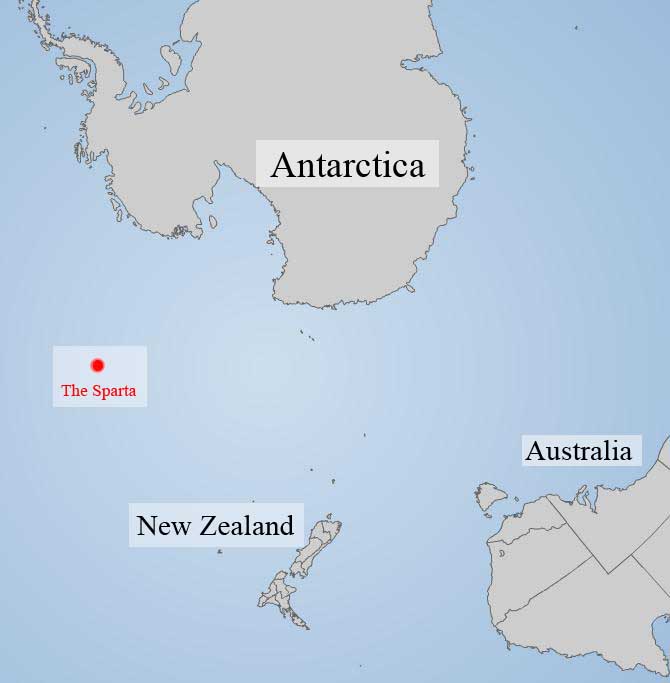
    Approximite destination of Sparta.

    A Russian fishing boat is trapped in heavy sea ice near Antarctica and its crew has moved to lifeboats. The ship is in danger of cracking and sinking so the crew evacuated the ship. It has reported a hole in its hull beneath the water line.

    The next icebreaker is days away and no helicopters are near the ship. A number of ships are on their way to rescue the ship.

    “However, the closest ones are hampered by heavy ice, making vessel movement very difficult. The closest vessel which can cut through the ice is several days away,” Rescue co-ordinator Tracy Brickles said.

    The Sparta is holed beneath the waterline and stuck in heavy sea ice, about 2,000 nautical miles (3,704km) south-east of New Zealand.

    A military plane spent about an hour above the ship but could not land to rescue the crew.

    The crew of 32 has immersion suits on. The crew comprises 15 Russians (including the captain), 16 Indonesians and a Ukrainian, AFP news agency reported.

    They were throwing cargo overboard to lighten the ship, and some had boarded lifeboats as a precaution, the RCCNZ said.

    Remaining crew are pumping water out of the ship and had attached a tarpaulin over the outside of the hole in an attempt to keep the water out, it said. They had requested that additional pumps be sent to help.

    The ice surrounding the ship is estimated to be up to 1.5m thick.

    Click here to see images of the ship from BBC.

    Sources: BBC, AFP, UPI, ITAR-Tass, RCCNZ.

  • Russias claim submitted next year

    Russias claim submitted next year

    artic-skipting2

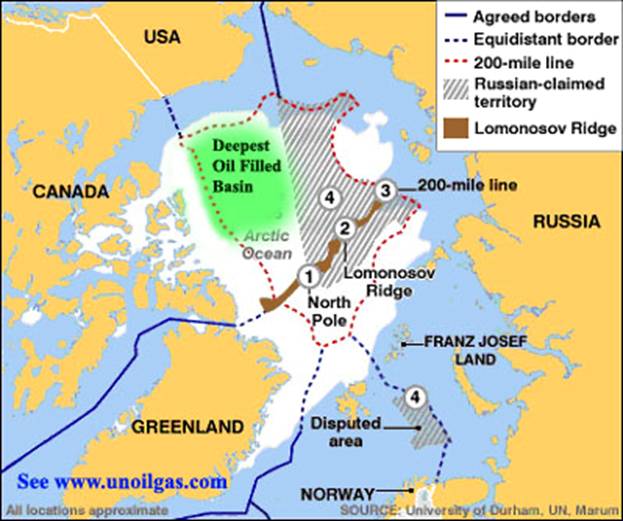
    Russia’s revised submission for their claim of the Arctic shelf boarders is almost complete. Russia was rejected earlier this year after submitting a claim for expanding its shelf borders to the UN commission, because of lack of information.

    The United Nations Convention on the Law of the Sea allows the coastal states in the Arctic to submit their claims for the continental shelf, outside their Exclusive Economic Zones.

    The potential resources in these areas are huge, so a competition between the states has begun. Russia is for example both claiming some of the same areas as Canada and Denmark (through Greenland).

    Norway is the only country who has gotten its claim approved, but the other claims are more complicated.

    “We have done a great deal of work, with the submission 90 percent complete, Russian Deputy Prime Minister Sergei Ivanov told at a press conference.

    The deputy prime minister said that Russian specialists are preparing a claim to be submitted to the UN Commission on the Limits of the Continental Shelf in 2012.

    Source: Barents Observer via RIA Novosti

  • Beluga whales trapped in ice

    Beluga whales trapped in ice

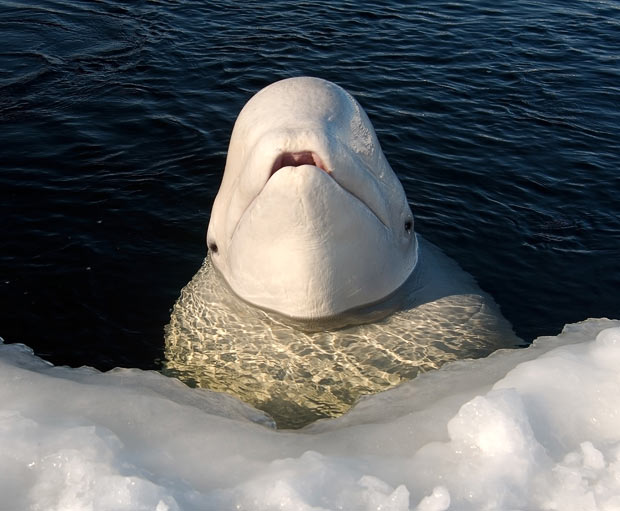
    Beluga Whale in ice

    Around 100 Beluga whales are trapped in sea ice in the Bering Sea. They await rescue or face death.

    The Beluga whale can weigh 2 tons at six meters long.

    They lie outside the town Janrakynot in east Russia. They can’t feed but authorities in Chukotcha are hoping for an icebreaker to break the whales free.

    Prime Minister Vladimir Putin is a known admirer of the Beluga whale and the authorities are hopeful it will help them in the cause for the icebreaker. The icebreaker is around the area but it would take around two days to reach the animals.

    Below is a video of trapped Beluga whales, escaping an attack from a polar bear.

    Source: Vísir.is