Category: News & Press Releases

Arctic Portal News Portlet

  • Volcanic Eruption in Iceland Comes to a Halt

    Volcanic Eruption in Iceland Comes to a Halt

    Grímsvötn

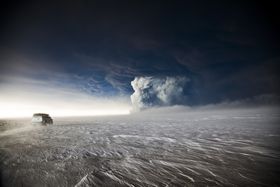
    The volcanic eruption in the volcano Grímsvötn seems to have stopped. According to eyewitnesses this morning, the volcanic column rises only a hundred meters (330 feet) from the crater. A thick layer of ash lies all around the crater on the glacier.

    The eruption in Grímsvötn has steadily grown smaller since monday. The volcanic column reached an altitude of three to five kilometers (16.000 feet) yesterday, and the output of ash is was considerably smaller than the day before, when the volcaninc column reched an altitude of 10 kilometers (32.000 feet). There have been very strong northerly winds in the area blowing the ash to the south. The winds have gone down today, according to the Icelandic Meteorological Office.

    About 100 tons of volcanic materials erupt per second from the volcano in Grimsvotn yesterday. The day before, it was about 1,000 tons per second. As a comparison the output was ten to twenty thousand tons per second when the eruption peaked last Sunday. Volcanic tremors have, however, stayed unchanged.
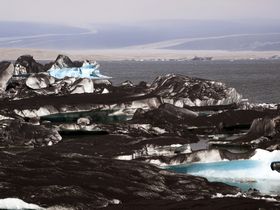
    Grímsvötn

    According to the Meteorological Office there have been no deep tremors and no lightning detected since midday monday. The strong northerly winds in the area yesterday, blew the ash to the south and causing much ash drift in the area but it has stopped for now.

    This explosive eruption was accompanied by great amounts of ash. The ice around the crater melts and water in the subglacial lake at Grímsvötn causes the volcanic materials to explode, creating huge volume of ash.

    This eruption has caused some problems for the residents in the small town of Kirkjubæjarklaustur at the south coast of Iceland, where ash has spread heavily on the town. This has caused serious interruption in the daily life of people who foresee a great cleanup of ash. The fine grained ash slips through very narrow cracks and fills houses and other equipments with the material. This has caused decreased air quality in the area, and some people have relocated cleaner areas.
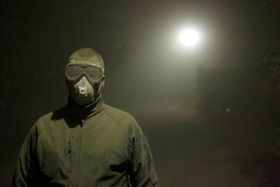
    Grímsvötn

    For local farmers, the ash spread has caused some damage to the live stock and their equipment. However, the toxic content in the ash is low which means that their fields remain more or less unspoiled. In the long term, the ash serves as a natural fertilizer.

    Some disturbances in flight schedules have affected Northern Europe and Iceland, where the ash has spread to Scotland and Norway. The ash cloud is likely to spread further into the European Mainland and disrupt flights there.

    The tags below provide an opportunity to view previously posted related news within the selected category
  • IPY 2012 From Knowledge to Action Conference April 22-27, 2012 Montréal, Canada

    IPY 2012 From Knowledge to Action Conference April 22-27, 2012 Montréal, Canada

    The From Knowledge to Action International Polar Year (IPY) 2012 Conference features the latest polar research results from global leaders in Arctic and Antarctic science.

    Endorsed by the World Meteorological Organization (WMO) and the International Council for Science (ICSU) as the third and final conference to close IPY 2007 – 2008, the From Knowledge to Action Conference will be hosted in Montréal, Canada from April 22-27, 2012.

    Occurring at a pivotal moment for the environment of our planet, this Conference draws international attention to global environmental issues that affect us all. We are witnesses to the global impacts of climate change. Scientific evidence reveals the critical role that the polar regions play in the Earth’s systems. What is happening at the Poles will alter the polar environments and change the course of human and economic development.

    International Polar Year

    From Knowledge to Action will bring together Arctic and Antarctic researchers, policy- and decision-makers, and a broad range of interested parties from academia, industry, nongovernment, education, Arctic communities, and circumpolar indigenous peoples. Together these groups will address challenges, share and apply knowledge of the polar regions and discuss opportunities and solutions for adapting to global change.

    The IPY 2012 Conference will contribute to the translation of new polar scientific findings into an evidence-based agenda for action that will influence global decisions, policies and outcomes over the coming years.

  • Volcanic Eruption Started Again in Iceland

    Volcanic Eruption Started Again in Iceland

    Grímsvötn

    A volcanic eruption has started in Iceland underneath the glacier Vatnajökull on Saturday around 7 PM. The volcano, called “Grímsvötn” is spewing large amounts of ash up to 11 kilometers high (35 thousand feet) up into the air.

    The ash has fallen on the southern part of Iceland. In areas where the ash cloud is very dense and the amount of fallout considerable, people are advised to stay indoors if possible, close all doors and windows and warm up their houses in order to push out the ash.

    The International airport in Keflavik, Iceland has been closed since 8:30 Sunday morning and air companies have already cancelled flights. The domestic airport in Reykjavik and many other towns are also closed so no domestic flight has been operating.

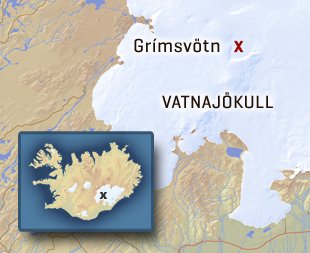
    Grímsvötn on a map

    There has been little impact on European or transatlantic flights after the Grimsvotn volcano’s eruption, where aircrafts have been diverted from the ash cloud. However, ash is expected to reach Scotland on Tuesday and could enter France and Spain on Thursday, Ash could reach the United Kingdom and northern continental Europe Wednesday. Weather patterns this weekend have been very different from the northerly winds that swept through the region after last year’s eruption. However ash cloud’s movement is difficult to predict.

    The intensity of the eruption has decreased slightly since its climax on Saturday night when the magma flow exceeded 10,000 tons per second and the ash plume reached 15 kilometers (50 thousand feet). The magma flow on Sunday afternoon was estimated to be 2-5,000 tons per second. No effusion of lava has been observed.

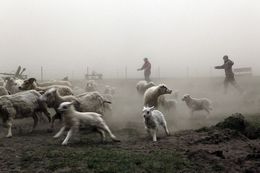
    Local animals covered in ash

    There has been no immediate danger to people in the area but it has started to affect live stock that can not graze due to ash cover. Lambing season in the area is finishing and farmers have to keep all their stock in their sheepcotes, which is getting more and more cramped.

    Ice-melt is not expected to be great and therefore floods or swelling of rivers in the next few days is considered unlikely.
    Grímsvötn is Iceland’s most active volcano. Usually the eruptions occur at an interval of a few years. Most of these eruptions last a few days. The eruption is very big this time. However, experts consider it unlikely to cause anything similar to the chaos of the eruption in Eyjafjallajökull in 2010.

    The tags below provide an opportunity to view previously posted related news within the selected category
  • Arctic Council Nuuk Ministerial Meeting

    Arctic Council Nuuk Ministerial Meeting

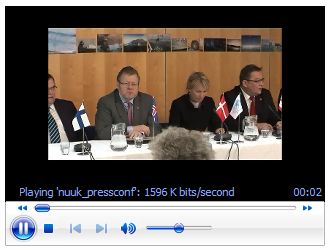
    The Arctic Council Nuuk Ministerial Meeting participants

    The Arctic Council Nuuk Ministerial Meeting participants held a press conference at the end of the meeting, where they expressed their satisfaction with the results of the meeting.

    The Search and Rescue Agreement was considered ground-breaking, as it is the first legally binding agreement negotiated under the auspices of the Arctic Council and an important step towards safe shipping in the Arctic. The shipping and resource management will be a priority in the Swedish chairmanship agenda Swedish Foreign Minister Carl Bildt stating, that “Arctic Countries need enhanced cooperation on many future challenges in the Arctic, not least prevention, preparedness and response to oil spills. As incoming chair we will press forward with this agenda.”

    Arctic Council Permanent Participants had a different perspective, stating that the environmental issues are the most important for their communities. To maintain a healthy Arctic environment is a prerequisite for the survival of their culture and livelihoods. In the coming Swedish chairmanship period they will also “commit to working on improving health by establishing adaptive measures to protect our traditional food sources and to support and strengthen indigenous languages”, stated Rodion Sulyandziga, Chairman of the Indigenous Peoples Secretariat.

    Sources: AC, IPS

  • Historical Agreement signed today at the Arctic Council Nuuk Ministerial Meeting

    The foreign Ministers of the Arctic countries and leaders of the Arctic Indigenous Peoples witnessed a historical moment today at the Nuuk Ministerial Meeting, when the first legally binding agreement established under the auspices of the Arctic Council was signed.

    The Agreement on Cooperation on Aeronautical and Maritime Search and Rescue in the Arctic lays down a framework to strengthen search and rescue cooperation and coordination in the Arctic airspace and waters.

    The Parties commit themselves to broad cooperation and agree to seek cooperation also with other countries who may be able to contribute to the Arctic search and rescue operations. The agreement further delimits operational regions for the Parties, who each will bear their own costs deriving from the implementation of the Agreement.

    For the full text of the Agreement click the Agreement name here above or go to the Arctic Council.

    The Nuuk Declaration

    The Ministers also gave out a Declaration marking the policy for the next biennial period. The ministers decided to strengthen the capacity of the Arctic Council to respond to the challenges and opportunities facing the Arctic by establishing a permanent Arctic Council secretariat in Tromsø, Norway. They also call for an assessment of the current state of human development in the Arctic and its relationship with climate change and recognize the need for an integrated assessment of multiple drivers of Arctic change as a tool for Indigenous Peoples, Arctic residents, governments and industry to prepare for the future.

    In above photos are Hillary Clinton, the Secretary of State of the US and Össur Skarphéðinsson, the Minister of Foreign Affairs of Iceland at the SAR signing.

  • High Arctic species on thin ice

    High Arctic species on thin ice

    arctic fox alopex lagopus

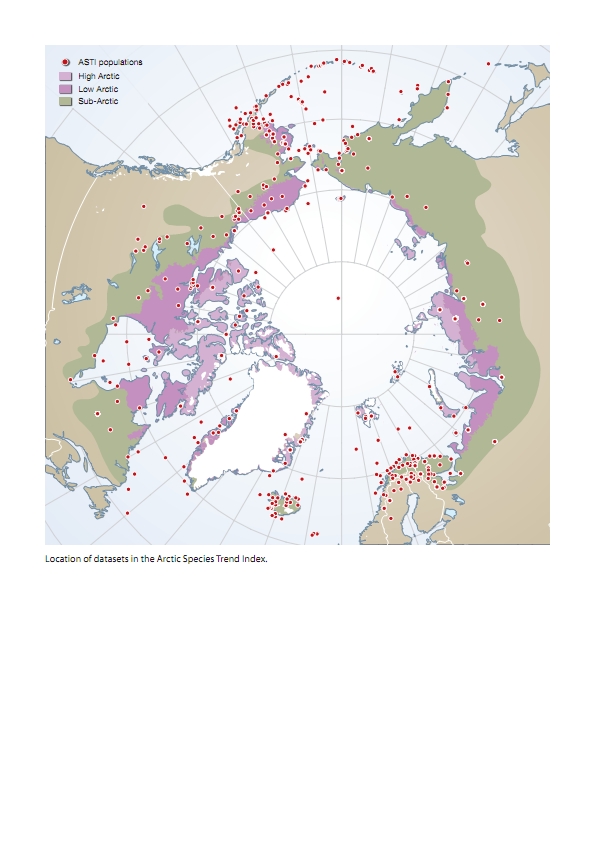
    A new assessment of the Arctic’s biodiversity reports a 26% decline in species populations in the High Arctic. The ASTI includes almost 1,000 datasets on Arctic species population trends, including representation from 35% of all known vertebrate species found in the Arctic.

    Populations of Lemmings, Caribou and Red Knot are some of the species that have experienced declines over the past 34 years, according to the first report from the Arctic Species Trend Index (ASTI), which provides crucial information on how the Arctic’s ecosystems and wildlife are responding to environmental change.

    While some of these declines may be part of a natural cycle, there is concern that pressures such as climate change may be exacerbating natural cyclic declines.

    In contrast, population levels of species living in the Sub Arctic and Low Arctic are relatively stable and in some cases, increasing. Populations of marine mammals, including Bowhead Whales found in the Low Arctic, may have benefitted from the recent tightening of hunting laws. Some fish species have also experienced population increases in response to rising sea temperatures.

    “Rapid changes to the Arctic’s ecosystems will have consequences for the Arctic that will be felt globally. The Arctic is host to abundant and diverse wildlife populations, many of which migrate annually from all regions of the globe. This region acts as a critical component in the Earth’s physical, chemical, and biological regulatory system,” says lead-author Louise McRae from the Zoological Society of London (ZSL).

    Data collected on migratory Arctic shorebirds show that their numbers have also decreased. Further research is now needed to determine whether this is the result of changes in the Arctic or at other stopover sites on their migration routes.

    Louise McRae adds: “Migratory Arctic species such as Brent Goose, Dunlin and Turnstone are regular visitors to the UK’s shores. We need to sit up and take notice of what’s happening in other parts of the world if we want to continue to experience a diversity of wildlife on our own doorstep.”

    Co-author Christoph Zöckler from the UNEP-World Conservation Monitoring Centre says: “The establishment of these results comes at a crucial time for finding accurate indicators to monitor global biodiversity as governments strive to meet their targets of reducing biodiversity loss.”

    The Arctic Species Trend Index was commissioned by the Arctic Council’s CAFF Circumpolar Biodiversity Monitoring Program. The development of the index was a collaboration between the CBMP, the Zoological Society of London, UNEP World Conservation Monitoring Centre and the Worldwide Fund for Nature. Further information is available from: www.asti.is.

    datasets locations in the Arctic Species Trend Index

  • Marine Biodiversity Monitoring Plan

    Marine Biodiversity Monitoring Plan

    Marine Biodiversity Monitoring Plan

    Arctic biodiversity is under growing pressure from both climate change and resource development, requiring both managers and users to have access to more complete information to help them make timely and informed conservation and adaptation decisions.

    Yet existing monitoring programs remain largely uncoordinated, limiting our ability to effectively monitor, understand and respond to biodiversity trends at the circumpolar scale. The maintenance of healthy Arctic ecosystems is a global imperative as the Arctic plays a critical role in the Earth’s physical, chemical and biological balance. Maintaining the health of Arctic ecosystems is also of fundamental economic, cultural and spiritual importance to Arctic residents, many of whom maintain close ties to the land and sea.

    The Arctic’s size and complexity represents a significant challenge towards detecting and attributing changes in biodiversity. This demands an integrated, pan-Arctic, ecosystem-based approach that can effectively identify important trends in biodiversity and identify their underlying causes.

    To meet these challenges, Conservation of Arctic Flora and Fauna (CAFF) Circumpolar Biodiversity Monitoring Program (CBMP) is working with partners across the Arctic to harmonize and enhance long-term Arctic biodiversity monitoring in order to facilitate more rapid detection, communication and response to significant trends and pressures. Towards this end, the CBMP is developing four, ecosystem-based Arctic biodiversity monitoring plans (Marine, Terrestrial, Freshwater and Coastal). These umbrella monitoring plans work with existing monitoring capacity to facilitate improved and cost-effective monitoring through enhanced integration and coordination.

    The Arctic Marine Biodiversity Monitoring Plan (CBMP-Marine Plan) is the first of the CBMP’s four pan-Arctic biodiversity monitoring plans. The overall goal of the CBMP-Marine Plan is to improve our ability to detect and understand the causes of long-term change in the composition, structure and function of arctic marine ecosystems, as well as to develop authoritative assessments of key elements of arctic marine biodiversity (e.g., key indicators, ecologically pivotal and/or other important taxa).

    The CBMP-Marine Plan integrates existing marine biodiversity monitoring efforts (both traditional scientific and community-based) from across the Arctic and represents an agreement between six Arctic coastal nations and a great number of national, regional, Aboriginal and academic organizations and agencies in all six countries on how to monitor arctic marine ecosystems.

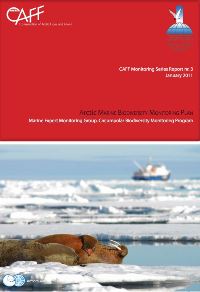
    Arctic Marine Biodiversity Monitoring Plan Report

    Practical information

    Further information at www.caff.is.
    Contact: Tom Barry.

  • Announcement of opportunity – SCAR Antarctic Science Fellowships 2011 – 2012 and COMNAP Antarctic Research Fellowship

    Announcement of opportunity – SCAR Antarctic Science Fellowships 2011 – 2012 and COMNAP Antarctic Research Fellowship

    SCAR

    Two leading Antarctic organisations announce today opportunities for early career researchers. The Scientific Committee on Antarctic Research (SCAR) and the Council of Managers of National Antarctic Programmes (COMNAP) are working together to attract talented researchers, engineers and other professionals to strengthen international capacity and cooperation.

    The Fellowships are worth up to $US 15,000 each and up to five (4 SCAR and 1 COMNAP Fellowships) are on offer for 2011.

    For the SCAR fellowships, the awardee should:

    1. Be PhD students or within 5 years of having completed a PhD on the day of the deadline for applications
    2. be from any country
    3. want to visit a SCAR member country’s research facilities or Antarctic base
    4. work in ANY field of SCAR’s Antarctic scientific interest, including Antarctic Climate change, Life Sciences, Geo Sciences, Physical Sciences.

    Further details of both the SCAR and COMNAP fellowships

    The deadline for applications is 15 May 2011.

  • The 6th NRF Open Assembly to be held in Hveragerði, Iceland

    Northern Research Forum

    The 6th Northern Research Forum (NRF) Open Assembly which was originally planned to be held in Oslo and Kirkenes in the autumn of 2011 has been moved to Iceland. The move of congress venues was prompted by unforeseen financial challenges, according to the NRF Secretariat.

    The venue of the 6th Open Assembly is a small town in the south of Iceland located 45 km to the east of Reykjavík, the capital of Iceland. The town of Hveragerði is well known for its geothermal park, which is centrally located in the town.

    The NRF secretariat says that all preparations are well underway and the Open Assembly will be held on the 4th – 6th of September.

    For further information, please visit the NRF Webpage