Category: YAR & Features

Young Arctic Researchers & Features

  • Polar Law Symposium 2009

    Between September 10-12 The Second Polar Law Symposium 2009 Will be held at the University of Akureyri Iceland to present and debate current legal challenges in the polar regions. The First Polar Law symposium was held September 7-10 2008 and brought together several of the world’s leading Polar lawyers and senior scientists and coincided with the launch of a new Masters program in Polar Law at the University of Akureyri.

    The symposium gathered over 60 participants, from a variety of institutions including distinguished guests Dr. Bakary Kante, Director of the Division of Environmental Law and Conventions at the United National Environmental Programme (UNEP), and President Ólafur Ragnar Grímsson, Republic of Iceland.

    The symposium was divided into four themes, which addressed the legal challenges of protecting polar UNAK Lake Myvatn biodiversity, improving sustainable development in the North, re-evaluating environmental governance and questions surrounding emerging jurisdictional claims in the Polar Regions. One particular concern for researchers was the need for developing a new legal framework to address the Arctic environment. The Symposium was regarded as a success and the upcoming symposium can be expected to be similarly interesting. This years theme will be

    • Theme I: New Shipping Routes and Environmental Implications for the Polar Regions
    • Theme II: Effective Environmental Governance
    • Theme III: The Exploration and Exploitation of Resources

    It is clear that this years symposium will be just as exiting as last years and will coincide with a APECS meeting held in connection with the conference. The full schedule of the conference can be downloaded here and further questions addressed to Dr. Natalia Loukacheva natalial@unak.is

    Source: UArctic, UNAK

  • Journeys of whales in Icelandic waters – new satellite sender on a Blue Whale

    Journeys of whales in Icelandic waters – new satellite sender on a Blue Whale

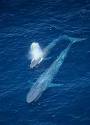
    For the past two years, the Icelandic Marine Research Institute has been conducting experiments by tagging whales dwelling on Icelandic waters with satellite senders to track theirblue whale migration route around the island and map their departing points of Icelandic waters.

    In the fall 2008 four whales, two Minke Whales and two Humpback Whales, were marked by shooting them with a special air gun developed for this purpose especially. In February 2009 another two Humpbacks were tagged and finally in June this summer one more Humpback and a Blue Whale were tagged.

    This is a first time that the migration pattern of a Blue whale has been tracked and thus very important and interesting information for both the public and the research community. The Blue Whale was marked in Skjálfandi bay in northern Iceland in June 23 and has since travelled almost 8000km from north-coast of Iceland to the southeast coast, visiting west-coast Greenland on its way.

    Blue whaleThe travelling pattern of the Blue Whale is characterized by rapid sprints, while it can dwell in restricted areas for several days, most likely for food gathering.

    The migration of Blue Whales to south is soon getting started and the research institution hopes that the senders will continue to send signals through that period giving them thus valuable information on the migration pattern itself and a hint of their hibernation.

    It is possible to follow the Blue Whale’s migration pattern HERE.

    Further information can be found on the Icelandic Marine Research Institute’s website, and other Arctic Portal features

  • Arctic Wildlife

    Arctic Wildlife

    Introduction

    Polar bearThe Arctic has a unique climate within the earth’s ecosystem. Fearly little of low angle sunlight reaches the Arctic and more energy is radiated from the polar regions than is received. This makes the Arctic climate very harsh and difficult for growth and survival. Great variation in temperature and the contrast between the long and dark winter and the brief and light summer require extreme adaptability of plants and animals. The Arctic contains many species not found elsewhere, and many habitats and ecological processes and adaptations that are unique.

    To survive the Arctic conditions, animals have developed many behavioral and morphological adaptations. They use snow as shelter throughout the winter, accumulate large fat deposits when food is available and change the color and texture of their fur or plumage in winter to insulate their bodies and retain their crypticMursu coloration year round.

    Several mammalian species spend the winter in torpor to escape the coldest period of the year and species such as bear and badger spend their winter sleeping under the snow.

    One of the characteristics of almost all Arctic animals is their ability and willingness to migrate even very long distances in search for food and easier environment.

    Some Arctic species

    The Arctic Char
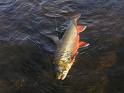
    Arctic CharThe Arctic Char (Salvelinus alpinus (L.)) is the most northern distributed freshwater fish, and part of the small group of salmonid fishes (i.e., salmons, trouts, whitefishes). Chars are a significant component of aquatic and near shore marine ecosystems in the Arctic. Often the only freshwater fish available, they play a major role for the subsistence of local people who fish returning upstream migrants of sea-run char in late summer and early autumn. Arctic Chars are threatened by a wide range of impacts ranging from local exploitation and habitat fragmentation and degradation mostly through oil and gas development, to widespread and pervasive impacts such as climate change and atmospheric contaminant deposition. Moreover, pervasive threats such as climate change affect Arctic aquatic ecosystems in a dramatic way, clearly having a huge impact on its most sensitive ecosystem components. Yet, many aspects of ecological roles of chars are still unknown at present for most northern ecosystems. Clearly, the integrity and continued health and viability of northern aquatic ecosystems are intimately connected to the biodiversity of chars present in those systems.

    Reindeer and Caribou

    Reindeer and Caribou (Rangifer tarandus) are distributed circumpolar in every Arctic country. Caribou represent the most dominant large mammal species in CaribouArctic habitats and are an extremely valuable component of Arctic biodiversity and cultural identity of many northern peoples. Caribous are the only member of the deer family where both males and females grow antlers. Pregnant females will retain their antlers until after calving, allowing them to dominate the social hierarchy in late winter. During deep snow years, caribou will move in search of more favorable snow conditions, as more energy is expended digging to the lichens than is derived from feeding. Reindeer and Caribou are a vulnerable yet crucial source of income from Arctic terrestrial ecosystems for northern peoples. Close monitoring of these wild and domestic Rangifer populations is vital in assessing the impact of climate change.

    Gray Wolf

    Grey wolfGray wolves (Canis lupus arctos) currently number about 150,000 worldwide. Some 80% live in the circumpolar countries, although the number actually living in the Arctic is unknown. Canada has the most wolves of any arctic country, with some 50,000 to 63,000 animals inhabiting about 86% of their historical range. About 16,000 of the wolves live north of 60°N. Most of these Arctic populations are considered stable and not at risk. While wolves are abundant in Alaska, northern Canada, and Russia, local overharvests may occur. Habitat loss continues to be a concern for wolf conservation, especially in areas with recovering wolf populations. Wolves are regarded by many as a nuisance species, hampering thus management and recovery plans. The challenge continues to be the development and public acceptance of a flexible conservation plan that accommodates wolves in wilderness, but allows for local conflict management.

    Ivory Gull

    The Ivory Gull (Pagophila eburnean) is a high Arctic seabird breeding at high latitudes in the Atlantic sector of the Arctic and often associated with sea ice throughout the year. InIvory gull spite of an early discovery the Ivory Gull still remains one of the most poorly known seabird species in the world. There is growing concern in the circumpolar Arctic that the Ivory Gull may be in decline. The most recent information on population trend of Ivory Gulls exists for Canada, Svalbard and Russia. In Canada, the Ivory Gull has a highly restricted range, breeding exclusively in Nunavut Territory. Recent surveys in Svalbard suggest that only a few of the known colonies are still being used there and that the total population is smaller than previously estimated. Information obtained currently on Russian breeding grounds indicate stable populations breeding at some key colonies, although considerable annual fluctuations in numbers of breeding birds occurs. The Ivory Gull has been protected in West Greenland since 1977 under the Greenland Home Rule Order of 5 May 1988 concerning the protection of birds in Greenland. In Svalbard, it has been protected since 1978, under the Svalbard Environmental Protection Act. In Russia, it was listed in the Red Data Book of the USSR (1984) and now is registered as a Category 3 (Rare) species in the Red Data Book of the Russian Federation.

    Climate change

    Climate change is perhaps the greatest threat to the Arctic environment as it exists today. Observed changes in species abundance and distribution, and to permafrost and sea ice, are evidence that climate change is already having an impact. Although the predictions cannot tell what will happen, they do indicate the types of ecological impacts that may occur.

    The impacts are likely to include melting of discontinuous permafrost, changes in distribution of moisture and the northward expansion of the forest. The climate change is further likely to affect the distribution of most plants and animals of the tundra and polar desert and affect the fish and shellfish distribution in the Arctic waters. Loss of permanent sea ice altogether would clearly have tremendous impacts on algae, plankton, fish, and marine mammals that use sea ice.

    Monitoring to detect the impacts of climate change and ultraviolet radiation on Arctic ecosystems is vital, as is further research to understand the dynamics of the systems that will be affected.

    Reference:

    All the information presented above is gathered from the Arctic Council’s Conservation of Arctic Flora and Fauna (CAFF) Working Group’s homepage

    and from the Arctic Flora and Fauna: Status and Conservation report.
  • Arctic Energy

    In the recent years, the world’s attention has turned to the Arctic, not least because of its vast energy resources. Due to the climate change and its significant impact to the Arctic environment resources that have long been unreachable are becoming feasible for exploitation. It is estimated that up to fifth of the world’s undiscovered petroleum resources are to be found in the Arctic while the Arctic’s share of the worlds known resources today is around 12%.

    Russia is by far the most important gas producer in the Arctic. Almost all proven Arctic gas reserves are located in Northern Russia as well as 90% of the proven oil reserves. Together produce Northern Russia and Alaska 97% of the total Arctic oil and gas the Arctic’s total global share of production being around 16%. Furthermore, Russia is considered to contain by far the largest volume of the undiscovered petroleum reserves. Other significant regions where petroleum is to be found are Alaska and the Norwegian Sea, which will in future introduce new oil producing states within the Arctic, namely Greenland and Iceland.

    In the face of the petroleum race in the Arctic, some concerns have been raised about the very fragile Arctic environment. In addition to the actual drilling, transportation of the petroleum will impose the Arctic environment to a severe threat in case of an oil spill or shipwreck.

    Even though the conventional petroleum industry is still today dominant in the Arctic, some renewable energy developments are also taken place in the Arctic. The renewable energy sector is however still quite small compared to the conventional one, but can be expected to grow in the future.

    The newly published  Arctic Energy Portal aims at providing a comprehensive information gateway to the Arctic energy projects, new developments and controversies concerning the resource exploitation. At present, the Portal will concentrate mostly on oil and gas, but as new projects and developments take place in renewable energy sector the Portal will broaden its scope of information and cover renewable sector as well.

  • Organized Crime in the Arctic

    Organized Crime in the Arctic

    The Arctic is rapidly changing and has been doing so for the last couple of decades. During the cold war many regions of the Arctic were a no-mans land crammed full of radar equipment. The Arctic is increasingly opening up on many frontiers. The ice sheet is receding, increasing industrial production and the quest for oil and increased participation in the global market system has increased the role of cash within local economies. Megaprojects have brought in considerable amounts of staff; often single men with a disposable income further increasing the role of the cash economy. Following this development organized crime has been on the rise in the Arctic, and organized crime syndicates are believed to have acquired a firm foothold in the Arctic and are involved in the human- drug- and weapons trafficking, fraud, violent crimes bootlegging and other illegal activities.

    The rise of drug trafficking has been prominent in the Arctic. Recently the Greenlandic police confiscated 118 kilos of Cannabis that is the largest amount that has been confiscated so far in Greenland. The street value of the drugs is estimated to be around 60 million Danish krona.

    Police dog, K-9

    In the Canadian North the authorities have become almost become incapable of monitoring activities within it’s own Arctic boundaries, which are the size of continental Europe, due to increased tourism and industrial production effecting criminal activity . Currently there are just 200 military personnel and 400 police working in the region.

    The Royal Canadian Mounted Police (RCMP) has called for up to 30 new intelligence officers into the Canadian Arctic. Currently there is only one intelligence officer in charge of all three of Canada’s Arctic territories. Chief Supt. Pierre Perron, the RCMP’s director of criminal intelligence, said “To say that we have no capacity in the North is not necessarily true,” he said, “because every officer we do have does operate in some capacity as an intelligence officer.”

    “However, we would like to implement dedicated criminal intelligence officers.”

    Human trafficking is a problem that is often difficult to identify and address. A special task force has been operating since 2005 within the Barents Euro Arctic Region (BEAC) to cooperate in battling human trafficking in the European part of the Arctic. Very few cases of human trafficking have been put on trial in the Arctic but can be expected to rise as the industry rises and the awareness of the problem increases.

    Both Canada and the U.S have voiced concerns about the Arctic being used as a portal for Arms trafficking into the U.S by terrorists as border control is challenging due to the immense the size of the area.

    With the increased activities within the Arctic following global warming it is highly likely that crime as well is on the rise, as accessibility increases and profitability vs. risks continue to rise. The eight Arctic states are however very well aware of the opening up of the Arctic so increased measures in law enforcements would come as a surprise to no one. The Nordic countries, Russia and U.S.A are increasing their military presence in the Arctic, which serves as another form of increased surveillance which one could imagine would be backed up with increased police activities as well

  • International Polar Year – IPY Legacy

    International Polar Year – IPY Legacy

    International polar year logo

    Polar areas have always interested both scientists and adventurers for their remoteness and harsh climate, but in recent years it has become clear that the Arctic and Antarctic play a significant role in the earth’s ecosystem and are in a keyrole to both predict the impact of climate change and bear the consequences of it.

    International Polar Year (IPY) is an international cooperative research initiative first introduced in 1882, with an objective to provide scientific information about the fundamentals of meteorology and geophysics as well as further people’s knowledge on the Polar Regions. Due to the fact that the IPY webpage has recently been relocated and updated by the Arctic Portal we have decided to overview the history of the IPY and some of the good work carried out by the IPY and it’s programs.

    Short History of the IPY

    The initial idea of international cooperative polar research came from an Austro-Hungarian explorer and naval officer Lt. Karl Weyprecht who was a scientist and co-commander of the Austro-Hungarian Polar Karl WeyprechtExpedition of 1872-74. Weyprecht realised that a comprehensive polar research could not be a task of one nation only, but should involve a coordinated international effort. He recognized that a time of mere geographical discovery had past and a series of coordinated expeditions dedicated to scientific research should be undertaken to further peoples understanding on fundamentals of meteorology and geophysics. Unfortunately, he died before the international research became a reality, but his inspiration led to an establishment of the largest coordinated series of scientific expeditions ever undertaken in the Arctic during the 19th century, or to what is now known as the First International Polar Year.

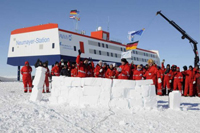
    First International Polar Year, 1881-1883

    Eleven nations took part in establishing fourteen principal research stations across the Polar Regions. Twelve research stations were located in the Arctic, along with at least 13 auxiliary stations, and two in the Antarctic. A vast amount of information was gathered between 1881 and 1884, but in the lack of a centralized coordination of analysis and publication of the results no fundamental discoveries were made as a result of the first IPY. Each state published their observations independently and the International Polar Commission dissolved in the aftermath of the project.

    Nevertheless, the First International Polar Year demonstrated that joint international scientific research was possible and set a precedent for the coming international scientific events.

    Second International Polar Year, 1932-1933

    The Second International Polar Year was both proposed and promoted by the International Meteorological Committee. The main objective of the second research initiative was to investigate the

    International Geophysical Year

    global implications of the newly discovered “Jet Stream” and to conduct magnetic, auroral and meteorological observations at a network of research stations in the Arctic and Antarctic. Some 40 countries participated in the establishment of 40 permanent observation stations in both Arctic and Antarctic. Following, the data collected during the two-year period became the foundation of the International Meteorological Organization and promoted further research, such as the International Geophysical Year (IGY), 1957-1958, often called the third International Polar Year, which celebrated the 75th and 25th anniversaries of the First and Second IPYs.

    Third International Polar Year, 2007-2008

    Neumayer StationThe latest International Polar Year, organized through the International Council for Science (ICSU) and the World Meteorological Organization (WMO), took place in 2007-2008. It was gigantic international multidisciplinary collaborative with around 10 000 scientists and 50 000 other participants from over 60 countries. Main objectives of this megaproject were to significantly increase the scientific knowledge and understanding of the polar areas, especially the wide-ranging and significant impacts of climate warming in the Arctic and Antarctic, and to conduct research projects beyond the resources of individual countries. In addition, the Polar Year aimed at educating a new generation of polar scientists and engineers and raise awareness of the public and policymakers of the importance of the polar areas for the entire planet. The disciplinary breadth of the third IPY far exceeded the previous Polar Years of 1882, 1932 and the 1957 IGY providing more comprehensive picture of the polar areas.
    IPY legacy

    Learning from the previous IPYs and from the lack of continuity between the IPYs, it was decided that this time the outcome of the immense research should be captured in a form accessible to all. It was also clear to the participants, that the polar areas were such large and important for the earth’s ecology that the research could not only be conducted in short random periods, but it should be continuous process of information collection, implementation and education.

    What has become an IPY legacy includes activities such as observatory and research programs in the Polar Regions, educational opportunities, student and early career researcher initiatives and data and information sharing programs. The IPY Legacy will foster the international scientific cooperation to a higher level and promote a wide scale scientific knowledge and information sharing for the benefit of the generations to come.

    To learn more about the Third International Polar Year 2007-2008, please visit the IPY 2007-2008 homepage or read the IPY 2007-2008 Joint Committee Summary Report

    To search the IPY projects, please visit the IPY Project Database

    To learn more about the IPY scientific data, please visit the IPY Data and Information Services (IPYDIS)

  • Arctic Shipping

    Arctic Shipping

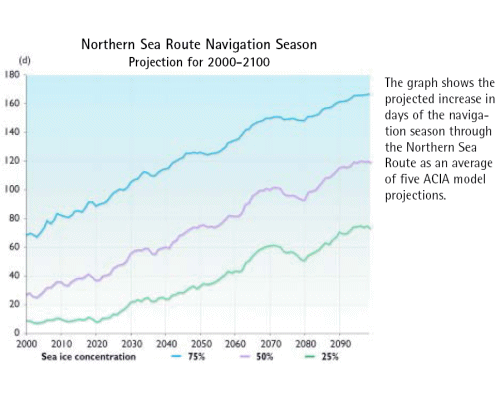
    Northern sea route navigation season projectionThe possibility of a trans-arctic shipping route has intrigued seafarers since the days of the first Arctic explorers, as it would shorten the distance between the Pacific Ocean and the Atlantic Ocean significantly. Challenging weather conditions and the lack of adequate shipping technology trans arctic shipping has not become a viable possibility as of yet. Shipping in the Arctic is on the rise and it is estimated that approximately 6000 vessels are operating annually in the Arctic region, many of them making multiple voyages. Off these 6000 ships operating in the Arctic almost all of them are declinational, conducted for community re-supply, moving natural resources out of the Arctic or marine tourism.

    The fact that the Arctic ice cap has been receding at an unprecedented rate, recent advancements in shipping technologies and an increasing interest in the Arctic’s resources have made the matter one of the most prominent issues in the northern hemisphere. Existing shipping lanes barely manage the current traffic as the Suez and Panama canal’s serve as bottlenecks and are not capable of servicing the largest container vessels of today. It is to be expected that shipment through the Arctic will become a viable option in the future. With growing technology and a receding ice cap the quest for resources companies are reaching further into the arctic region for resources and tourism activities by cruise liners is on the rise.

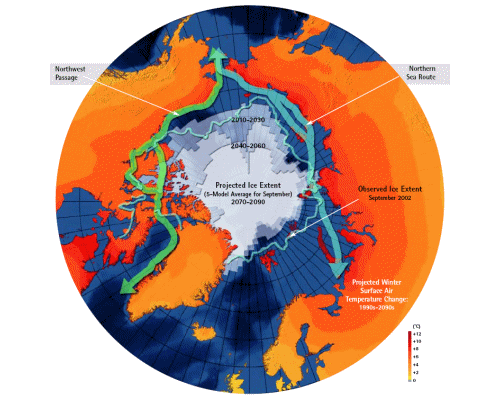
    shipping routesCurrently there seems to be a consensus that all of these activities will increase further and that trans arctic shipping will become a reality, that it is just a matter of time. There are nonetheless significant challenges, and issues that need to be analyzed and dealt with to prevent environmental disasters and ensure the safety of seafarers. It is clear that the benefits of these activities can be significant, but the environmental hazards are numerous as well. Infrastructure and safety measures are lacking and need to be addressed. There is an ongoing debate if there is a need for mandatory regulations by the IMO. The jurisdiction over the waterway is also disputed most prominently between the U.S and Canada.
    The matter has received substantial attention from researchers and organizations, some of these works can be found in the links bellow.

    Links

    Arctic Marine Shipping Assessment (AMAP) 2009 Report

    Recently published report, which is very detailed and covers most of the outstanding issues, possibilities and challenges connected to shipping activities in the Arctic

    North meets North, navigation and the future of the Arctic Report of a working group of the Ministry for Foreign Affairs Iceland 2006.

    Gives a substantial overview of shipping in the Arctic and what it’s future might hold. It also examines the possibilities of a transshipment port in Iceland.

    Arctic Shipping Activities into the next Decade1

    By: Norwegian Maritime Directorate

    Gives a brief overview over developments in shipping in different parts of Arctic Waters by type and estimates for future development in Arctic shipping.

    Developments in Arctic Shipping

    Produced by the research company Ocean Futures, Oslo for the Norwegian Atlantic Committee

    Guidelines for Ships Operating in Arctic Ice-Covered Waters

    Guidelines developed in 2002 by the International Maritime Organization for operating in Arctic Ice-Covered Waters

    The IMO Guidelines for Ships Operating in Arctic Ice-covered Waters From Voluntary to Mandatory Tool for Navigation Safety and Environmental Protection?

    By: Øystein Jensen

    Interesting report, which discusses if there is a need for mandatory guidelines for ships operating in Arctic Ice-covered waters.

    United Nations Law of the Sea (UNCLOS) /Direct link to the UNCLOS agreement

    International shipping is largely regulated by the UNCLOS agreement. All of the countries of the Arctic besides the U.S have ratified the agreement. They are non-the less to a great extent bound to it as customary international law.

    Maps

    Arctic sea routes

    By UNEP

    Ice Strengthened vessels and icebreakers

    Aker Arctic.

    Finnish company dedicated to building icebreakers and ice strengthened cargo vessels.

    Yamal the Russian Icebreaker

    The Yamal, a nuclear powered Icebreaker: Interesting information about the Russian icebreaker Yamal.

    Conferences and symposiums related to Arctic shipping

    International Symposium on Sea Ice in the Physical and Biogeochemical System

    International Glaciological Society 31 May – 4 June 2010

  • Arctic Indigenous Languages

    Arctic Indigenous Languages

    In the Arctic, there exists over 40 different indigenous languages, which had survived for centuries or even thousands of years in small communities Language mapthroughout the northern hemisphere. Most of these languages can still be found, spoken by a small group or individual, but in many cases, they have come close to extinction. In some cases, the reason for the weakening of the language has been the decline of the amount of its speakers. In other cases, local and national policies and leadership have had an impact on the language spoken in a particular area. What is, however, common for almost all the Arctic indigenous languages is the fact that in the past 100 years they have gone through an immense change, first several decades to a negative direction and now for the past two decades to a more positive direction.

    From the late 19th century, the indigenous languages of the Arctic have been increasingly exposed to colonial powers. Especially in the second half of the 20th century, the indigenous peoples went trough an immense assimilation process organized by the state authorities. Indigenous children were in many cases educated in public schools, often in boarding schools, and their ties to Indi languages in North Americatheir own culture and language were weakened intentionally. Due to the assimilation process along with the decline of indigenous inhabitants, many of the languages were about to extinct when the international indigenous movement emerged in the beginning of the 1970’s. The dominant languages in the Arctic today are Russian, English and Scandinavian languages, all which have been introduced to the Arctic inhabitants by a colonial power. However, in the recent years the indigenous languages have gained stronger status within the Arctic states either as protected cultural heritage or as an official language.

    In the Scandinavia, the Saami languages are protected by law and have a status of an official language within the Saami homeland in both Finland and Norway. In Sweden, the Sami languages can be used in public affairs in the municipalities of Arjeplog, Gällivare, Jokkmokk and Kiruna.

    Inuit childIn Greenland, along with the establishment of the Greenland Self-Government in June this year, the Inuktitut became the only official language, Danish having being another official language in Greenland since 1950’s.
    In Nunavut, Canada, all three languages, Inuktitut, English and French became Nunavut’s official languages in July 1, this summer, when Canadian government enacted a new Inuit Language Protection Act.

    The situation in Russia is somewhat different. Under law, many of the indigenous languages are protected as a cultural heritage, but in reality their status varies enormously.

    Even though many positive steps have been taken to revive the valuable heritage of Arctic indigenous peoples, much is still undone to guarantee the indigenous languages’ survival and status within the eight Arctic states. With the strong involvement of indigenous youth and establishment of new technologies, it has become easier for Arctic inhabitants to hold on to their culture and language despite the long distances and educational opportunities sought outside the Arctic. In addition, the influence the strong international indigenous movement has had on national policies has made the legal status of the languages better and in many cases they have gained special protection within the state system.

  • To Whale or not to Whale

    To Whale or not to Whale

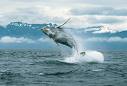
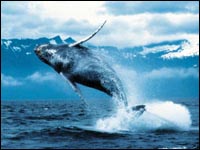
    Whale jumping in the seaThe issue of whaling is a complex matter that stands close to the hearts of many Arctic peoples and the world in whole. Public opinion varies significantly, whether whaling is cruel and barbarous or if they should be hunted and utilized in a sustainable manner, like other animals. Similar differences in views are prominent in the international community, which is locked in a bind on the matter. With the recently concluded 61st annual meeting of the international whaling commission (IWC) in Madeira, Portugal a solution seems to be no where in sight. Due to this a brief overview of the current situation as well as the history of whaling is in order.

    Brief Overview History of Whaling and the IWC:

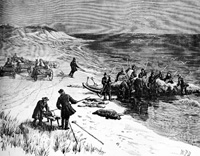
    shore whaling

    Humans have been engaged in whaling since prehistoric times and to many costal cultures they have been a valuable source of nutrition, light and construction material. Cave drawings and ancient tools from whale bones have been found around the globe dating back thousands of years. It was not until commercial whaling begun that the stocks started to decline to the catastrophic state, which many whale stocks are today. Commercial whaling can said to have started around the late 16th century, first the Dutch, then the British, Americans and later on the Norwegians. Other nations followed suit later on and whale oil became the first of any animal or mineral oil to become commercially viable. Prior to the arrival of floating factory-ships western civilizations utilized only the blubber and the baleen of the whale and the rest was discarded. The arrival of new hunting methods and increased interest in the lucrative trade caused almost all whale stocks to decline to a fraction of their earlier state. This led to a collapse of the whaling industry and spurred international cooperation to manage the whale stocks.

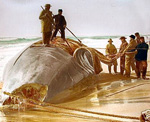
    The International Whaling Commission (IWC) was founded in 1946 to provide for the proper conservation of whale stocks and thus make possible the orderly development of the whaling industry.whale processing The IWC has since the late 1970s been dominated by countries largely opposed to commercial whaling. Since 1986 there has been a moratorium on whaling, functioning as an all out ban on commercial whaling with an exemption of indigenous subsistence whaling and whaling for scientific purposes. This decision was not based on advice from the Scientific Committee ( an advisory committee within the IWC) and has been disputed by pro whaling nations ever since.
    The IWC is based on voluntary participation and is not backed up by a treaty between its members and has substantial practical limitations on its authority. For instance, by formally objecting the moratorium the nations can exempt themselves from the ban. Therefore, Norway, Japan, Peru and the Soviet Union formally objected the moratorium when it was issued. Peru and Japan also objected, but later on subtracted their objection, Japan after the U.S threatened to reduce their fishing quota within U.S waters. Iceland did not object the moratorium in the beginning, but withdrew from the IWC in 1992 due to disputes concerning the moratorium. Iceland was allowed to rejoin IWC in 2002 with a reservation to the moratorium, though the reservation has not been recognized by many of the IWC nations.

    In the recent years, whaling has been conducted by three nations; Norway, Iceland and Japan. This whaling has not been considered to be in violation of the IWC on the grounds of their objection to the moratorium and also since it has been done in the name of research. These actions have however spurred the anger of both anti whaling nations and environmental organizations around the world. Pro whaling nations have in return accused the IWC on basing their decisions on “political and emotional” factors instead of scientific knowledge as it’s Scientific Committee has concluded since 1991 that quotas on some species of whale would be sustainable.

    Whaling today and the row within the IWC

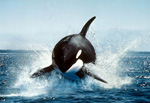
    Orca killer whaleUnder the chairmanship of William Hogarth, compromise talks began formally a year ago but have yielded little results so far, as nations have taken a strong stances and have not been willing to budge an inch making negotiations futile.
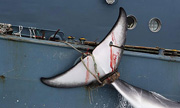
    The recently concluded 61st annual meeting of the International Whaling Commission (IWC) in Madeira, Portugal can be said to be yet another failure to reach an agreement that is acceptable to both factions. The debate is heated by emotion and different views seem often so far apart that it seems that a consensus will never be reached. The failure to reach common ground has endangered the future of the International Whaling Commission (IWC) as it has not been able to function properly due to skirmishes within the commission.Whale

    In an effort to mitigate differences and reach a conclusion, a number of key nations were invited to participate in a Committee to try to reach an agreement about the future of whaling and the IWC before the next annual meeting in 2010. The two most prominent matters put forward at the meeting was Greenland’s wish to include humpback whales in their annual quota. Their request has been denied two years in a row and decision on the matter was postponed at this years meeting, despite the quota being deemed sustainable by the Scientific Committee. Negotiations with Japan to reduce its Antarctic hunt, in return for the right to catch whales quasi-commercially in its costal waters have similarly run ashore and been postponed. Australia, which has taken the strongest stance against whaling recently threatened Japan legal actions if diplomatic efforts fail to halt its whale hunt.

    As the situation appears today, there seems to be only one solution to save the IWC as a venue for managing and protecting the worlds whale stocks, and that is to hand out a sustainable quota to whaling nations. Such an activity would ensure their continued participation and keep the control over quotas within the IWC This, however, will probably be problematic, as the dispute seems to have elevated, long ago, from being about sustainable catches to being a moral question. The question would therefore be if a whale’s existence has more value in itself than the existence of other animals utilized by man?

  • New technology to establish the electric car as a viable option in Iceland and possibly other regions of the Arctic is becoming a not so distant reality.

    New technology to establish the electric car as a viable option in Iceland and possibly other regions of the Arctic is becoming a not so distant reality.

    Driving a car is the most polluting act an average citizen commits and cars are the single most contributors to air pollution in the world. Partial shift to other energy sources could reduce CO2 emissions significantly.

    Smartcar

    Electric cars are not a new invention and have been around for years. The Smart car for example is known to most dwellers of urban centers and metropolies around Europe and the United States, and could be described as a funny little car that has limited usability to the average individual. Fuel cells or batteries have been the limiting factor in electric cars in the past. The duration of the batteries was low, they were heavy and not environmentally friendly in production. Over the last couple of years technical advancement have been significant, and further advancements are to be expected. As a indicator of the weight being put into further development U.S president Barack Obama recently allocated a billion $ to further development of batteries and supporting technologies to be used in such vehicles.

    Electric cars are becoming more and more competitive for various reasons. Environmental awareness has over the past decades been on the rise and governments are allocating more funding for research and development. Fluctuations in energy prizes, the notion of energy security and the possible future scarcity of fossil fuels further encourage development of new methods and facilitate the establishment of infrastructure needed for such vessels.

    In Iceland work has begun by a company called 2012 on the establishment of 10.000 charging stations and 150 speed-charging stations located around the country. The idea is that one could charge one’s car while shopping for groceries, going to the cinema, etc. An average car could be fully loaded in 3-4 hours in a regular charging station and in 10-15 minutes in a speed-charging station. The electric cars of today are able to manage between 100 km per charge to 470 km approximately.

    Admission to the charging system would be managed by subscription and the estimated cost would be between 5-10.000 Icelandic Kr per month. For comparison 50 liters/ 13 gallons of gasoline cost 8900 Kr in Iceland today. Electricity would thus be significantly cheaper than buying gasoline for the average user per month, given that this estimate is accurate. Users that drive more than average would be billed accordingly and users that drive less would be refunded credits to their energy account. Users that charge their cars at home and do not use their cars often would therefore be able to save significantly. Furthermore maintenance is expected to be less expansive since an average diesel engine has approximately 1000 moving parts while a similar electric motor has four. Despite for lower operating costs electric cars are as of yet significantly more expensive than their fossil-fuel counterparts but this can be expected to change as production of them increases.

    A wide range of cars are and have been developed using electricity as there only energy source.

    Electric motocross/dirt bikes have become a reality as well as the production of electric Skidoo’s/Snowmobiles can be expected to commence in a couple of years.

    the arctic

    Cars using alternative energy sources than fossil fuels are definitely on the rise and could be so especially in the Arctic. A common nominator to many areas of the Arctic is the abundance of hydro energy. Furthermore work is being done on creating electricity with wave or tidal power, solar power as well as by the use of windmills. Technological advancements over the past decades and the foreseeable future will enable us to create more electricity at a declining cost which are more environmentally friendly than previous methods.

    The Arctic regions are especially vulnerable to air pollution. Toxins from thousands of miles away can enter the Arctic ecosystems, creating health risks to local people, especially to the Inuit due to their traditional diet. Despite the marginal part of the Arctic’s pollution, originating from the Arctic it is highly important that the Arctic countries lead the way in finding more sustainable solutions.