Tag: climate change

  • Poles Apart to take place in London

    Poles Apart to take place in London

    Melting Arctic ice

    “Poles Apart” – the one day conference will take place on Tuesday, October 29th 2013 in London, United Kingdom.

    The resource rich Arctic has been changing faster than any other region on Earth. Due to climate change, melting Arctic sea ice brings summer floats and sets alarm bells for environmentalists but opens doors of possibilities for investors in trade and development.

    Poles Apart, one – day international conference was designed to bring together representatives of various types of industries and scientists – polar researchers.

    The event will take place in the heart of Europe – London, United Kingdom at The Royal United Services Institute.

    Conference is free of charge for all participants however it requires earlier registration due to limited space at the conference venue.

  • Polar Law Textbook II

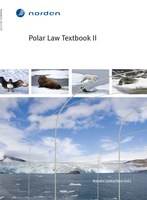
    Polar Law Textbook II

    Polar Law Textbook

    Polar Law Textbook II
    Natalia Loukacheva (ed.), Copenhagen: Nordic Council of Ministers

    Publication date
    May 27, 2013

    ISBN
    978-92-893-2550-9

    Language
    English

    Number of pages
    303

    Publication number
    TemaNord 2013:535

    This pioneering educational material deals with various legal and political developments in relation to the Arctic and Antarctica.

    This new textbook reflects on changes that have taken place since 2010 in Polar law and focuses on actual questions of: major trends in polar law, geo-politics, security, climate change, marine biodiversity, polar bears agreement, continental shelf, energy, indigenous peoples, search and rescue agreement, devolution in the North, self-determination of small nations (e.g., Faroe Islands), good governance and tourism.

    Polar Law Textbook II can be downloaded at NORDEN website or purchased from the NCM.

    This publication is endorsed by the Arctic Cooperation Program of the NCM and Polar Law Program, University of Akureyri, Iceland www.polarlaw.is For further info pls. contact: Dr. Natalia Loukacheva, the First Visiting Nansen Professor of Arctic Studies, University of Akureyri, Iceland n.loukacheva@utoronto.ca

    (written by: N. Loukacheva)

  • Arctic sea ice disappearing faster than ever

    Arctic sea ice disappearing faster than ever

    arctic landscape

    The Arctic lost record amounts of sea ice last year and is changing at an unprecedented pace due to climate change, a landmark climate study says.

    Last year was among the 10 warmest years on record – ranking eighth or ninth depending on the data set, according to a report led by the National Oceanic and Atmospheric Administration (Noaa). The year 2012 also saw record greenhouse gas emissions, with concentrations of carbon dioxide and other warming gasses reaching a global average of 392.7 parts per million for the year.

    “The findings are striking,” Kathryn Sullivan, Noaa’s acting administrator, said on a conference call. “Our planet as a whole is becoming a warmer place.”

    The scientists were reluctant to point directly to the cause of the striking changes in the climate. But the annual reports are typically used by the federal government to prepare for the future, and in June president Barack Obama used his climate address to direct government agencies to begin planning for decades of warming atmosphere and rising seas.

    The biggest changes in the climate in 2012 were in the Arctic and in Greenland, said the report, which is an annual exercise by a team of American and British scientists. The Arctic warmed at about twice the rate of lower latitudes, the report found. By June 2012, snow cover had fallen to its lowest levels since the record began. By September 2012, sea-ice cover had retreated to its lowest levels since the beginning of satellite records, falling to 1.32 million square miles.

    That was, the report noted, a whopping 18% lower than the previous low, set in 2007, and a staggering 54% lower than the mark for 1980.

    The changes were widespread on land as well, with record warm permafrost temperatures in Alaska and in the Canadian Arctic, the report’s authors noted. On 11 July last year, Greenland experienced surface melting on 97% of the ice sheet. The record-breaking events indicate an era of “new normal” for the climate, the researchers said.

    “The record or near-records being reported from year to year in the Arctic are no longer anomalies or exceptions,” said Jackie Richter-Menge, a civil engineer with the US army corps of engineers. “Really they have become the rule for us, or the norm that we see in the Arctic and that we expect to see for the forseeable future.”

    That ice melt was also a major cause of sea-level rise, the report found. Global sea levels rose to record highs last year, after being depressed during the first half of 2011 because of the effects of La Niña. The average global sea level last year was 1.4in above the 1993-2010 average.

    “Over the past seven years of so, it appears that the ice melt is contributing more than twice as much to the global sea level rise compared with warming waters,” said Jessica Blunden, a climatologist at Noaa’s national climactic data centre.

    Source

    Guardian
  • Climate Change in Northern Territories

    Climate Change in Northern Territories

    Mountain landscape in the arctic

    The Conference: “Climate Change in Northern Territories will take place in Akureyri, northern Iceland 22nd – 23rd of August 2013.

    The registration to the ESPON/ENECON and NRF event is now available. Early registration fee will be available until the 10th of July 2013.

    Bookings for accommodation are done through the registration form and information on the hotels can be found on the registration web page. Please note that accommodation can only be guaranteed through registration until the 10th of July. After this conference guests might have to make reservations on their own.

    In questions regarding travel and accommodation please contact Akureyri Travel at aktravel@aktravel.is or call +354 4600 600.

    Practical information on registration and travelling in Iceland can be found here.

    Click here to download the program of the conference “Climate Change in Northern Territories”.

    Source

    NRF

  • Climate conference seeks abstracts

    Climate conference seeks abstracts

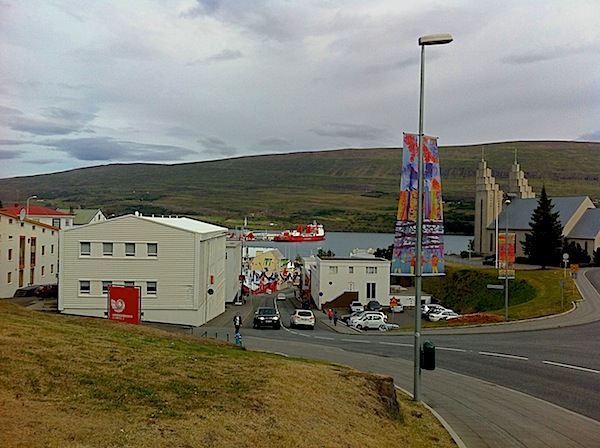
    Downtown Akureyri

    The conference Climate Change in Northern Territories is calling for abstracts. The conference is held in Akureyri, Iceland, in august. The ESPON/ENECON and NRF Open Assembly organize the conference, hosted by the University of Akureyri.

    This is the 2nd call for abstracts for general participation and young researchers. The deadline for submission is the 28th of February, but for young researchers the deadline is 15th of March. The abstracts are to be submitted to nrf@unak.is.

    Further information for young researchers.

    The idea is that this conference will bring together researchers which have similar background but have been focusing on different problems and situations and applied different methodological approaches. Regional and local stakeholders as well as state politicians and policymakers are also target groups for the conference.

    Subthemes are:

    • Territorial socio – economic impacts of climate change
    • Methodologies for assessing socio-economic impact
    • Adaptation to climate change in regions and local communities – examining methods and sharing knowledge

    You will find more information concerning the central theme here.

    Source

    NRF

  • Amazing Mt. Everest photo

    Amazing Mt. Everest photo

    The Mt. Everest

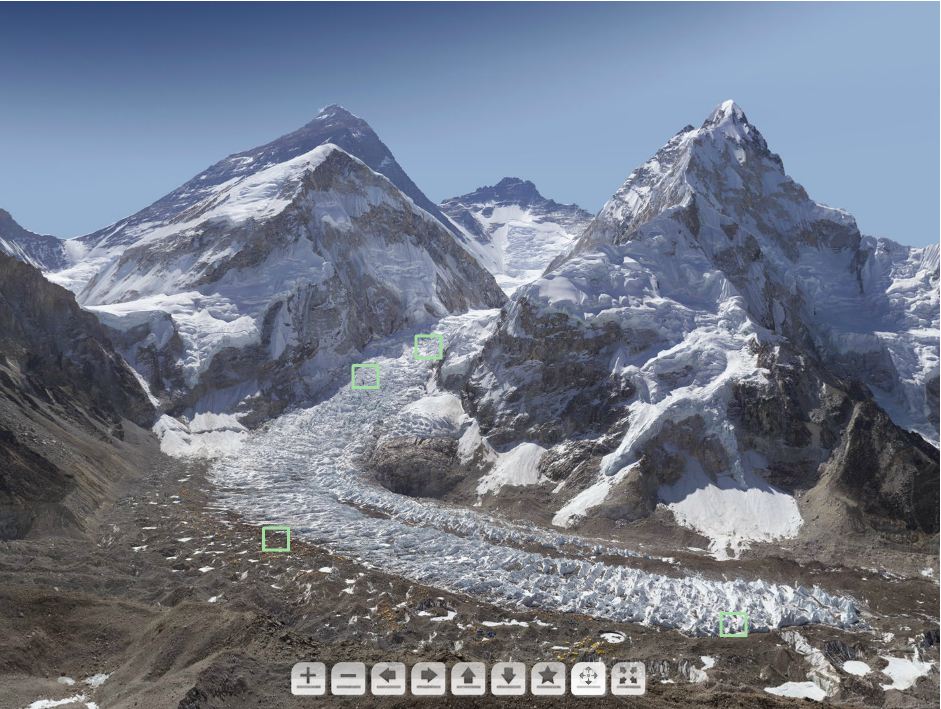
    David Breashears has released a stunning picture of Mount Everest to show effect of climate change on the world’s highest peak. It is over 3,8 million pixels and stitched together from 477 photographs.

    The photo can bee seen below and is also available here.

    Filmmaker David Breashears and nonprofit organization GlacierWorks worked on the project together and he is now working with Microsoft on an even more detailed version.

    This version allows users to zoom in and also show before and after pictures from the area since 1921.

    “It’s just extraordinary and we’re so excited by that image, and people love clicking on things and zooming in,” he said.

    “We want to tell the bigger story of climate change in the area, and we are working with Microsoft and the Royal Geographical Society on this.”

    The team eventually hope to develop a far larger version of the image so detailed users can actually zoom inside tents at base camp.

    “Just 1/100th of our imagery is on the site, and the storytelling possibilities are incredible – people love to move things,” said Breashears, who has climbed Everest five times.

    “It started out as a simple concept, and every time we visit we find out more – this is not even the tip of the iceberg, we want to take people all over the mountain with 120,000 pictures from a helicopter in the region. We are building this with Microsoft, and we could soon be able to combine the old and new pictures so people can virtually ‘swipe’ images to see how they looked in the past.”

    Source

    Daily Mail

  • Next step in response to climate change

    Next step in response to climate change

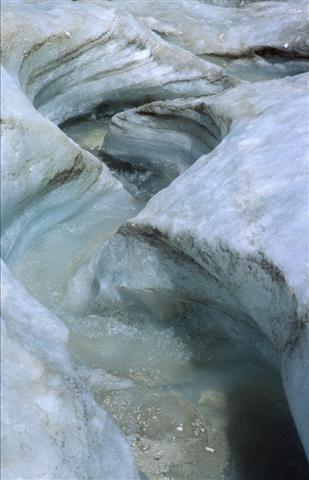
    Melting glacier in Greenland

    At the UN Climate Change Conference in Doha, Qatar (COP18/CMP8), governments have taken the next essential step in the global response to climate change.

    Countries have successfully launched a new commitment period under the Kyoto Protocol, agreed a firm timetable to adopt a universal climate agreement by 2015 and agreed a path to raise necessary ambition to respond to climate change. They also endorsed the completion of new institutions and agreed ways and means to deliver scaled-up climate finance and technology to developing countries.

    “Doha has opened up a new gateway to bigger ambition and to greater action – the Doha Climate Gateway. Qatar is proud to have been able to bring governments here to achieve this historic task. I thank all governments and ministers for their work to achieve this success.

    Now governments must move quickly through the Doha Climate Gateway to push forward with the solutions to climate change,” said COP President Abdullah bin Hamad Al-Attiyah.

    The Executive Secretary of the UN Framework Convention on Climate Change (UNFCCC), Christiana Figueres, called on countries to swiftly implement what has been agreed in Doha so that the world can stay below the internationally agreed maximum two degrees Celsius temperature rise.

    “I congratulate the Qatar Presidency for managing a complex and challenging conference. Now, there is much work to do. Doha is another step in the right direction, but we still have a long road ahead. The door to stay below two degrees remains barely open. The science shows it, the data proves it,” said Ms Figueres.

    “The UN Climate Change negotiations must now focus on the concrete ways and means to accelerate action and ambition. The world has the money and technology to stay below two degrees. After Doha, it is a matter of scale, speed, determination and sticking to the timetable,” she said.

    In Doha, governments also successfully concluded work under the Convention that began in Bali in 2007 and ensured that remaining elements of this work will be continued under the UN Climate Change process.

    The next major UN Climate Change Conference – COP19/ CMP9 – will take place in Warsaw, Poland, at the end of 2013.

    Sources

    COP18

  • Sea levels rise to cost trillions?

    Melting of sea ice

    The rise of sea levels due to melting sea ice, as a result of climate change, could cost around $2 trillion US dollars. This is the result of a study by the Stockholm Environment Institute in Sweden.

    By the end of the century the cost could skyrocket. The scenario made by the SEI is that the Earth´s temperature will rise by 4° by 2100. The report is part of a book, Valuing the Ocean, which is being compiled by the SEI for the UN’s Rio+20 Conference on Sustainable Development in Rio de Janeiro, Brazil, in June.

    The rise of the Earth´s temperature will have several economic impacts, for example on fisheries, tourism, as well as those associated with the oceans’ ability to absorb atmospheric carbon. If the temperature rise holds at 2 °C it could save as much as $1.4 trillion.

    Report co-editor Kevin Noone of Stockholm University emphasizes that the $2 trillion figure is not a worst-case scenario. It doesn’t count the cost of factors that aren’t easily quantifiable, such as the value of species which will go extinct when their habitats are lost.

    The value of the oceans should not be underestimated. “Every second breath [of oxygen] we take comes from marine organisms,” Noone says.

    Sources

    New Scientist

  • Record Arctic temperature in 2011

    Record Arctic temperature in 2011

    The Arctic temperature has been rising for many years

    The year 2011 was another heat record in the Arctic. Climate change is therefore in no way retreating.

    The image on the right clearly shows the annual temperature rising. Click to enlarge the image.

    NASA has released data on the temperatures yeasterday. According to NASA’s Goddard Institute for Space Studies (GISS), the annual mean surface temperature (land and air) for the region north of 64°N (the Arctic Circle is at 66° 33’N) in 2011 was 2.28 degrees Celcius above that which characterized the 1951-1980 period.

    Temperatures in the region have been rising rapidly since the late 1970s and have not dropped below the long term mean since 1992, for nearly 20 years.

    This year’s annual mean temperature broke the record that was just set in 2010, when the temperature was 2.11oC above 1951-1980 levels.

    The global average surface temperature in 2011 was the ninth warmest since 1880, according to NASA scientists. The finding continues a trend in which nine of the 10 warmest years in the modern meteorological record have occurred since the year 2000.

    Sources

    NASA´s Goddard Institute

  • Warm summer means cold winter

    Warm summer means cold winter

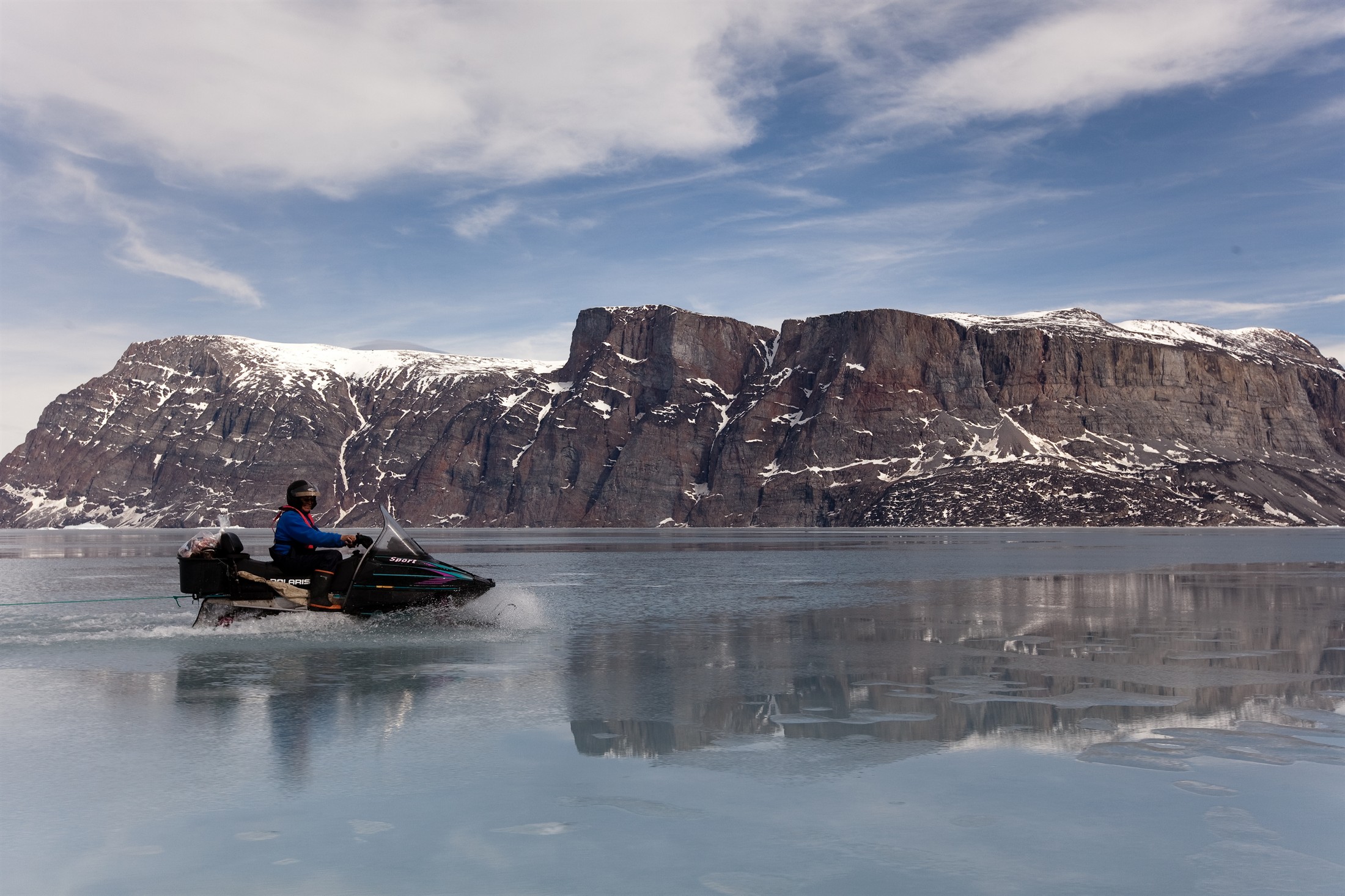
    Snowmobile driving on open water

    Warmer climate, spurred by climate change, can cause colder winters. This is the result of a new study by Jodah Cohen, released this week.

    The study explains the Rube Goldberg-machine of climatic processes that can link warmer-than-average summers to harsh winter weather in some parts of the Northern Hemisphere.

    Average temperatures have risen for over 200 years, most rapidly for the past 40 years. And average temperatures in the Arctic have been rising at nearly twice the global rate, says Cohen, a climate modeler at the consulting firm Atmospheric and Environmental Research in Lexington, Massachusetts.

    A close look at climate data from 1988 through 2010, including the extent of land and sea respectively covered by snow and ice, helps explain how global warming drives regional cooling, Cohen and his colleagues report.

    The strong warming in the Arctic in recent decades, among other factors, has triggered widespread melting of sea ice. More open water in the Arctic Ocean has led to more evaporation, which moisturizes the overlying atmosphere, the researchers say. Previous studies have linked warmer-than-average summer months to increased cloudiness over the ocean during the following autumn.

    That, in turn, triggers increased snow coverage in Siberia as winter approaches. As it turns out, the researchers found, snow cover in October has the largest effect on climate in subsequent months.

    Source: American Association for the Advancement of Science