Tag: climate change

  • Climate change leads to starving dogs

    Climate change leads to starving dogs

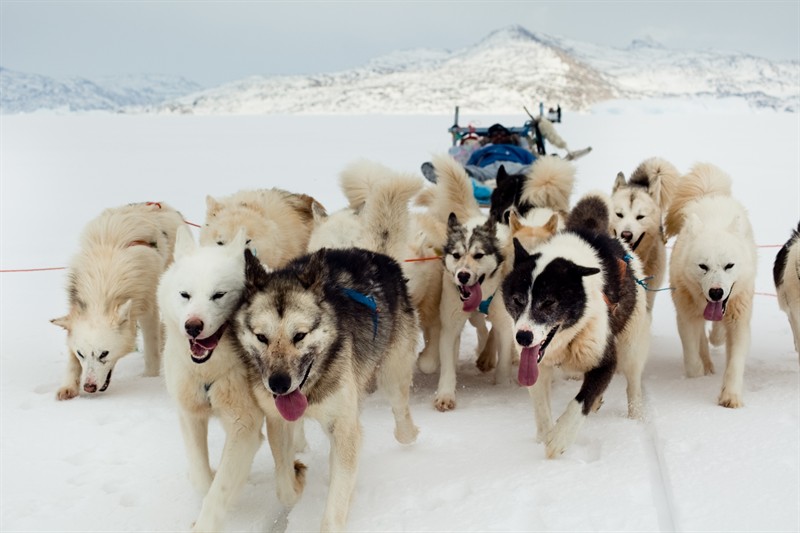
    Sled Dogs in Greenland

    Lack of ice is hindering hunting in Greenland. Humans are not the only one who rely on hunting in, the dogs in Qaanaaq are starving.

    This led to animal friends all over Greenland sending dog food for up to 500 dogs in Qaanaq.

    “We are doing this to help animals in need, weather it is in Nuuk or in Qaanaaq,” Susanne A. Markdal, president of Animal Friends of Greenland, told the Greenlandic Radio.

    She also hopes that more organizations will join in for the cause.

    “We expect this to feed the dogs for a few days but that is not enough. We hope more will join us,” she said.

    The weather and climate change are causing problems in Greenland. Five years ago the sea ice had frozen in early november, making hunting for dog food easy, hunting both seals and fish.

    This year it is unforseen when the ice will freeze.

    The people of Qaanaaq are hoping for a bigger quota of walrus in order to help them solve the problem. The annual quota of 64 animals is almost over.

    Source: Mbl.is and KNR.

  • Climate change and Fisheries

    Dried fish, traditional produce in Lofoten, Norway

    The relationship between the physical effects of climate change and effects on the ecosystem is complex. It is impossible to tell what climate change will to do biological resources in the Arctic.

    Many ideas have been set forward in the main consequences of climate change to the Arctic marine area.

    This highlights some of these thoughts:

    1. Climate change is a much more rapid warming of the Arctic surface temperatures in comparison with the rest of the world. As a consequence, Arctic waters will warm more rapidly as well.
    2. Climate change will lead to substantial reductions of Arctic sea ice coverage and thickness.
    3. Reduced salinity due to influx of fresh water as a consequence of melting sea ice (which is essentially salt free) and glacial ice.
    4. Other oceanographic and meteorological  changes (e.g. more storms and waves) in particular due to changes in air and water temperature and sea ice coverage.
    5. Increasing acidification of the world’s oceans due to increasing uptake of CO2 (which is not just relevant to the Arctic marine area).

    One general conclusion to what climate change will do is that “moderate warming will improve the conditions for some of the most important commercial fish stocks, as well as for aquaculture. This is most likely to be due to enhanced levels of primary and secondary production resulting from reduced sea-ice cover and more extensive habitat areas for subarctic species such as cod and herring. Global warming is also likely to induce an ecosystem regime shift in some areas, resulting in a very different species composition.”

    The composition of Arctic marine ecosystems will undoubtedly change, both qualitatively and quantitatively. Some species will at some stage disappear and others (e.g. due to northward migration) will be added and the relative importance of species in abundance will change as well. These changes will of course be spatially and temporally differentiated. Where new fishing opportunities will occur (on the high seas or within coastal state maritime zones) and with respect to which species or categories of species (e.g. shared, anadromous, straddling or highly migratory) is also difficult to predict.

    Similarly which states – Arctic Ocean coastal states or other states – will benefit or suffer and how subsistence fishing will be affected, among other things by competition with commercial fisheries. Finally, as reduced ice overage and thickness will also enable other human activities – most importantly shipping and offshore hydrocarbon activities – these activities may compete with fishing in a spatial sense or affect them by pollution and other impacts.
    The impact of current and future Arctic fisheries on the marine environment and marine biodiversity in the Arctic is not likely to be fundamentally different from impacts to the marine environment and biodiversity in other parts of the globe. Arctic fisheries could lead to overexploitation of target species and a variety of impacts on non-target species, for instance on dependent species due to predator-prey relationships, on associated species due to by-catch and on benthic species due to bottom fishing techniques.

    Fishing nets

    In view of the broad spatial scope of the Arctic marine area, such undesirable effects are without doubt already occurring, even though not necessarily on a very serious scale.

    The effects of a temperature rise on the production by the stocks of fish and marine mammals presently inhabiting the area are more uncertain. These depend on how a temperature increase is accompanied by changes in ocean circulation patterns and thus plankton transport and production. In the past, recruitment to several fish stocks in the area, cod and herring in particular, has shown a positive correlation with increasing temperature.

    This was due to higher survival rates of larvae and fry, which in turn resulted from increased food availability. Food is transported into the area via inflows of Atlantic water, which have also caused the ocean temperature to increase. Hence, high recruitment in fish is associated with higher water temperature but is not caused by the higher water temperature itself.

    Provided that the fluctuations in Atlantic inflows to the area are maintained along with a general warming of the North Atlantic waters, it is likely that annual average recruitment of herring and cod will be at about the long-term average until around 2020 to 2030.This projection is also based on the assumption that harvest rates are kept at levels that maintain spawning stocks well above the level at which recruitment is impaired.
    How production will change further into the future is impossible to guess, since the projected temperatures, particularly for some of the global models, are so high that species composition and thus

    the interactions in the ecosystem may change completely.

    Conclusion:

    • Climate change will affect fisheries
    • The extent is impossible to predict
    • Already happening, but not on a serious scale
    • Some species might dissapear and other might migrate to the Arctic
    • The effect on marine mammals is unknown

    Source: Arctic Transform & ACIA report

  • Climate Change Effects

    Boats in the ice, Uummannaq, Greenland

    Although most scientists agree on that the globe is becoming warmer, predictions on how rapidly Arctic ice will retreat often varies greatly amongst them.

    The schedule is however not as important as the results of this development and the possibility of the ice-free Arctic to become a lucrative shipping route. For oil and gas, climate change will challenge the petroleum sector in many ways.

    Offshore oil exploration and production is likely to benefit from less extensive and thinner sea ice, although equipment will likely be costlier as it will be required to withstand increased wave forces and ice movement. Within the region, a number of innovative political and legal arrangements have been developed, while certain devolution of power has also taken place.

    Due to the fact that climate change has influenced greatly the northernmost coastal regions of the globe, the Arctic has become one of the frontiers of climate change.

    Climate change is expected to increase marine access to the Arctic regions, especially with the possible opening of once completely closed passages such as the Northwest Passage and the Northeast Passage (Northern Sea Route). Increasing shipping activity in the Arctic raises questions of maritime law that will need to be resolved soon.

    These issues include accident and collision insurance, authority for regulation, enforcement and cleanup in management of natural resources and environment. These questions are important because sovereignty over Arctic waters is still not firmly settled among Polar nations, and increased ship access could raise many destabilizing international issues.

    The Arctic region is categorized by extreme weather conditions. The increase in temperature and melting sea ice will open new sea routes, but will increase the frequency of icebergs, which may damage sub-sea pipelines and offshore petroleum production facilities. Being the most unpredictable factor in this discussion, climate change really is a dominant force in allowing for exploitation of oil and gas in the Arctic on one hand and shipping on the other.

    This being said, more predictable factors are also important to establish massive expansion on exploitation of non-renewables, e.g. changes in technology, costs, and transportation availability.

    Greenhouse gas emissions restrictions

    If the global society can agree to take effective measures to reduce emissions of Greenhouse Gases, it would certainly lead to more energy efficient transport of goods. The shipping of goods from Asia to Europe is in fact relatively shorter trough the Arctic, than through the Suez-Canal or the Panama-Canal.

    Transportation itself can therefore be affected by climate change and similarly itself poses challenges in terms of environmental management and international institutions.

    Greenhouse gas emission restrictions can be the most determinative factor in encouraging Trans-Arctic shipping because it is subject to universal agreement[1] that has already been elaborated with the Kyoto Protocol.

    Further individual states might need, due to pressure from NGO’s and other environmentally friendly stakeholders, implement some measures to reduce emissions, yet, facing similar pressure to the contrary from other stakeholders.

    Although no legally binding agreement has been reached, it must be kept in mind that the issue is still under consideration of the global politics. Therefore, it might be thought of as a development waiting to happen rather than mere expectation.

    It should be added that such development does not necessarily mean that ships of various kind would be subject to such restrictions. If an industrial state would only need to restrict emissions of 5-10%, burdensome gas emissions would first be tackled in areas where new technology exists and is relatively cheap. On the other hand, Trans-Arctic shipping seems to need both new technologies and the impetus of governments for the shipping industry to use new shipping routes.

  • Gore tackles Climate change again

    Gore tackles Climate change again

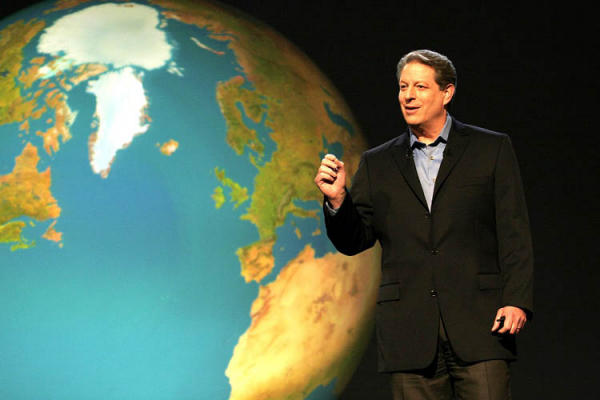
    Al Gore tackles climate change

    Al Gore, Nobel Laureate and former Vice President of the United States, has a new climate project which set sail this week.

    This week it hosted the 24 Hours of Reality where from New York in USA, New Delhi in India, Rio de Janeiro in Brazil to Húsavík Iceland, a movie about climate change was shown, with experts talking with civilians in each location, in their own language, explaining the issue.

    “The Climate Reality Project is bringing the facts about the climate crisis into the mainstream and engaging the public in conversation about how to solve it. We help citizens around the world discover the truth and take meaningful steps to bring about change,” Gore says on the projects website.

    Gore famously tackled climate change a few years ago with his project The Inconvenient Truth. He held over 2000 lectures worldwide about the issue and a movie was also produced.

  • Melting the Vitruvian Man

    Melting the Vitruvian Man

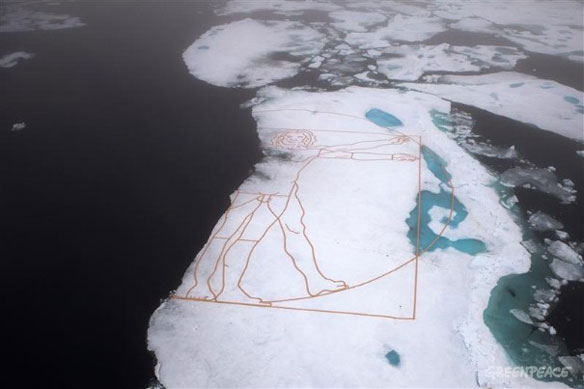
    Vitruvian man greenpeace

    “Climate change is literally eating into the body of our civilisation,” artist and activist John Quigley explained his newest art piece. It is no ordinary drawing; it is a remake of Leonardo Da Vinci’s famous drawing, Vitruvian Man, at the size of four Olympic-sized swimming pools.

    The Vitruvian Man is based on the correlations of ideal human proportions with geometry described by the ancient Roman architect Vitruvius.

    The art piece is melting, it is located 800 kilometers from the North Pole, as a call for urgent action on climate change.

    Quigley used copper strips normally used to create solar panels to construct the giant copy of da Vinci’s 500 year-old drawing. All
    materials were removed after construction
    and the copper will be reused.

    “When he did this sketch it was the Enlightenment, the Renaissance, the dawn of this innovative age that continues to this day, but our use of fossil fuels is threatening that,” Quigley said.

  • New current found near Iceland

    New current found near Iceland

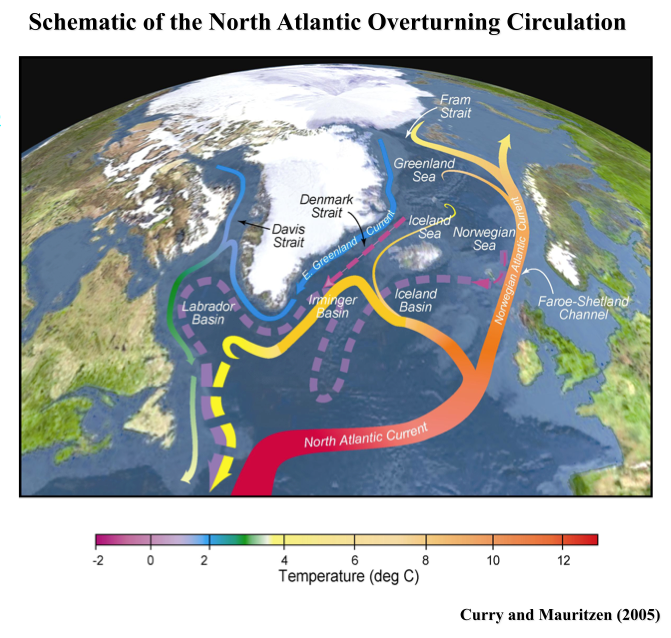
    Ocean currents around Iceland

    A hidden ocean current, discovered far below the sea’s surface near Iceland, could be a major player in the ocean’s response to climate change. Deep water currents have its say in the matter and this new player could play its role.

    Icelandic Scientists Steingrímur Jóhannesson from the University of Akureyri and Héðinn Valdimarsson found the current in the Denmark Strait. Located between Iceland and Greenland, The Denmark Strait is one of the most important stretches of water in the entire world-ocean circulation, according to the scientists.

    The 600 mile wide Denmark Strait is the main portal for southbound water. Every second of every day millions of cubic meters of warm water flow north along the British Isles and up the coast of Norway aboard an arm of the Gulf Stream System, treating Western Europe to a far more moderate climate than their latitude deserves.

    However, if all that warm water flows north, an equal quantity of cold water must flow south to maintain the circulation—the stability of our climate depends on it.

    The new current has changed the accepted theory that said a current flowing down the East Greenland coast delivered most of the water to the strait. Yet the area was, according to the Icelanders, under-measured.

    In 2004 they found the current, named it the North Icelandic Jet and in 2008 the current was confirmed by WHOI oceanographer Bob Pickart with extended measurements.

    The new theory is that the current supplies fully half the water that exits the strait to form the return-flow current.

    The expedition witch set sail from Reykjavík three days ago is looking to confirm this, and continuing to research the possibly vastly important current.

    HERE is the webpage of the expedition.

    Schematic of the North Atlantic Overturning Circulation

  • Marine Biodiversity Monitoring Plan

    Marine Biodiversity Monitoring Plan

    Marine Biodiversity Monitoring Plan

    Arctic biodiversity is under growing pressure from both climate change and resource development, requiring both managers and users to have access to more complete information to help them make timely and informed conservation and adaptation decisions.

    Yet existing monitoring programs remain largely uncoordinated, limiting our ability to effectively monitor, understand and respond to biodiversity trends at the circumpolar scale. The maintenance of healthy Arctic ecosystems is a global imperative as the Arctic plays a critical role in the Earth’s physical, chemical and biological balance. Maintaining the health of Arctic ecosystems is also of fundamental economic, cultural and spiritual importance to Arctic residents, many of whom maintain close ties to the land and sea.

    The Arctic’s size and complexity represents a significant challenge towards detecting and attributing changes in biodiversity. This demands an integrated, pan-Arctic, ecosystem-based approach that can effectively identify important trends in biodiversity and identify their underlying causes.

    To meet these challenges, Conservation of Arctic Flora and Fauna (CAFF) Circumpolar Biodiversity Monitoring Program (CBMP) is working with partners across the Arctic to harmonize and enhance long-term Arctic biodiversity monitoring in order to facilitate more rapid detection, communication and response to significant trends and pressures. Towards this end, the CBMP is developing four, ecosystem-based Arctic biodiversity monitoring plans (Marine, Terrestrial, Freshwater and Coastal). These umbrella monitoring plans work with existing monitoring capacity to facilitate improved and cost-effective monitoring through enhanced integration and coordination.

    The Arctic Marine Biodiversity Monitoring Plan (CBMP-Marine Plan) is the first of the CBMP’s four pan-Arctic biodiversity monitoring plans. The overall goal of the CBMP-Marine Plan is to improve our ability to detect and understand the causes of long-term change in the composition, structure and function of arctic marine ecosystems, as well as to develop authoritative assessments of key elements of arctic marine biodiversity (e.g., key indicators, ecologically pivotal and/or other important taxa).

    The CBMP-Marine Plan integrates existing marine biodiversity monitoring efforts (both traditional scientific and community-based) from across the Arctic and represents an agreement between six Arctic coastal nations and a great number of national, regional, Aboriginal and academic organizations and agencies in all six countries on how to monitor arctic marine ecosystems.

    Arctic Marine Biodiversity Monitoring Plan Report

    Practical information

    Further information at www.caff.is.
    Contact: Tom Barry.

  • The Shared Future: A Report of the Aspen Institute Commission on Arctic Climate Change.”

    The Shared Future: A Report of the Aspen Institute Commission on Arctic Climate Change.”

    The Aspen InstituteRecognizing that the circumpolar Arctic region is experiencing significant ecological change due to global climate change, the Aspen Institute convened a civil society Dialogue and Commission to consider the implications of this impending transformation for the region’s inhabitants and resources. The Aspen Institute released a final report and recommendations of Commission, entitled “The Shared Future: A Report of the Aspen Institute Commission on Arctic Climate Change.”

    The report features a very special foreword by President Jimmy Carter and presents the Commission’s recommendations, foremost of which is that governance in the Arctic marine environment should be sustained and strengthened by a new conservation and sustainable development plan based on using an ecosystem-based management approach.

    The Commission believes marine spatial planning provides a workable method to begin implementation of ecosystem-based management. Governance of the Arctic can and should be strengthened through an inclusive and cooperative international approach that allows greater participation in information gathering and sharing, and decision-making, leading to better information policy choices and outcomes.
    The report is issued under the auspices of the Aspen Institute and the members of the Aspen Institute Commission on Arctic Climate Change, with support from the Prince Albert II of Monaco Foundation.

    Aspen Climate Change Report

    Aspen Climate Change Report – Handout

    Arctic OceanThe report presents the Commission’s recommendations, foremost of which is that governance in the Arctic marine environment, which is determined by domestic and international laws and agreements, including the Law of the Sea, should be sustained and strengthen by a new conservation and sustainable development plan using an ecosystem-based management approach. The Commission believes marine spatial planning provides a workable method or approach to begin implementation of ecosystem-based management. According to the Commission, Arctic governance can and should be strengthened through an inclusive and cooperative international approach that allows greater participation in information gathering and sharing, and decision-making, leading to better informed policy choices and outcomes.

    gullThe Commission recognizes that this Aspen Dialogue has been a preliminary step toward a fuller discussion on the future of the Arctic marine environment. Its major discovery is that a more modern, holistic and integrating international plan is needed to sustainably steward and govern the Arctic marine environment. The Commission has made significant progress in understanding the needs and requirements for action to sustain the Arctic and realizes that in order to implement its recommendations the entire Arctic community must be engaged.
    The Aspen Commission on Arctic Climate Change has identified the following initial Principles of Arctic Governance as forming the guiding foundation of its recommendations and the standards by which future governance and sustainable management of human activities in the Arctic marine environment should be measured. Specifically, governance and sustainable management of human activities in the Arctic marine environment should seek to:

    1. Optimize ecosystem resilience, integrity and productivity by maintaining food-web (trophic) structure and protecting and restoring biodiversity and available habitat.
    2. Maintain the full suite of Arctic ecosystem services to support human well-being on a continuing basis.
    3. Promote investment in scientific research and related infrastructure necessary to ensure sustainable development and environmental protection.
    4. Avoid exacerbating changes that may be difficult or impossible to reverse in temperature, sea-ice extent, pH, and other key physical, chemical and biological ecosystem parameters.
    5. Assess, monitor and manage multiple human activities using an integrated, adaptive, ecosystem-based management system that takes into account risks and cumulative and interacting effects.
    6. Apply ecosystem-based management processes based on science and traditional knowledge, particularly to new and expanded human activities which are subject to prior evaluation and analysis. Prudent measures to reduce or eliminate impacts are to be taken when there are reasonable grounds for concern that such activities, directly or indirectly, will bring about hazards to human health, harm living resources and ecosystems, damage amenities or interfere with other legitimate uses.
    7. Fully respect the rights, including human rights, of Arctic residents and Arctic indigenous peoples, and maximize participation in and transparency of decision-making for all interested stakeholders.
    8. Link global policy discussions to the need to conserve and manage Arctic ecosystems and dependent communities.
    9. Promote cooperation among Arctic states to arrive at appropriate standards for managing activities in the Arctic to meet the special conditions of the Arctic region, while promoting sustainable development.
    10. Inform, in a timely manner, national and international decision-makers as well as the public of the consequences of climate change impacts in the Arctic, and needed actions required to meet the above noted principles.

    shippingThe Aspen Institute Commission on Arctic Climate Change believes that existing frameworks can be enhanced and new frameworks can be established to improve governance and strengthen resilience in the Arctic marine environment in response to climate change impacts and the need for adaptation readiness. The Commission developed its recommendations against the backdrop of at least three observable strategies currently discussed internationally to strengthen the Arctic Council; expand and strengthen the existing system of bilateral and multilateral agreements; and/or establish a new Framework Convention for Arctic governance.
    Aspen Commission Recommendations

    1. Arctic governments should take immediate steps to begin developing an Arctic Marine Conservation and Sustainable Development Plan by 2012, in collaboration with civil society and other interested parties.
    2. Arctic governments, independently and collectively, should implement an integrated ecosystem-based management approach in the Arctic marine environment utilizing appropriate marine spatial planning, as well as regulatory rules and standards that address the special conditions of the Arctic region.
    3. In addition to an Arctic marine conservation and sustainable development plan, a number of specific actions should be initiated through the development of agreements or standards that foster consistent implementation among and across Arctic governments.
    4. An open-source Arctic network, focused on ecosystem-based management, should be developed through the Arctic Council and used to complement the existing system of national and international governance mechanisms in the Arctic.
    5. Arctic governments should call for a special diplomatic conference in 2012, which includes participation by Indigenous Peoples and the eight Arctic nations, to establish a timetable for designing and implementing the preceding recommendations.
    6. All Arctic residents, including Indigenous Peoples, should play a pivotal role in planning the future of the Arctic and should share in the benefits of its resources as well as responsibility for its sustainable future.
    7. An Arctic science program should be implemented and integrated as part of the Arctic Marine Conservation and Sustainable Development Plan using an open-source information network.
    8. The Commission urges that the Arctic Council be reinforced as an effective, multilateral organization for the region and that it be given the resources and a revised architecture to ensure that the planning, participation, management and accountability recommendations put forward in this report are implemented.

    About the Aspen Institute

    The Aspen Institute mission is twofold: to foster values-based leadership, encouraging individuals to reflect on the ideals and ideas that define a good society, and to provide a neutral and balanced venue for discussing and acting on critical issues.

    The Institute is based in Washington, DC, Aspen, Colorado, and on the Wye River on Maryland’s Eastern Shore and has an international network of partners. Further information.

  • A change in climate means a change in diet

    A change in climate means a change in diet

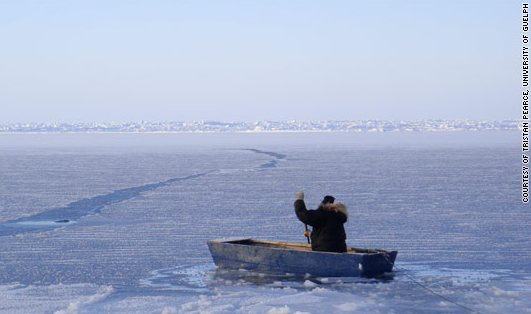
    Inuit sailing in arctic waters

    Climate change is altering people’s diet, according to Professor Barry Smit at the University Of Guelph, Canada. Professor Smit has conducted a research for the past five years on how melting ice and change in climate is affecting northern communities in Canada.

    One of his findings is a change in those communities diet. Loss of hunting grounds and changes in ice patterns are affecting the people in such way that they need to find a substitute nourishment for their diet, which usually consists of high carbon, easily transportable and storable food. Inevitable, this change in their diet has lead to some health problems, where high carbon food is not on their usual menu. A loss of identity is also mentioned as a concern where younger generations do not participate in traditional hunts. This is reported at the CNN website as an Earths Frontiers feature that was published on December 30th 2011

    Unfortunately, this problem has been known for some time where loss of traditional hunting grounds are affecting northern communities, where loss of identify and traditional nutrition is changing theirs way of life. Pollutants have also been identified as a major problem since traditional food becomes inedible due to persistent toxics in the Arctic, which has lead to change in traditional diet in northerners lives. This has for example been identified in the Arctic Human Development report, which was published in 2004.

    However there is no doubt that the Arctic is facing a major transformation, where people and animals need to adapt. Some of those changes are socio-economically positive, whilst other is not. Therefore there is a need to further identify those changes and measures need to be adopted in order to reduce the negative impact of changing climate.

  • The Battle Against Climate Change

    The Battle Against Climate Change

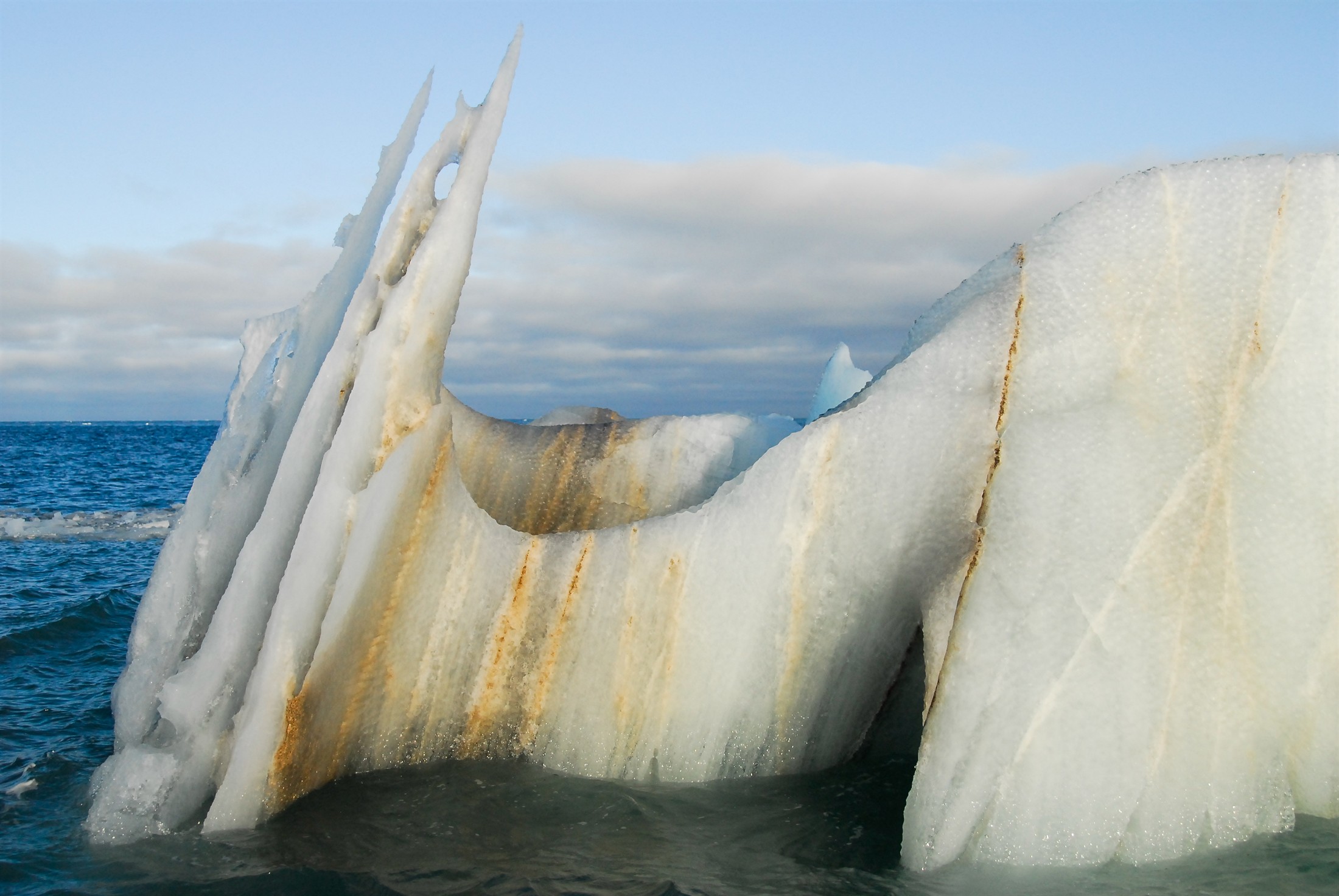
    Iceberg near Svalbard

    The International response to climate change was initiated at the Earth Summit in Rio De Janeiro in 1992 with the signing of the U.N Framework Convention on Climate Change (UNFCCC).

    It is an international treaty on environmental law aiming at reducing the greenhouse gas concentrations in the atmosphere.

    The UNFCCC does not lay down any binding limits of reduction, but divides the signatories to the convention in to three categories each category agreeing to reduce their emissions of greenhouse gas a certain amount.

    First category of industrialized countries, so called Annex I countries, agree to reduce their emissions of greenhouse gasses to targets that are mainly set below their 1990 levels. These countries are Australia, Austria, Belarus, Belgium, Bulgaria, Canada, Croatia, Czech Republic, Denmark, Estonia, Finland, France, Germany, Greece, Hungary, Iceland, Ireland, Italy, Japan, Latvia, Liechtenstein, Lithuania, Luxembourg, Monaco, Netherlands, New Zealand, Norway, Poland, Portugal, Romania, Russia, Slovakia, Slovenia, Spain, Sweden, Switzerland, Turkey, Ukraine, UK and USA.

    Annex II countries, developed countries that are to pay for the costs of developing countries for their efforts to reduce greenhouse gasses, are Australia, Austria, Canada, Denmark, Finland, France, Germany, Greece, Iceland, Ireland, Italy, Japan, Luxembourg, Netherlands, New Zealand, Norway, Portugal, Spain, Sweden, Switzerland, UK, USA and the European Union.

    Finally, in the Annex III are developing countries and countries with economy in a transition.

    Today, the UNFCCC enjoys near-universal membership having 192 signatory members. The members meet annually in Conferences of the Parties (COP), in which they assess progress and negotiate binding rules on greenhouse gas emissions. One of the most significant COPs has been the COP-3 in 1997 in Kyoto, Japan, where the so called Kyoto Protocol, the legally binding protocol on emission reduction, was adopted.

    Kyoto Protocol

    The major feature of the Kyoto Protocol where the targets for 37 industrialized countries and the European Community for reducing greenhouse gas emissions .The target is an average of five per cent against 1990 levels between 2008-2012. In addition to the limits, the Kyoto Protocol introduces three mechanisms how the targets are to be met. Primarily, the countries must reduce their emissions through national measures, meaning that they have to take action to actually diminish their greenhouse gas pollution. But since the economies of most countries are highly dependent on indutries that are high pollutors, three other mechnisms were introduced to ease the reduction scheme.

    The first mechanism introduced in the Kyoto Protocol is the Emissions Trading. Emissions trading, as set out in Article 17 of the Kyoto Protocol, allows countries that have emission units to spare – emissions permitted them but not “used” – to sell this excess capacity to countries that are over their targets. This scheme is in use for example in the European Union and is one of the largest trading schemes in operation.

    Second mechanism provided by the Kyoto Protocol is the Clean Development Mechanism (CDM), defined in Article 12 of the Protocol. The CDM is a purchase system where saleable certified emission reduction (CER) credits can be earned by implementing an emission-reduction project in developing countries. This is a unique global environmental investment system and there exists now 1849 registered CDM project activities.

    Third mechanism is so called „joint implementation” ,defined in Article 6 of the Kyoto Protocol. The „joint implementation” allows an Annex II country to earn emission reduction units (ERUs) from an emission-reduction or emission removal project in another Annex II country through a flexible and cost-efficient foreign investment and technology transfer.

    The Kyoto Protocol entered into force on 16 February 2005 and has today been ratified by 184 countries.

    COP 15 – Copenhagen, 7-18 December 2009

    The 15th Conference of the Parties to the UNFCCC (COP 15) and the 5th Meeting of the Parties (MOP 5) to the Kyoto Protocol will be held in 55 days, 7-18 December 2009, in Copenhagen, Denmark. The COP15 / MOP5 are of special significance because of the goals set forth in the Bali Road Map. In the Bali Road Map it was stated that in Copenhagen, a post-Kyoto Protocol action is to be negotiated. The fact is that the consequences of the climate change are getting increasingly apparent and in the Arctic alone it has been estimated that the sea ice will melt in ever accelerating rate the North pole being ice free over the summer time already as soon as in 2040.

    Ad Hoc Working Group on Kyoto Protocol (AWG-KP) has been preparing the COP 15 / MOP 5 and most participants seem to agree that a positive outcome for the global community can be reach in the COP Meeting. However, it is to be seen how the global recess has influenced the ability of the major industrialized countries to act upon their commitments and how far they are willing to go to futher the legally binding commitments for the post-Kyoto era.

    Uppdate 2010: Cop 15 was concluded a while ago and it can be said that it did by no means live up to the high hopes that it would be a landmark in dealing with climate change.

    The Arcitc Portals coverage of COP 15 can be seen HERE.