Tag: climate change

  • Effects of Climate Change

    Effects of Climate Change

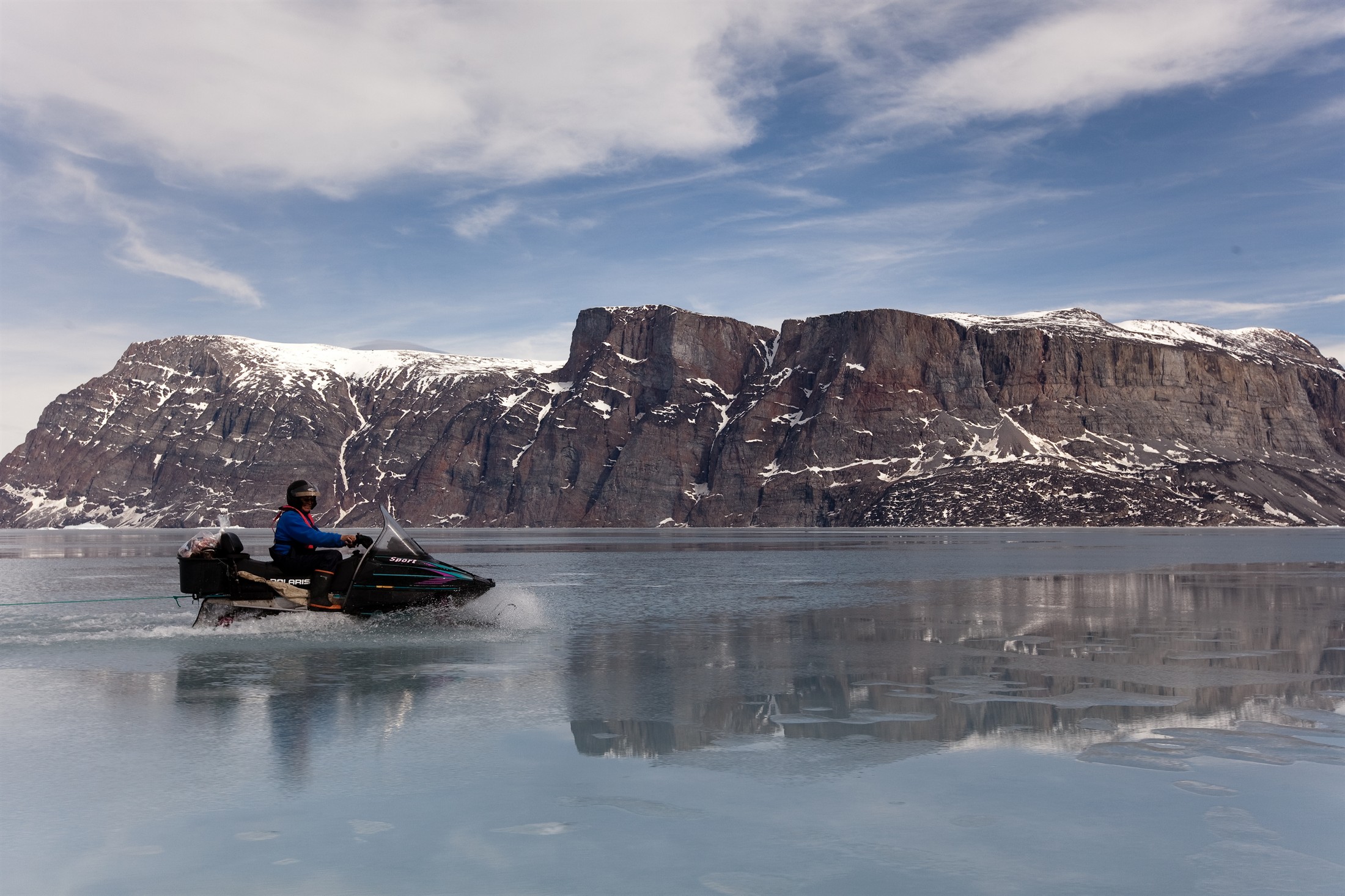
    Snow mobile travel over sea ice in Uummannaq, Greenland

    The effects of global warming are believed to be extensive. Estimating the precise effect is not possible as there as several unknowns in the equation so this should be regarded as best available estimates rather than facts.

    The International Panel on Climate Change (IPCC) predicts that global warming will continue to grow and get worse much faster than was expected. Effects of a rise in global temperature are severe.

    Warm and dry countries will become even drier and warmer often severely challenging the local population and making water an even scarcer commodity than it is today. Countries within most continents are likely to be affected by this but most prominently large regions of Africa. This will add to political unrest and some scientist have estimated that large migrations of people to north may follow as regions of the globe will no longer be available to sustain its current population.

    The list below includes some of the estimated effects:

    • Most places will continue to get warmer. The temperature change will benefit some regions while harming others. Globally mortality will rise and food supplies will be scarcer due to more frequent heat waves.
    • Weather patterns will continue to change and intensify. Stronger floods and droughts where wet regions will get wetter and dry regions dryer. Extreme weather events will become more frequent and worse. Glaciers and winter snow will shrink endangering many water supply systems.
    • Sea Levels will continue to rise for many centuries. Rising sea levels will endanger many of the worlds largest city’s in the world including cities like New York to Shanghai. Thirteen of the world’s fifteen largest cities are on coastal plains.
    • Ecosystems will be stressed. Some managed agricultural and forestry systems may experience a short time gain while long time effect may be drastic. Species in the Arctic, mountain areas
      and in the seas will move towards more habitable climate and species that can not move, like the polar bear, will face extinction. Furthermore tropical diseases and pests will spread to other regions. Many of these problems have been observed already in numerous places.
    • Increasing carbon dioxide levels will affect biological systems. This may affect the fertilization of plants. The oceans will continue to become more acidic, endangering coral reefs and affecting the fisheries and other marine life.

    Source: Spencer R. Weart

    Here below you can watch “Observations on Climate Change in the Arctic by WWF

    [http://www.youtube.com/watch?v=Jak1pExql0U]
  • Causes of Climate Change

    Causes of Climate Change

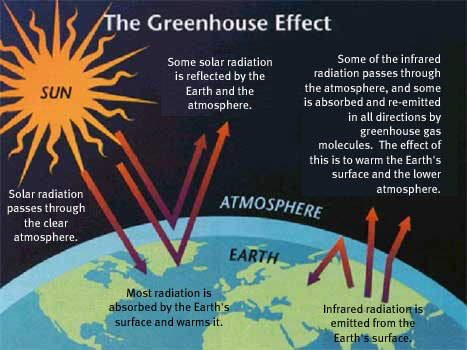
    The Greenhouse Effect

    Most of the observed temperature increase since the 1940-50’s were caused by increasing concentration of greenhouse gases.

    Greenhouse gases closely correlate human activity such as fossil fuel burning and deforestation.

    Greenhouse gases are gases in an atmosphere that absorb and emit radiation within the thermal infrared range.

    This process is the fundamental cause of the greenhouse effect.

    Greenhouse gasses are in the correct amount quite necessary and natural and without them it has been estimated that the earth surface temperature would be on average 33 degrees colder.

    The main greenhouse gases in the earth atmosphere are in accordance to their abundance:

    • water vapor
    • carbon dioxide
    • atmospheric methane
    • nitrous oxide
    • ozone
    • chlorofluorocarbons

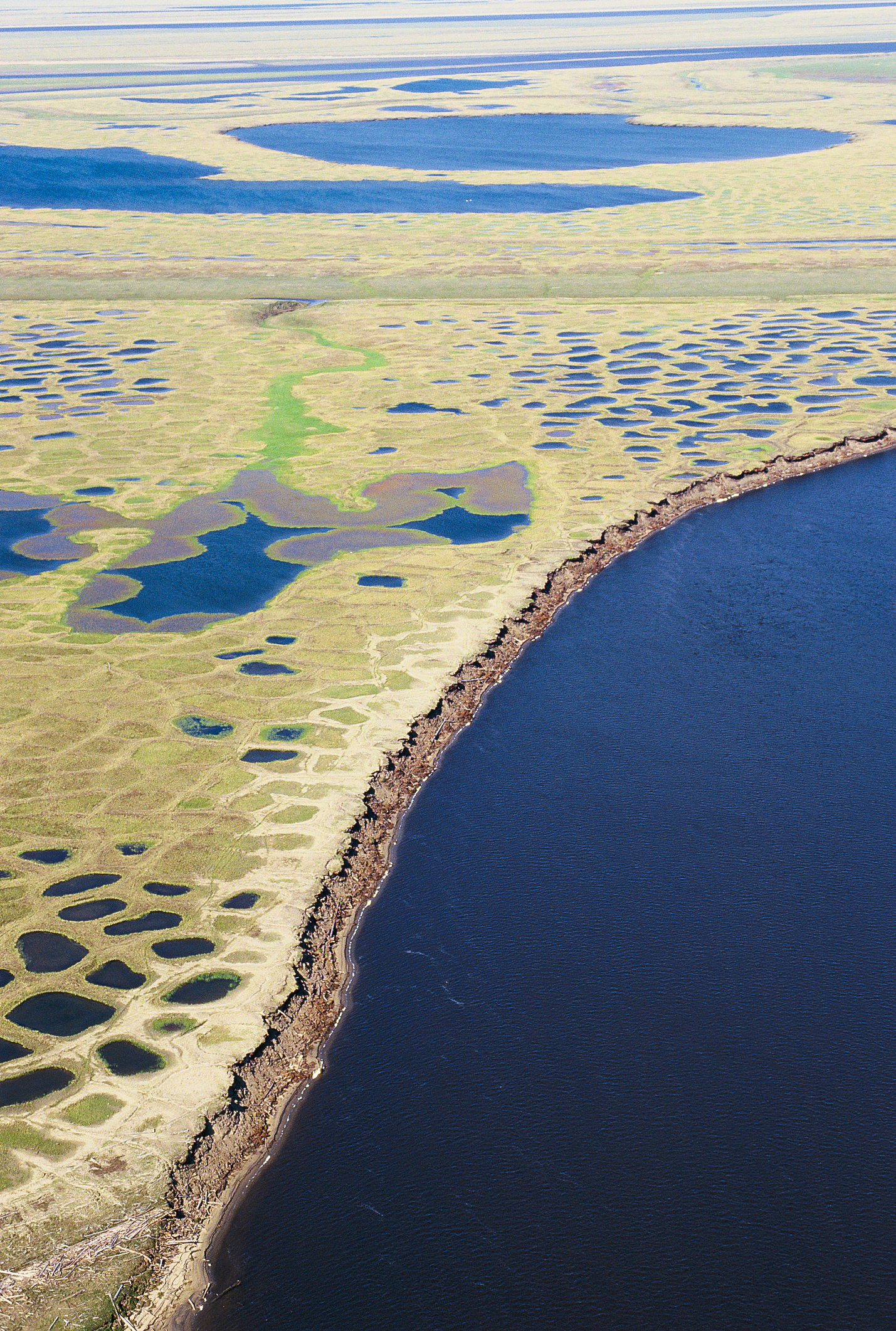
    Polygon Lakes in the Arctic Tundra

    From the beginning of the Industrial revolution the release of carbon dioxide or Co2 has increased dramatically. Most of the observed temperature increase since the middle of the 20th century was caused by increasing concentrations of greenhouse gases, which results from human activity such as fossil fuel burning and deforestation.

    Global dimming, a result of increasing concentrations of atmospheric aerosols that block sunlight from reaching the surface, has partially countered the effects of greenhouse gas induced warming.

    Climate model projections summarized in the latest IPCC report indicate that the global surface temperature is likely to rise a further 1.1 to 6.4 °C (2.0 to 11.5 °F) during the 21st century. The uncertainty in this estimate arises from the use of models with differing sensitivity to greenhouse gas concentrations and the use of differing estimates of future greenhouse gas emissions.

    An increase in global temperature will cause sea levels to rise and will change the amount and pattern of precipitation, probably including expansion of subtropical deserts.

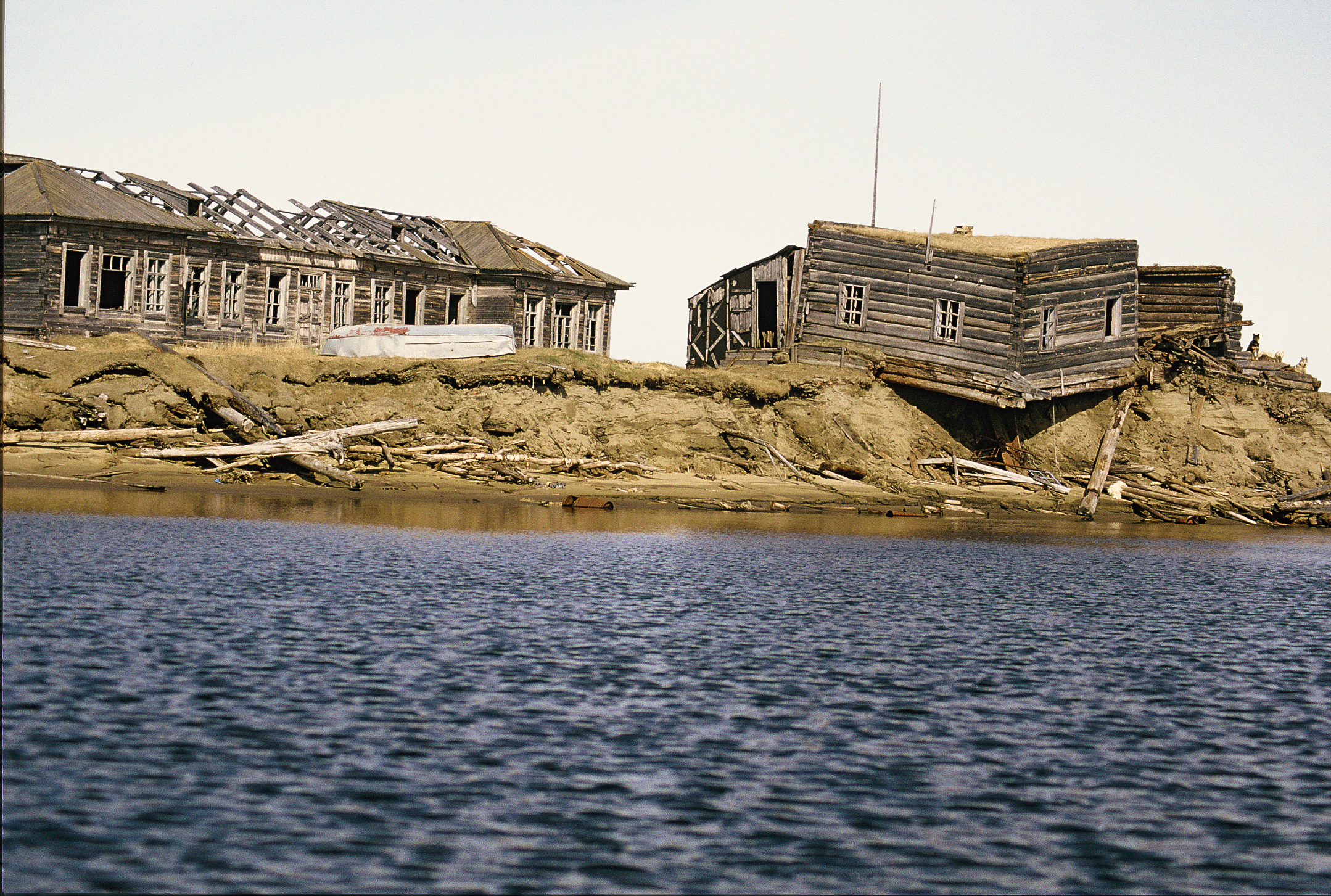
    Warming is expected to be strongest in the Arctic and would be associated with continuing retreat of glaciers, permafrost and sea ice.

    Other likely effects include changes in the frequency and intensity of extreme weather events, species extinction, and changes in agricultural yields.

    Warming and related changes will vary from region to region around the globe, though the nature of these regional variations is uncertain.

    The scientific consensus is that anthropologic global warming is occurring. Nevertheless, political and public debate continues. The Kyoto Protocol is aimed at stabilizing greenhouse gas concentration to prevent a “dangerous anthropogenic interference”. As of November 2009, 187 states have signed and ratified the protocol. Source: (IPCC)


    Learn more about the Kyoto Protocol HERE

  • Introduction to Climate Change

    Introduction to Climate Change

    climate house

    The Arctic Portals Climate Change and Sea Ice Portal is intended to give individuals access to material according to each ones need in connection to the subjects This will consist of recent news articles, scientific reports and other relevant material.

    Climate Change or Global Warming refers to the increase in the average temperature of the Earth’s near surface air and oceans since the mid 20th century.

    The International Panel on Climate Change (IPCC) has concluded that increasing greenhouse gas concentration resulting from human activity such as fossil fuel burning and deforestation are the biggest contributors to global warming.

    Climate Change is, in the eyes of many, the key issue in the Arctic and one of the key issues faced by human kind as a whole. Climate change has been highly disputed and there are those who maintain that human induced climate change does not exist and the swift warming occurring over the two last centuries is a part of the earth’s natural cycle.

    It can, non the less, be said that within the scientific community there is a relative consensus that global warming is indeed at least partially human induced. The scientists that conclude that human effect is marginal are all but extinct.

    Since the 1880, average temperatures have climbed 0.8° Celsius (1.4 ° Fahrenheit) and the rate of warming is increasing. Much of this increase can be traced back to the last couple of decades. The 1980’s and 90’s were the hottest in 400 years and possibly the warmest for several millennia. IPCC reported in 2007 that 11 of the past 12 years had been among the dozen warmest since 1850. Further increase of 1.1° to 6.4° Celsius (2.0 ° to 11.5 ° Fahrenheit) have been estimated during the twenty first century.

    Here below you can watch short Global Warming 101 by the National Geographic.

    [http://www.youtube.com/watch?v=oJAbATJCugs]

    To learn more about climate change:

    United Nations Environment Programme (UNEP) Climate Change Factsheet, July 2010

    United Nations Environment Programme (UNEP) The Climate Change Science Compendium 2009

    Global Climate Observing System

    Arctic Climate Impact Assessment (ACIA)

    National Oceanic and Atmospheric Administration (NOAA) Arctic Theme page

  • Increased Arctic Shipping to Accelerate Climate Change

    Increased Arctic Shipping to Accelerate Climate Change

    Arctic Portal news

    Arctic Shipping is a topic that is of great interest to both nation states as well as local Northern communities. The last four years have shown a trend of record low ice extent, and it is generally believed that the melt will continue to increase.

    This development in already leading to increased shipping within the Arctic. During this summer we saw the first high capacity tanker go through the northern passage to Asia as well as the first non-Russian bulk carrier to go through the same route. The opening of the Northern Sea route would have immense effects on global shipping as it would shorten shipping from Asia to Europe and North America significantly.

    Such a sea-route and all the benefits which it would entail are however not without consequence as recently been published from a team of U.S and Canadian researchers, including scientists from the University of Delaware. Growing Arctic ship traffic will bring with it air pollution that has the potential to accelerate climate change in the region. Engine exhaust particles is could increase warming by some 17-78 percent.

    James J. Corbett, Professor of marine science and policy at UD states ” One of the most potent ‘ short-lived climate forces’ in diesel emission is black caron, or soot. Ships operating in or near the Arctic use advanced diesel engines that release black carbon into one of the most sensitive regions for climate change.

    Produced by ships from the incomplete burning of marine fuel, these tiny particles of carbon act like ‘heaters’ because they absorb sunlight — both directly from the sun, and reflected from the surface of snow and ice. Other particles released by ship engines also rank high among important short-lived climate forcers, and this study estimates their combined global warming impact potential.

    To better understand the potential impact of black carbon and other ship pollutants on climate, including carbon dioxide, methane and ozone, the research team produced high-resolution (5-kilometer-by-5-kilometer) scenarios that account for growth in shipping in the region through 2050, and also outline potential new Arctic shipping routes.”

    Among the research team’s most significant findings:

    • Global warming potential in 2030 in the high-growth scenario suggests that short-lived forcing of ~4.5 gigatons of black carbon from Arctic shipping may increase the global warming potential due to ships’ carbon dioxide emissions (~42,000 gigagrams) by some 17-78 percent.
    • Ship traffic diverting from current routes to new routes through the Arctic is projected to reach 2 percent of global traffic by 2030 and to 5 percent in 2050. In comparison, shipping volumes through the Suez and Panama canals currently account for about 4 percent and 8 percent of global trade volume, respectively.
    • A Northwest Passage and Northeast Passage through the Arctic Ocean would provide a distance savings of about 25 percent and 50 percent, respectively, with coincident time and fuel savings. However, the team says tradeoffs from the short-lived climate forcing impacts must be studied.
    • To calculate possible benefits of policy action, the study provides “maximum feasible reduction scenarios” that take into account the incorporation of emissions control technologies such as seawater scrubbers that absorb sulfur dioxide emitted during the burning of diesel fuel. Their scenario shows that with controls, the amount of Arctic black carbon from shipping can be reduced in the near term and held nearly constant through 2050.

    What this work highlights is that the development path that trans-arctic shipping must take is one that is environmentally friendly. That scientists cooperate closely with the Arctic Council and the eight nation states there within on climate policy in connection to trans-arctic shipping. 

    The Northern Sea Routes on map

  • Climate Change and Arctic Sustainable Development Report

    Climate Change and Arctic Sustainable Development Report

    Arctic Portal news

    UNESCO Publishing has just released Climate Change and Arctic Sustainable Development: Scientific, Social, Cultural and Educational Challenges.

    This book brings together the knowledge, concerns and visions of leading Arctic experts in the natural and social sciences, and of prominent indigenous leaders from across the circumpolar North.

    For more information: http://publishing.unesco.org/details.aspx?&Code_Livre=4722&change=E

  • “Danish draft” leaked to media

    “Danish draft” leaked to media

    larslokke

    Guardian / cop15.dk – There seems to be a great change coming in the climate change negotiations, after the “Danish” draft of an agreement was leaked to media yesterday.

    The developing countires accuse the draft of being a legalisation of the developing / industrialised division in the world and contributing to the already existing problems in the developing countries. The UNFCCC head Yvo de Boer on the other hand said that only an informal paper is in question and that formal proposals will be only provided by the Chairs of the Conference.

    It will be though interesting to see if the text of the “draft” gives any hint of what can be expexted on behalf of the industrialised countires and whether the so much talked about political will is actually only a wishful thinking.  What is sure is that the negotiations are of crucial importance for the global community and a just and equal agreement should be reached for the benefit of us all.

  • Climate Investment Funds

    Climate Investment Funds

    Industry pollution

    Now when almost all the major players have announced their emission reduction targets, the talk has turned to money and the ways the battle against climate change can be financed.

    The US has proposed that a new climate fund should be established under the World Bank, which would direct funding to climate projects in developing countries. Further, the Asian Development Bank intends to direct 700 million dollars to two new investment funds that will primarily concentrate on financing climate change projects in developing countries. In short term, it has been estimated, that some 10 billion dollars are needed to cover the costs of the most current developments. In long term, some 100 billion dollars a year might be needed to cover the costs of climate change adaptation.

  • International Climate Change Action

    International Climate Change Action

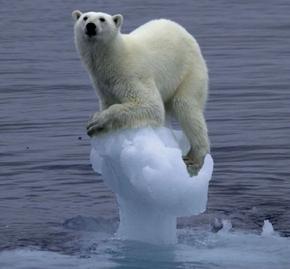
    Polar bear on sea ice

    One of the major international environmental and political challenges of our time is the climate change. It has been known for some time now, but for economic reasons it has been very difficult to find shared stand on what to do and how to do it. The 1997 Kyoto Protocol, which entered into force in 2005, is the first legally binding climate change solution that the international community has been able to agree upon.

    The major feature of the Kyoto Protocol are the targets for 37 industrialized countries and the European Community for reducing greenhouse gas emissions. In addition to the limits, the Kyoto Protocol introduces three mechanisms how the targets are to be met. Primarily, the countries were to reduce the emissions through national measures, meaning that they were to take action to actually diminish their greenhouse gas pollution. But since the economies of most countries are highly dependent on industries that are high polluters, three other mechanisms were introduced to ease the reduction scheme.

    The industrialised countries were given opportunity to trade emission units they themselves did not use, earn emission credits by implementing an emission-reduction project in developing countries or earn emission reduction units from a joint investment on emission-reduction or emission removal project in another industrialised country.

    Major Post-Kyoto Challenges

    All has come to nothing the fact being that almost all the industrialised countries that have ratified the Kyoto protocol are far from their targets for 2012. Another, and perhaps even more severe, drawback is that the biggest polluters in the world, the USA, China and India, either did not ratify the Protocol or were not categorised as industrialised countries under the Protocol thus not being under any emission reduction scheme.

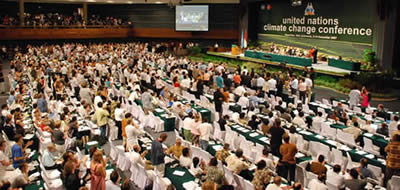
    COP13 - United Nations Climate Change Conference

    The Bali Road Map, adopted in the 13th Conference of Parties (COP) in 2007 in Bali, Indonesia includes the Bali Action Plan, which charted the course for a new negotiation process designed to create a climate change solution package for post-Kyoto era. The Bali Action Plan identified the COP 15, the upcoming Copenhagen UN Climate change Conference as the major event, where a new legally binding post-Kyoto agreement is to be enacted.

    One of the major challenges for the Copenhagen Conference has been the engagement of the world’s biggest leaders. Despite the very good ratification situation, the Kyoto Protocol fails to address some of the major problems of today, namely the emergence of new industrialised powers. China has already announced that it aims at cutting its carbon emissions by up to 45 percent as measured against its economic output – a target aimed at keeping its surging growth while still reining in pollution, while India has not clearly expressed its will to cut emissions, but only to accept “deviation from business as usual”. The US, which never ratified the Kyoto Protocol has as well already announced that it is going to reduce its greenhouse gas emissions by 17%.

    Now at the eve of the Conference many significant countries have announced their willingness to sign a binding treaty on emission reduction. The Commonwealth, a 53-member state union, has stated that a deal should be adopted no later than next year and 10 billion US dollars should be made available to help developing countries to reach their emission goals.

    The COP15 negotiations start on Monday, December 7 and will be carried out throughout the two week period closing session being on Friday, December 18. In addition to the actual COP15, 5th Session of the Conference of the Parties serving as the meeting of the Parties to the Kyoto Protocol (CMP 5) will also be held in Copenhagen at the same dates. Further, 31st Session of the Subsidiary Body for Scientific and Technological Advice (SBSTA 31), 31st Session of the Subsidiary Body for Implementation (SBI 31), 10th session of the Ad Hoc Working Group on Further Commitments for Annex I Parties under the Kyoto Protocol (AWG-KP 10) and 8th session of the Ad Hoc Working Group on Long-term Cooperative Action (AWG-LCA 8) will take place in Copenhagen between December 7 and December 18.

    For more information, please visit the COP15 homepage

    [http://www.youtube.com/watch?v=r3x4OnMPeCs]

  • The dire situation of the world’s fisheries in the Arctic and beyond

    The dire situation of the world’s fisheries in the Arctic and beyond

    Fishing ship

    Fishing within the North East Atlantic has been a significant economic resource as well as a practice that has become rooted in the culture of fishing nations utilizing the resource. In the Icelandic sagas, the fish was considered to be a gift from the gods and free for all who sought it (Jón Þ. Þór, 2006). This has however changed in Iceland as well as the world in whole.

    Technological advancements have multiplied the possible catch of each vessel and the world’s population growth has increased the demand for fish significantly. Legal issues in connection with maritime boundaries and rights to fisheries both in countries’ economic zones as well as international waters have mostly been settled under the UNCLOS. The realisation that stocks would have to be managed to yield a maximum return has lead to the establishment of fisheries management schemes the world over, both within countries’ Exclusive Economic Zones (EEZ) and multilateral cooperation’s in connection to the high seas and migratory stocks.

    Despite measures taken, the somewhat dire situation of the world’s fisheries has become increasingly apparent, which can mostly be contributed to overfishing and the effect global warming has on the worlds fish stocks (FAO 2009). These findings, call for evaluation and further examinations of both the regulatory framework in place as well as the existing management schemes and cooperation’s.

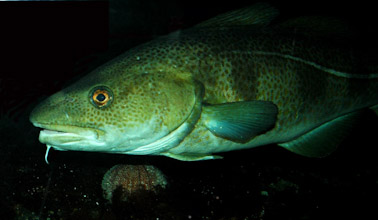
    Climate change and predicted fluctuations in fish stocks have been a constant through the earths history, the rapid change now and in the foreseeable future is however unprecedented (UNDP 2007). Climate change is increasing the world’s temperature and one of the consequences is the migration of fish stocks towards the two poles to cooler water’s. For stocks already residing in cooler waters this may have a severe affect and recent studies indicate that the Atlantic cod stock may be significantly challenged. The warming will lead to a loss of habitat by the Cod in its more southern range and reduce survival during early life and offset growth. This is estimated to result in a decline of the Atlantic Cod stock by as much as 50% by 2050, and cause it to migrate further North (Cheung et al 2009).

    Cod up close

    Fish and fisheries are extremely important to the Arctic region as its waters are often considered to be one of the richest fishing grounds in the world. Despite the drastic effects the significant fluctuations or collapse of the stock would have on the northern hemisphere its counterparts in the south would be considerably more vulnerable. Nations within Africa, who many of them are among the least developed nations in the world, generally have a less diversified economy and fewer means to deal with such change. In a global context fisheries are a significant part of the worlds nutritional intake, with at least 20% of the worlds annual consumption of dietary protein (Fao, 2007 (Allison et al 2009).

    Due to negative reports of the state of the fisheries globally, international and regional bodies are starting to react. One of the most commonly criticized fishery policies or organization is the European Union, which has recently addressed the issue of over fishing within its chambers. At the end of May 2009 European fisheries ministers concluded in a meeting to effectively scrap current rules that decide fishing quotas. Given this conclusion the European Union has decided to draw up a new common fisheries policy before 2012.

    It will be interesting to see if the new fishing policy will be adequate to deal with E.U problems in connection to fishing as 80% of E.U fishing grounds are estimated to be overfished (BBC News, 2009). Similarly it will be interesting to sea how regional bodies like the North East Atlantic Fisheries Committee (NEAFC) will be able to manage changes in migratory patterns of stocks.
    The position as it is portrayed by many of the leading specialist’s and organizations on a global scale will demand for close cooperation and some difficult decisions so world fishing can become sustainable within the changing environment at hand.

    Illegal and unregulated fishing also continues to be an important issue. It’s value has been estimated being between $4bn and $9bn. It also presents a further danger to species, which are already under threat of being overfished. Some interesting videos on the matter can be seen by following the links bellow:

    Sources

    • Allison, Edward H. Conway, Ashley S. Halls, Graham M. Pilling, John D. Reynolds, Neil L. Andrew & Nicholas K. Dulvy. (2009) Vulnerability of national economies to the impacts of climate change on Fisheries. Fish and Fisheries magazine
    • Cheung, William W.L. Lam, Vicky W.Y. Sarmiento, Jorge L. Kearney, Reg Watson & Pauly, Daniel (2009). Projecting global marine biodiversity impacts under climate change scenarios. Fish and Fisheries magazine
    • FAO (2007) The State of World Fisheries and Aquaculture
      2006. Food and Agriculture Organisation of the United
      Nations, Rome. Retrieved 18.02.09 from: http://www.fao.org/docrep/009/a0699e/A0699E00.HTM
    • FAO (2009) THE STATE OF WORLD FISHERIES AND AQUACULTURE
      2008. http://www.fao.org/docrep/009/a0699e/A0699E00.HTM
    • Jón Þ. Þór (2002) Sjósókn og Sjávarfang. Saga Sjávarútvegs á Íslandi. 1. Bindi Árbáta og skútuöld. Bókaútgáfan Hólar á Akureyri.
      UNDP (2007). Climate change threatens unprecedented human development reversals. http://content.undp.org/go/newsroom/2007/november/hdr-climatechange-20071127.en